The lost city of the Inca, and the civilization that built it without a wheel.
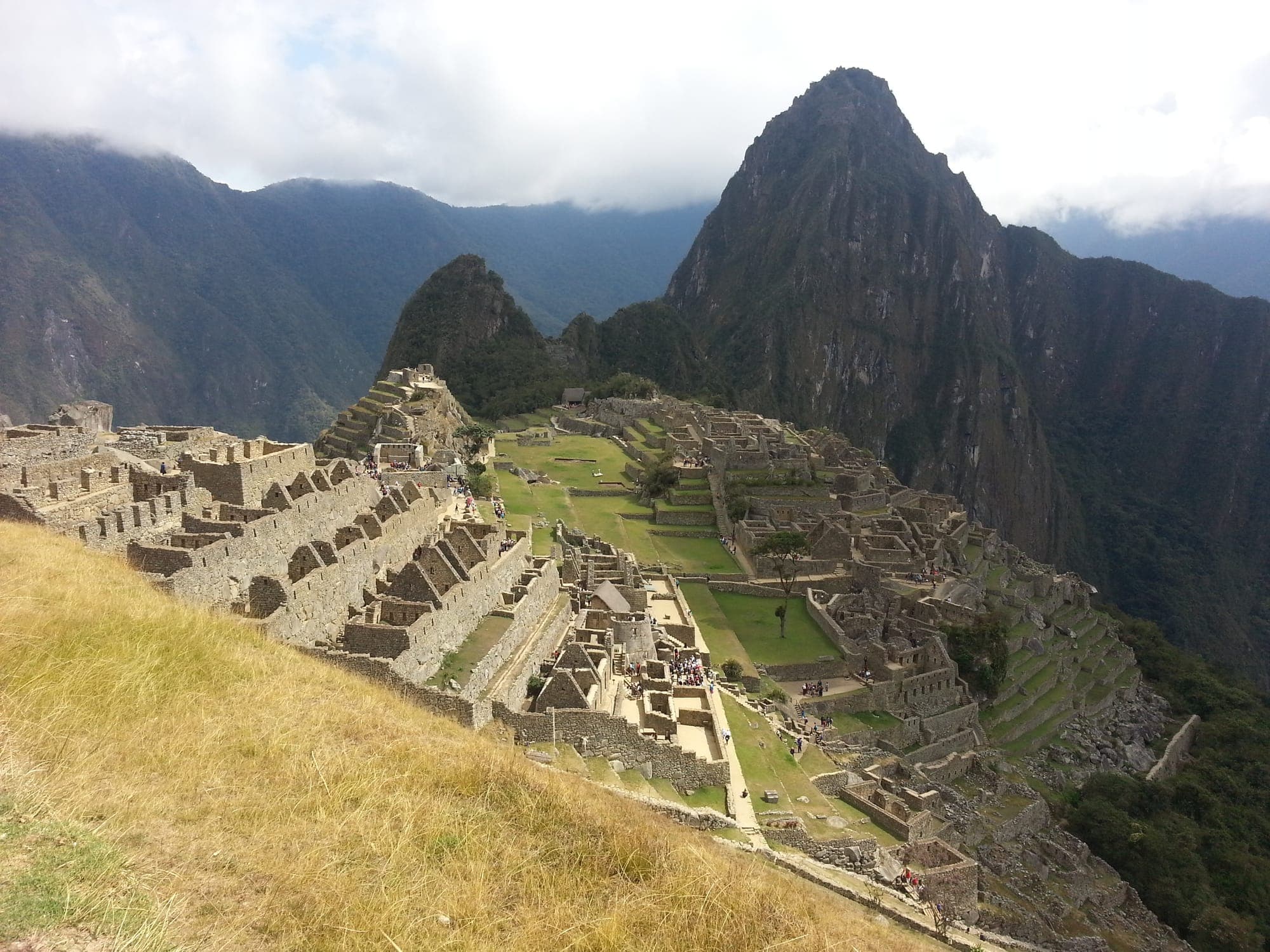
Machu Picchu is the defining image of Peru, but the country holds enough history to fill years of travel. The Inca built an empire across some of the most extreme terrain on Earth — and Machu Picchu, sitting at 2,430 meters on a ridge in the Andes above the Urubamba River, is their most spectacular surviving achievement. The Sacred Valley below it contains dozens of sites the tourist circuit mostly skips.
The places that make Peru worth the trip — and the stories behind them.
01
Machu Picchu
Built in the mid-15th century as a royal estate and then abandoned during the Spanish conquest, rediscovered by Hiram Bingham in 1911. The Inca built it without the wheel, iron tools, or mortar — the stones fit together so precisely you cannot slide a piece of paper between them.
The former capital of the Inca Empire, built at 3,400 meters elevation. Much of the original Inca stonework survives beneath the Spanish colonial city built on top of it. The Plaza de Armas and the Qorikancha temple complex are the starting points.
03
Sacred Valley
The valley below Machu Picchu holds Ollantaytambo, Pisac, and a dozen other Inca sites that most visitors skip while rushing to the main attraction. Don't rush.
04
Ollantaytambo
An intact Inca town at the head of the Sacred Valley, still inhabited on its original 15th-century street grid. The fortress above was the site of one of the few Inca victories against the Spanish in 1537. The temple complex at the summit has some of the finest stone fitting in the Inca world.
05
Maras Salt Mines
Thousands of terraced salt pools cut into an Andean hillside above the Sacred Valley, fed by a saltwater spring harvested since Inca times. From a distance the white pools stacked up the mountainside look almost abstract. Still operated by the local community.
The mountain that appears behind Machu Picchu in every photo. You can climb it — extremely steep Inca stairs, roughly 90 minutes up, limited permits per day. Book months ahead.
07
Sacsayhuamán
A massive Inca military complex just above Cusco, with stones weighing up to 200 tons fitted together with no mortar. The Spanish tried to demolish it for building material and gave up.
08
Huaca Pucllana
A massive adobe platform pyramid in the Miraflores district of Lima, built by the Lima culture around 400 CE — predating the Inca by a thousand years. It sits open-air in the middle of a modern city neighborhood, partially excavated. A reminder that Lima was already ancient long before the Spanish arrived.
09
Caral
The oldest known city in the Americas, built around 2600 BCE on the Peruvian coast — contemporaneous with the Egyptian Old Kingdom and predating Machu Picchu by 4,000 years. Monumental pyramids, sunken circular plazas, no pottery, no writing. Almost no one visits. That gap is inexplicable.
Massive geoglyphs carved into the southern desert floor, visible only from the air. A hummingbird, a spider, a condor — their purpose is still genuinely unknown.
Plan Your Trip to Peru
Affiliate links — booking through these supports my work at no extra cost to you.
Travel insurance isn't something you think you need—until you actually need it. Three days into a trip to Rio, I had an emergency appendectomy. World Nomads covered the entire surgery, hospital stay, and follow-up care. Now I won't travel anywhere without it. They cover emergency medical, evacuation, trip cancellation, lost luggage, and 150+ adventure activities.
We receive a fee when you get a quote from World Nomads using this link. We do not represent World Nomads. This is not a recommendation to buy travel insurance.
Affiliate link — helps fund the adventures at no cost to you

 01
01