Craigmillar Castle: Where Scotland's Nobles Agreed to Get Rid of the Queen's Husband

Craigmillar Castle: Where Scotland's Nobles Agreed to Get Rid of the Queen's Husband
•~31 min read
SharePostShare
In November 1566, some of the most powerful men in Scotland were staying at a castle on the southeastern edge of Edinburgh, and they put their names to a document agreeing to solve a problem.

The problem was the Queen's husband.

Ten weeks later, the house he was sleeping in exploded.

That castle is Craigmillar, and it was the centerpiece of the first real day of a 24-day trip through Scotland: three people, one rental car, and a route that runs from Edinburgh down through the Borders, up the west coast, across the Highlands, out to Orkney and Shetland, and back again. Day one stayed close to the city. A well that seeps oil, a standing stone surrounded by houses, a castle with a body in the wall, the chapel at the end of The Da Vinci Code, and then east into the farmland of East Lothian until the gates started closing on us.

This is the longer version of that day, with the history that didn't fit in the episode.

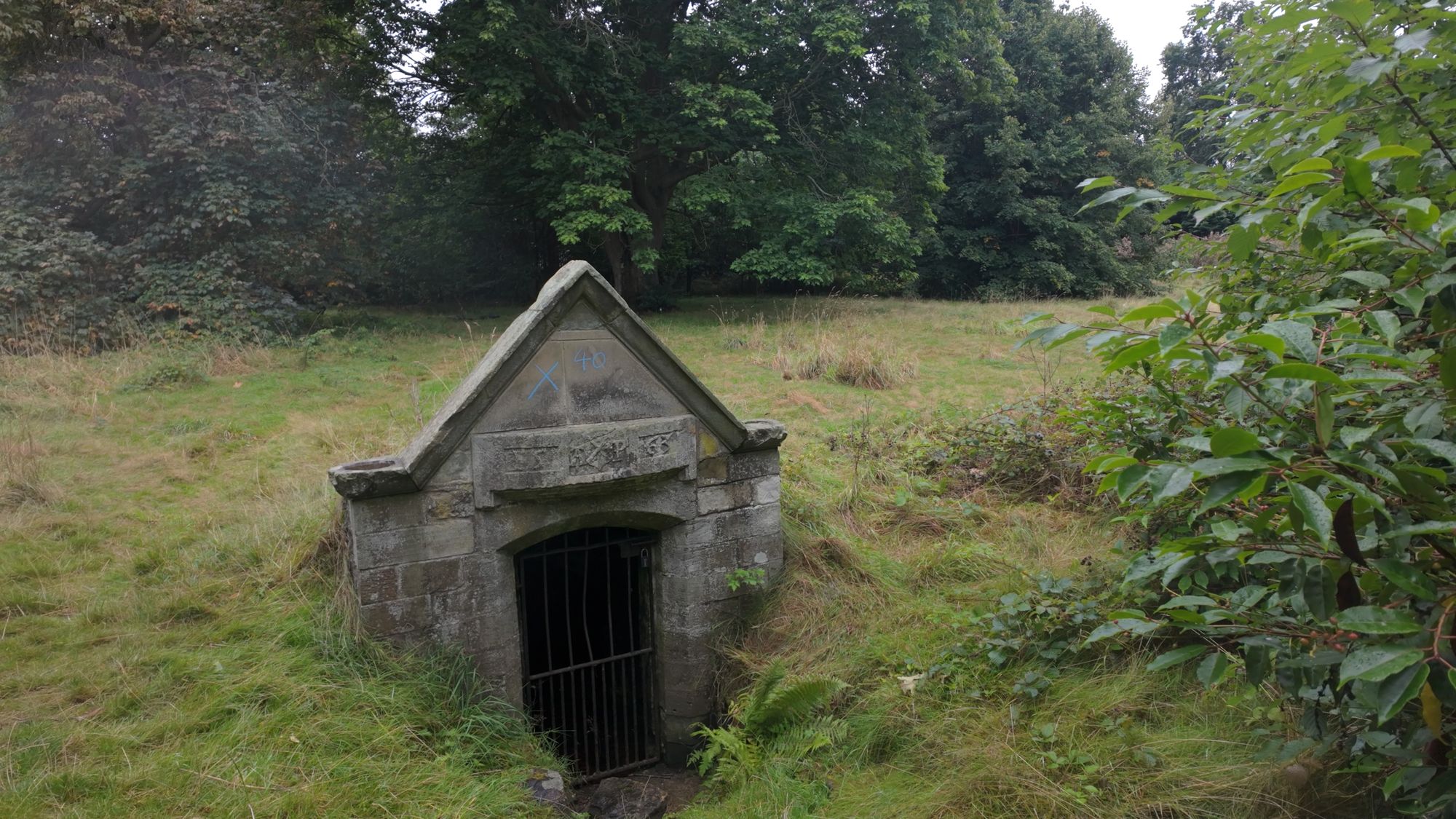
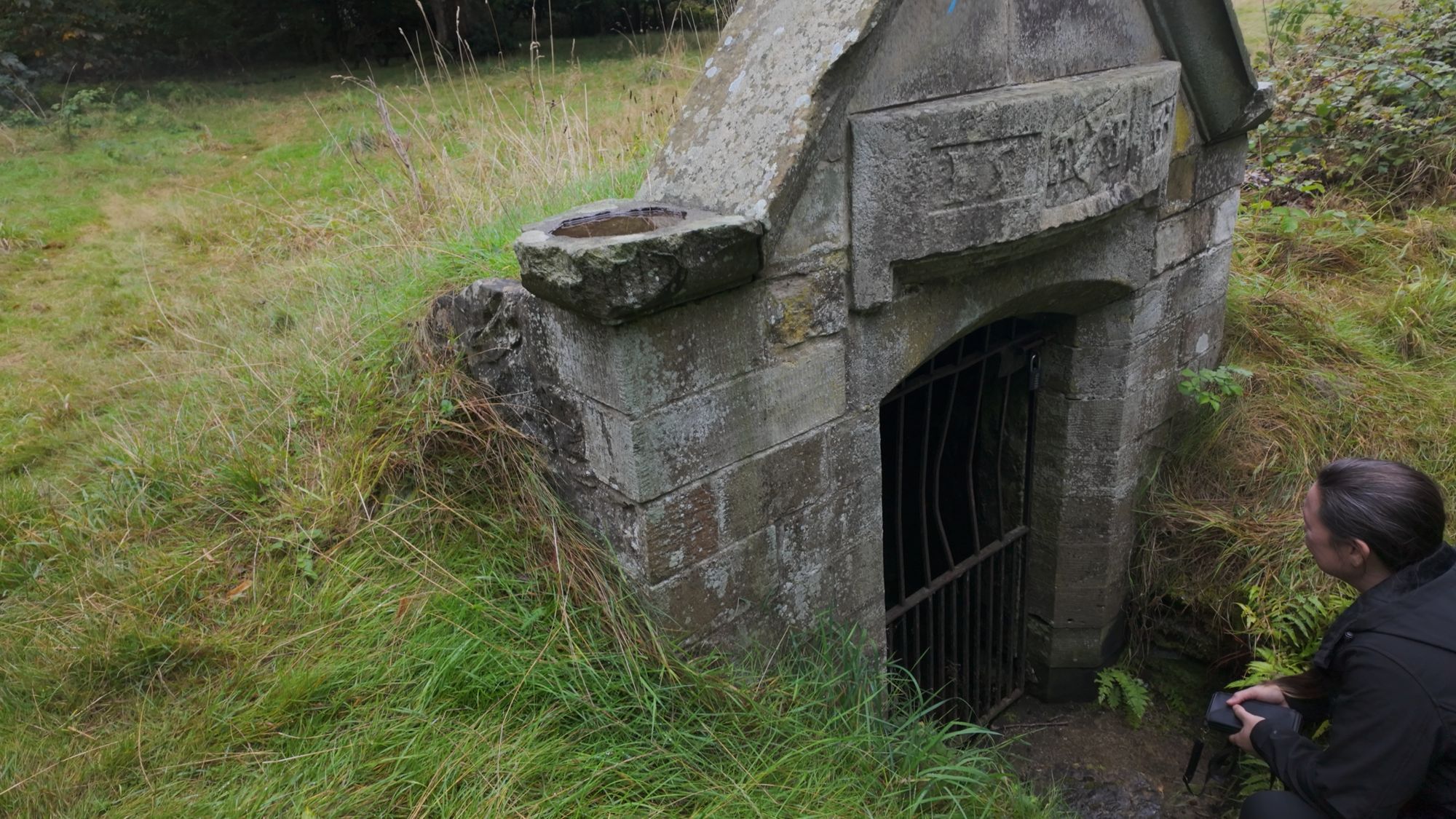
St Catherine's Balm Well in Liberton — a small gabled stone well house with an iron-barred door, half sunk into an overgrown meadow

A Well That Comes Up Oily

The first stop is in Liberton, on the southern edge of the city. St Catherine's Balm Well is a small stone well house, and the water inside comes up with a dark, tarry film on top of it. Locals have also called it the Oily Well, which is accurate.

The story attached to it goes back to St Margaret, the 11th-century queen of Scotland. As it's told, Margaret sent a holy woman named Catherine to Mount Sinai to bring back oil from the tomb of St Catherine of Alexandria. On the way home, Catherine spilled a few drops on this spot, and the ground has produced healing balm ever since.

People believed it. James IV made an offering at "Sanct Katrine's of the oly well" in 1504. When James VI came back to Scotland from London in 1617, the only time he returned after taking the English throne, he went to see it himself and ordered it built up in stone, with a door and steps down to the water. Cromwell's soldiers almost completely wrecked it in 1650. It was rebuilt, patched, and protected again in the 1880s, and as late as the early 1900s people were still using the water on eczema.

The oil is real. It just isn't holy. A tiny spring rises through oil shale under Liberton and picks up bitumen on the way to the surface. The same oil shale runs under a big stretch of the Lothians. Out in West Lothian in the 1850s, a chemist named James Young started distilling paraffin from it, and that became the first commercial oil industry anywhere in the world. Liberton just got there a few centuries early and called it a miracle.

As for the healing, smearing something greasy on cracked, irritated skin does genuinely help. That's how pretty much every ointment works. So the well wasn't a fraud. It was a lotion with a very good backstory.
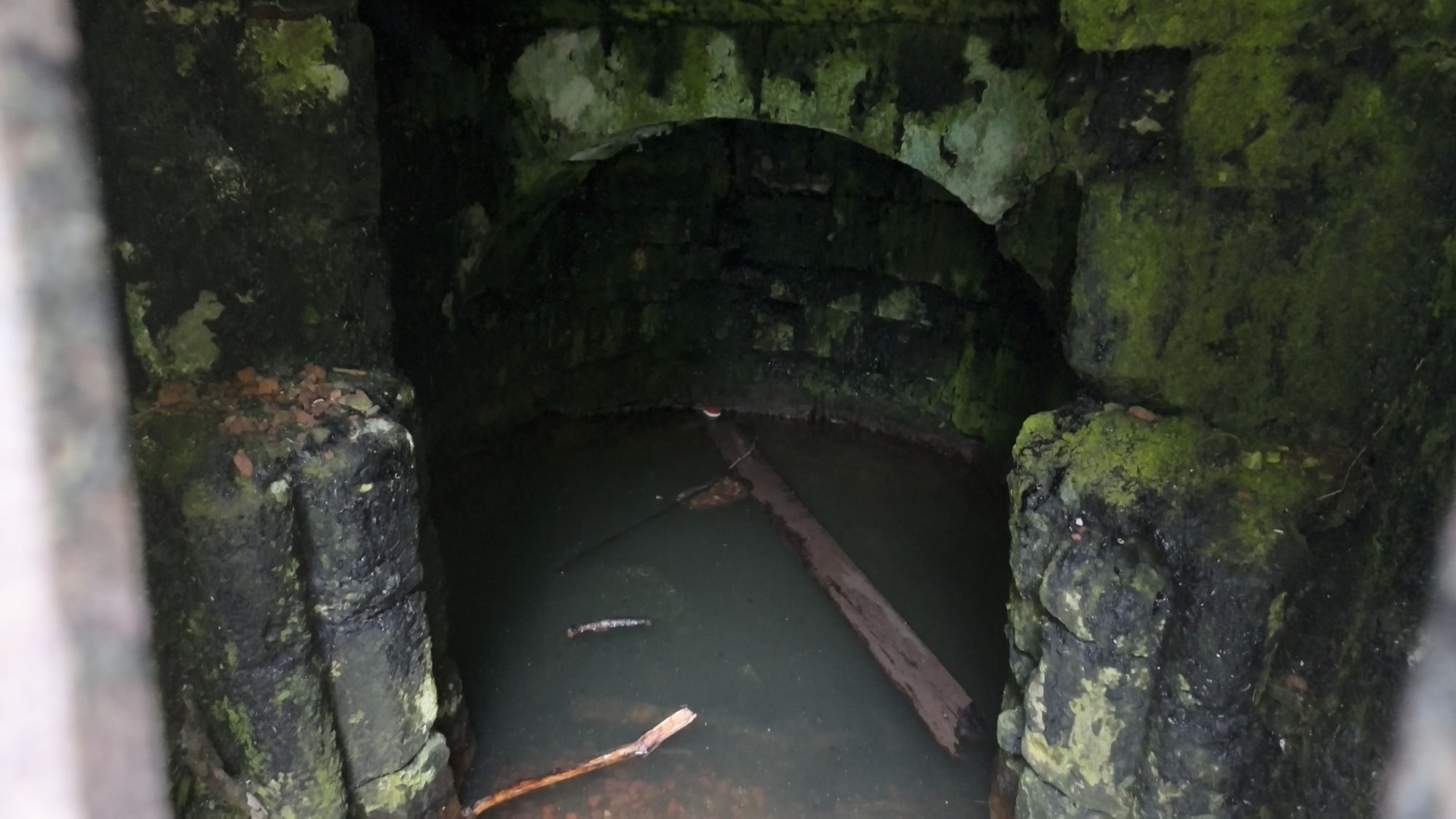
Looking through the bars into the Balm Well: a mossy stone chamber with dark, still water at the bottom

My sister crouched at the barred door of the Balm Well, peering in at the water

Britain's Most Urban Standing Stone

A few minutes away, at the end of Ravenswood Avenue, there's a prehistoric standing stone in the middle of a modern housing estate. It's behind a railing on the footpath of a cul-de-sac, with houses on every side.
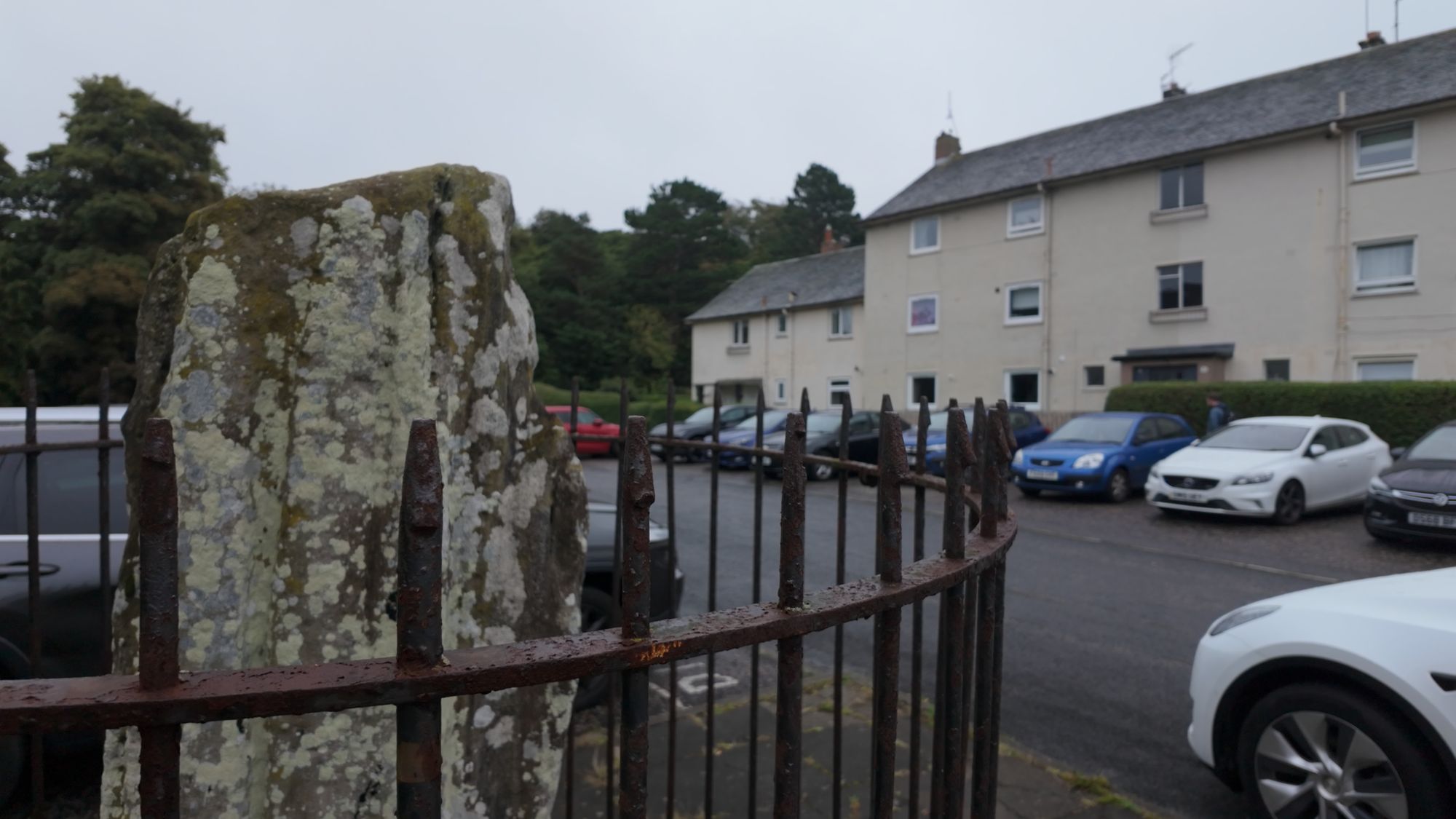
The lichen-covered Liberton standing stone behind its iron railing, with parked cars and a block of flats right behind it

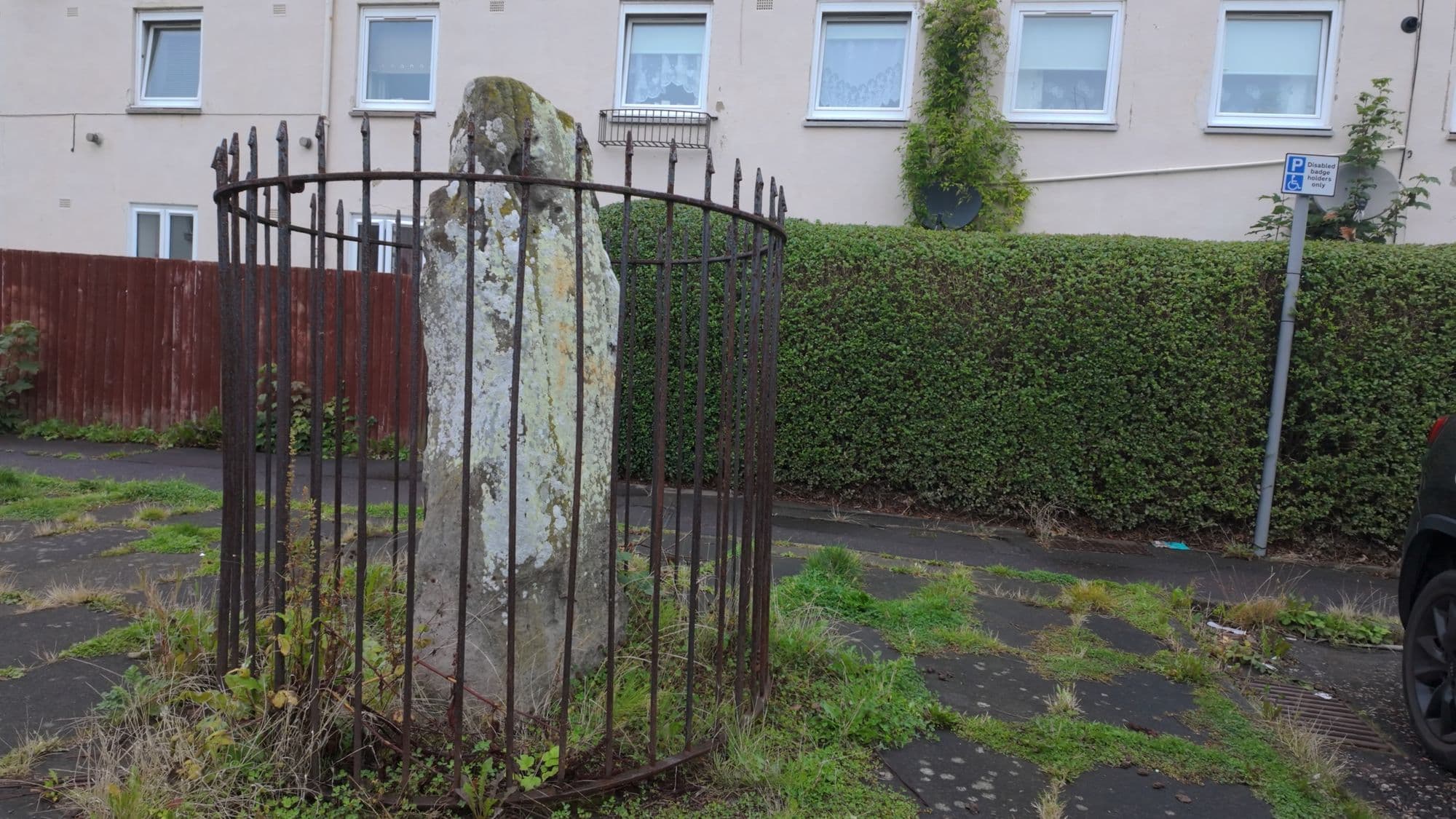
Officially it's the Liberton standing stone. It's a slab of gray sandstone with flecks of quartz in it, a little over six feet tall, and it was set up around 2000 BCE. That makes it about 4,000 years old. The grooves running down two of its faces and the ear-shaped hollow on one side are natural weathering. No one carved anything on it.

Nobody knows what it was for. It could have marked a burial, or a battle, or a boundary, or something that mattered enormously to people whose language and name for this place are completely gone.

What we do know is that Edinburgh can't stop moving it:

  • Early 1800s: shifted out of the way for a road scheme.
  • 1891: put back in its original spot on the Liberton glebe.
  • Around 1971: the housing went up around it, and it was moved again, about a hundred yards north, and stood up in a concrete base inside the railings.
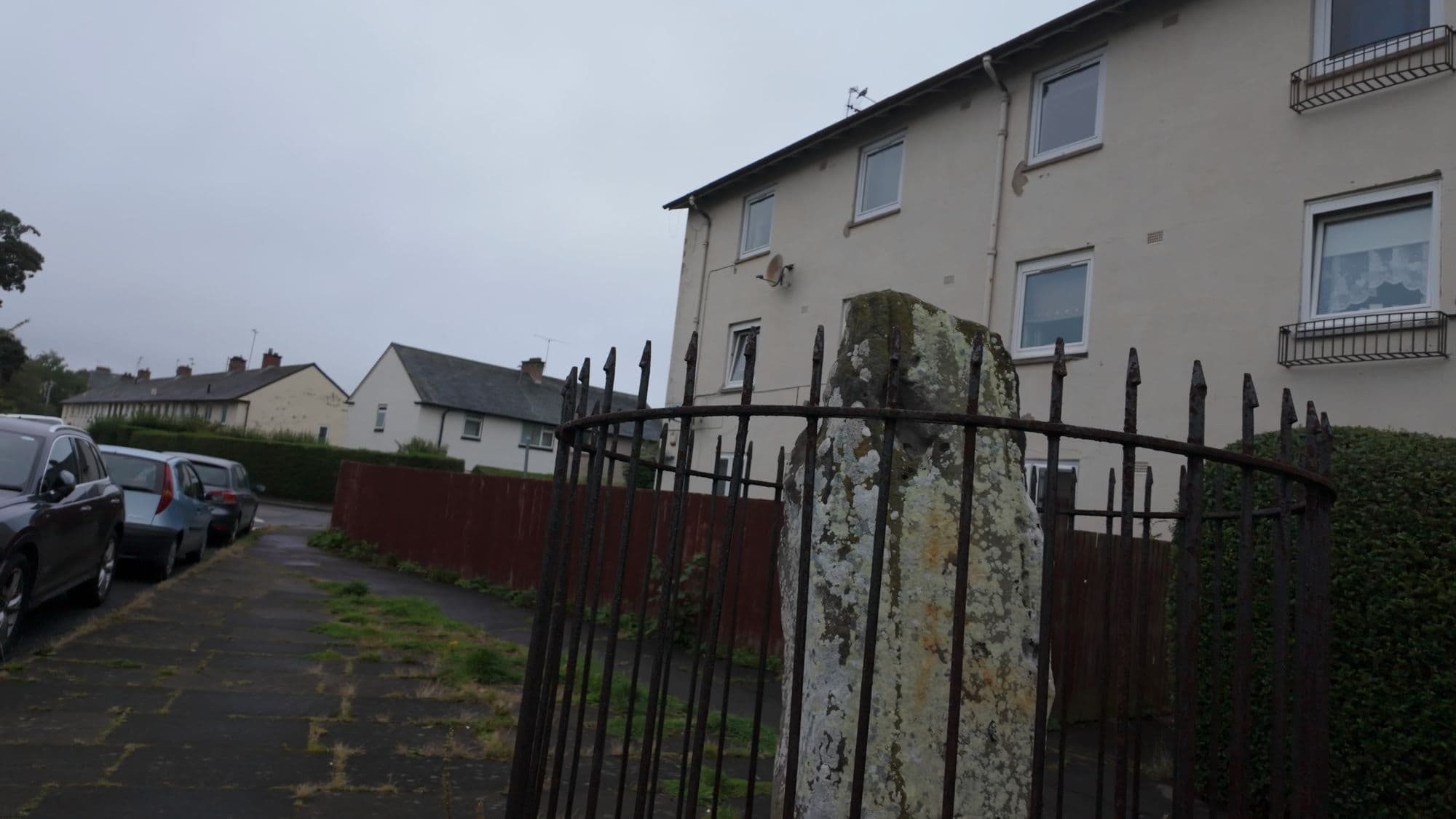
It has been a scheduled monument since 1938. Historic Environment Scotland admits plainly that after all that moving it has no archaeological value left. Whatever was buried at its foot, if anything, is long gone. They protect it anyway because it matters to people, and that seems right.

For years the neighborhood held its Guy Fawkes Night bonfire right next to it, and kids used the railings as a football goal. It has stood on this patch of ground for something like four thousand years, and it now shares a street with somebody's recycling bins.

The standing stone in its circular railing on the footpath of the Ravenswood Avenue cul-de-sac, a hedge and housing behind it
Ravenswood Avenue — a 4,000-year-old stone on the pavement between a fence, a hedge and a row of parked cars

Tap any photo to enlarge

Craigmillar: Edinburgh's Other Castle

From Liberton it's a couple of miles northeast to Craigmillar Castle, about three miles from the city center.
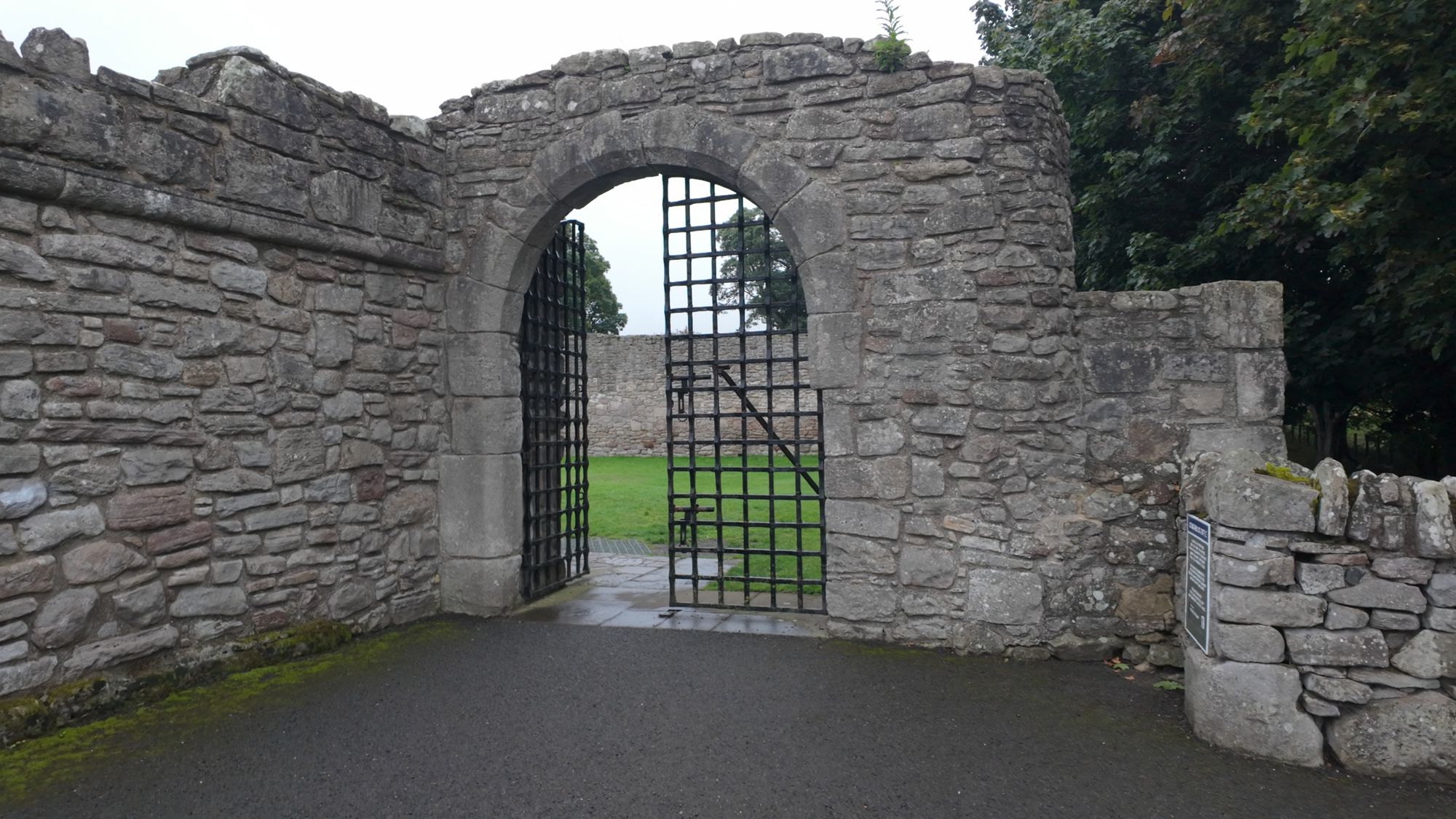
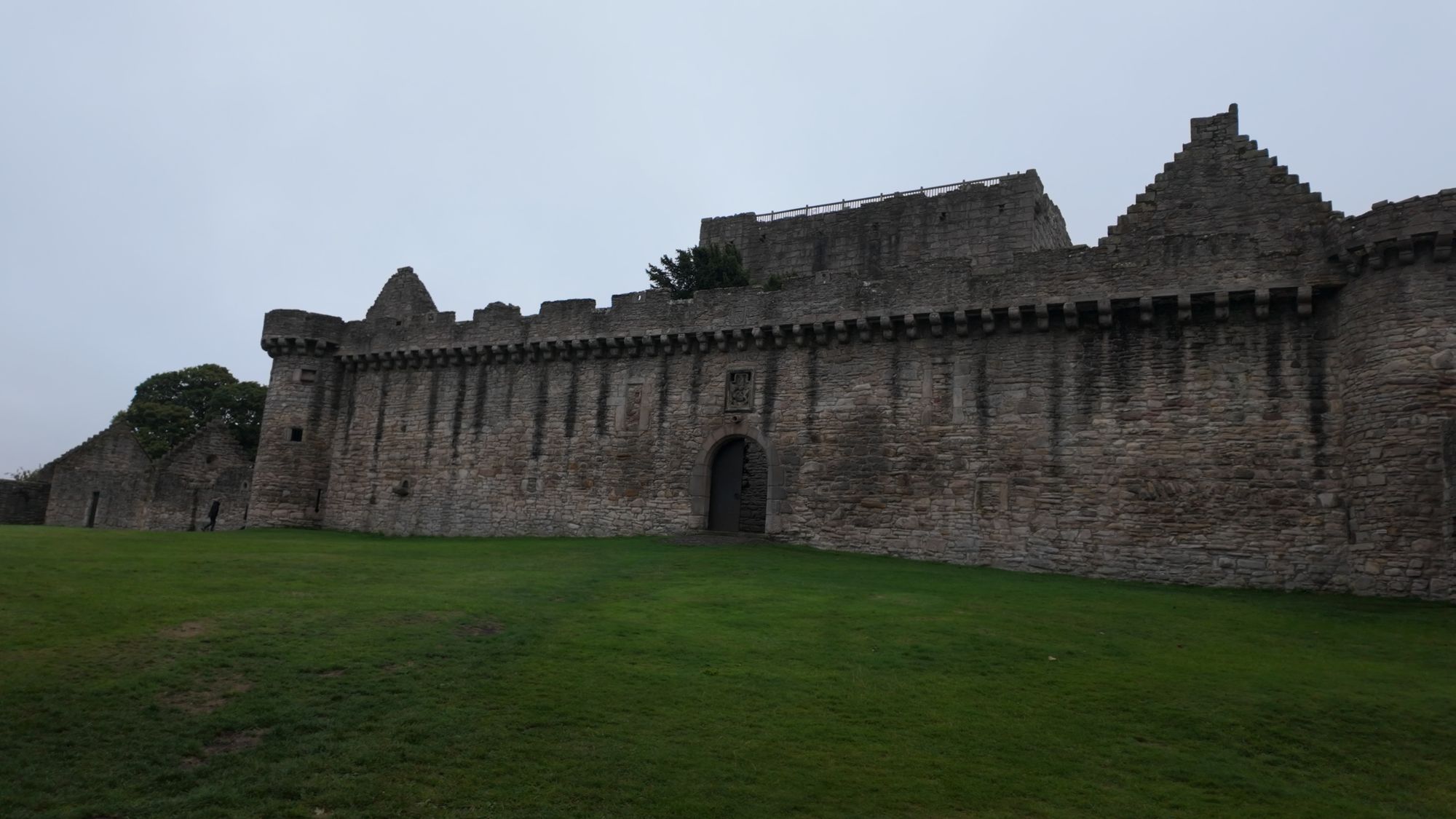
The arched outer gateway of Craigmillar Castle with its iron yett standing open onto the grass

The long battlemented curtain wall of Craigmillar Castle across a wide lawn, the tower house rising behind it under a gray sky

If you've never heard of it, that's normal. Edinburgh has a much more famous castle, the one on the shortbread tins, and we'll get to that one at the very end of the trip. Craigmillar is the one historians get quietly excited about, because it's one of the best-preserved medieval castles in Scotland and because of what got agreed inside it.

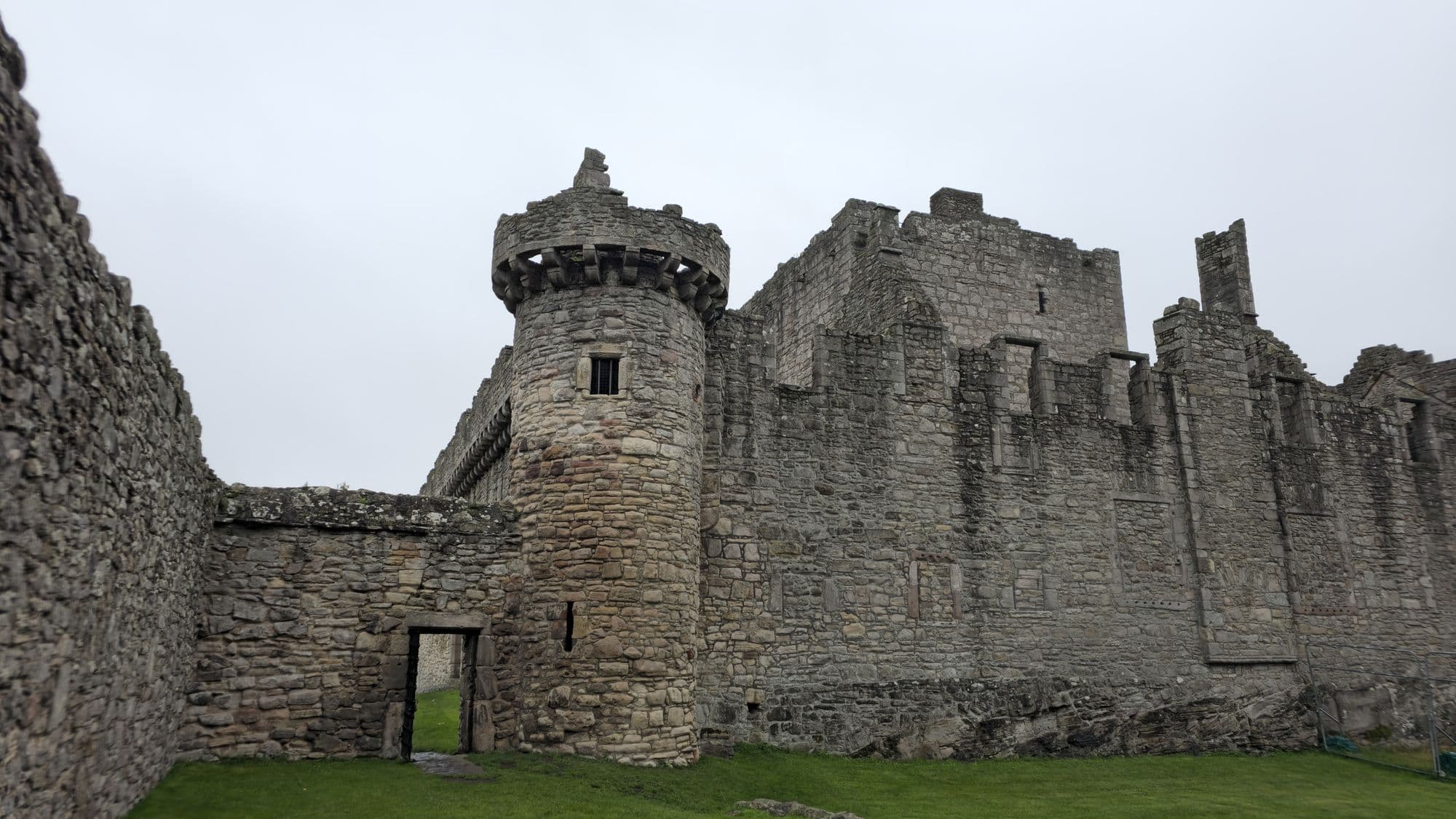
The Preston family were granted part of these lands in 1342 and the rest in 1374. The L-shaped tower house was up by around 1400, built on an outcrop of rock, and the Prestons spent the next two centuries adding to it. First came a curtain wall with round towers at the corners, then an outer wall beyond that, then ranges of buildings around the courtyard, a chapel, gardens, and a fish pond dug in the shape of a P, for Preston. (Some people now think it was a sunken garden rather than a pond. Either way, it's a giant initial dug into the ground in front of your house, and the point comes across.)

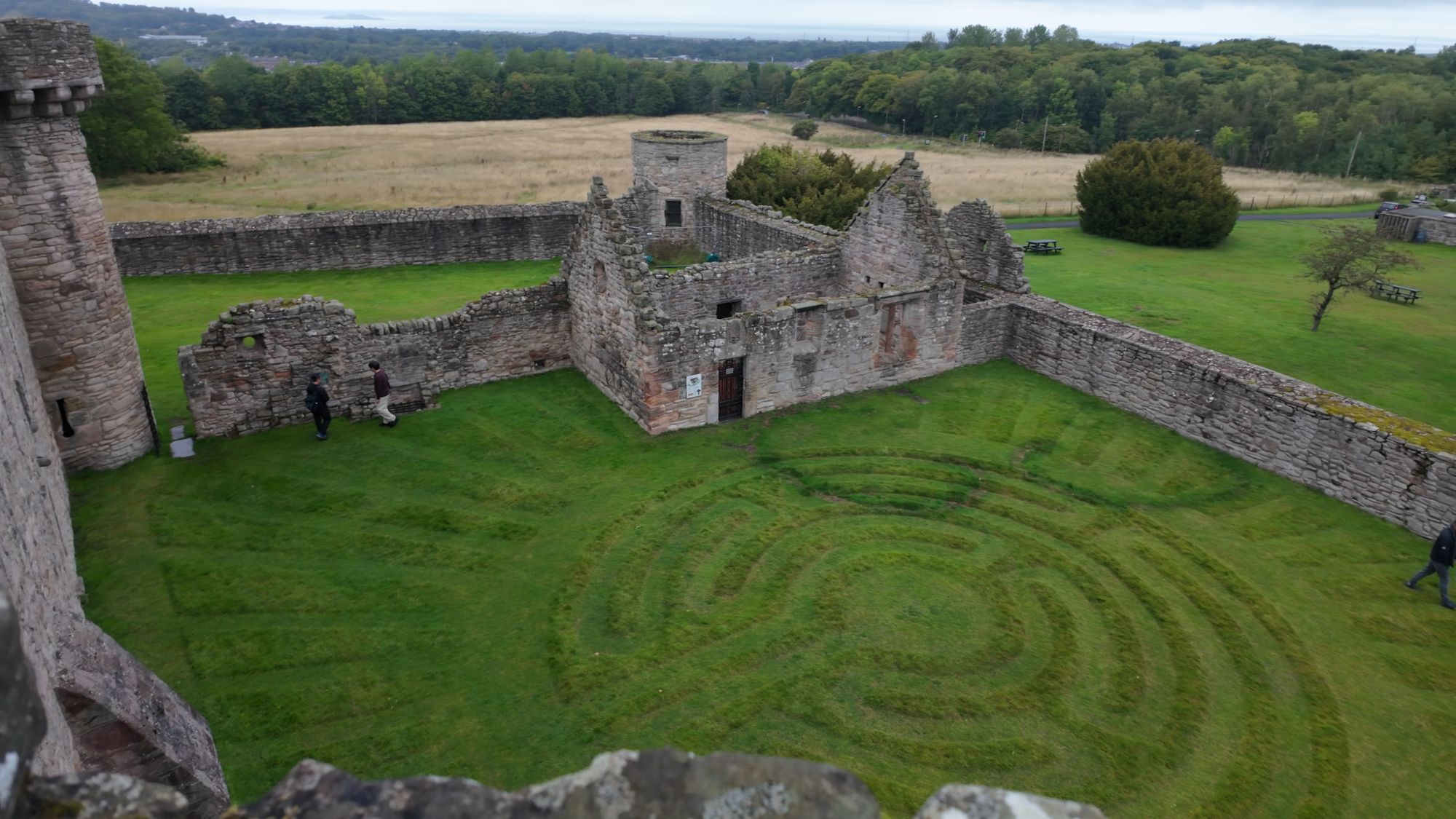
The outer courtyard from the tower roof: the ruined chapel and walled grounds, with a spiral pattern mown into the lawn

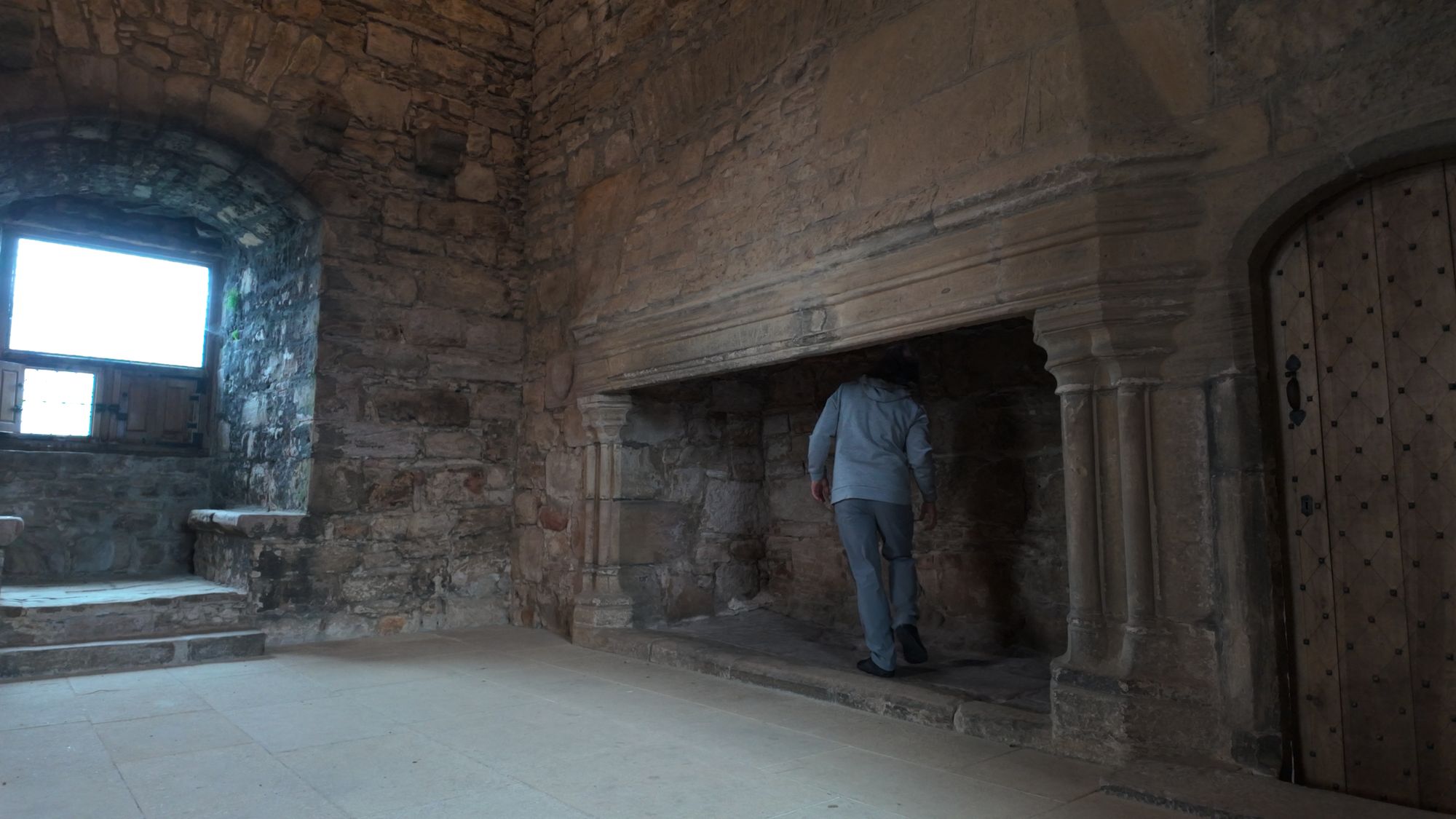
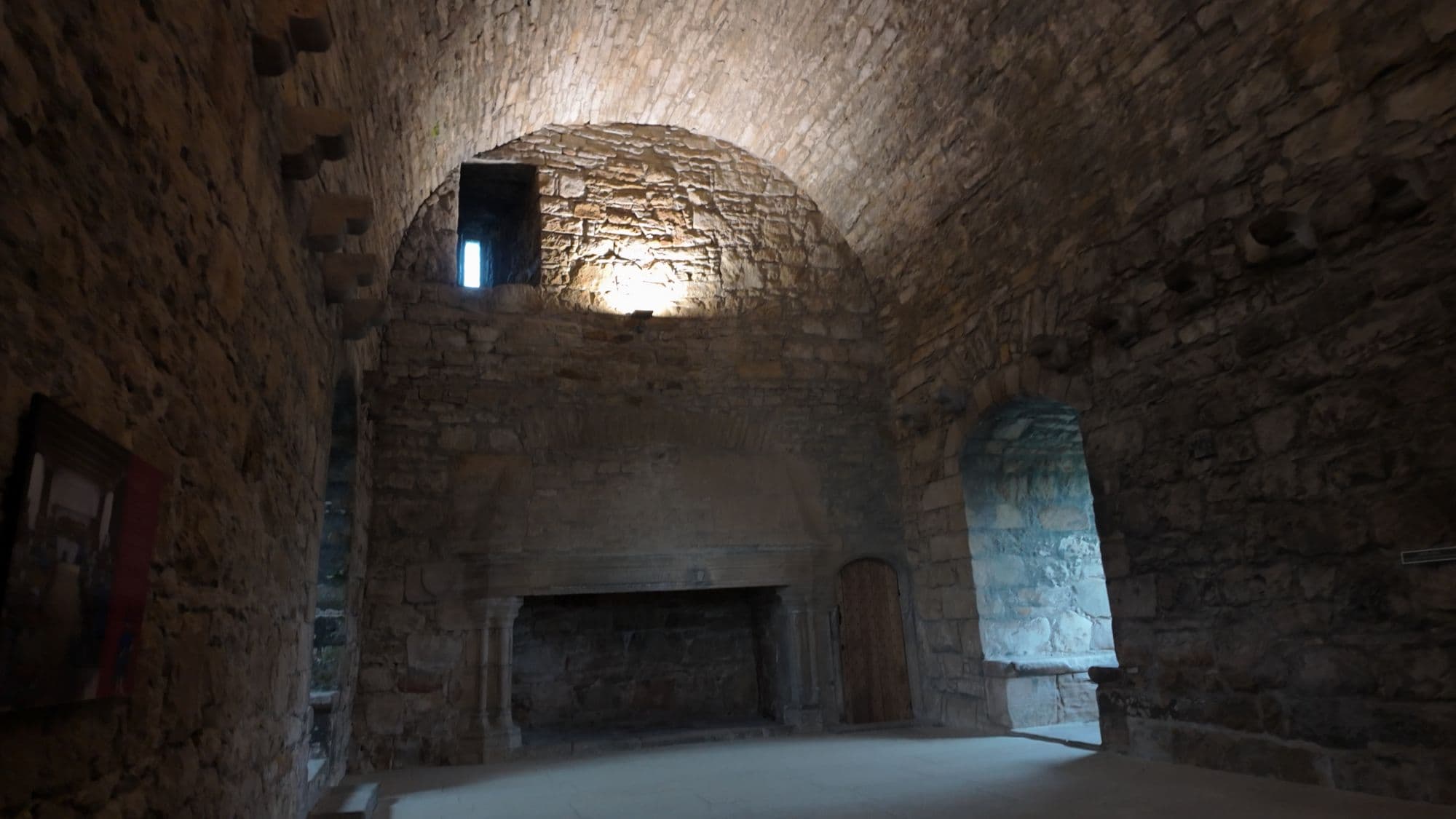
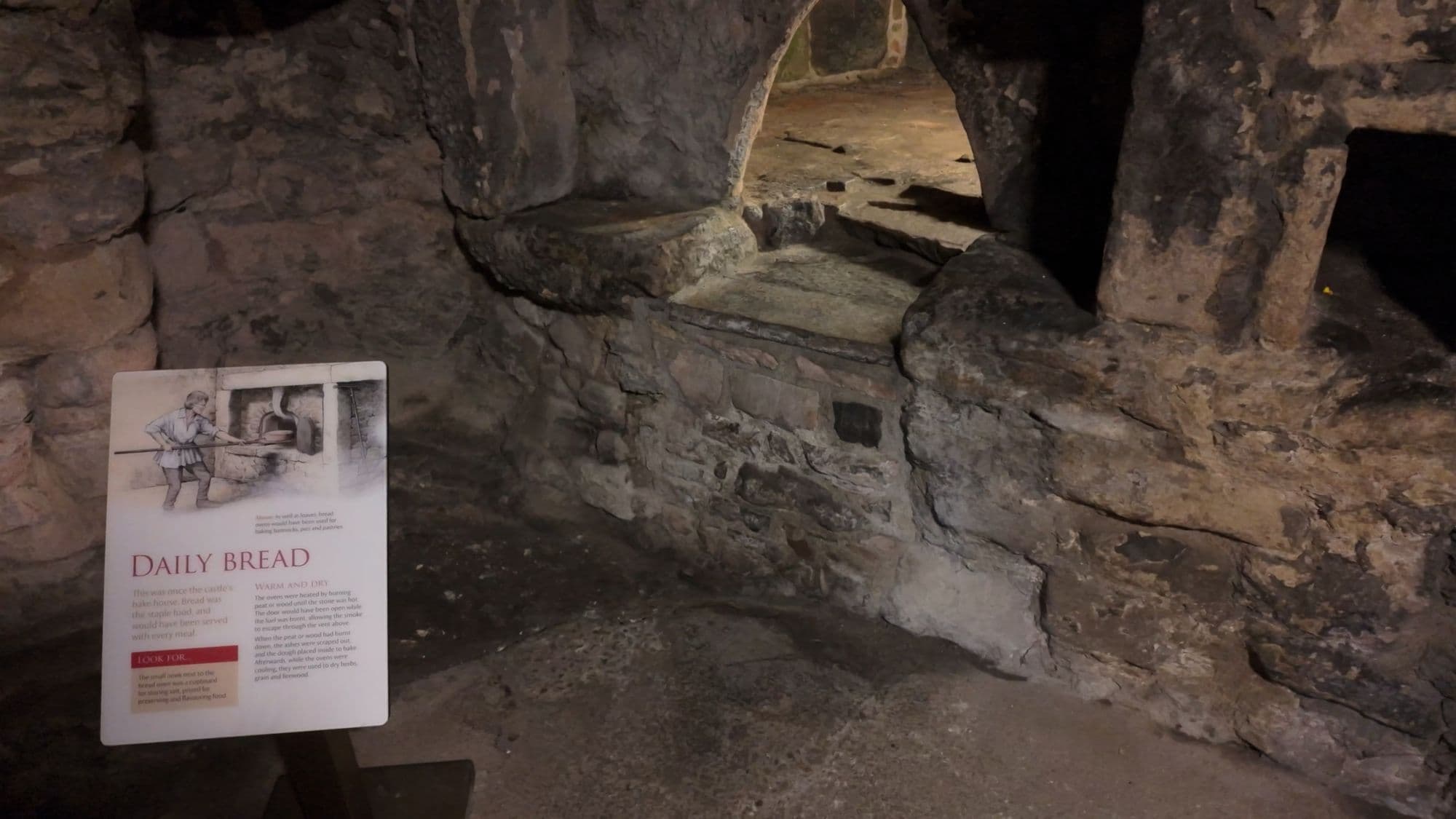
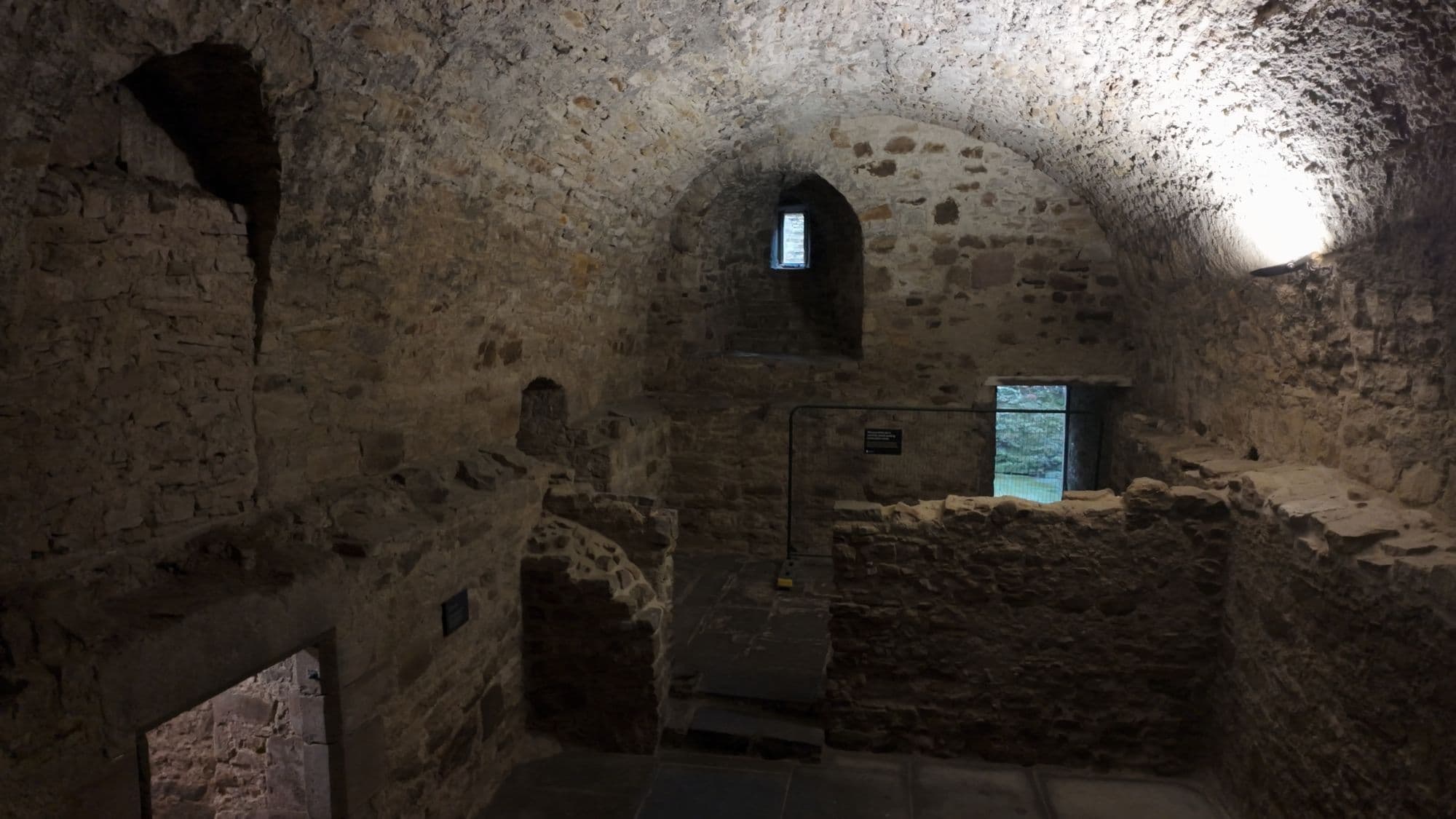
What makes Craigmillar special is how much of it is still standing. This isn't a pile of rubble with an artist's impression on a signboard. You can walk into the great hall and stand next to a fireplace big enough to stand inside, and sit in window seats cut into walls several feet thick. You can go down into the vaulted cellars where the food was kept, and into the kitchen, where the oven is still built into the wall.

Me standing inside the great hall fireplace at Craigmillar — it's big enough to walk into

The great hall at Craigmillar, its vaulted stone ceiling lit from above and the huge fireplace on the far wall
The castle kitchen, with the bread oven still cut into the rock wall beside a 'Daily Bread' interpretation sign
One of Craigmillar's vaulted cellars, rough stone walls and a single small window at the far end

Tap any photo to enlarge

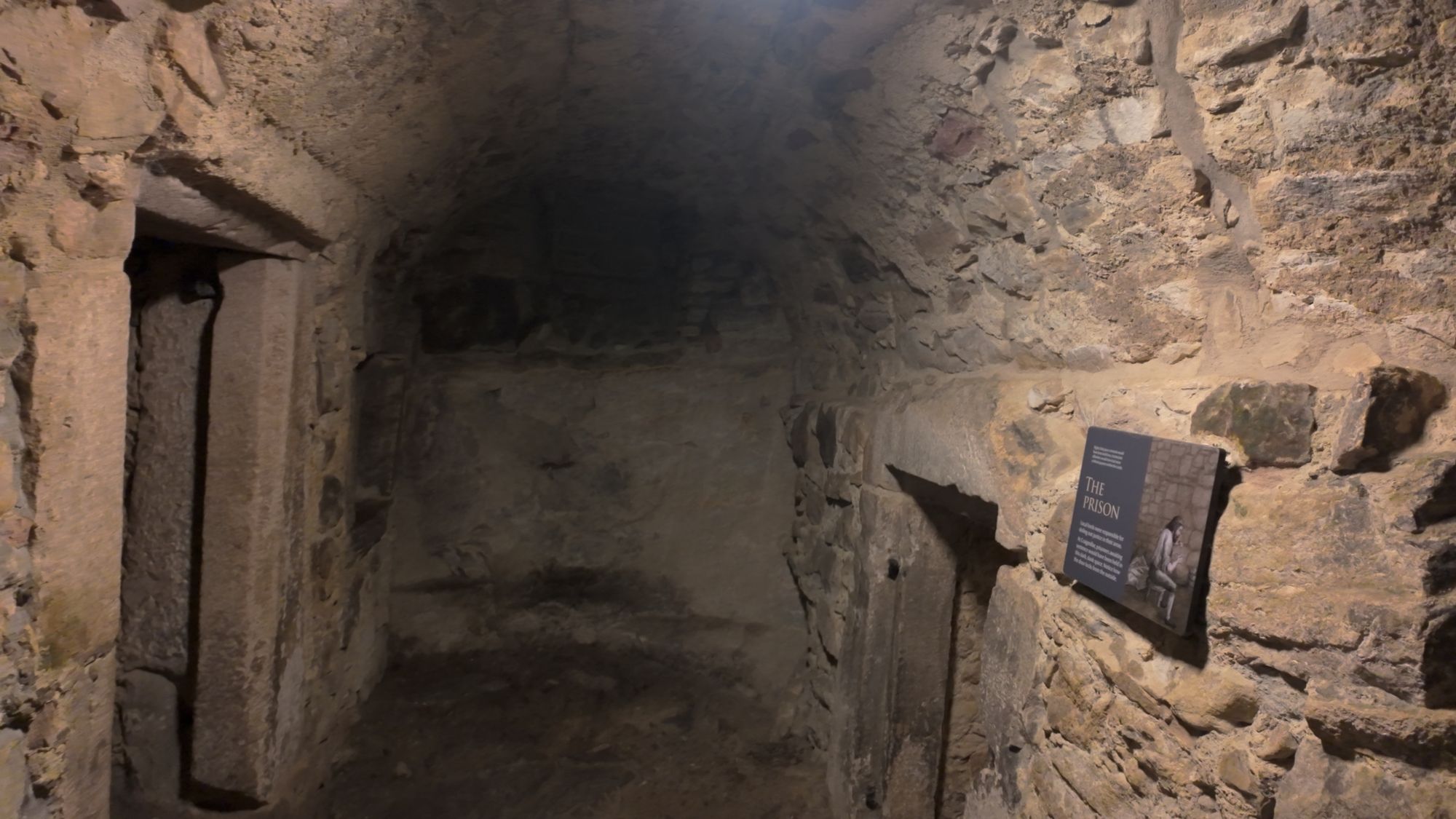
There's also a pit prison: a stone bottle of a room with no light, reached by a hatch in the floor above. The only way out was somebody up top deciding you were coming out.

The prison in Craigmillar's lower levels — a dim, bare stone chamber with a narrow doorway

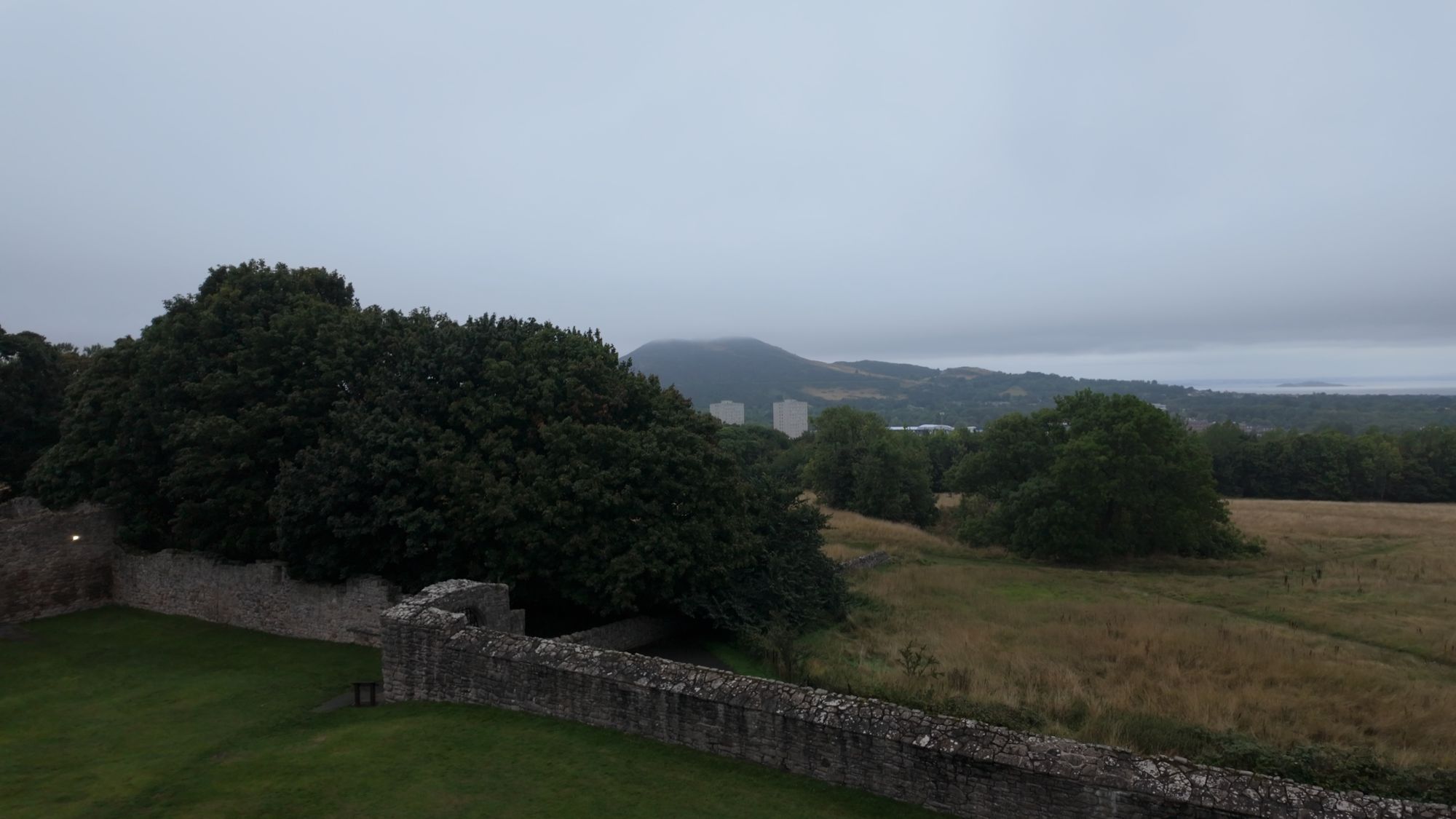
And you can climb all the way to the roof. From up there you get Arthur's Seat, the Firth of Forth, and Edinburgh Castle on its rock in the distance. The family that built this place spent generations trying to matter as much as the people who lived over there. Standing on their roof, you can see they had a decent view of the competition.

The view north from the Craigmillar tower roof: the castle wall and trees in the foreground, Arthur's Seat on the skyline

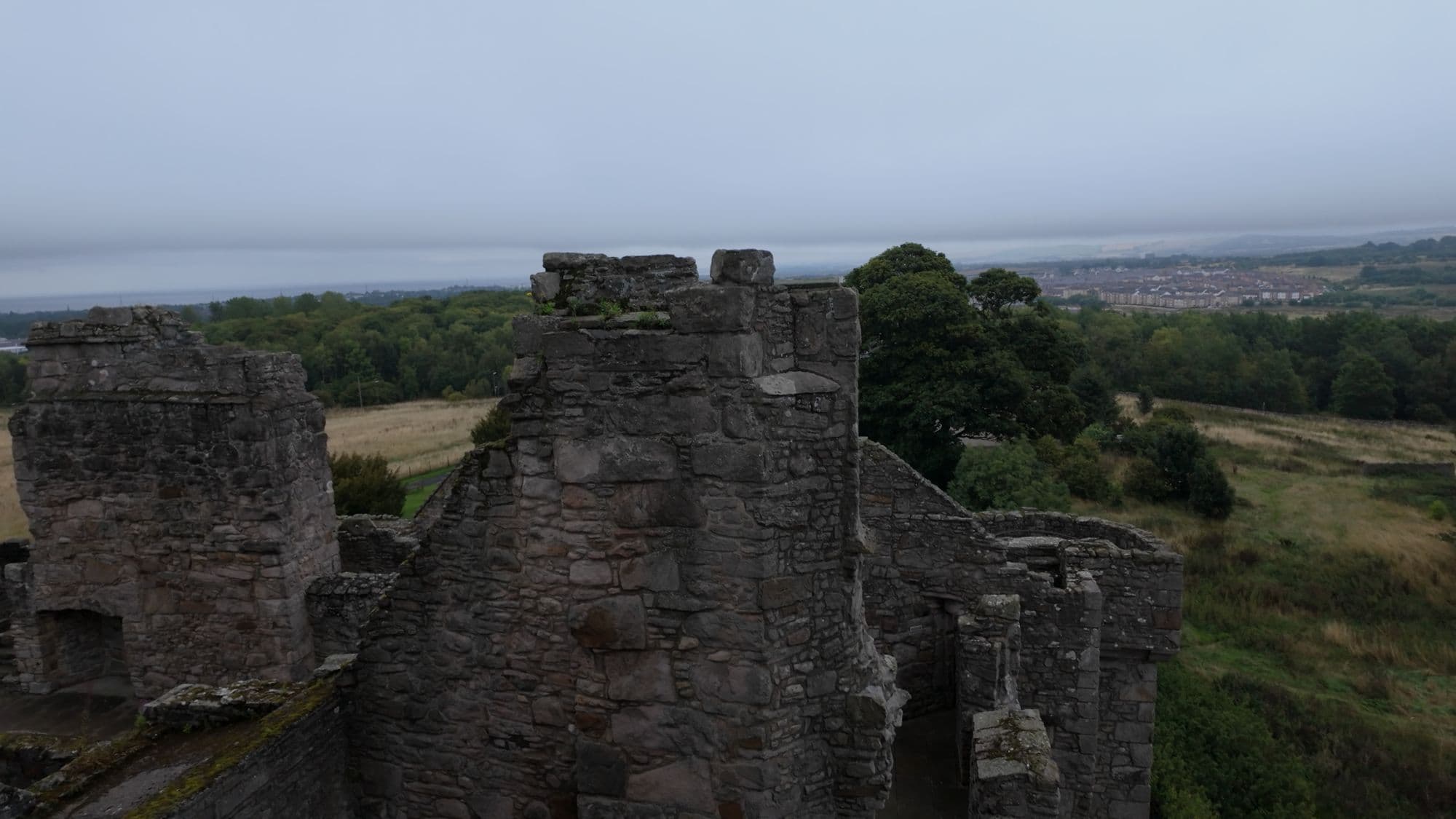
Ruined upper walls of the tower house from the roof, with Edinburgh's southern suburbs and the Firth of Forth beyond
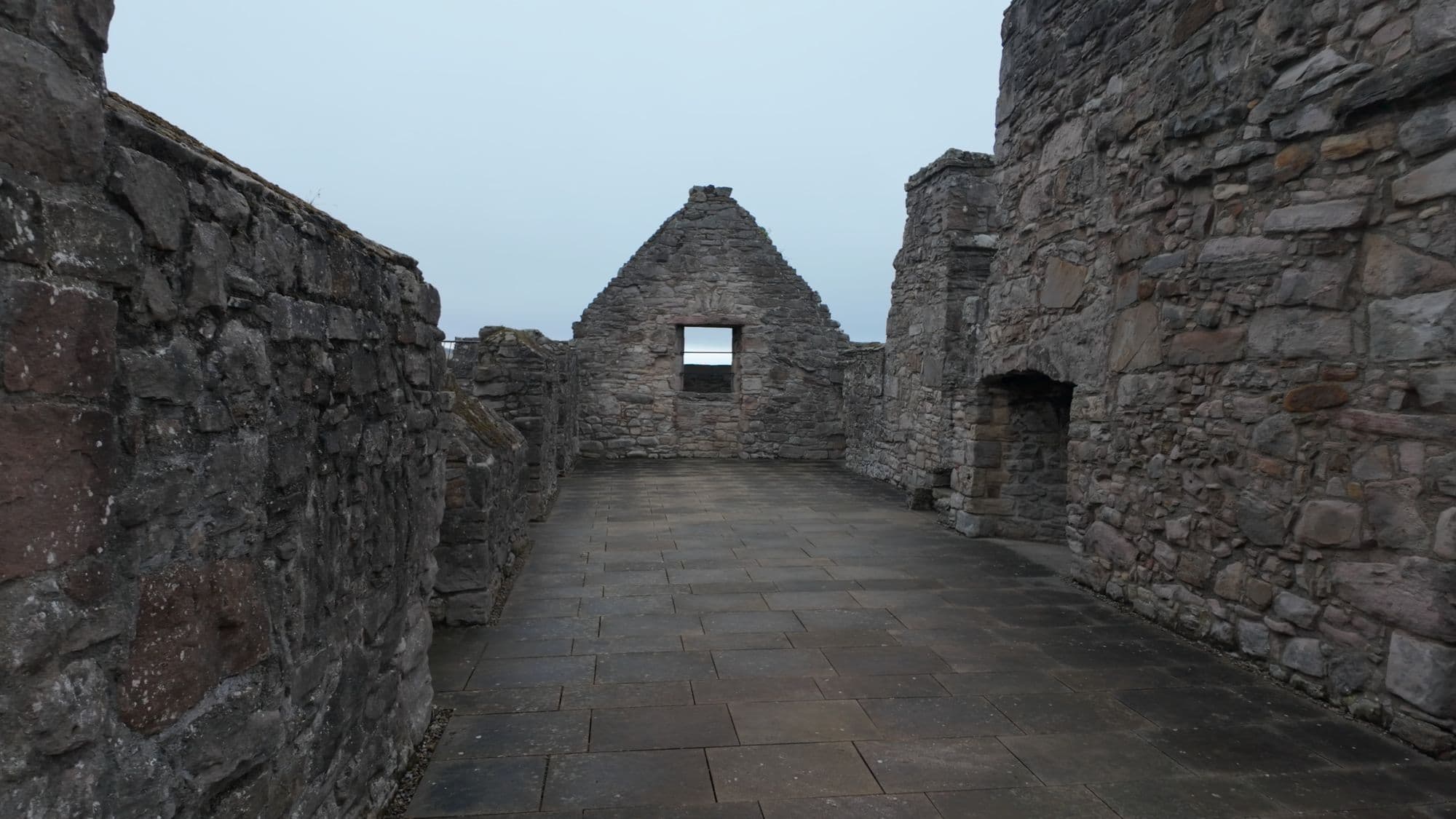
The paved rooftop walkway of the tower house, enclosed by stone parapets and a gabled end wall
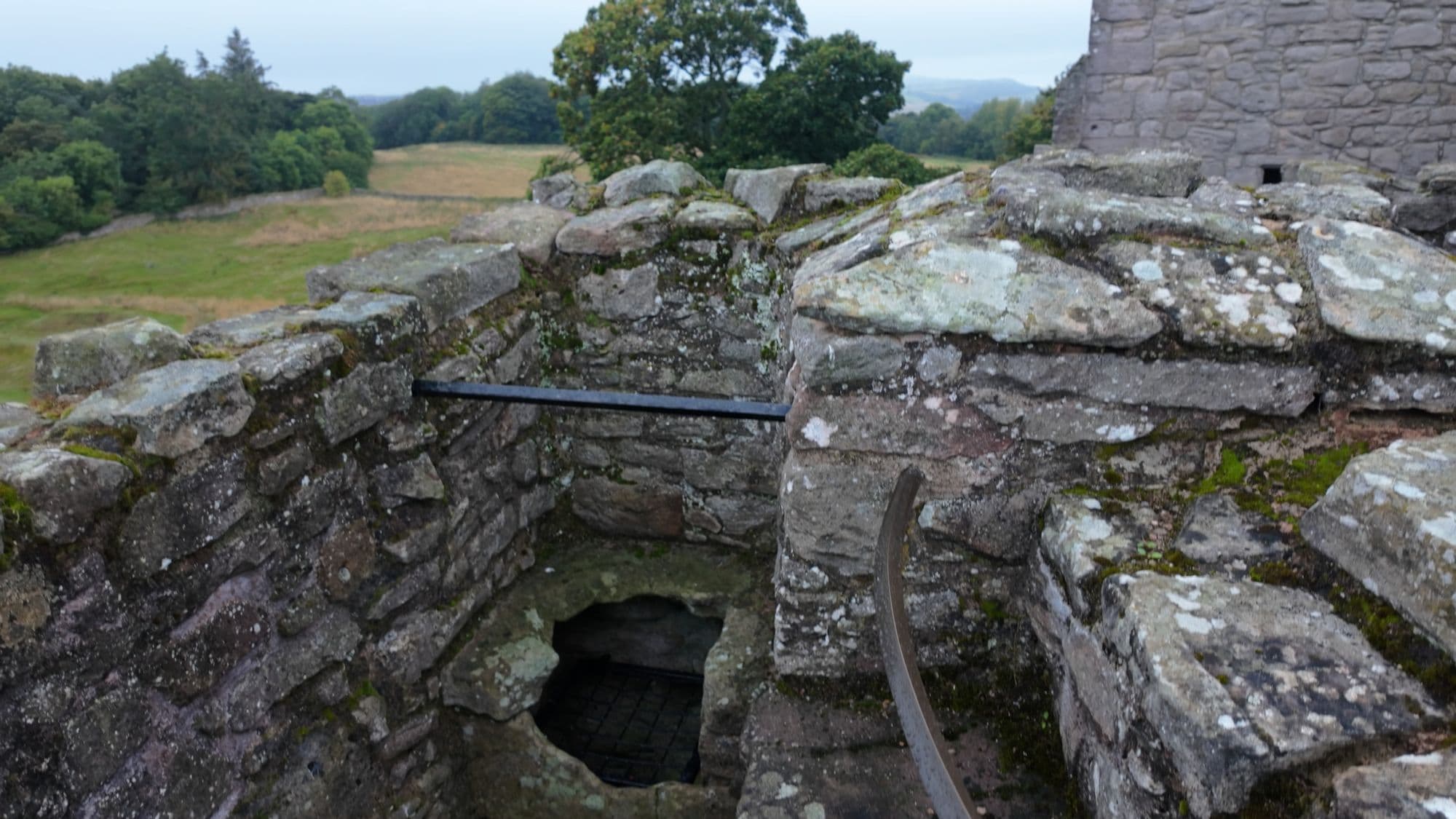
An open latrine shaft at the roof level, dropping straight down through the thickness of the wall

Tap any photo to enlarge

What Craigmillar Saw Before Mary

The Mary story is the famous one, but it was nowhere near the first bad thing to happen here.

In 1479, John Stewart, Earl of Mar, younger brother of King James III, was locked up at Craigmillar, accused of using witchcraft against the king. He died soon afterward in circumstances nobody has ever properly explained.

In 1517, the infant James V was moved here to keep him away from a plague outbreak in the city.

And on 8 May 1544, an English army under the Earl of Hertford burned it. This was the opening of a war later nicknamed the Rough Wooing. Henry VIII wanted the infant Mary, Queen of Scots married to his son Edward, the Scots backed out of the deal, and Henry's response was to send armies north to burn the Lowlands until they changed their minds. Hold onto that war, because it comes back twice more before this day is over.

November 1566

By the autumn of 1566, the Preston at Craigmillar was Sir Simon Preston, Provost of Edinburgh, which made him effectively the city's chief magistrate and one of Mary's loyal supporters.

On 20 November 1566, Mary, Queen of Scots arrived to recover from a serious illness. A month earlier, at Jedburgh, she had been sick enough that the people around her thought she was going to die. She was 23.

Her year had been brutal. In March, her husband Henry Stuart, Lord Darnley, had helped a group of nobles drag her private secretary, David Rizzio, out of her supper room at Holyrood and stab him 56 times. She was six months pregnant and in the room when it happened. In June she gave birth to her son, the future James VI, the same James who would later put the stonework around the Balm Well. By November, Darnley was a vain, drunk, ambitious man, and she couldn't trust him or get rid of him.

So Mary came to Craigmillar to convalesce, with a substantial household. While she was recovering, the men around her started talking about solutions.
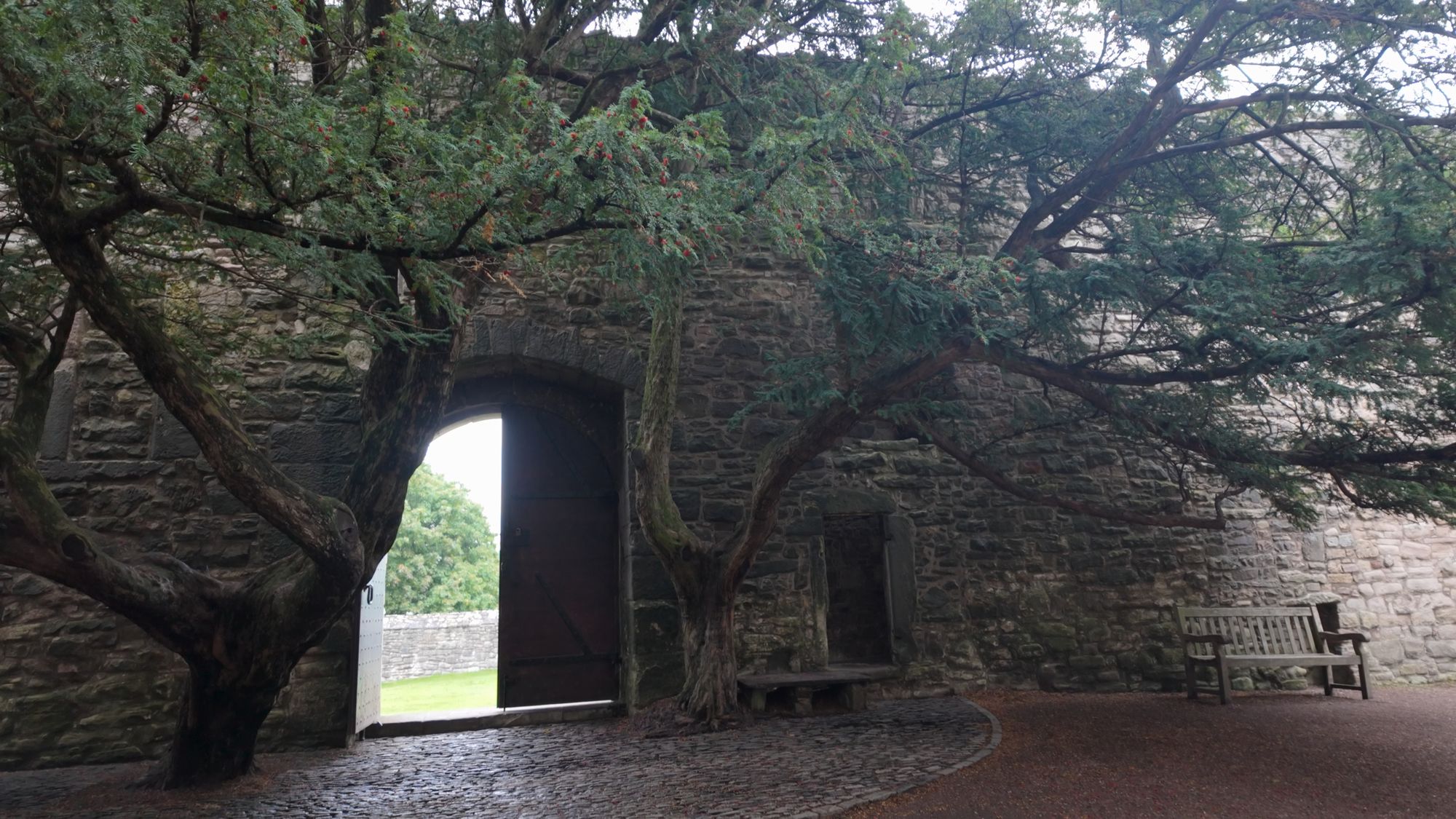
Craigmillar's inner courtyard, two old yew trees spreading over the cobbles and a doorway in the wall leading out

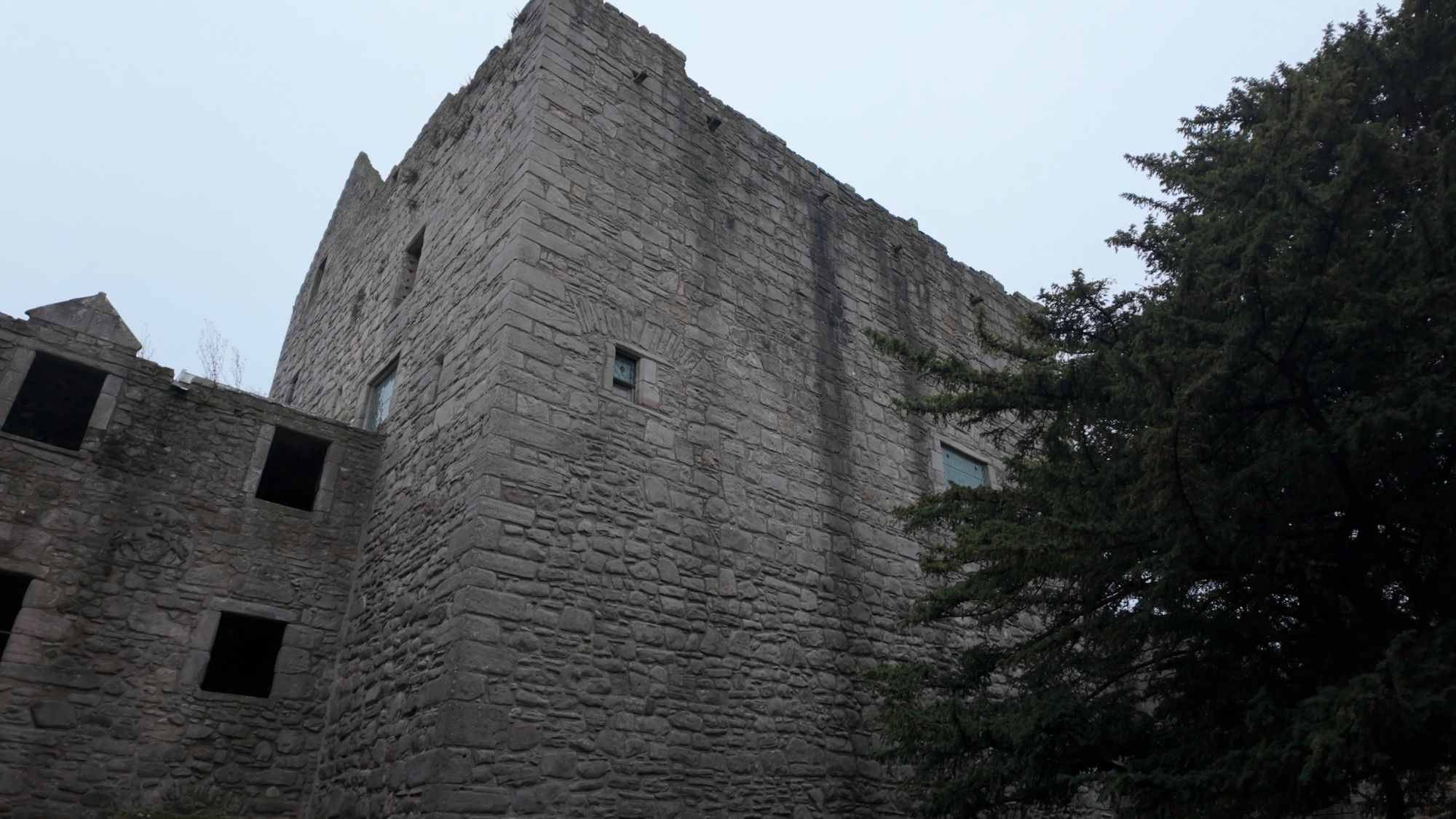
Looking up at the tower house from the inner courtyard, its sheer gray walls pierced by a few small windows

The Craigmillar Bond

The men involved were her leading nobles: the Earl of Bothwell, the Earl of Argyll, the Earl of Huntly, her half-brother the Earl of Moray, and her Secretary of State, William Maitland of Lethington.

The best account of what was said comes from a statement Huntly and Argyll made a couple of years later. According to them, the conversation started with divorce, and Mary was open to it on one condition: nothing could cast doubt on her son's legitimacy or damage her honour. That was a serious obstacle. Depending on how a divorce was obtained, it could suggest the marriage had never been valid, which would make the baby prince a bastard and hand every rival claimant an argument.

Maitland's answer was that the lords would find a way to free her from Darnley without any harm to her son, and that Moray, Protestant as he was, would "look through his fingers." In other words, he would see nothing and say nothing.

Somewhere in those conversations, "free her from him" stopped meaning divorce. Before Mary left on 7 December, a written bond was drawn up and signed, and it's been known ever since as the Craigmillar Bond. Its purpose was to remove Darnley.

The document itself doesn't survive. Historians still argue about exactly what it said and whose names were on it. The usual list is Maitland, Bothwell, Argyll and Huntly. And underneath all of it sits the question that has followed Mary for 450 years: did she know?

The account above was written by two men who badly needed to explain their own part in what happened next, so it can't be taken on faith. The most damning evidence against Mary, the so-called Casket Letters, was produced by her enemies after she'd been deposed, and their authenticity has been fought over ever since. The originals vanished in the 1580s. On balance, the evidence supports a fairly simple reading: she wanted out of the marriage, and she wasn't part of the plan to kill him.

Kirk o' Field

In January 1567, Darnley was in Glasgow, sick. It was officially smallpox, though there's been speculation about syphilis for centuries. Mary went to bring him back to Edinburgh. By the accounts we have, the idea was for him to recover at Craigmillar. He refused and picked a house just inside the city wall instead, the Old Provost's lodging at a place called Kirk o' Field. The site is now under the University of Edinburgh's Old College.

On the evening of 9 February, Mary visited him, then left to attend a wedding masque at Holyrood for one of her servants.

At around two in the morning on 10 February 1567, the house at Kirk o' Field blew up. Gunpowder had been packed into a room directly beneath Darnley's bedroom, and the blast was heard across the city.

Then came the detail that has kept this case alive for centuries. Darnley's body wasn't in the rubble. It was found in the orchard next door, along with his servant, William Taylor. He was wearing only his nightshirt, with a cloak, a dagger and a chair lying near him, and there wasn't a mark on him from the explosion. He had been smothered or strangled. The sources don't agree on which, but they do agree he didn't die in the blast.

Somewhere in that night he heard something, got himself out of the building, and was caught in the garden by someone who finished the job by hand. He was twenty years old.

Nobody was ever meaningfully punished for it. On 12 April, Bothwell stood trial and was acquitted, with his own armed men filling the town and Darnley's father, who had brought the charge, not even in the room. On 15 May, three months after the murder, he married Mary.

That was the end of her. Within a month, her own nobles had raised an army against the couple, and on 15 June 1567, at Carberry Hill, she surrendered to them. They brought her back into Edinburgh as a prisoner, with crowds in the street screaming for her to be burned.

This is where Simon Preston comes back. The house she was held in overnight, with that crowd outside, was his town house on the High Street, the Black Turnpike. The man who'd hosted her recovery at Craigmillar seven months earlier was now her jailer for the night. The next day she was taken to Lochleven Castle, and in July she was forced to abdicate in favor of her thirteen-month-old son.

She escaped, lost one last battle, fled to England expecting help from her cousin Elizabeth, and spent the next eighteen-plus years as her prisoner. In the end she lost her head as well. That's a story for another castle at the end of this trip.

The Skeleton in the Wall

There's one last piece of Craigmillar worth telling, and it has nothing to do with Mary.

In 1813, a sealed space in the lower part of the castle was opened up, and inside was a human skeleton. As the story was recorded, it had been walled up standing upright.

No inscription, no record, no story attached. Nobody knows who it was, when it happened, or what they'd done. People have tried to pin it on the Earl of Mar, since he's the castle's best-known prisoner with an unexplained death, but nothing actually links the two beyond that. It's just a person sealed into a wall in the dark, for what may have been centuries, until somebody opened it again.
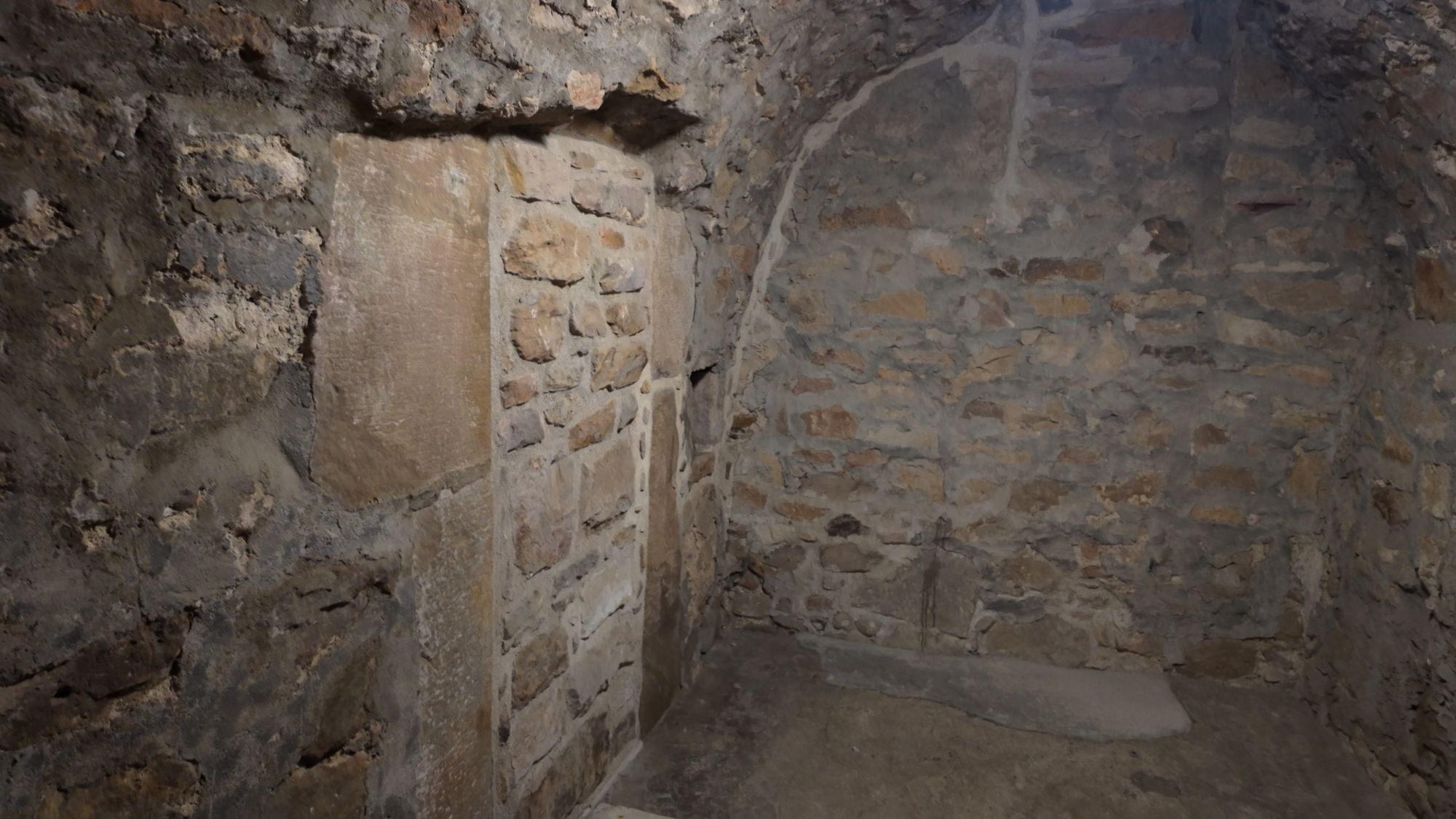
A section of patched, newer-looking stonework set into an older wall in Craigmillar's lower levels

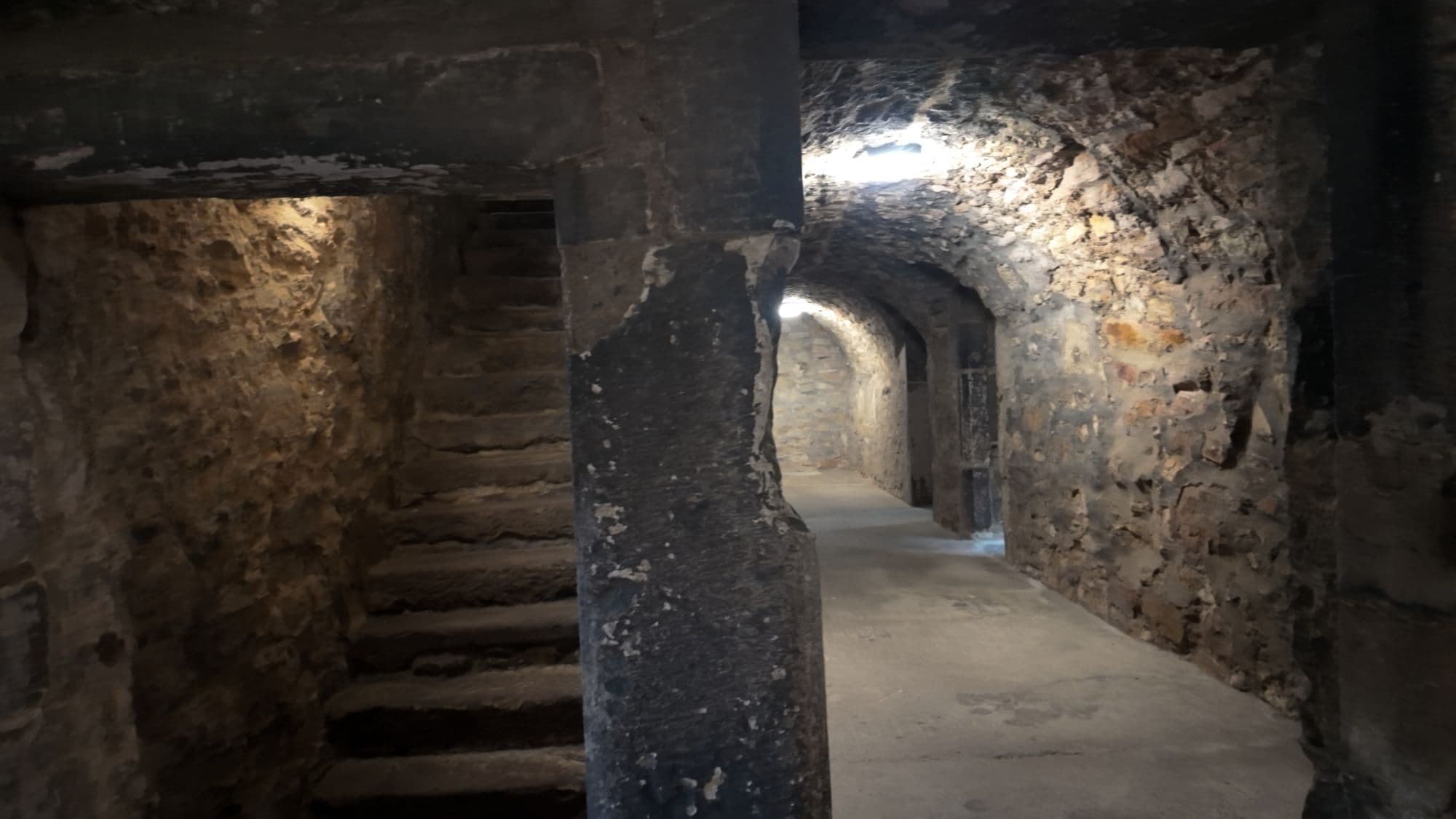
A stone stair and a lit, vaulted passage running through the lower levels of the castle
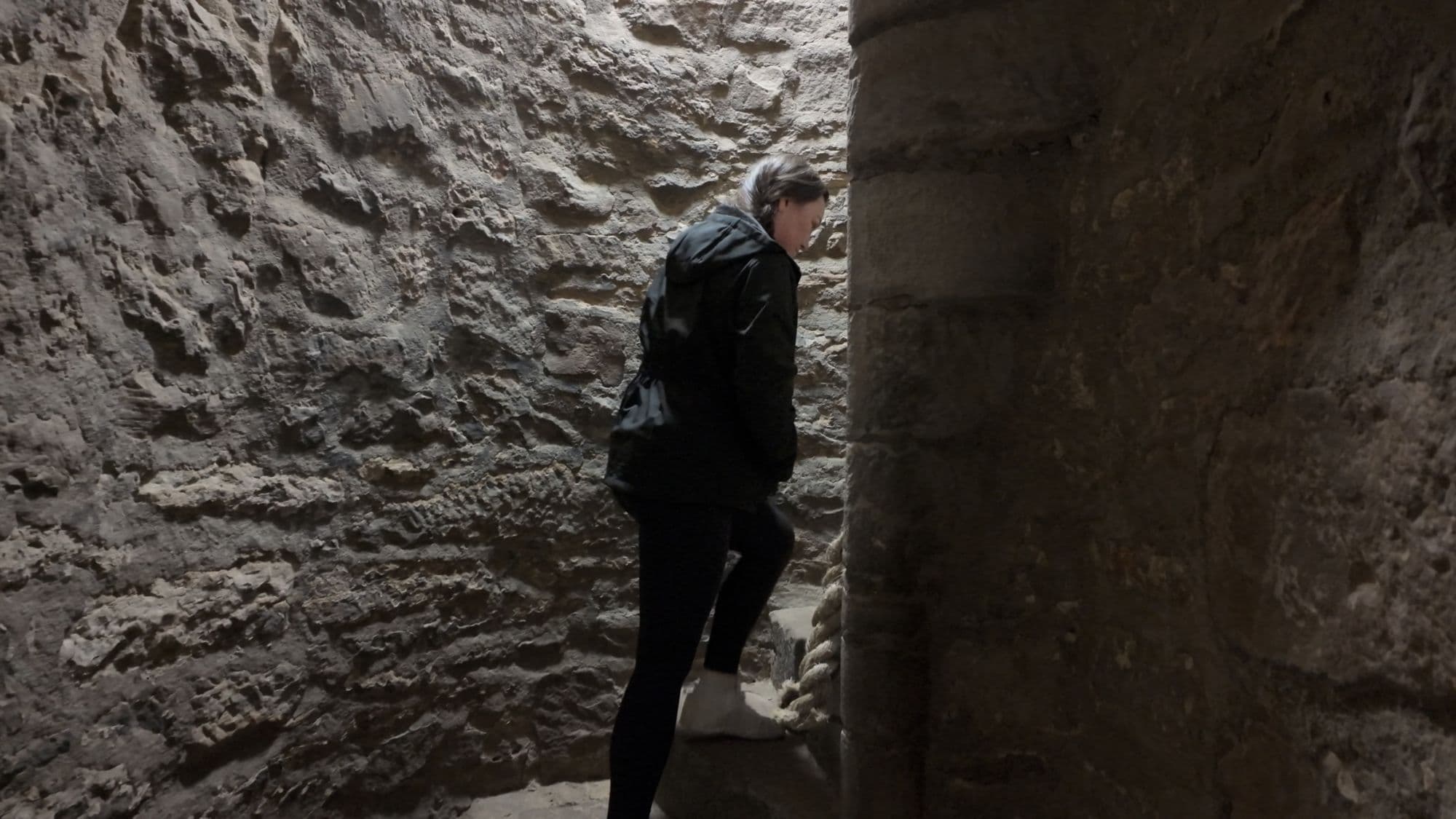
My sister climbing a steep, narrow stair cut through the rock inside the castle

Tap any photo to enlarge

After the Prestons

The Prestons held Craigmillar until 1660, when it was sold to Sir John Gilmour, a royalist lawyer who became Lord President of the Court of Session, the head of Scotland's highest civil court. The Gilmours modernized the west range, and then, early in the 1700s, did what a lot of landed families did: they moved into a comfortable modern house nearby and left the castle to the weather.

By 1775 it was a ruin, and by the 1800s it had become exactly the kind of romantic ruin the Victorians came out to sketch. A plan in 1842 to restore it for Queen Victoria came to nothing. She finally visited in 1886. It came into state care in 1946, and Historic Environment Scotland looks after it now.

It also has a habit of turning up on television. In season three of Outlander, Craigmillar stood in for Ardsmuir Prison, and the courtyard and stairways needed almost no dressing to pass for an 18th-century military jail.
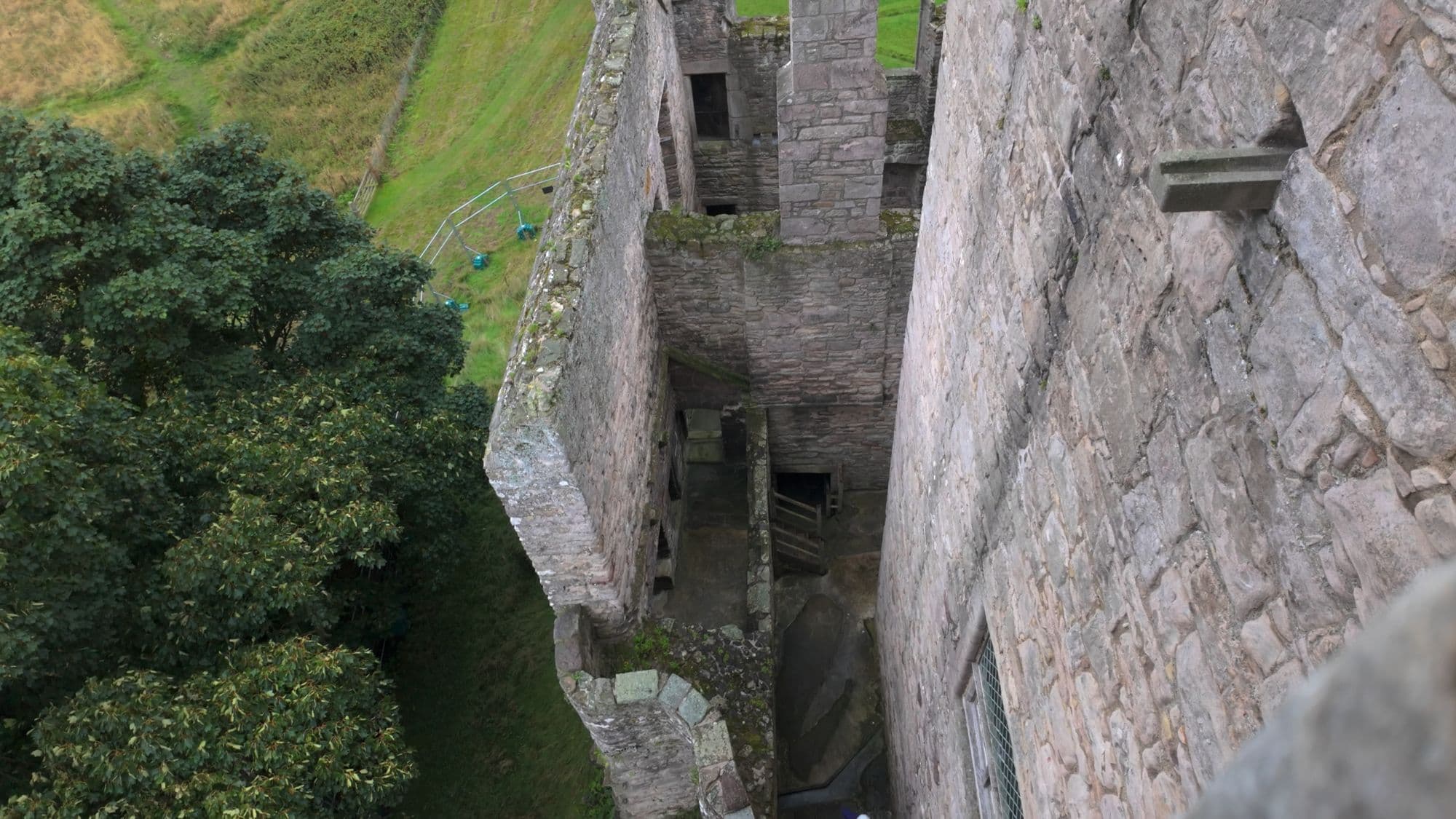
Looking straight down from the tower into the roofless ranges below, the castle walls dropping away toward the grass
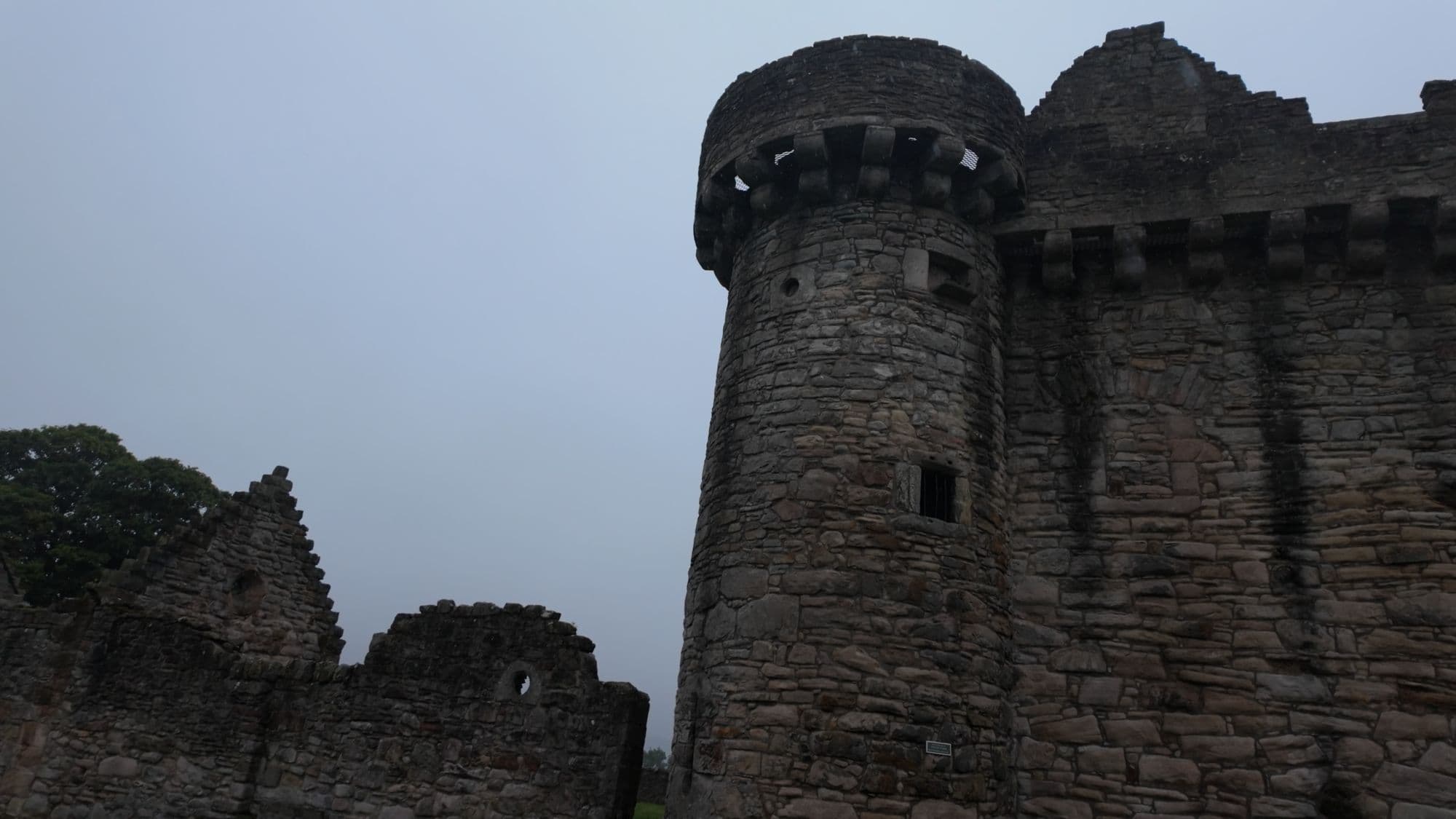
A round corner tower on Craigmillar's curtain wall, dark against an overcast sky
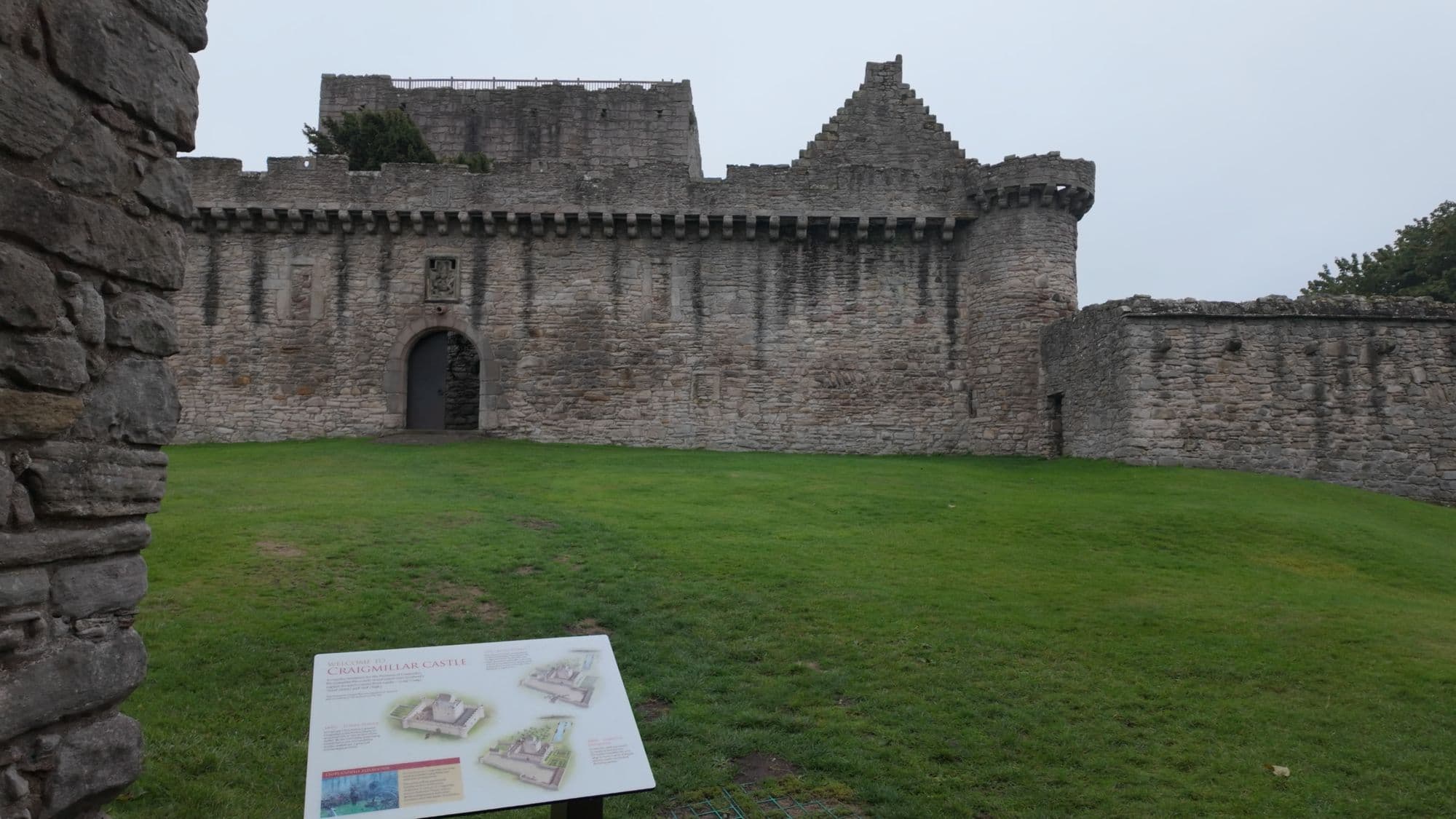
The Historic Environment Scotland information board on the lawn in front of the castle's curtain wall

Tap any photo to enlarge

Rosslyn Chapel, Minus the Grail

Seven miles south of Edinburgh, in the village of Roslin, is Rosslyn Chapel. The man who paid for it was an earl who held his title from the King of Norway.

William Sinclair was Earl of Orkney (later Earl of Caithness, too), and in the 1400s Orkney still belonged to the Norwegian crown. The chapel's founding charter dates to 1446, and work on the building was underway by the 1450s. He meant it to be a much larger cross-shaped collegiate church. What got finished was essentially the choir at the east end, which is why the building looks slightly too tall for its length. The rest was never built.
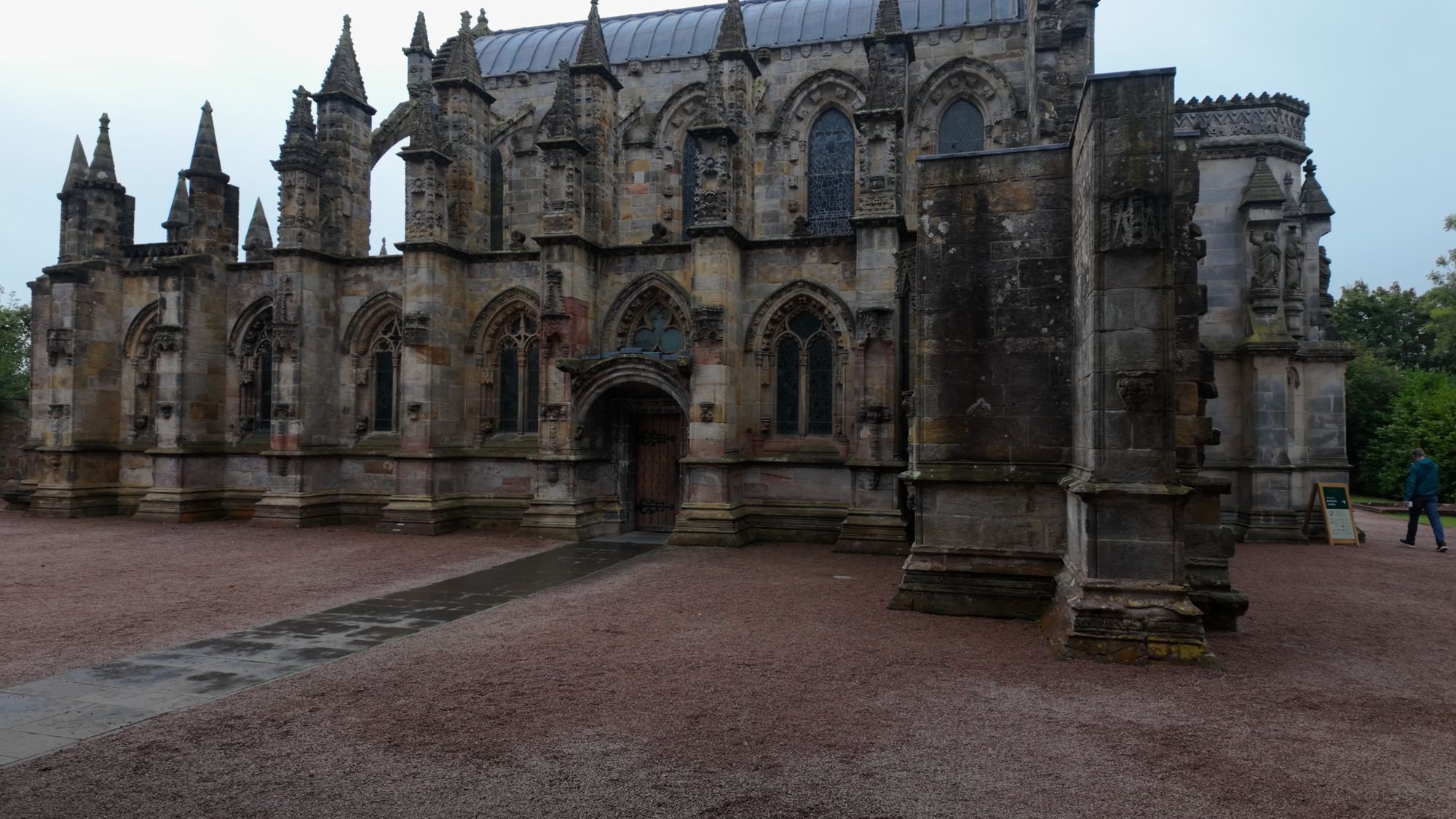
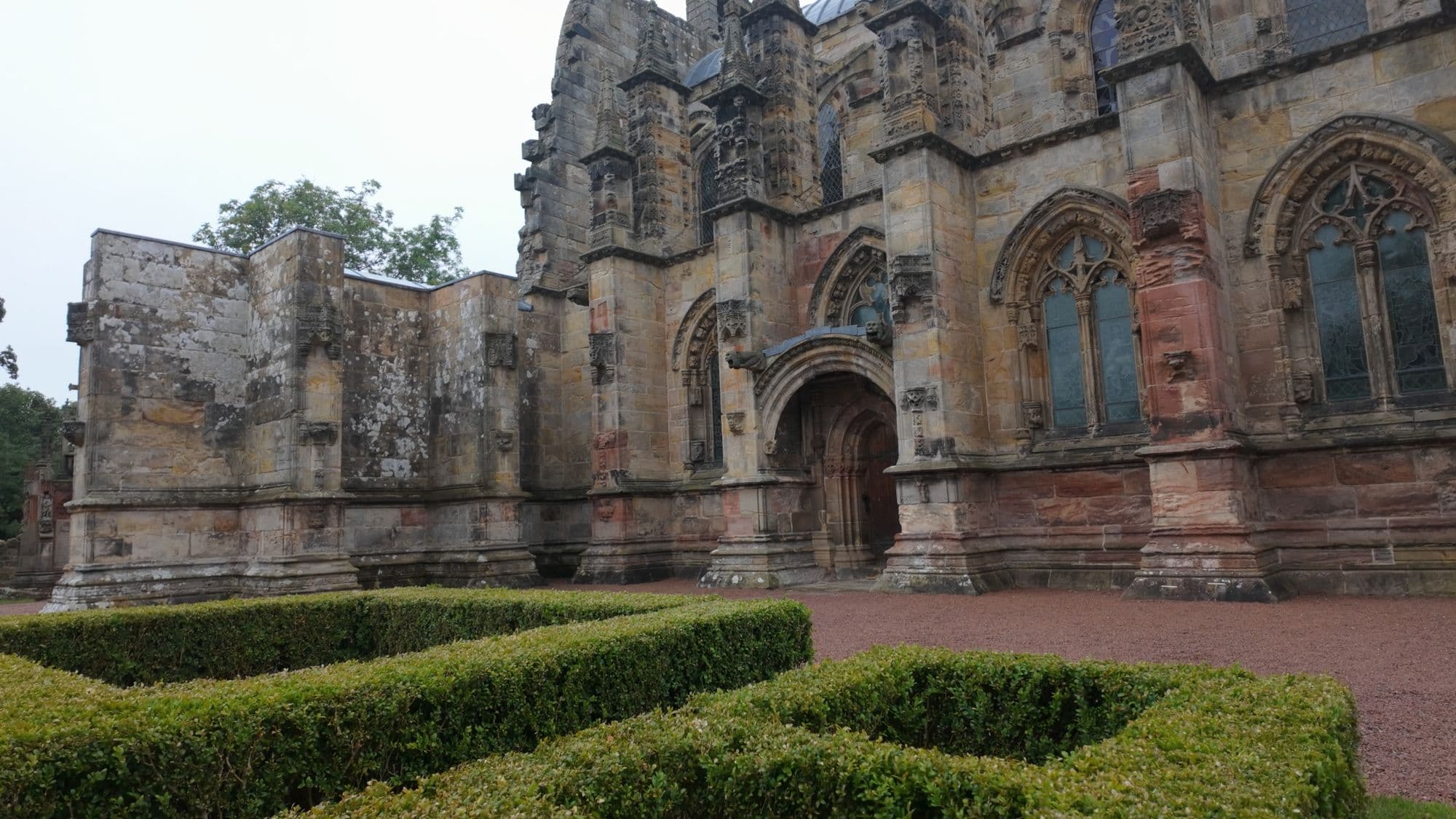
Rosslyn Chapel from the front: a forest of carved pinnacles and pointed windows along the walls

The outside is crowded with pinnacles, carved figures and grotesques. Photography and filming haven't been allowed inside since 2008, so what I could show you was the outside and the grounds. Inside, almost every surface is carved:

  • More than 110 green men. Faces with vines growing out of their mouths, usually read as a symbol of rebirth and the natural world.
  • Angels playing instruments.
  • A dance of death. Skeletons leading the living away by the hand, which is very much my kind of church decoration.
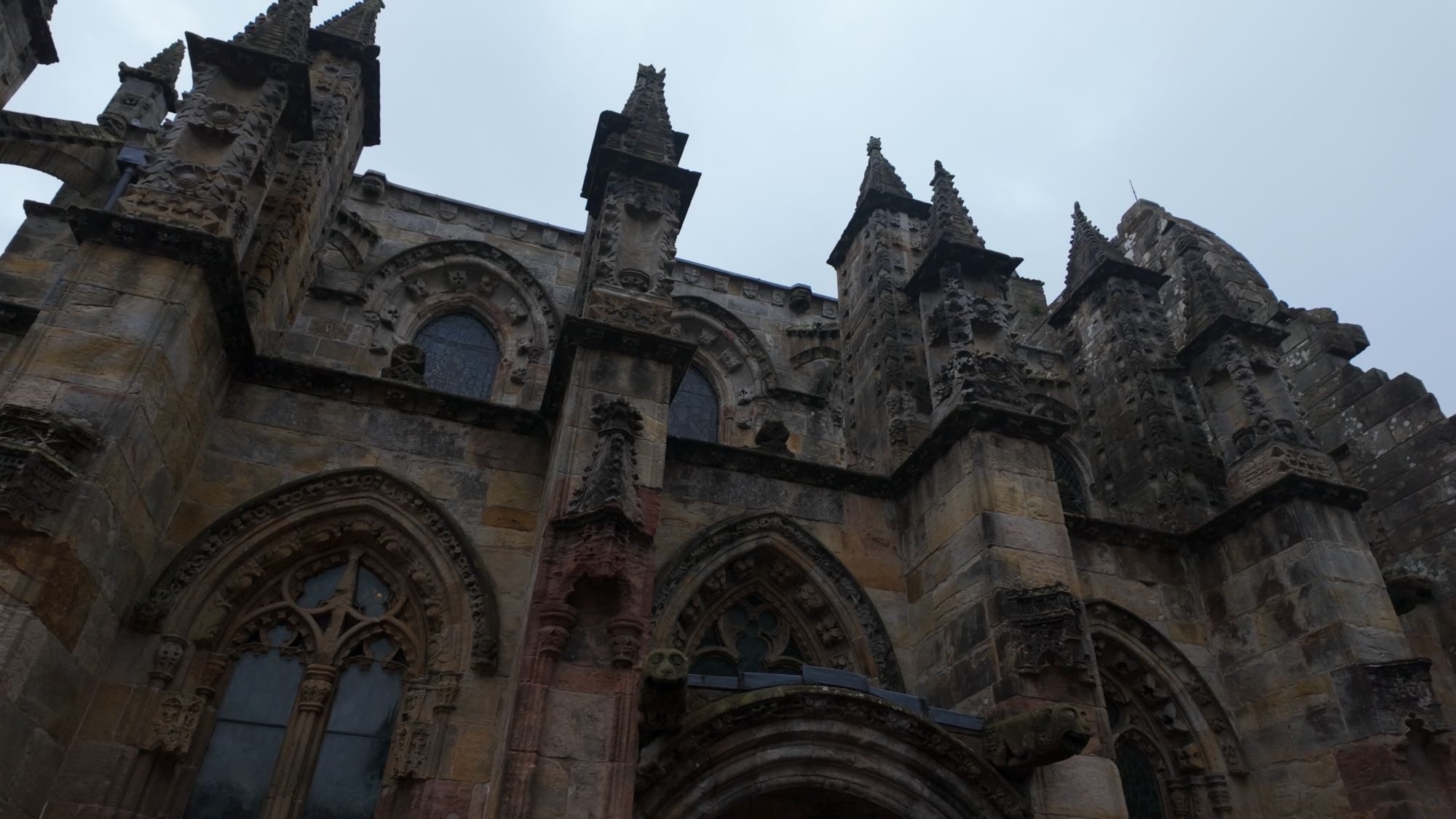
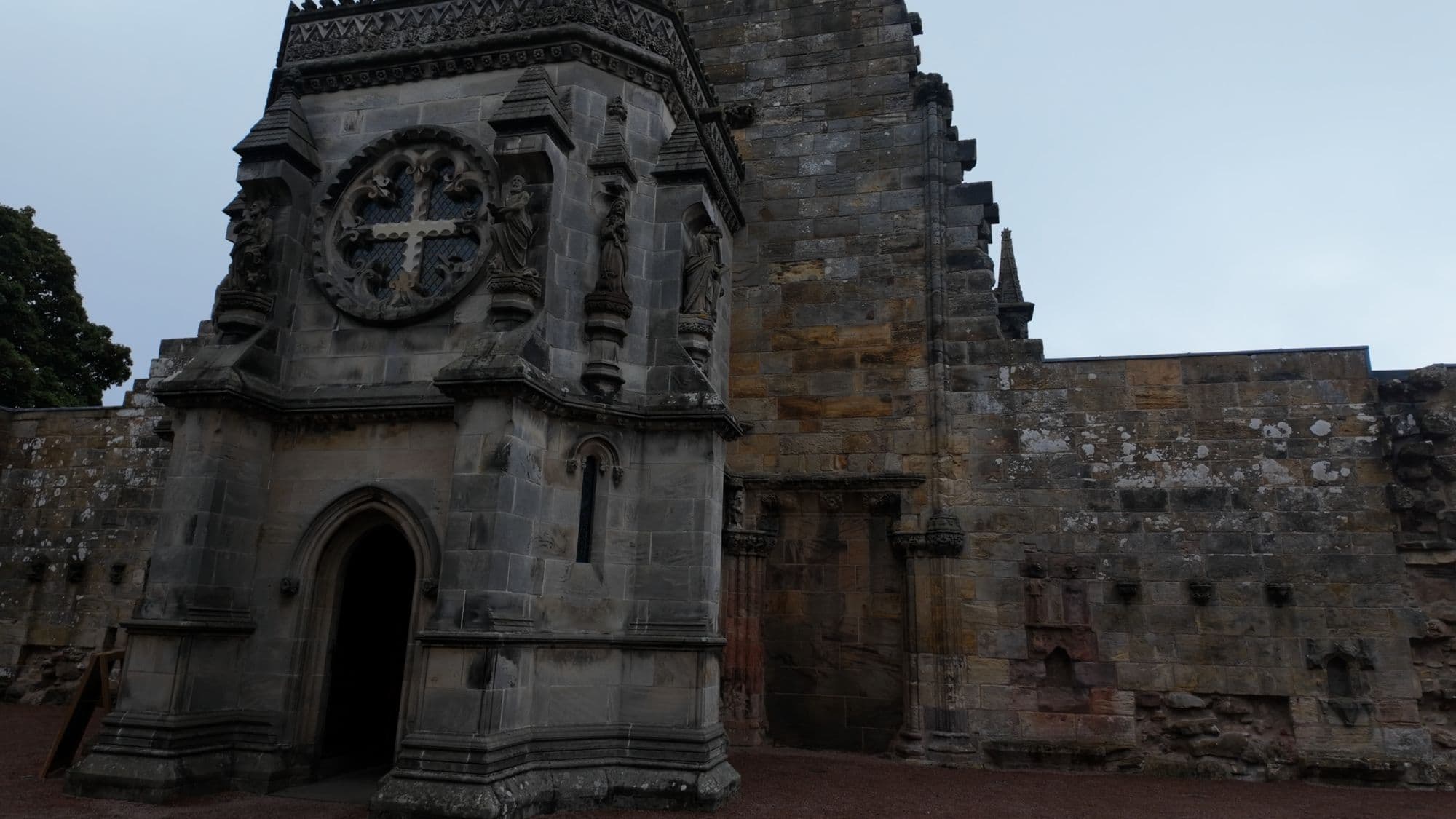
The most famous thing in the building is the Apprentice Pillar, a column wrapped in spiraling bands of carved stone. The story goes that the master mason traveled abroad to study the design before he'd attempt it. His apprentice carved it while he was gone, and when the master got back and saw it, he killed the apprentice with a mallet. As punishment, the master's own face was carved into the opposite corner of the chapel, so he'd stare at the pillar forever. It's a legend. There's no record of the killing. But there is a carved head in that corner, and the guides will point it out.

The crowded upper walls of Rosslyn Chapel — flying buttresses, pinnacles and carved niches packed against each other

After the Reformation in 1560, Catholic worship stopped, and in 1592 the altars were torn out. By the 1800s the chapel was close to forgotten. Queen Victoria visited in 1842 and said it should be preserved, the Earl of Rosslyn had it restored, and it was rededicated in 1862.

Then in 2003, Dan Brown put it at the climax of The Da Vinci Code and tied it to the Holy Grail and the Knights Templar. Visitor numbers climbed to close to 159,000 a year at the peak, around the time of the film. That money helped pay for a huge conservation program, roughly 1997 to 2013, during which the whole roof sat under a steel canopy for fourteen years while the stone dried out.

There's no evidence the Templars hid anything here. The order had been suppressed more than a century before the first stone went down, and the chapel's own guides will tell you so. The same goes for the claim that some of the carvings show American corn decades before Columbus. The scholarly view is that it's a coincidental resemblance to ordinary plant carving. The real building doesn't need any of it.

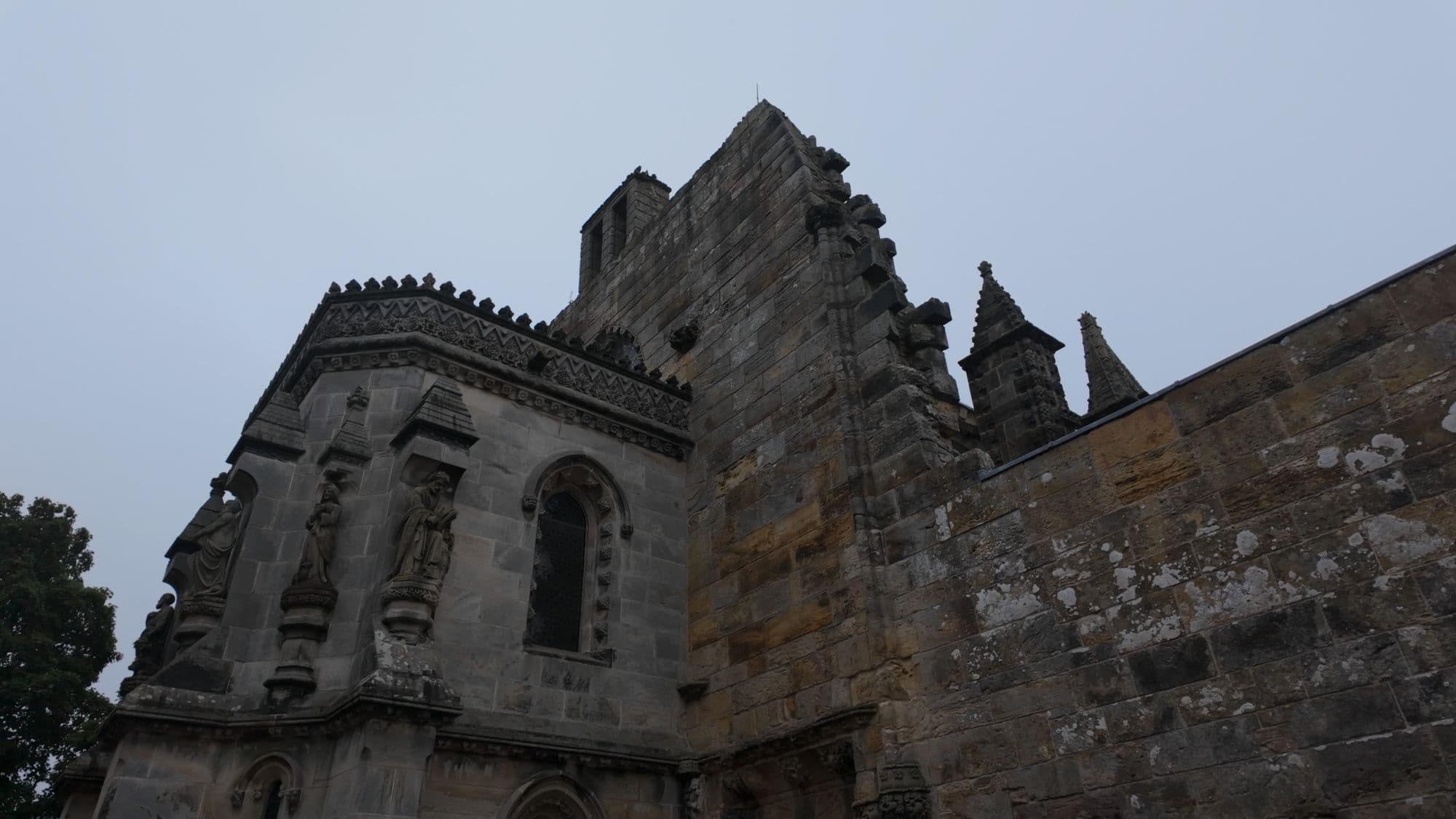
The west end of Rosslyn Chapel, where the unbuilt nave was meant to continue, with its carved rose window
The chapel's tall, blunt west wall — the point where construction simply stopped
The chapel's red-and-gray sandstone side wall behind clipped box hedges

Tap any photo to enlarge

Sinclair's earldom didn't last as long as his chapel. In 1468, Orkney was handed to Scotland as security on the dowry of Margaret of Denmark, who was marrying James III. The dowry was never paid, and Orkney never went back. Two years later, the king had Sinclair give up the title of Earl of Orkney in exchange for Ravenscraig Castle in Fife.

Rosslyn Castle

Behind the chapel, a narrow lane drops down into the glen, past a couple of walled graveyards, to the castle the Sinclairs actually lived in.

Rosslyn Castle sits on a rock spur above the River North Esk, reached by a high bridge over the gorge, and the setting does most of the work. It probably dates to the late 1300s or early 1400s; the sources argue about it. It stands close to the site of the Battle of Roslin in 1303, when a Scottish force beat a much larger English army in one of the more lopsided results of the Wars of Independence.
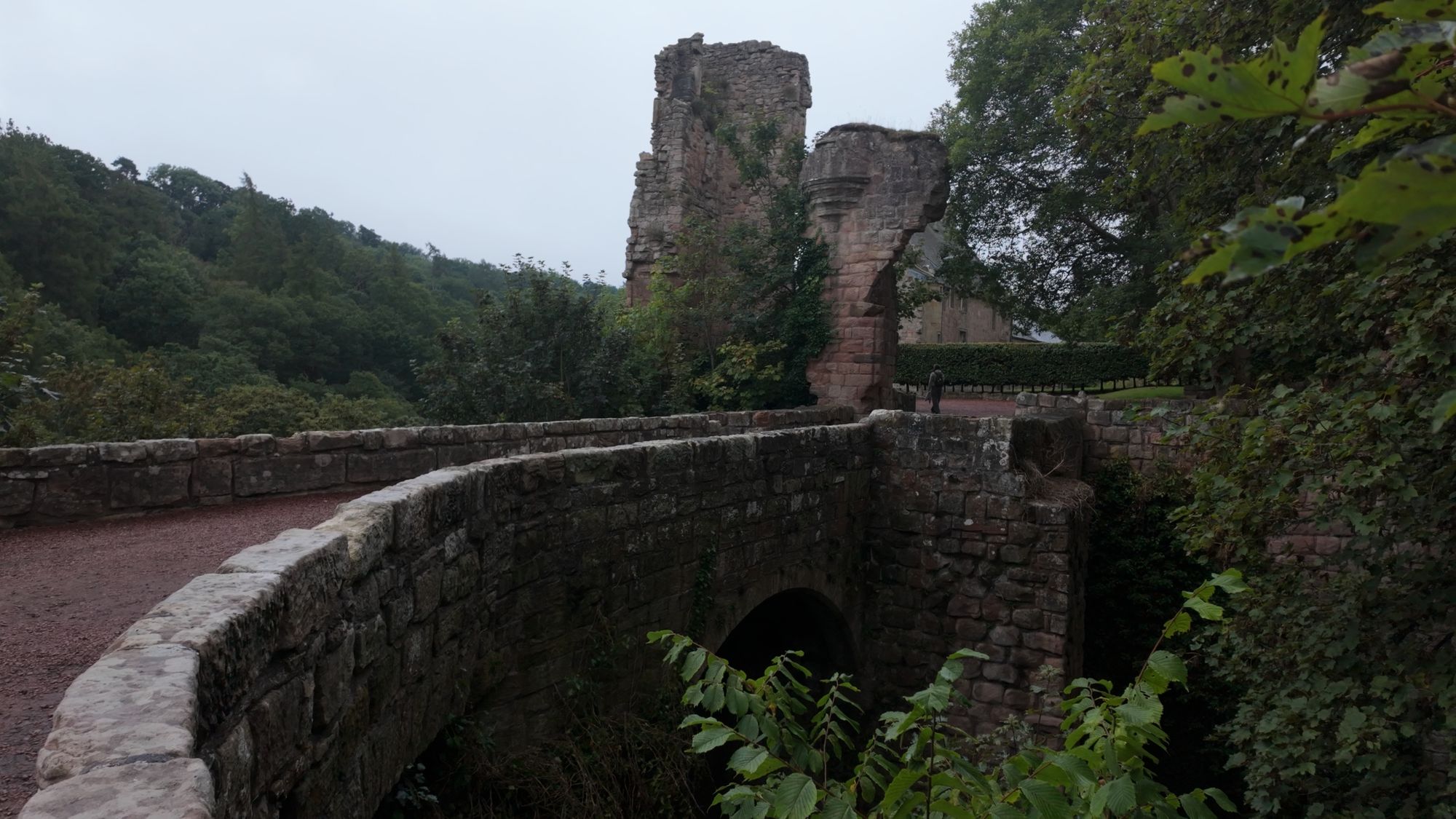
The high stone bridge over the gorge to Rosslyn Castle, a ruined tower fragment standing on the far side among the trees

It has been wrecked on a schedule. The Earl of Hertford burned it in 1544, on the same campaign that burned Craigmillar. It was rebuilt, then General Monck, Cromwell's commander in Scotland, battered it with artillery in 1650. A mob finished off more of it in 1688.

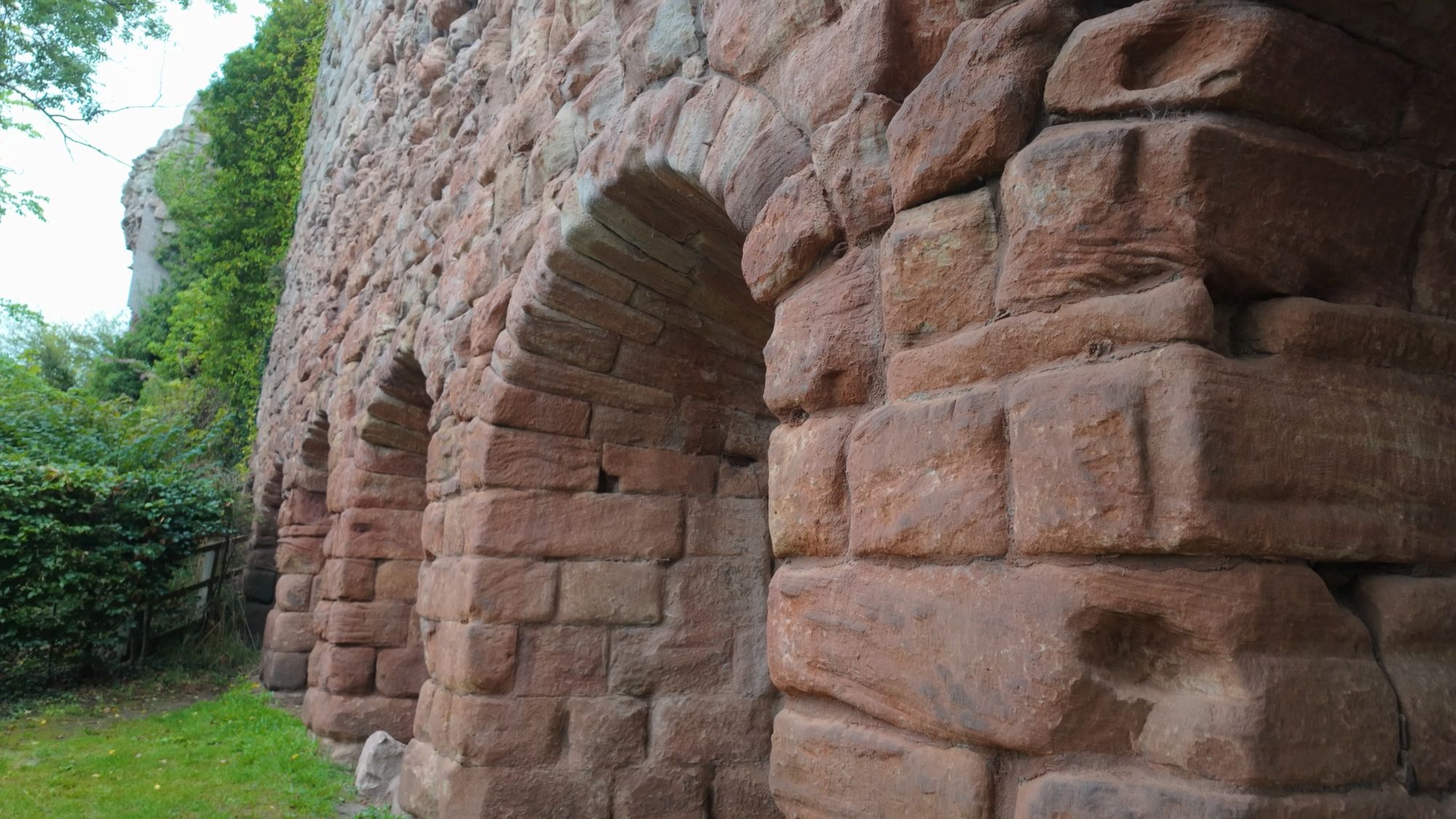
What's left is a ruin on top and something better underneath. The east range was cut down into the rock, three floors of vaulted rooms stacked into the cliff, with the kitchen at the bottom. That range is still roofed, still owned by the Sinclairs' descendants, the Earls of Rosslyn, and leased out through the Landmark Trust as a holiday rental. You can sleep in it.

Massive red sandstone arches in the lower walls of Rosslyn Castle, built down into the rock

Haddington: St Martin's Kirk

From Rosslyn it's a long drive east out of the city and into East Lothian, which is farm country. On the edge of Haddington, about seventeen miles east of Edinburgh, a roofless church stands on its own in a field.
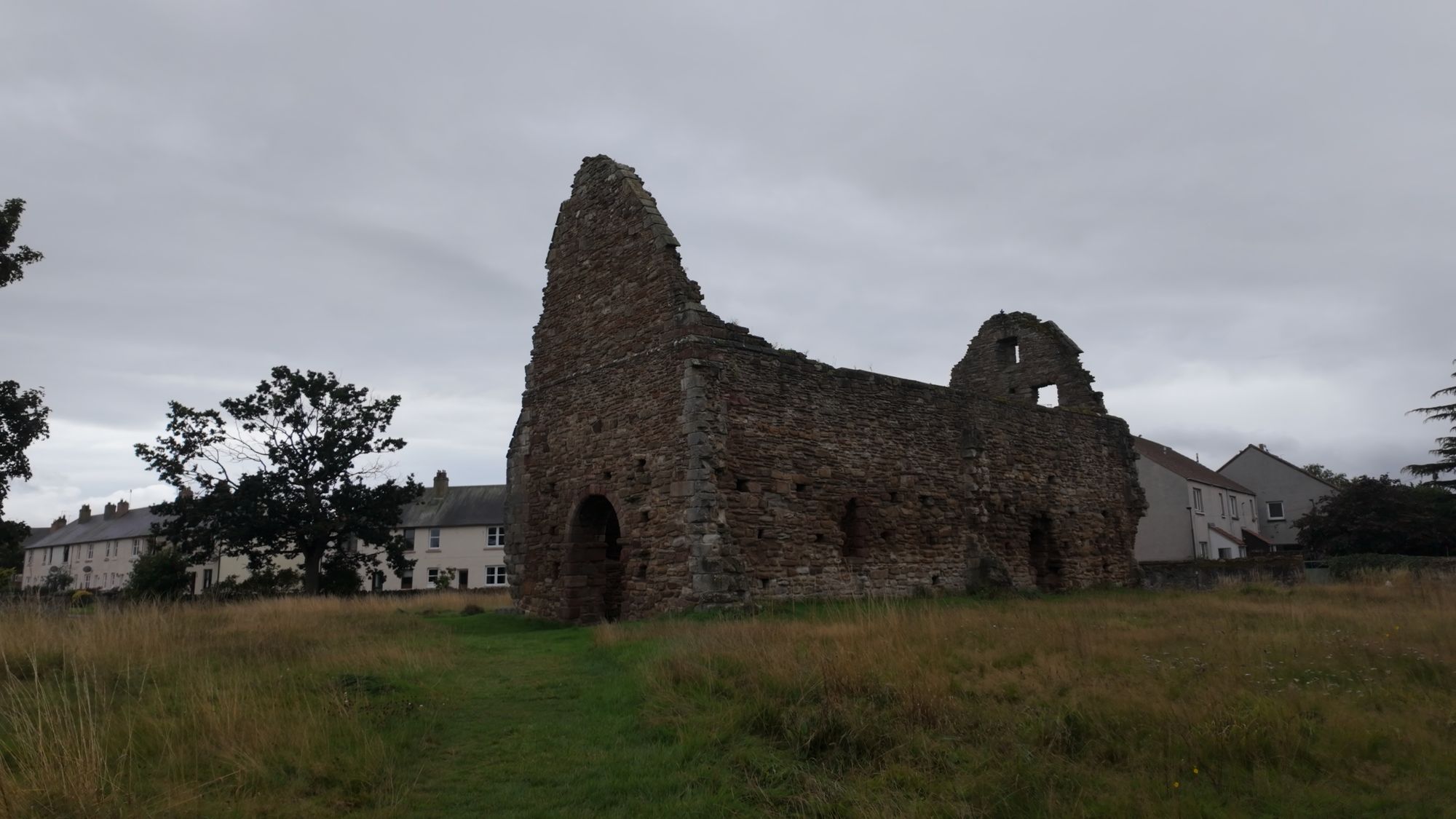
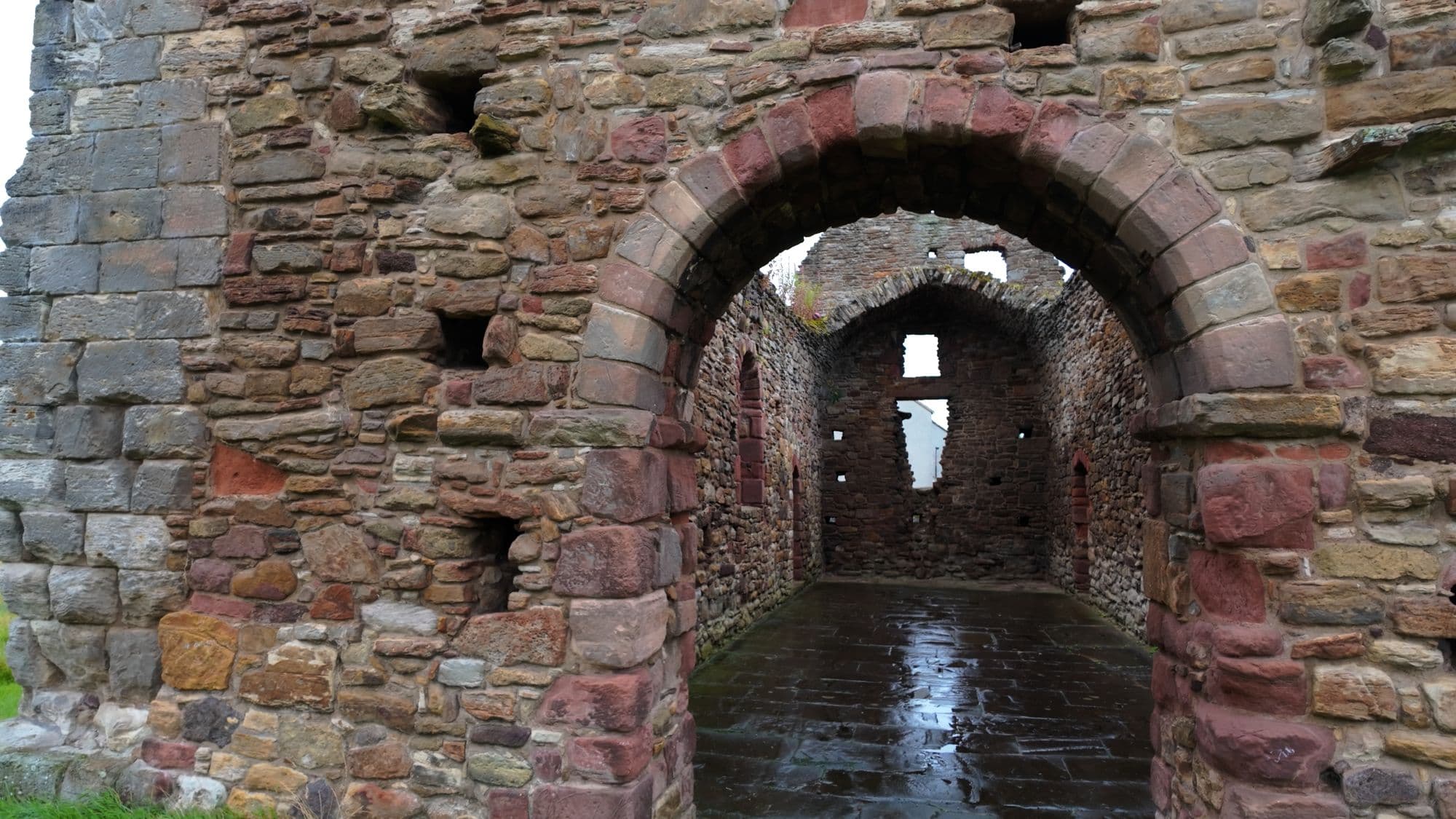
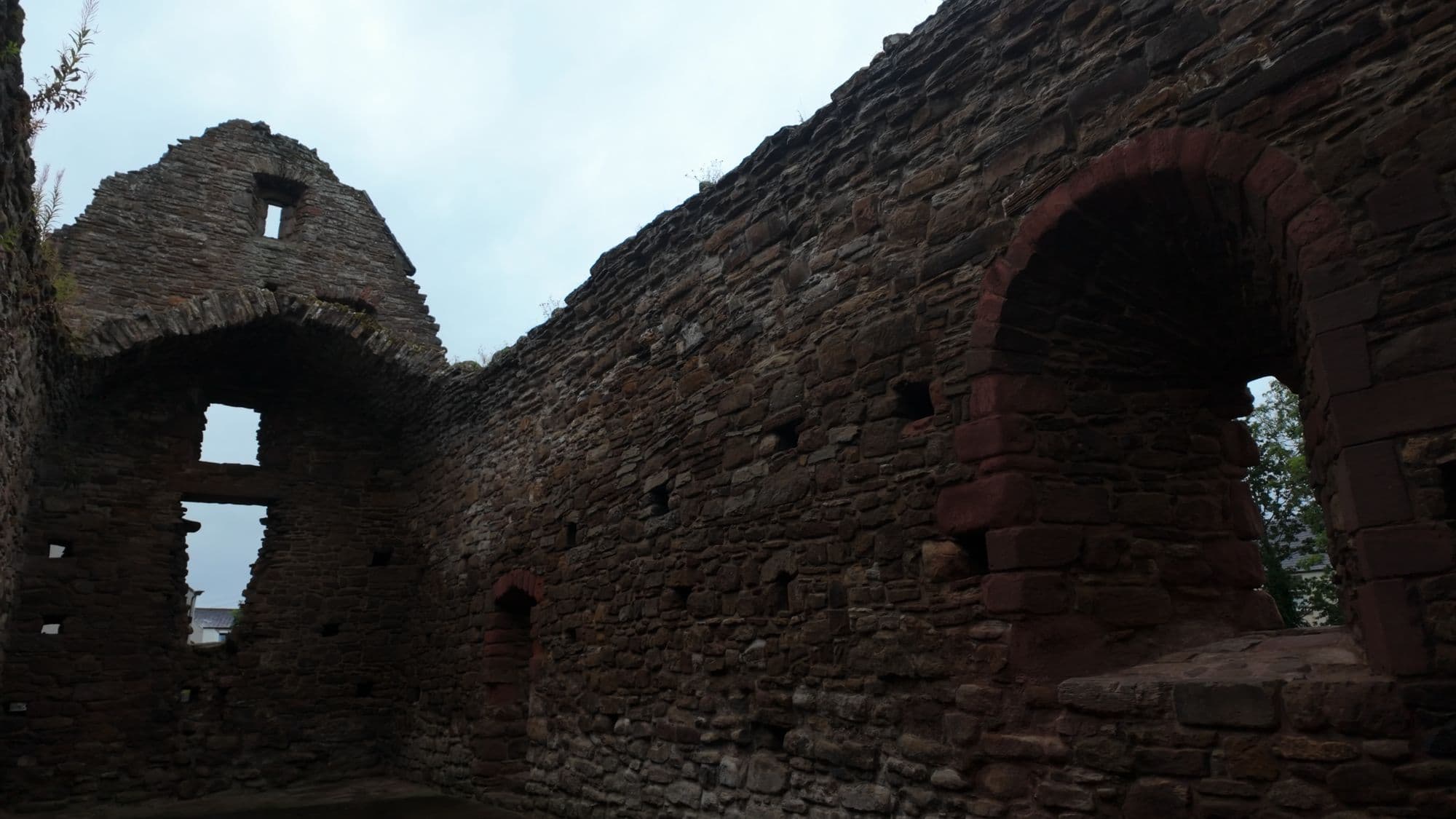
St Martin's Kirk standing roofless and alone in a grassy field on the edge of Haddington

This is St Martin's Kirk, and it's one of the oldest surviving buildings in this part of Scotland. The nave goes back to the 1100s, when Haddington was one of the most important towns in the kingdom: a royal burgh with a busy market, close enough to Edinburgh to matter and close enough to England to be burned, repeatedly.

The kirk was tied to the Cistercian nunnery of St Mary, about a kilometer east. The land around here had been granted out by Countess Ada, mother of King William the Lion, and the road from town to the nunnery was the Nungait, which is how the neighborhood got its name of Nungate. The stonework still shows where the building was altered and vaulted over the centuries. The Reformation probably took the chancel. Eight hundred years of weather took everything else. Now it's a husk: no roof, no congregation.

The nunnery is gone completely, but it had its moment, and it's the Rough Wooing again.

By the summer of 1548, four years into the war that burned Craigmillar and Rosslyn, an English garrison was holding Haddington itself, and a French army had landed to help drive them out. On 7 July 1548, Scotland's leaders met at the nunnery and agreed the Treaty of Haddington: five-year-old Mary, Queen of Scots would marry the heir to the French throne instead of the English one.

Within a month she was on a ship out of Dumbarton. She didn't come home for thirteen years. When she did, it was as a widow, and the clock was already running toward Craigmillar.

Through a round arch into the roofless nave of St Martin's Kirk, a mix of red and gray stone and a wet stone floor
Inside St Martin's: the gable end and a big blocked arch, open to the sky
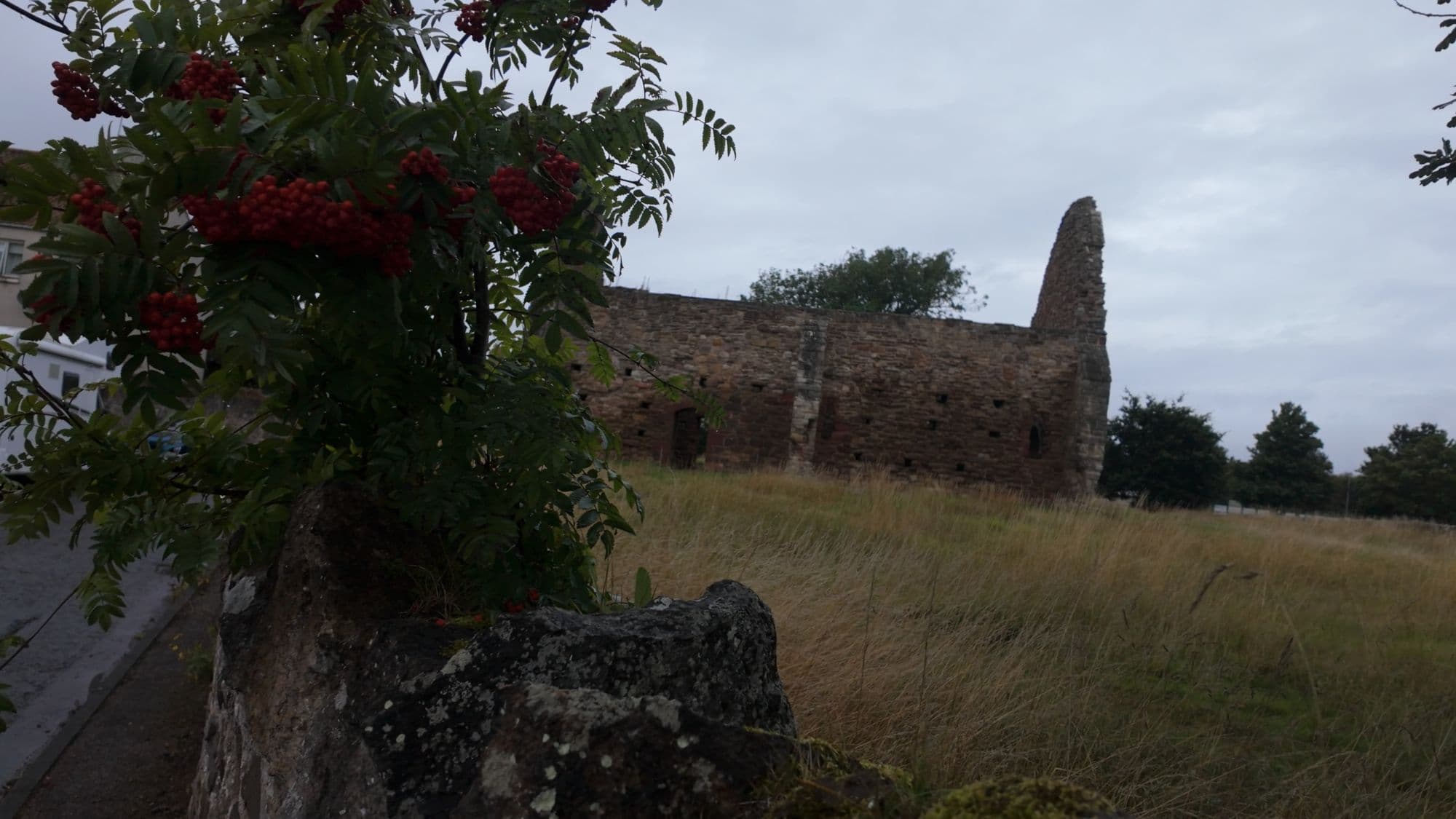
St Martin's Kirk across the long grass, seen past a rowan tree heavy with red berries

Tap any photo to enlarge

Haddington also produced the man who did more than anyone to end the world that built this church. John Knox was born here around 1514, in Nungate, and Historic Environment Scotland suggests he may have attended St Martin's as a boy. The Reformation he led went on to strip and empty churches all over Scotland, which is a big part of why so many of the churches on this trip have no roofs.

Phantassie Doocot: A Pantry That Refilled Itself

A few miles east, near the village of East Linton, there's a beehive-shaped stone building that worked as the 16th-century version of a meat locker.
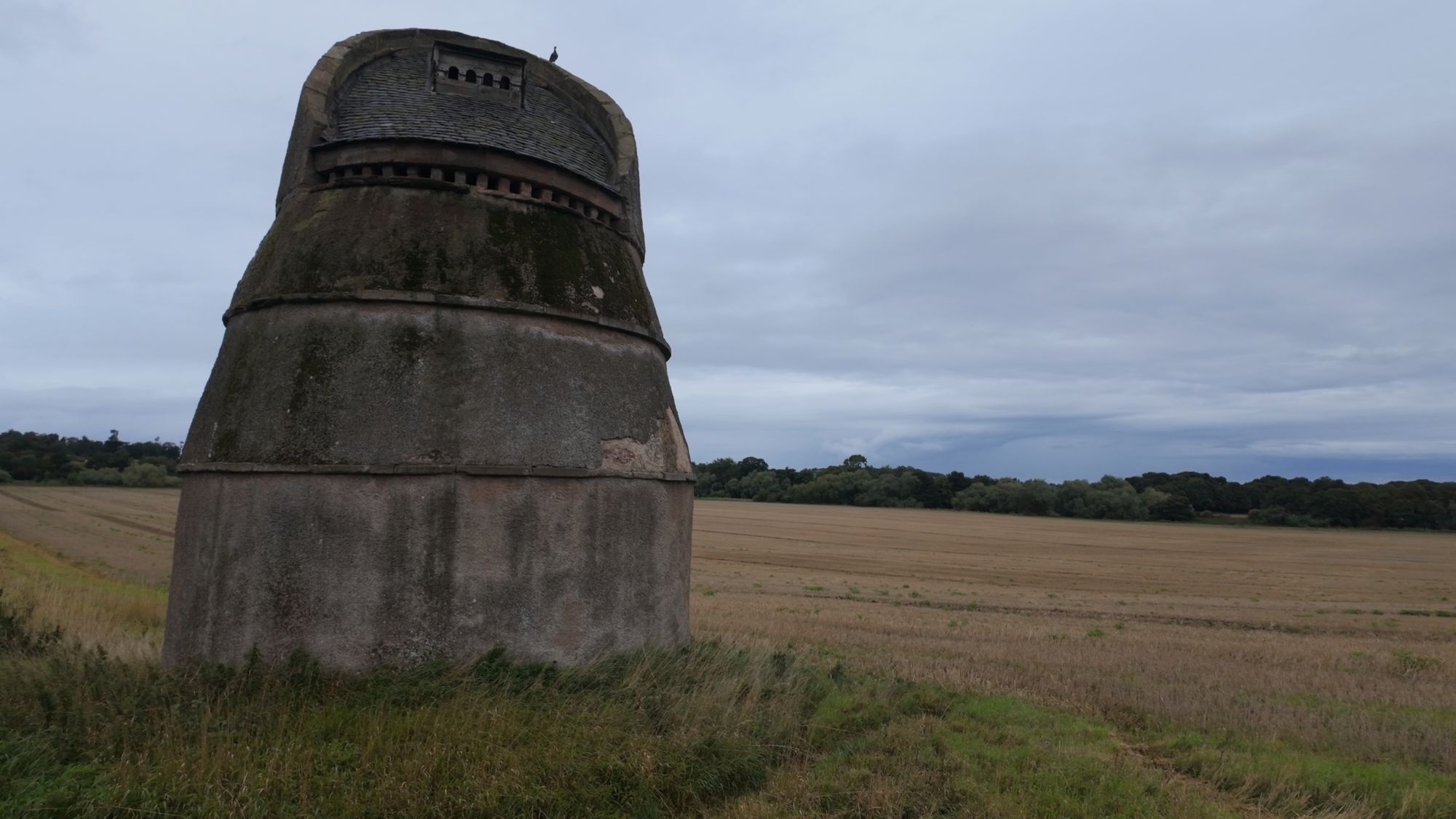
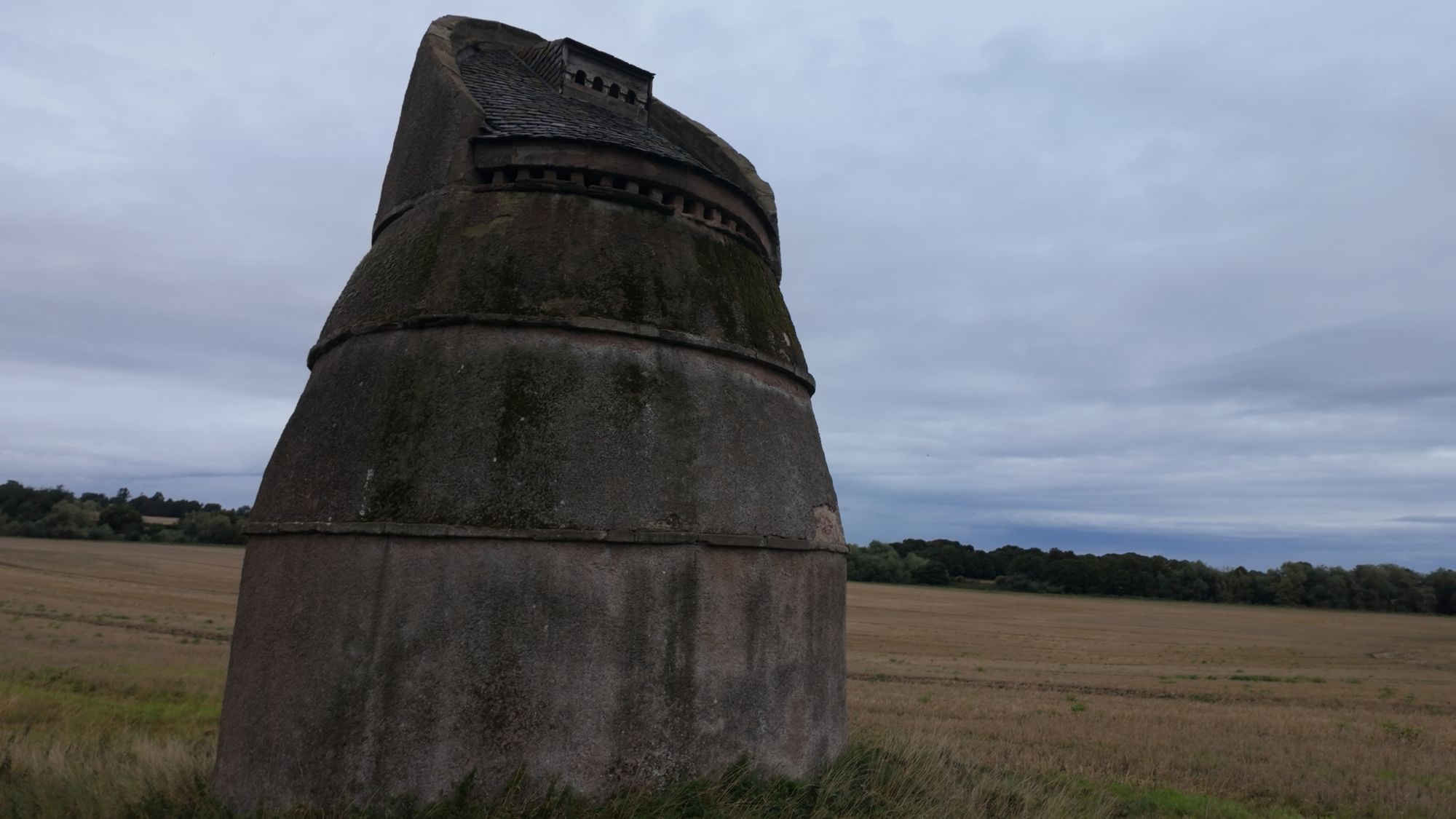
Phantassie Doocot — a squat stone beehive with its top sliced off at an angle, alone at the edge of a harvested field

Closer on the doocot, its sloping horseshoe-shaped top and the stone ledge running around the middle

This is Phantassie Doocot. Doocot is the Scots word for dovecote, and this one was built sometime in the 1500s. From the outside it looks like a stone igloo with the top sliced off at an angle. That's deliberate. The horseshoe-shaped parapet slopes down toward the south, which gave the birds a sunny, sheltered side to land and sit on.

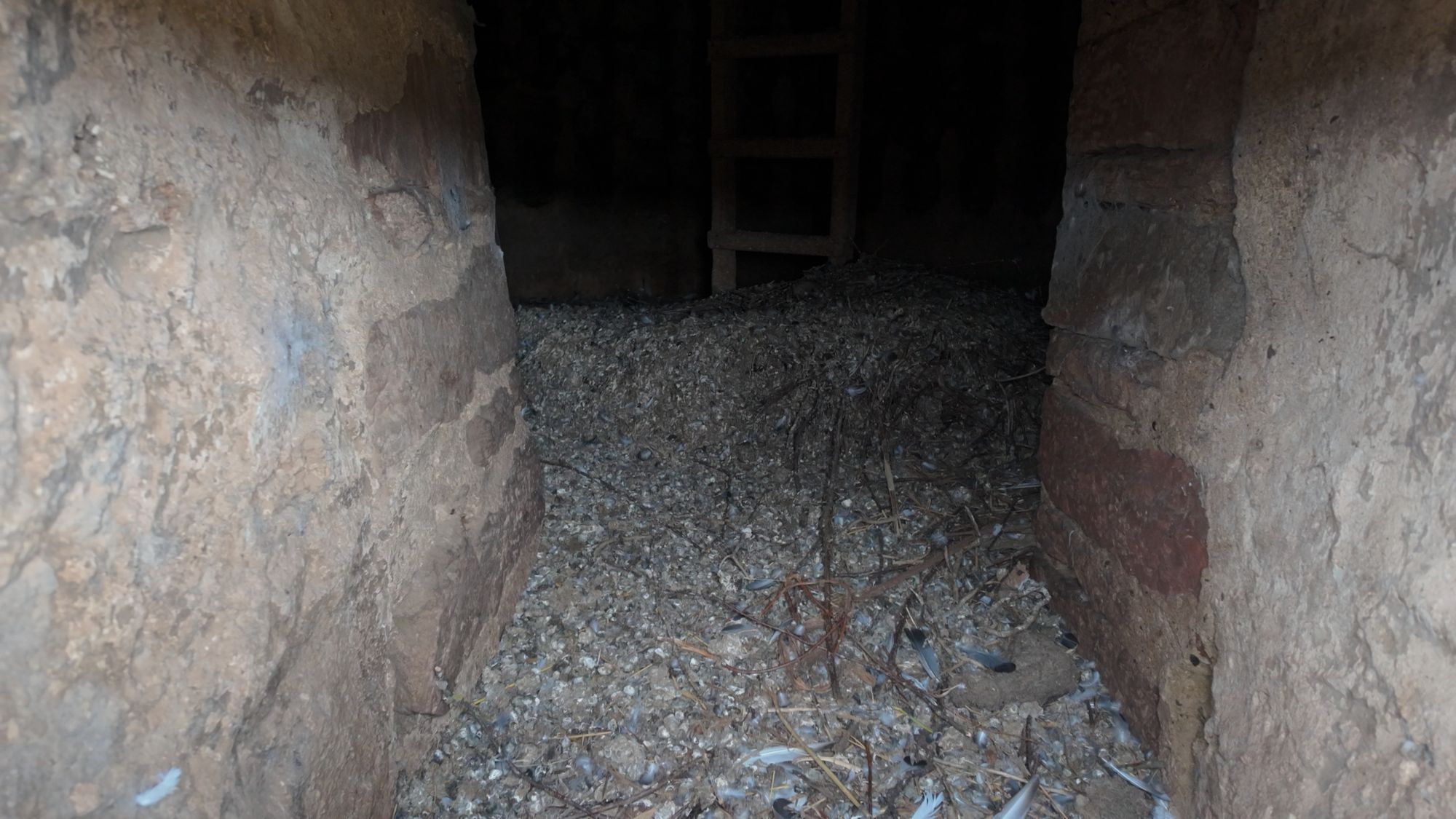
Inside there are 544 stone nesting boxes built into walls about four feet thick, stacked from the floor to the top of the dome, and the birds came and went through sixteen openings in the roof.

The reason buildings like this existed is simple. Fresh meat in a Scottish winter was close to impossible to come by. Most livestock had to be slaughtered and salted in the autumn because there wasn't enough fodder to feed it through to spring. Pigeons got around that better than anything else available. They feed themselves, they come home every night, and they breed nearly year-round. A doocot this size was a pantry that refilled itself. The laird ate squab and eggs all winter, and his tenants lived on grain and whatever they'd managed to salt.

The catch was what the pigeons were eating. They weren't feeding themselves out of thin air. They were feeding on everybody else's fields. The birds ate the tenants' grain, and the laird ate the birds, and legally there was nothing the farmers could do about it. Killing or stealing a laird's pigeons was itself an offense.

Doocots became such a resented symbol of privilege that Parliament stepped in. An Act of 1617 limited who could build one: you needed to own land within two miles of it worth at least ten chalders of grain a year in rent. That conveniently meant the people losing the grain were never the people eating the pigeons. (When the French Revolution came, abolishing the nobility's exclusive right to keep pigeons was one of the things the revolutionaries got around to in 1789. Grievances like this travel.)

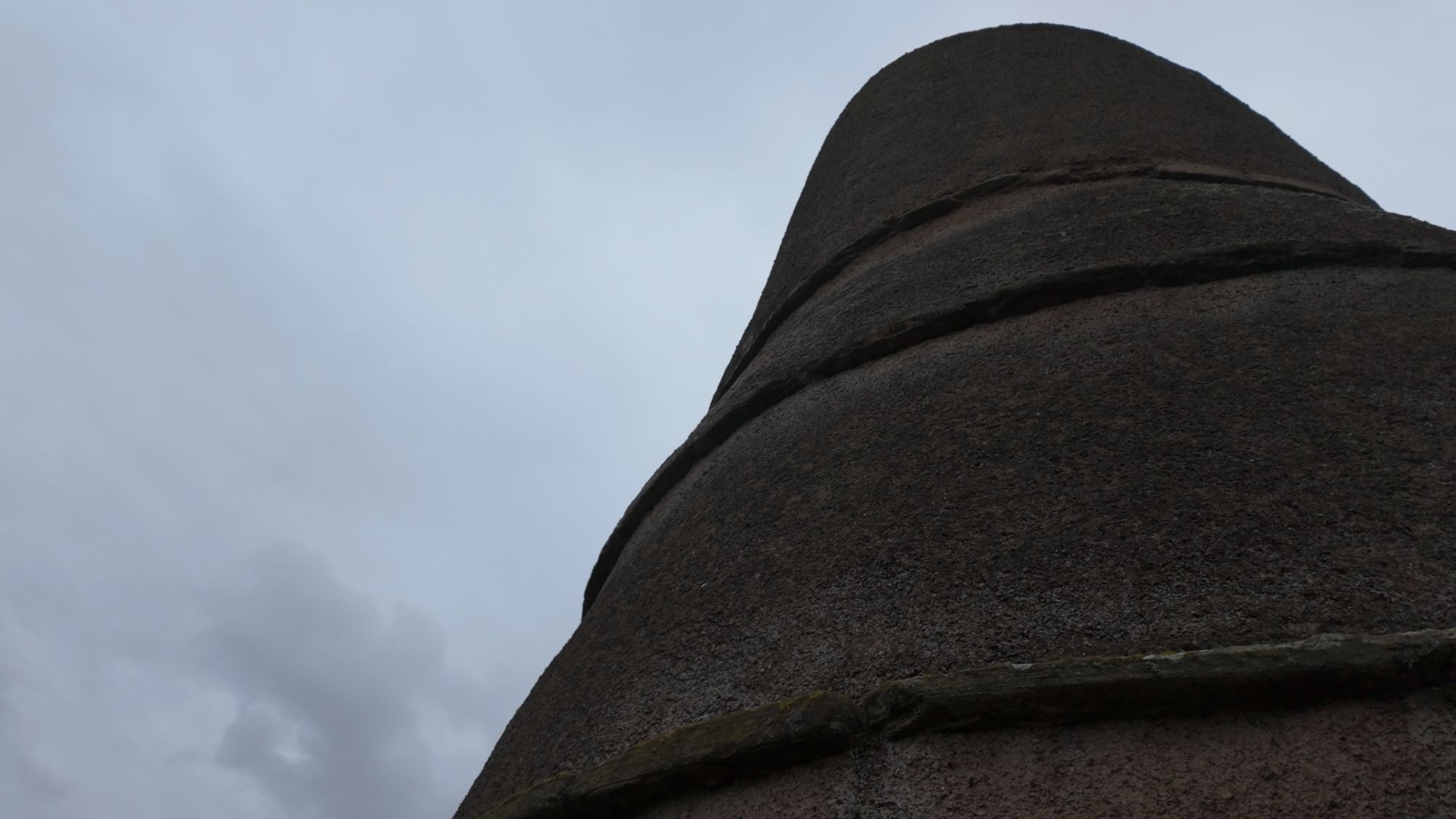
The stone bands running around the outside of doocots like this one were long assumed to be rat guards, ledges to stop rats from climbing up to the eggs and chicks. Some historians now think they were mostly just extra perches. Either way, the building paid for itself in more than meat. The droppings went onto the laird's own fields as fertilizer, and the feathers were prized for stuffing pillows and mattresses.

Looking up the side of the doocot at the projecting stone bands — rat guards or perches, depending on who you ask

About a hundred doocots survive in East Lothian alone. The National Trust for Scotland has owned this one since 1961, when the farmer at Phantassie, William Hamilton, gave it to them. The pigeons never fully moved out. There are still birds nesting in it today. It's completely full of them.

Through the low doorway of the doocot: the floor inside buried in a mound of pigeon droppings and feathers

The One That Got Away

This next part wasn't in the plan.

From the doocot we were supposed to be at Tantallon Castle, out on the cliffs facing the Bass Rock, the last great curtain-wall castle built in Scotland. It was built by William Douglas around 1350: one massive wall, fifty feet high and twelve feet thick, cutting off a headland with the sea on the other three sides. Cromwell's General Monck spent twelve days pounding it with artillery in 1651 before it fell.

We missed it by about five minutes. The closing time I had was off by an hour, and the gate was shut when we got there. About fifteen minutes of my planned script went in the bin.

That's what happens when you're booking and planning more than two hundred sites for one trip. I went back through the closing times for every site still ahead of us that night. I'm in Scotland, with hundreds more sites to see, so I'm not going to sulk about one. It still stings a little.

Also, a note on Scotland in general: there are dogs everywhere. Every site, every path, every pub. Pup dogs as far as the eye can see.

St Andrew's Old Kirk, Gullane

The last stop of the day is St Andrew's Old Kirk in Gullane. I guessed on camera that it was 1100s, and I was right. A church had stood on this site since the 800s, and the stone church went up in the second half of the 1100s. Parts of that building are still in the ruin.
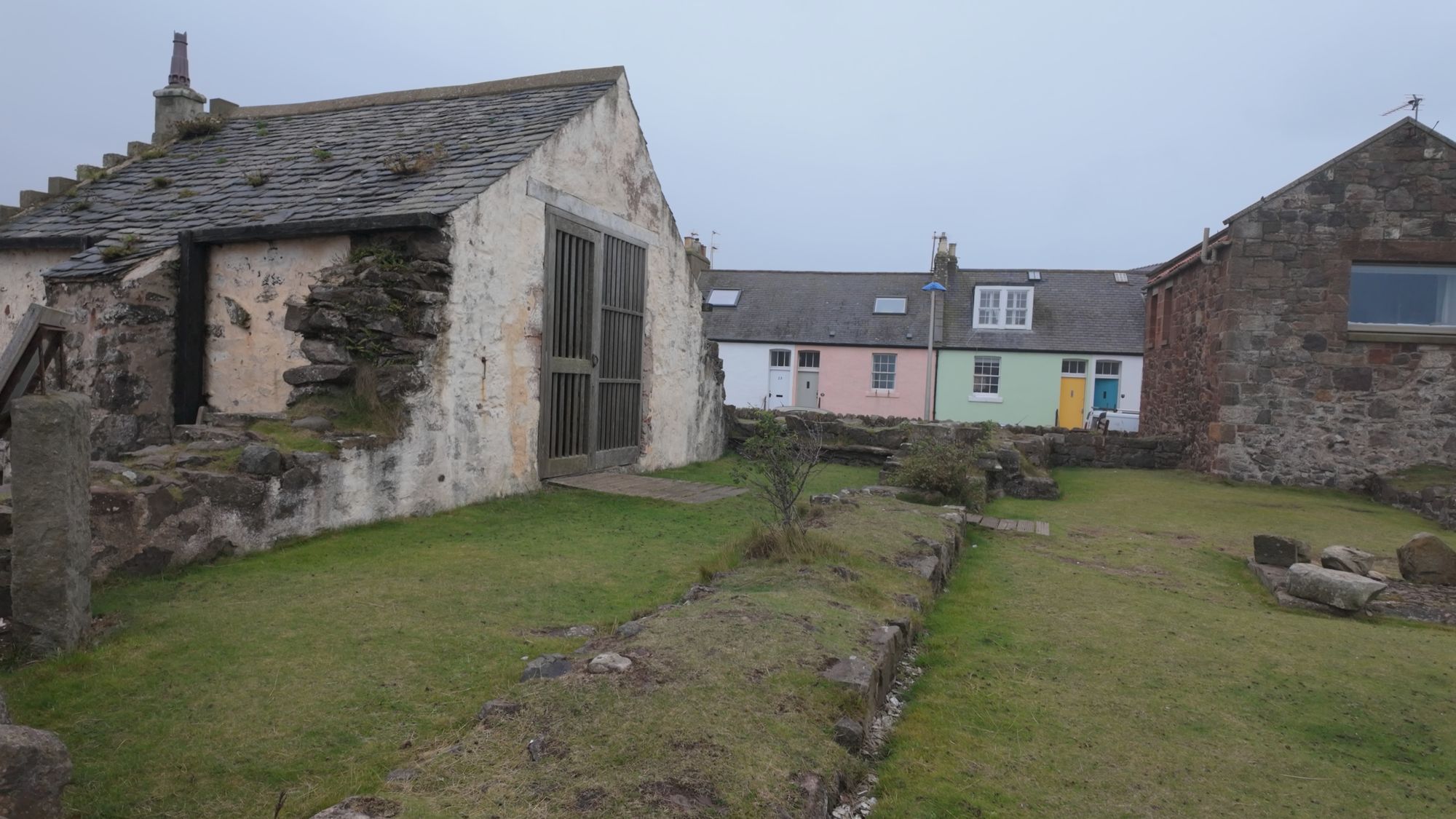
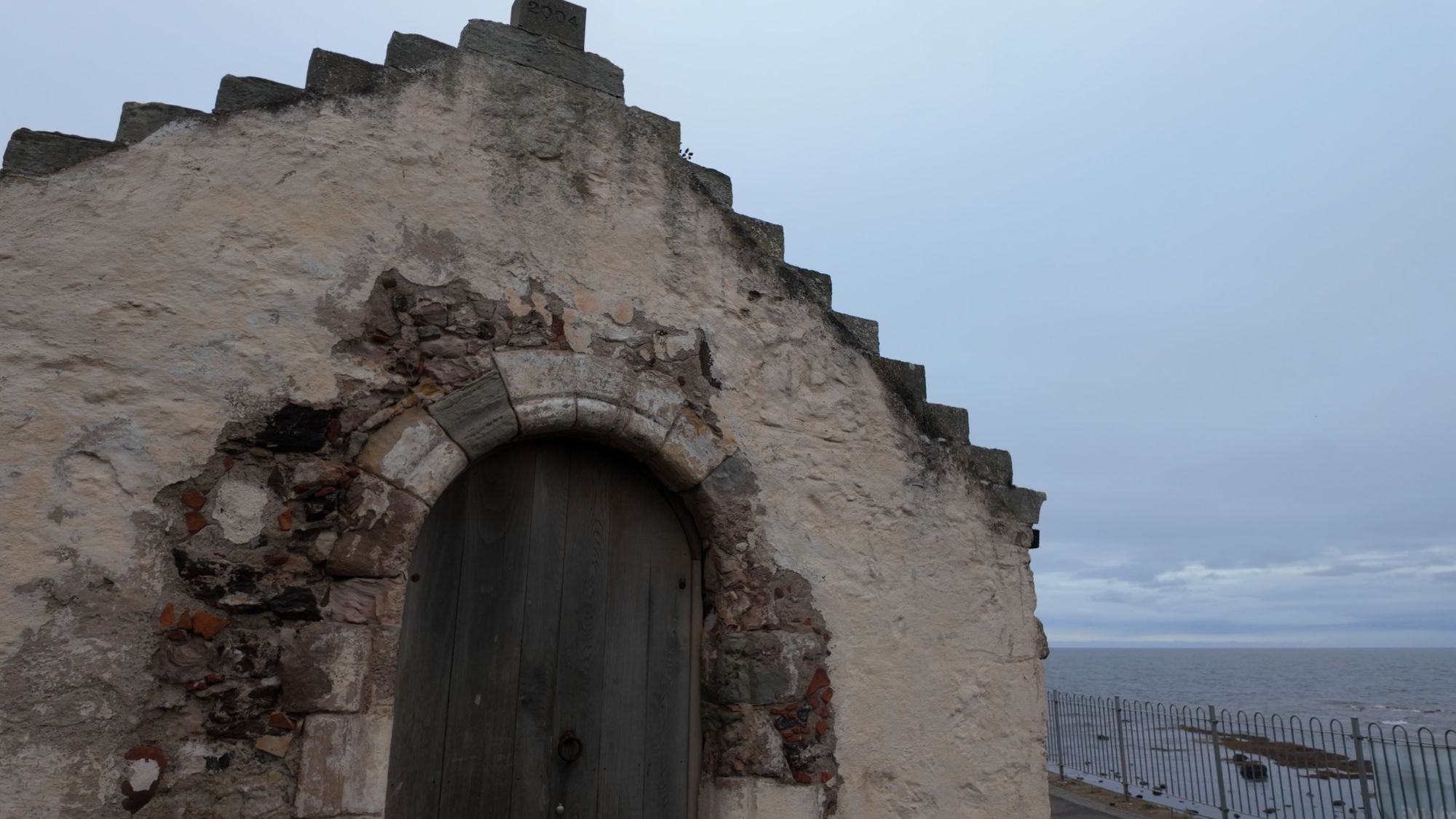
St Andrew's Old Kirk in Gullane — a low, whitewashed ruin with a barred gate, a row of colorful cottages behind it

A crowstepped gable of the old kirk with a blocked arch and an old wooden door

It was given up in 1612. That October, the Scottish Parliament allowed a new church to be built two miles away at Dirleton, because the old one was, in the wording of the time, "continewallie overblawin with sand." The congregation left almost immediately.

Here's the thing, though. The ruin sits nearly half a mile inland, and sand hadn't stopped anyone using it for the previous 800 years. Historians have pointed out that the new site was a lot more convenient for the powerful family who lived at Dirleton Castle. Sand blowing over the graves makes a better argument to Parliament than "the laird doesn't fancy the walk."

After it was abandoned, the old kirk was carved up into burial enclosures, with the chancel arch and windows blocked with stone. Oddly, that's a big part of why so much of the walling survived.

The Mortsafes

This kirk was on my list for its mortsafes.

Before Edinburgh's medical schools had a legal supply of bodies, the only bodies anatomists could legally dissect were executed criminals, and there weren't nearly enough of those. So people started digging up the freshly buried and selling them. The resurrection men worked fast, usually at night, and a quiet country churchyard an easy cart ride from the city was exactly where they went. The most notorious pair in Edinburgh, Burke and Hare, skipped the digging altogether and murdered sixteen people in 1827 and 1828 and sold the bodies. The trade didn't really end until the Anatomy Act of 1832 gave the schools a legal supply.

Families fought back however they could. Some paid for iron cages over the grave. Some built watch-houses and took turns sitting up with a gun. Gullane's answer was weight. Huge blocks of stone, each with iron lifting rings, were lowered onto a new grave and left there until the body underneath had decayed past being worth stealing. Then they were hauled off and moved onto the next one.

There are supposed to be three of them here. When we arrived, the groundskeeper was locking up, and he actually kicked my sister out while she was still inside. So the only one we saw was through the bars, inside the walls of the old church.
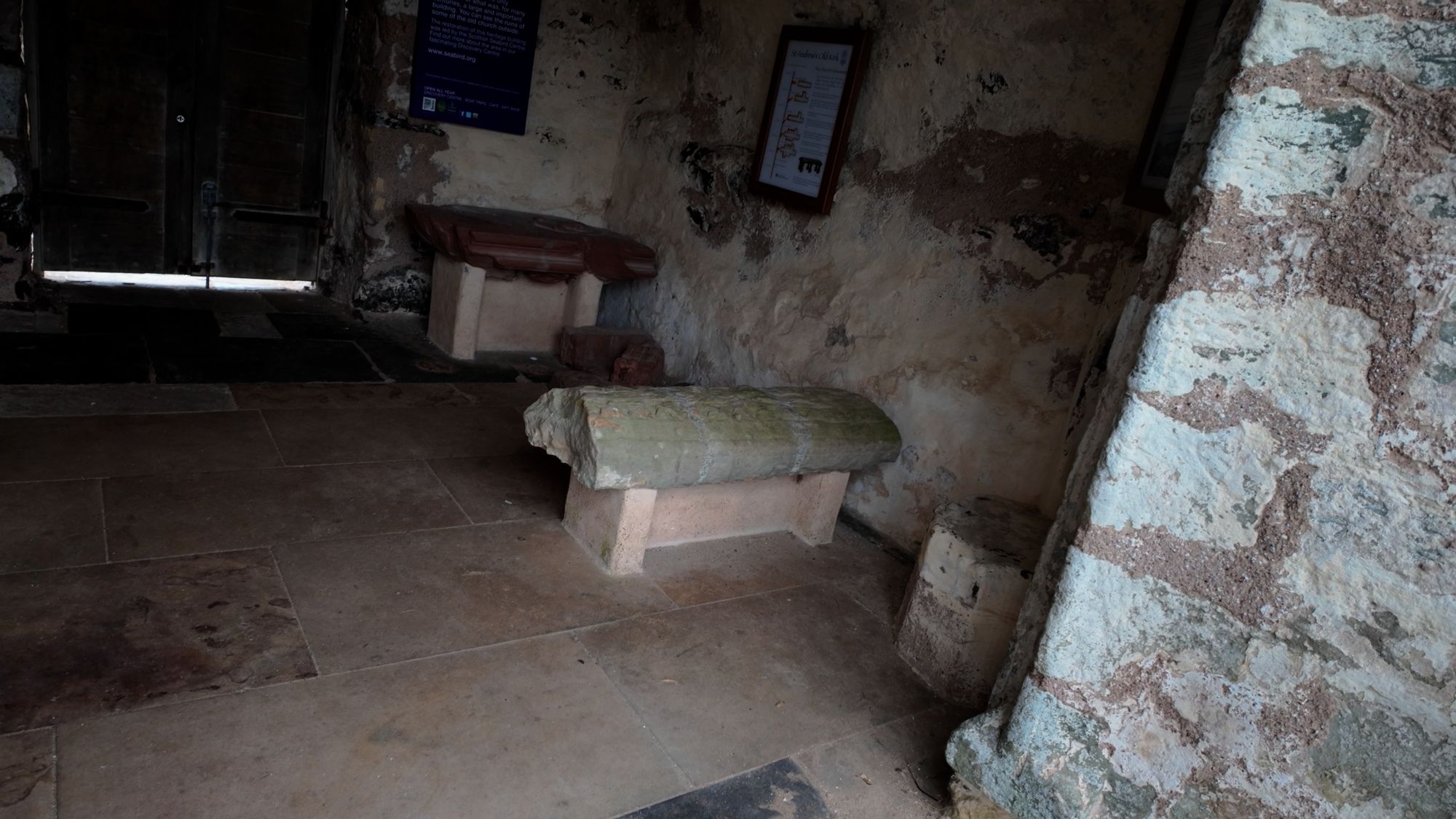
The mortsafe I could see through the bars: a heavy stone block resting inside the walls of the old church

If You're Doing This Day Yourself

You need a car for this one.

🚗

Freedom on Wheels

Rent a car in Edinburgh for total flexibility — I always do

Affiliate links • Helps fund my adventures at no extra cost to you

A few things I'd tell anyone copying this route:

Check closing times the morning of, not the night before you leave home. Historic Environment Scotland and National Trust for Scotland hours change by season, and last entry is usually earlier than closing. Ask me how I know.

Craigmillar is run by Historic Environment Scotland and is ticketed. Give it more time than you think you need, and don't skip the roof.

Rosslyn Chapel is ticketed and run by the Rosslyn Chapel Trust, and there's no photography inside at all. Go anyway, and walk down to the castle afterward. The walk down through the glen is part of it.

St Martin's Kirk and Phantassie Doocot are free and quick. For the doocot, park at Preston Mill and walk over.

Gullane has a groundskeeper who means it when he locks the gate. Get there early.

A 4,000-Year-Old Stone to a Locked Gate

So that was the first day. It started with a 4,000-year-old stone in a cul-de-sac and ended at a locked gate in Gullane. In between was a pact to get rid of the Queen's husband, a chapel that got rescued by a thriller, and a building whose whole purpose was letting one man eat his tenants' grain secondhand.

What struck me most is how much of it hangs off one war. The same English army that burned Craigmillar in 1544 burned Rosslyn Castle on the same campaign. Four years later, that war is why a five-year-old queen was signed away to France in a nunnery outside Haddington. Thirteen years after that she came home, and five years after that, she was recovering in Craigmillar's east range while the men around her decided what to do about her husband.

One day of driving, and it's basically one story.

Ancient & Macabre Scotland covers a 24-day run through Scotland's ancient, dark and strange. This episode covers the first full day, from Liberton to Gullane. Watch it below.

Next episode: south into the Borders, which for three hundred years was the most lawless stretch of ground in Britain. Cattle raiding was the family business, kidnapping had a going rate, and the word "blackmail" was coined there for the protection racket. The day starts at Melrose Abbey, standing over the lead casket that holds the heart of Robert the Bruce. Subscribe if you want to see it.

VagaPlan

Want to see it yourself? Plan a trip to Scotland

VagaPlan builds a day-by-day itinerary around how you travel, with real sites, opening hours, costs and booking links. Start with Scotland already filled in and get 3 trip ideas free.

🏨

Perfect Places to Stay

Find the best hotels in Edinburgh — I always recommend booking early

Affiliate links • Helps fund my adventures at no extra cost to you

📚

Further Reading

Books about Mary Queen of Scots Scottish history — history, culture, and the context that makes travel richer

Affiliate links • Helps fund my adventures at no extra cost to you

Find Your Basecamp — Book Your Next Artemis-Approved Expedition on Booking.com

Affiliate link — helps fund the adventures at no cost to you