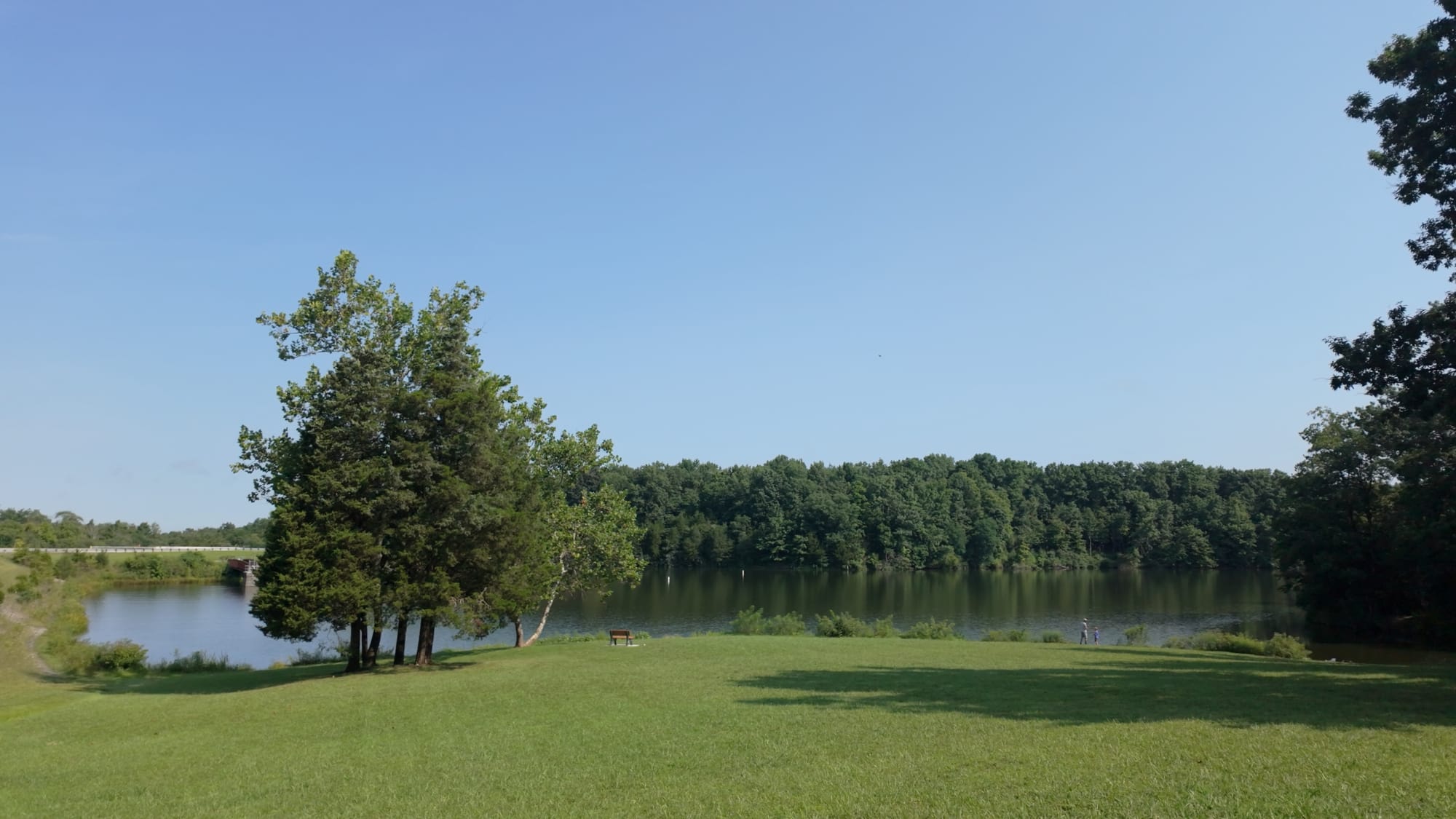
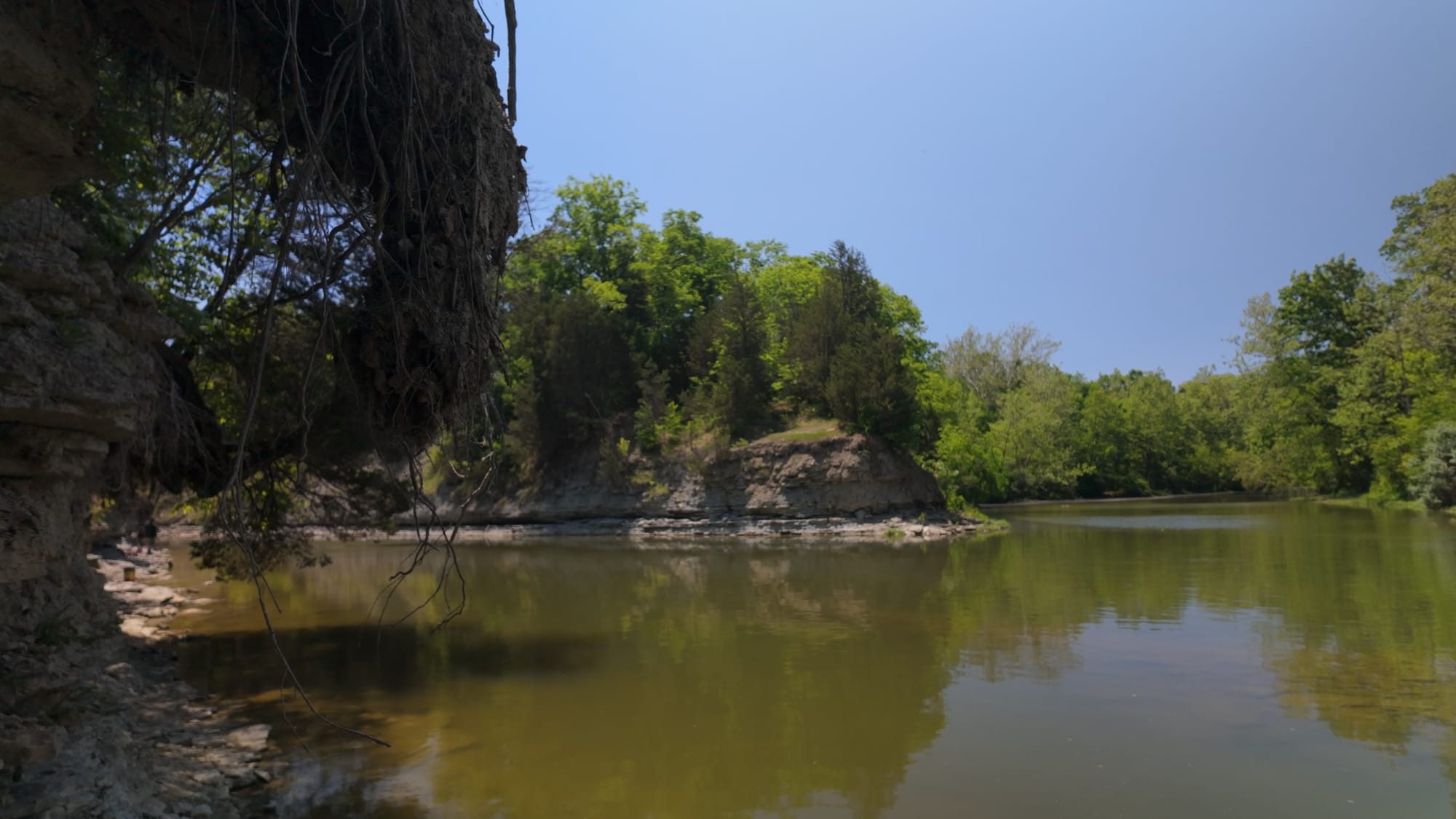
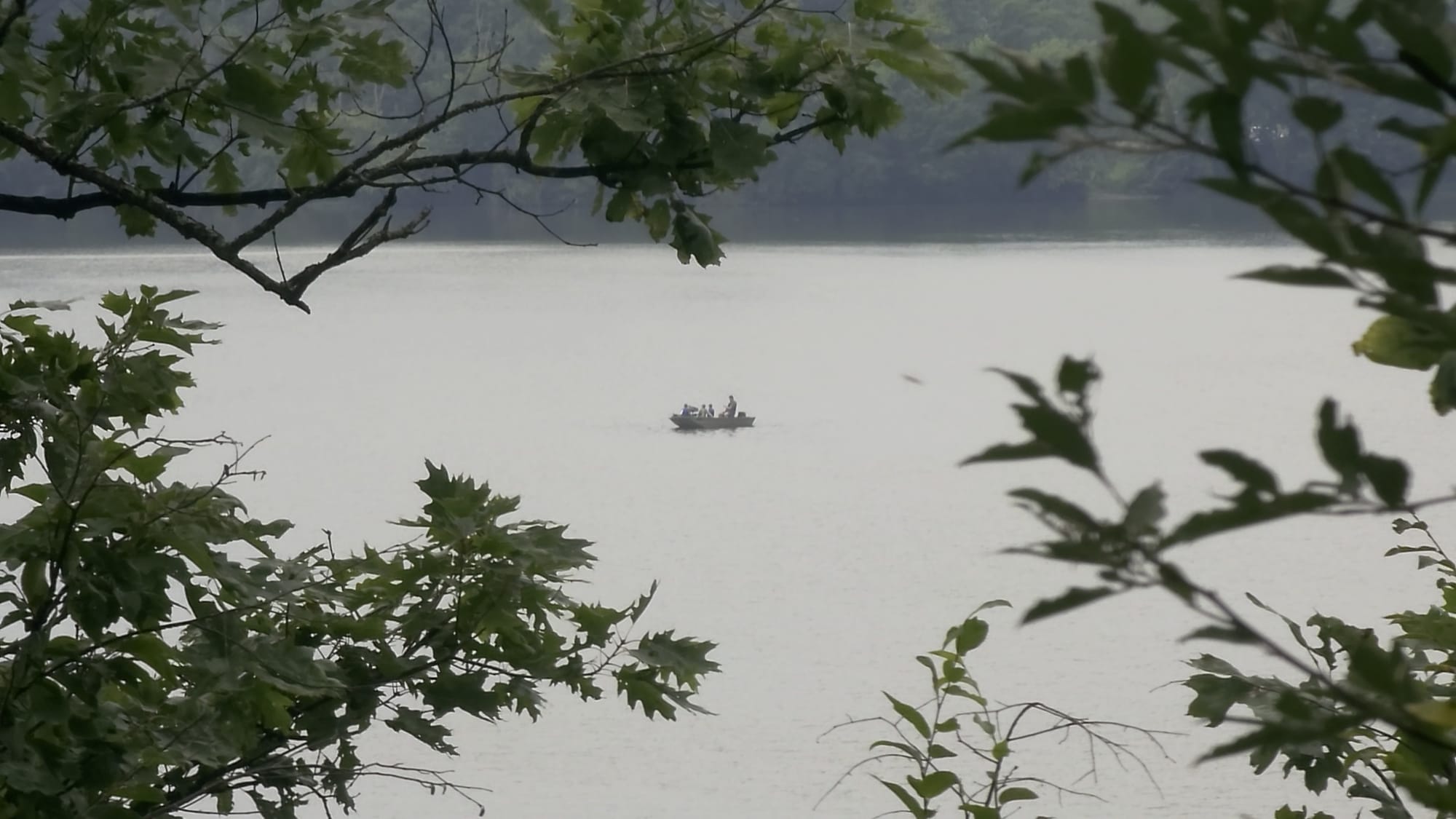
There are more than twenty burial mounds at the bottom of Cowan Lake.Nobody moved them. Nobody dug them out. In 1950 the State of Ohio closed a dam on Cowan Creek, the water came up the valley, and they were gone — and they have been down there ever since, under the pontoon boats.The ground they're resting on is the floor of a dead tropical ocean.This is Cowan Lake, in Clinton County just outside Wilmington, about fifty minutes northeast of Cincinnati. Seven hundred acres of water with a state park wrapped around it. On a summer weekend it looks like every other lake in Ohio: campers, kayaks, people fishing off the bank, a cabin loop, a marina. Almost nobody out here knows what they're floating over.This is a story about two things buried at Cowan Lake. One of them is 445 million years old and you can hold it in your hand. The other is about fifteen hundred years old and you will never see it.
Start With the One You Can Touch
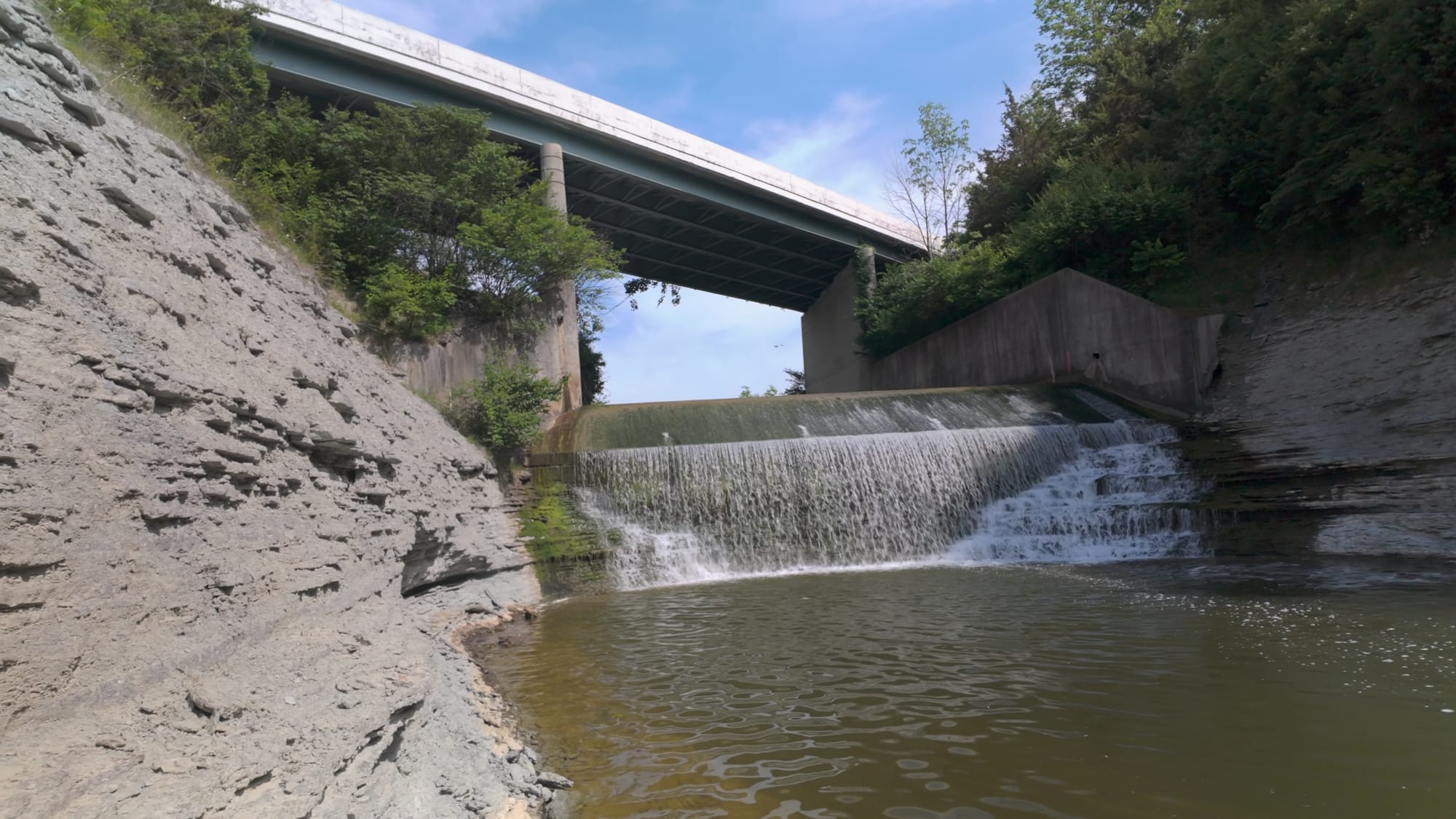
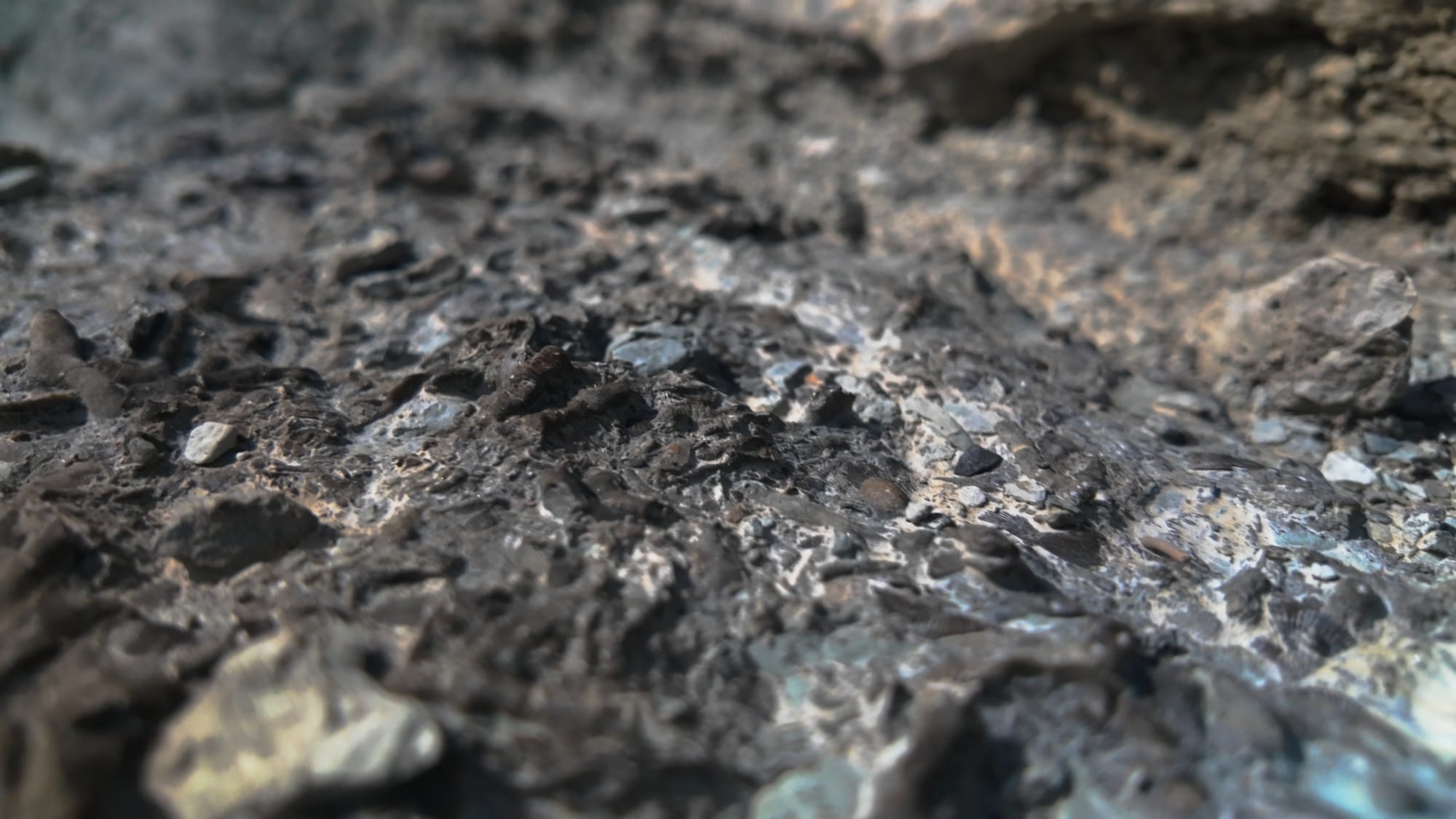
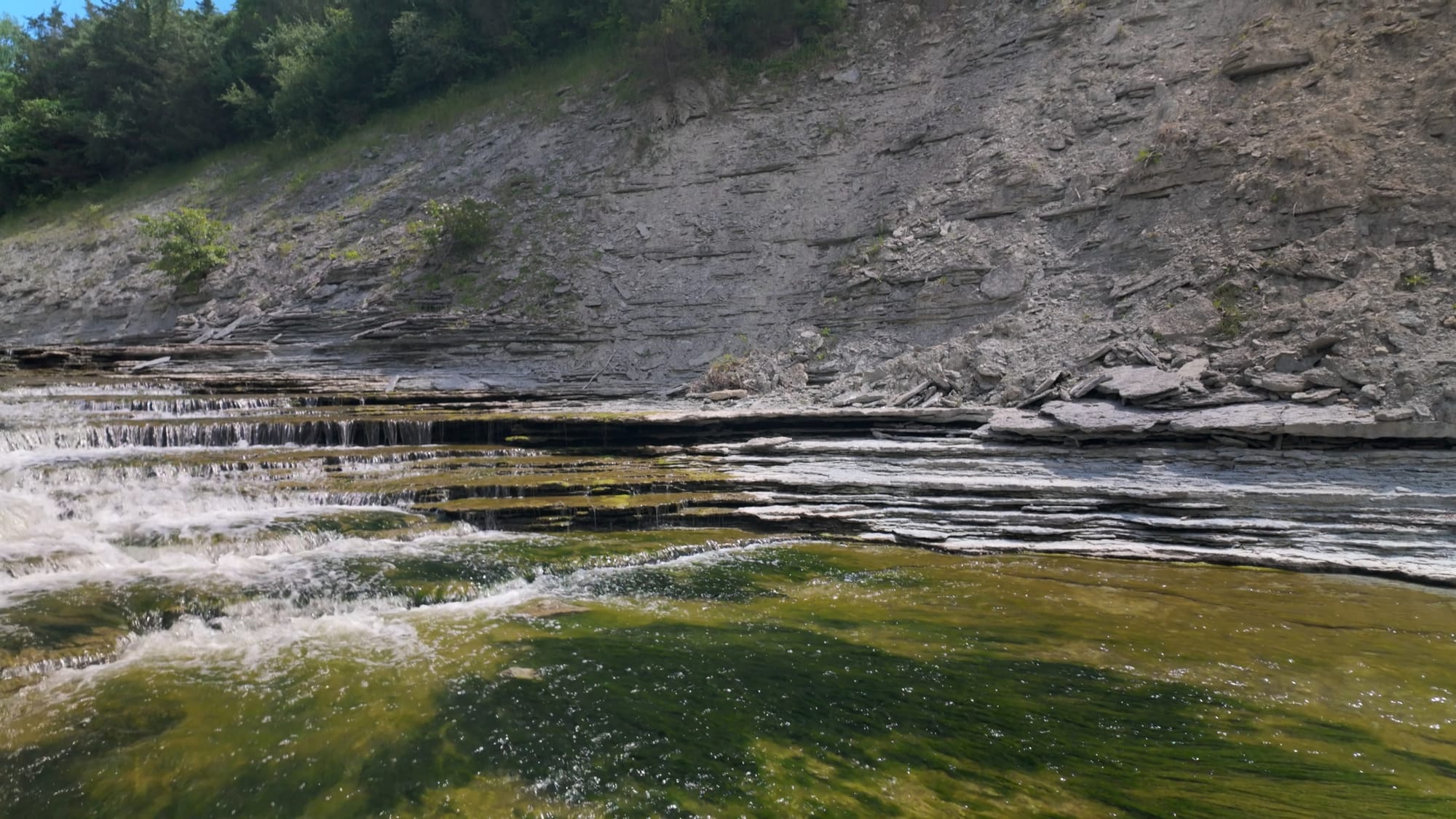
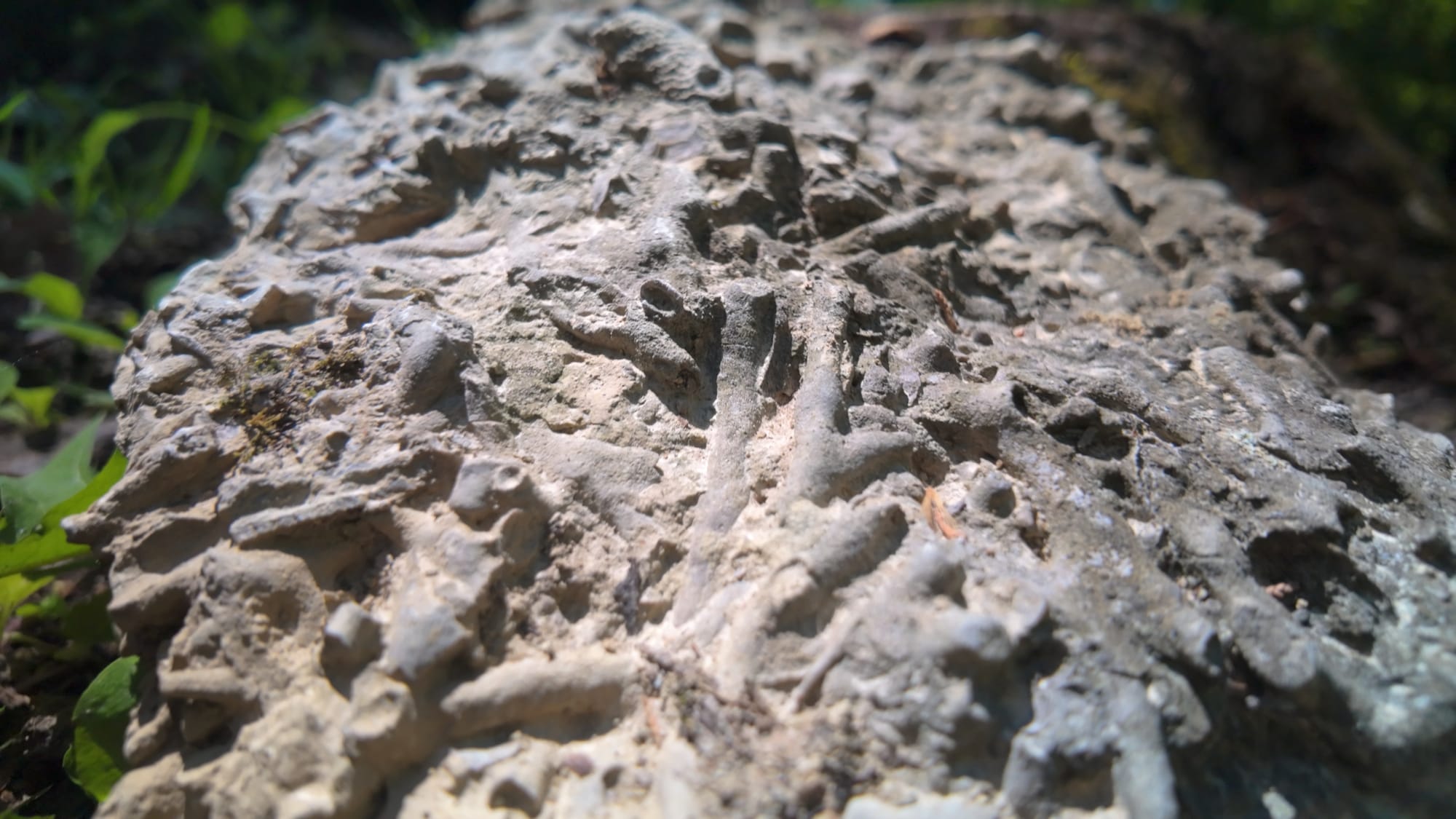
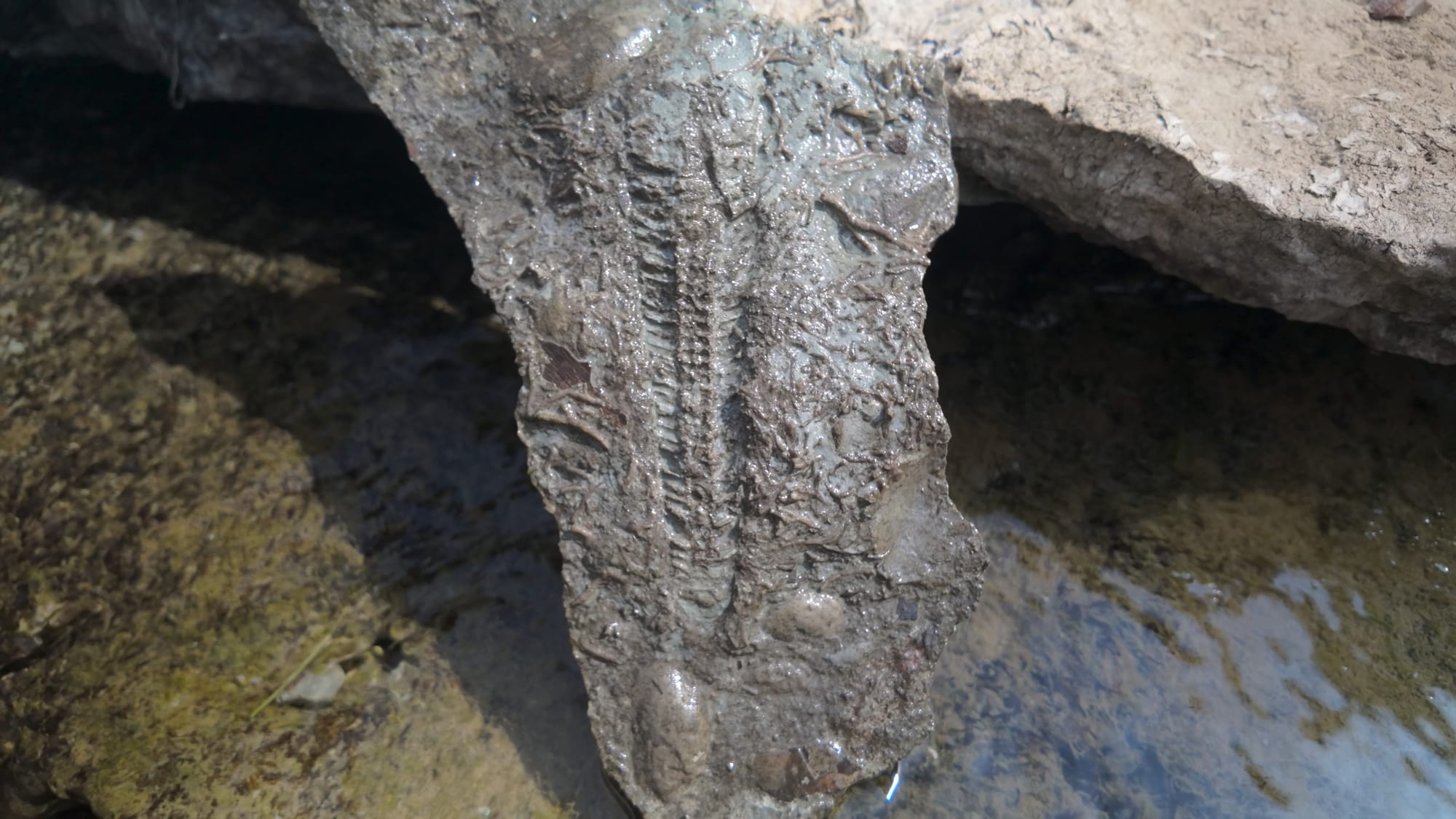
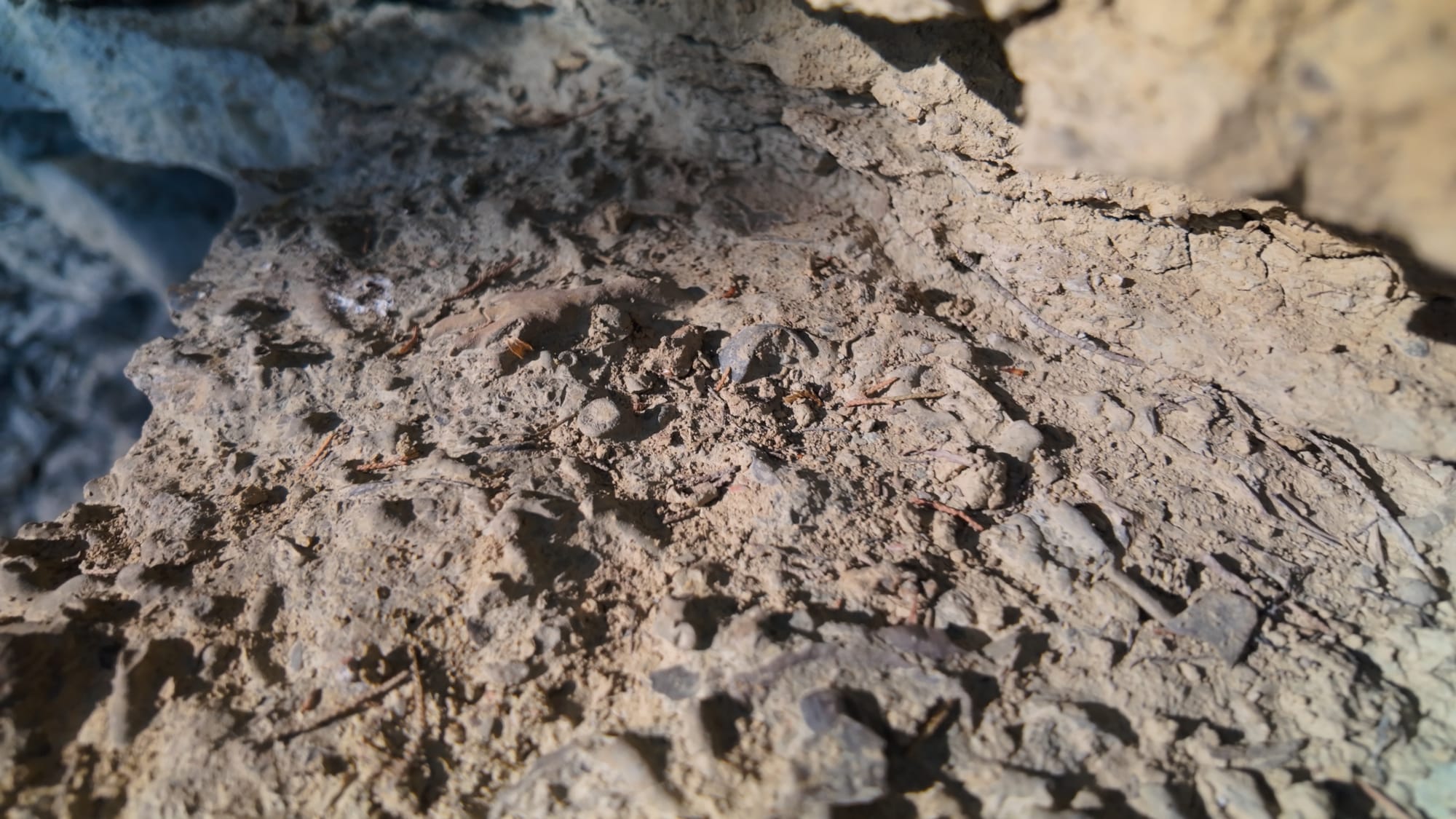
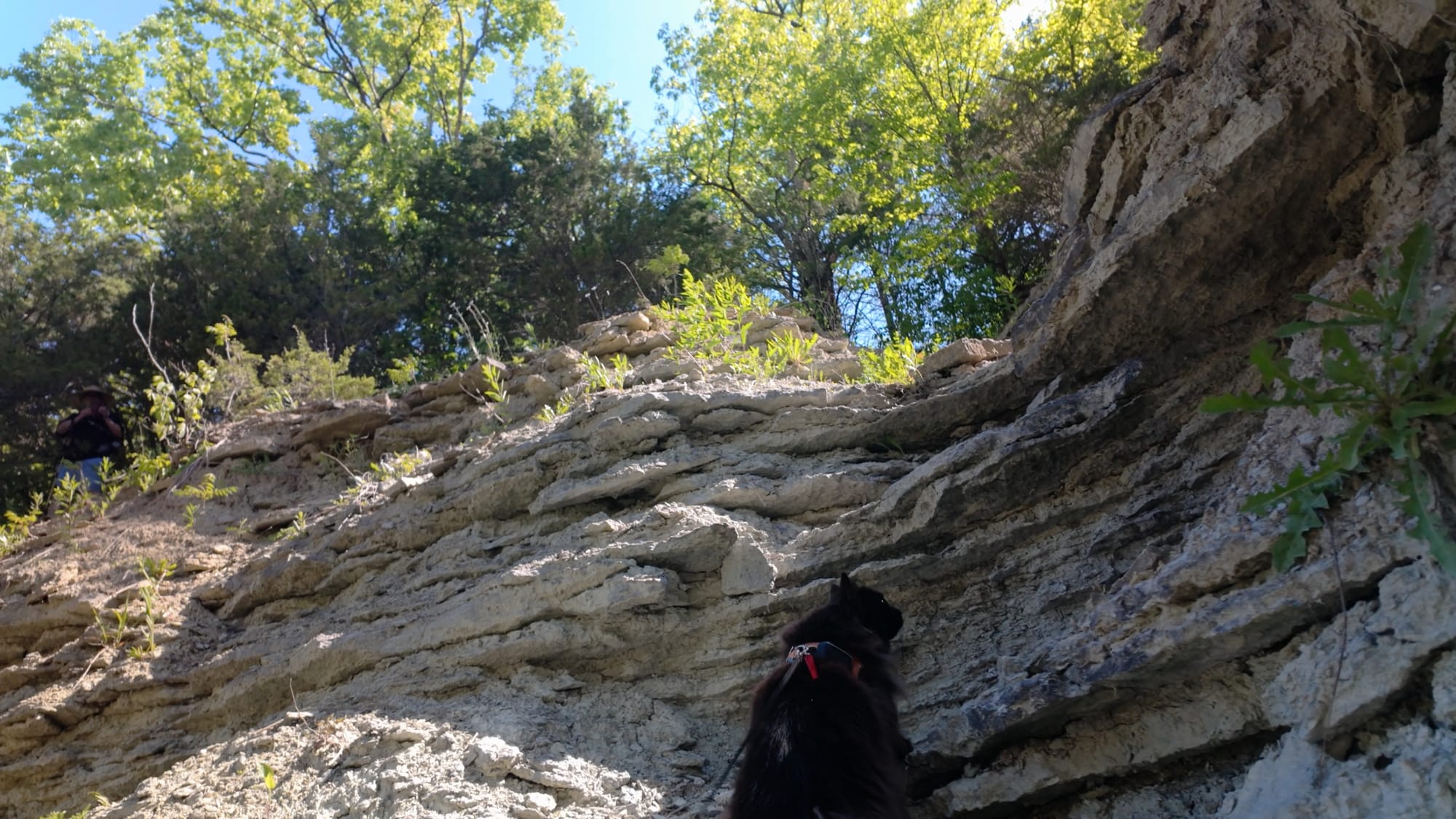
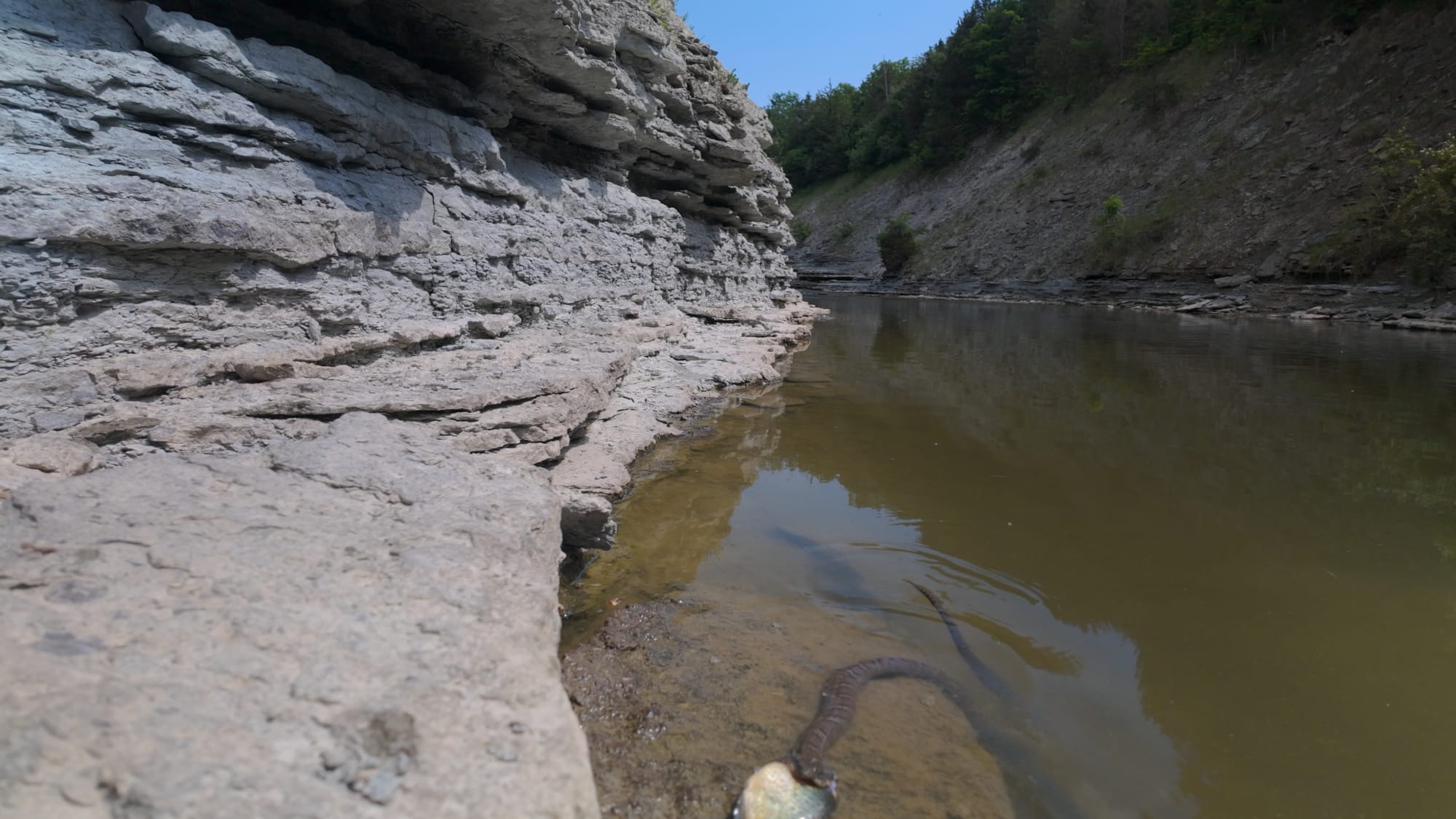
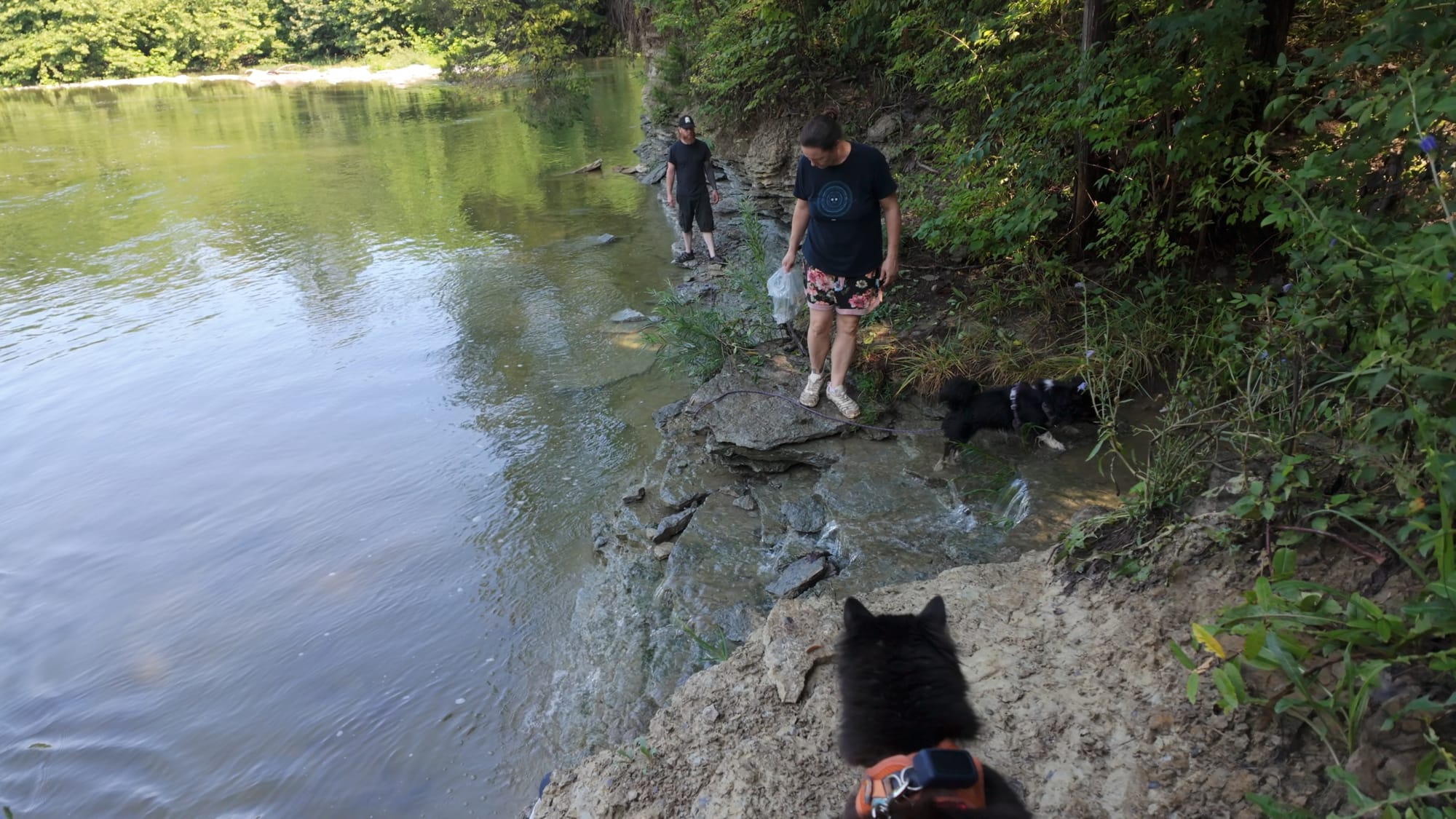
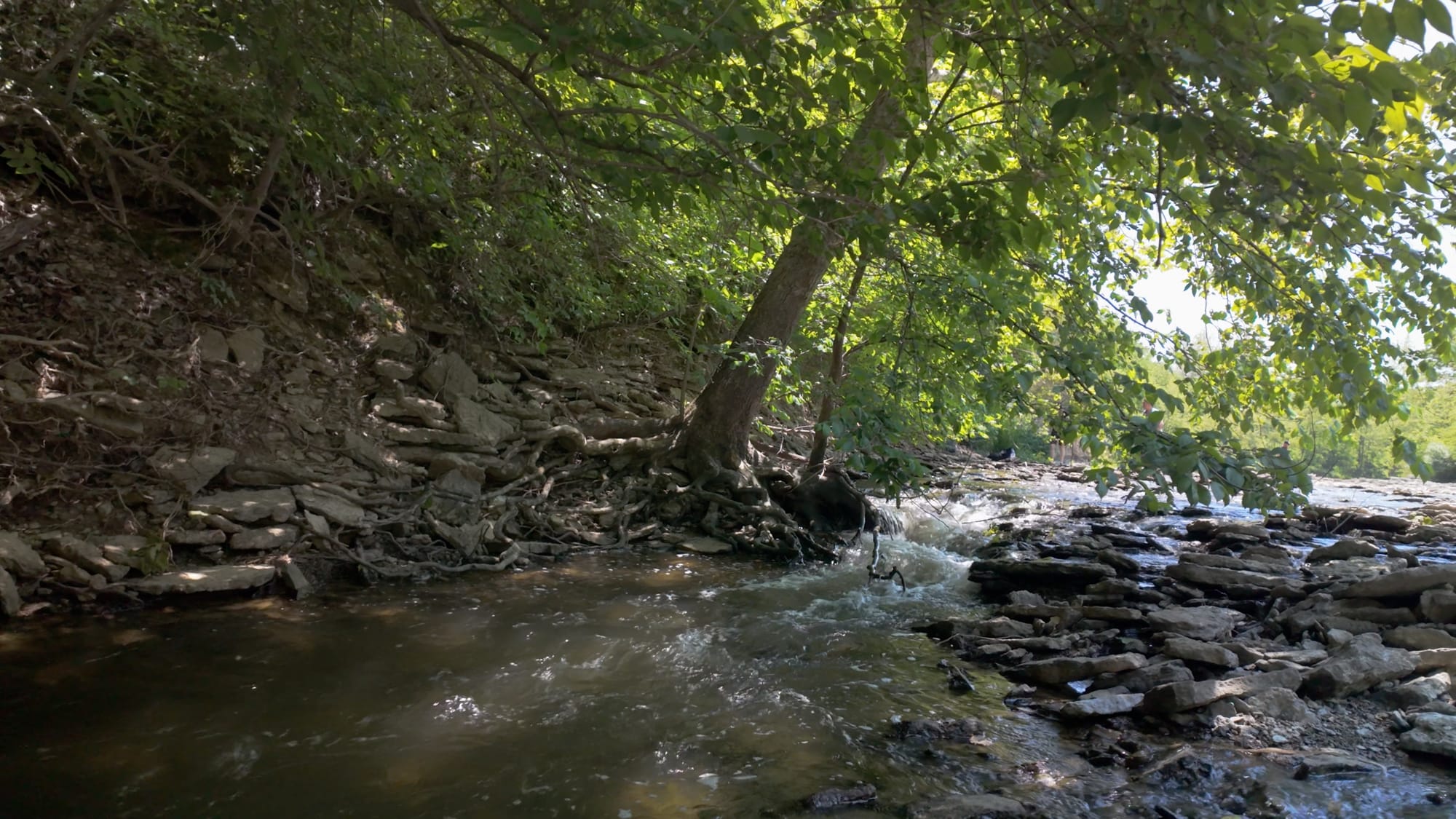
On the north side of the dam, off Route 730, there's a pull-off. From there a trail drops down toward the spillway, and trail is doing some heavy lifting in that sentence. It's steep, it's loose underfoot, and it's mostly maintained by the boots of people carrying fishing poles.At the bottom, Cowan Creek comes off the dam and runs over flat shelves of gray limestone. Every one of those shelves — every slab, every loose rock kicked to the edge of the channel — is packed with fossils.Not if you're patient fossils. Not bring a magnifying glass fossils. The rock down here is so dense with dead sea creatures that in places the hard part is finding a piece without any.Here's why.Four hundred and forty-five million years ago this wasn't Ohio. It wasn't even the northern hemisphere. This part of the continent sat well south of the equator under a warm, shallow, tropical sea — roughly the Ohio you'd get by dropping the Bahamas onto Wilmington. For millions of years, everything that lived and died in that sea sank to the bottom. Shells, coral, entire reef systems, piling up layer on layer until the weight of the sediment above compressed it all into limestone and shale.Then, much later, the same continental collision that shoved up the Appalachian Mountains flexed this part of the crust upward into a long, low bulge that geologists call the Cincinnati Arch. Rocks that had been buried for hundreds of millions of years got lifted back toward the surface, and erosion has been peeling the layers open ever since.That's the whole reason southwest Ohio is one of the most famous fossil-hunting regions on the planet. The Ordovician rock exposed around Cincinnati is so well studied that geologists worldwide use "Cincinnatian" as the formal name for the last stretch of the Ordovician period. Paleontologists fly here for what's lying loose on the ground.And some of the very best hunting is at the bottom of dam spillways — because when engineers blasted these channels out of the bedrock, they did the digging for everybody.
What's Actually Down There
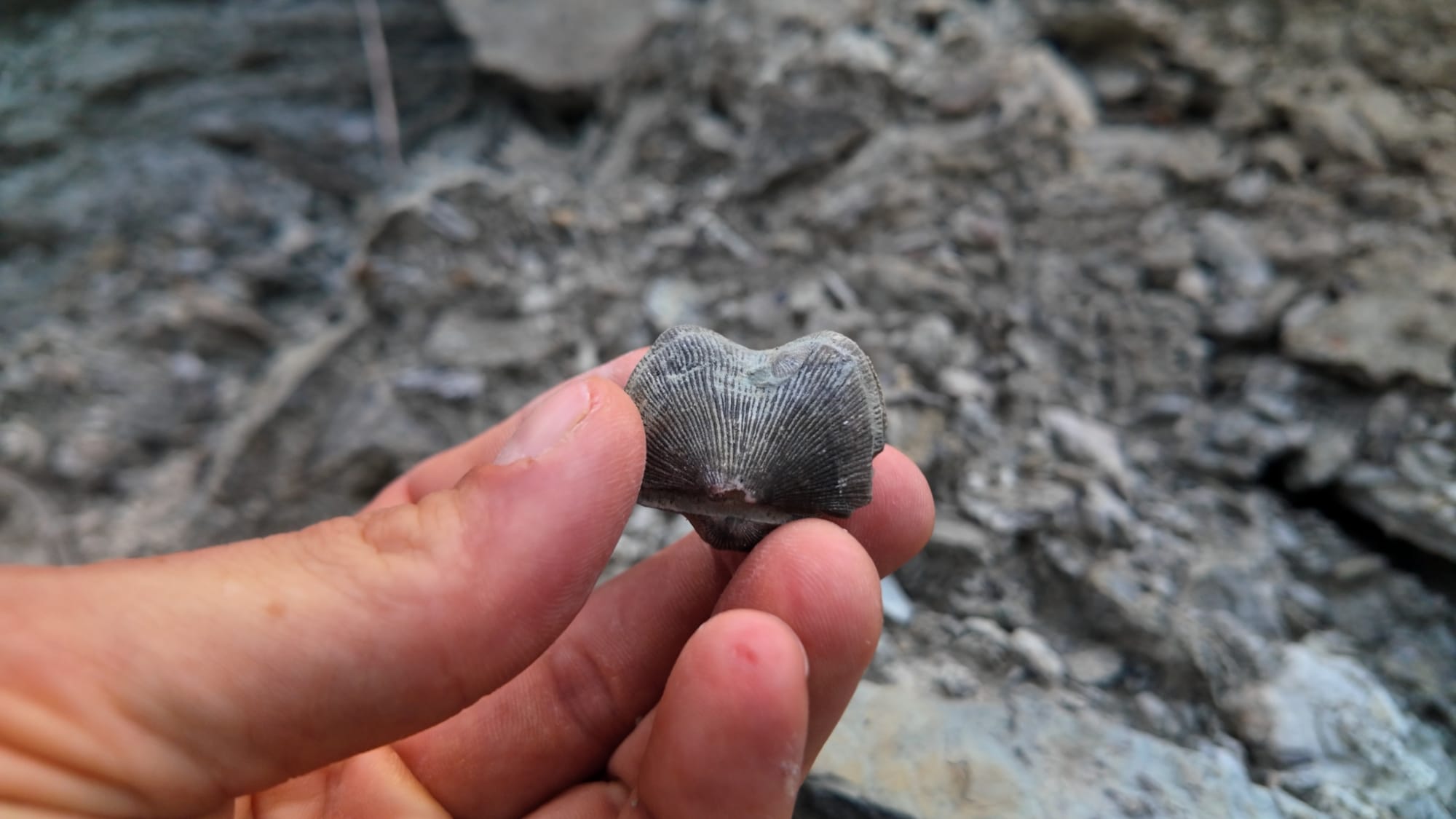
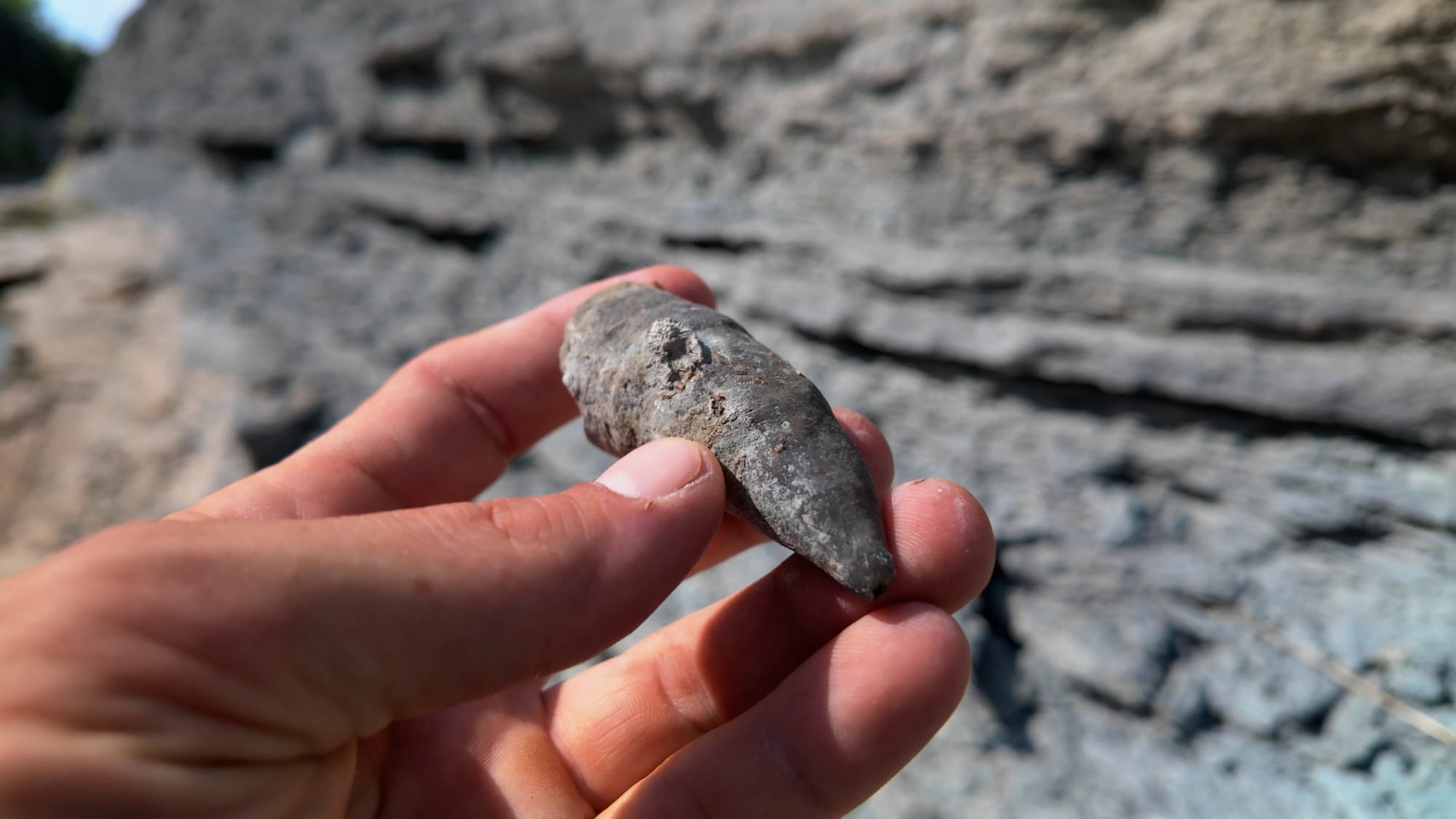
Here's your field guide to the spillway, in rough order of how often you'll see it.Brachiopods. By the dozen. Little ridged, fan-shaped shells that look like clams and are emphatically not clams — different animal, different body plan, different branch of the tree entirely. A clam's two shells mirror each other left and right. A brachiopod's two shells are different sizes and mirror top to bottom. Once you've seen that difference you can't unsee it.Horn corals. These look exactly like the name promises: small stony horns, curved, sometimes with the cup still visible at the wide end. Each one was a single animal that spent its entire life anchored to the seafloor with its tentacles out, waiting for lunch to drift past.Bryozoans. Colonies of tiny animals that grew in branching, lacy, fan-like structures — coral doing a fairly convincing impression of moss. Individually microscopic, collectively responsible for a startling percentage of the rock down here.Crinoid stems. Small stacked discs, usually broken into short segments that look like tiny screws or beads. These were the stalks of sea lilies, which — say it with me — were animals. Not plants. Nothing from this period is what it looks like.What we haven't found yet is a trilobite. They're down here — Isotelus, the Ohio state fossil, came out of exactly this kind of rock, and some specimens found in the Cincinnati region run over a foot long. But a lot of the rocks we carried home have a dozen fossils crammed into a few square inches, so there's a genuine chance one is sitting in the pile and we simply haven't spotted it. If you catch one in the episode footage before I do, put it in the comments. I'd rather know.
Two Warnings Before You Go Down There
The snakes. The water below the dam is full of them, and every local you meet will tell you they're water moccasins. They are not. Water moccasins — cottonmouths — don't live in Ohio at all; the nearest populations are hundreds of miles south. What's actually in that spillway is the northern water snake: nonvenomous, extremely common, famously bad-tempered, and apparently fine with a century of being slandered. It will bite if you corner it, and it will make a memorable mess of your afternoon, but it can't poison you. Give them room and they'll ignore you.The rules. Check with the park office about collecting before you fill your pockets. Rules vary from park to park across Ohio, they depend on who owns which side of a given fence, and they change. The fossils have been sitting there 445 million years. They'll survive one phone call.
The World in That Rock Didn't Fade Out. It Ended.
One more thing worth knowing about the animals in those slabs.Around 443 million years ago — right on the heels of the reef preserved in this spillway — the Ordovician period closed with the first mass extinction in Earth's history. The planet cooled hard, glaciers locked up the water, sea levels crashed, and shallow tropical seas like this one drained away. Something on the order of 85 percent of marine species disappeared. By body count it's arguably the second-worst extinction the planet has ever had.So that shelf of limestone isn't just old. It's a snapshot of an ocean that got switched off. And you're picking pieces of it up off the ground an hour outside Cincinnati, for free, next to a boat ramp.
Now the Other Thing Buried Here
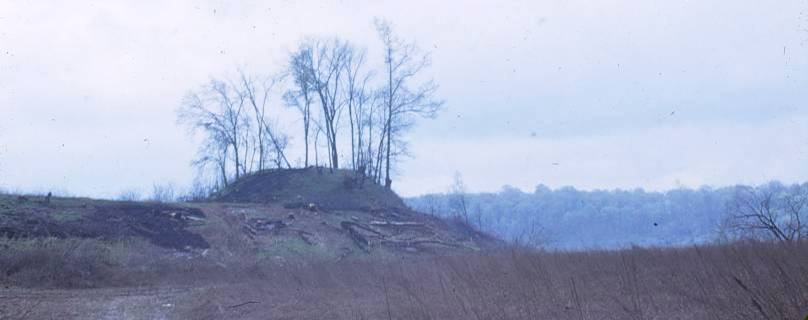
Long before there was a lake, this was simply the valley of Cowan Creek — a wide, well-watered bottomland, exactly the kind of ground people settle.And the people living here built mounds. These were the Adena, the earliest of Ohio's great mound-building cultures, active in the Ohio Valley from roughly 800 BCE to around 100 CE — the same broad tradition whose burial mounds sit on the grounds at Serpent Mound, and the culture that came centuries before the Hopewell raised Fort Ancient Earthworks.Along this single creek, surveys recorded more than twenty burial mounds, plus a circular earthwork enclosure roughly ninety feet across. That isn't a scattering. That's a landscape — a concentration of monuments built along one waterway over generations.Those mounds stood in this valley for something like fifteen hundred years. They outlasted the culture that built them. They outlasted settlement, and clearing, and a century and a half of plowing, and everything else Ohio threw at its own landscape.Then, starting in 1946, the State of Ohio began buying up land along Cowan Creek to build a lake.
One Mound, One Spring, Two Men
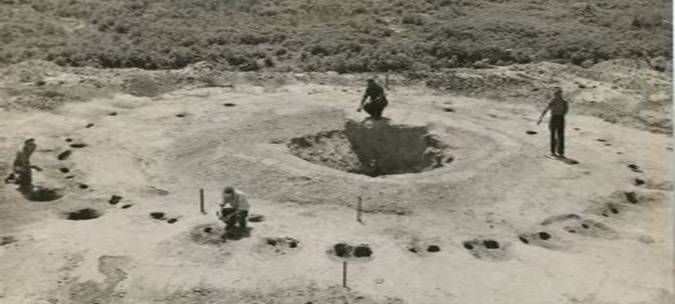
By the spring of 1949 the dam was essentially finished and the water was coming.That April, Raymond Baby — curator of archaeology for the Ohio Historical Society, and one of the most consequential figures in twentieth-century Ohio archaeology — came down with his colleague Robert Goslin to salvage whatever they could before the valley flooded.Out of more than twenty mounds, they had time to properly excavate one. It stood eighteen feet high and eighty-seven feet across at the base.And what they found underneath it wasn't just a burial.When they peeled the mound away, there was the footprint of a building underneath. A circle of paired postholes — forty-five feet across, the pairs set about four and a half feet apart — with fragments of charred bark that had most likely been its roof — a pattern archaeologists have since found beneath Adena mounds across the Ohio Valley.Both 1949 excavation photographs courtesy of the Ohio History Connection.That detail rewrites what a mound actually is. These weren't piles of dirt dumped over a grave. They were monuments raised over structures — large circular ceremonial buildings that were built, used, deliberately taken down or burned, and then buried under an earthen mound. The mound is the last act, not the whole ceremony.And on the floor of that structure, the excavators found something quieter and much stranger to sit with: a pile of goosefoot seeds and a few charred fragments of squash rind, resting in the remains of a woven container.Goosefoot — Chenopodium — was a domesticated crop here, part of what's now called the Eastern Agricultural Complex: a suite of native plants people in the Ohio Valley were farming for thousands of years before corn ever arrived from the southwest. Somebody's harvest, carbonized in place, sitting on that floor for fifteen hundred years until two men with trowels and a deadline dug it up weeks ahead of the water.
The Mound That Ended Up in a Physics Journal
The charcoal from this site went somewhere nobody could have predicted.Radiocarbon dating had just been invented. The entire technique was only a few years old and still being validated against samples of known age — and charcoal from a fire pit in the Cowan Creek Mound was run through it. It was the first radiocarbon date ever produced from Ohio Historical Society material.The result was published in the journal Science in 1951 by James Arnold and Willard Libby — Libby being the man who invented the method, and who would win the Nobel Prize in Chemistry for it in 1960. The number they got was 1,509 years, plus or minus 250. Call it roughly 440 CE.Sit with that margin for a second, because it's the most honest thing in the whole story. Plus or minus 250 years is a window nearly five centuries wide — the technique was brand new and nowhere near the precision it has now. But it was the right order of magnitude, and it was arrived at by counting atoms instead of guessing, which nobody on Earth had been able to do a decade earlier.And the number matters. Even at the young end of that window, it makes Cowan Creek one of the latest Adena mounds ever dated — the closing chapter of a building tradition that had run in Ohio for well over a thousand years. This small mound in Clinton County, excavated in a hurry one step ahead of a rising lake, ended up in the founding literature of radiocarbon dating itself.Baby never published a full report on the excavation. The field notes and that 1951 date are most of what we have.And in 1950, before anyone could get to the rest, the dam closed, the valley filled, and Cowan Lake rose over all of it.The mounds are still down there. Under the boats. Under the swimmers. Under the bass fishermen who have been drifting over them for seventy-five years without a clue.
The One Piece That Stayed Above Water
One part of the complex survived the flood: the circular enclosure.It sits on a peninsula in the lake, about three hundred feet from where the excavated mound went under. It's been on the National Register of Historic Places since 1974.And you cannot see it.Even back in 1949 it had almost no height left — by then the only way to make out its shape was from an airplane. The park's approach ever since has been to leave it entirely alone and let the land grow back over it. No trail, no sign, no mowing, no interpretation. So it's out there right now: protected, intact, and completely invisible.Given how things went for every other earthwork in this valley — and for Ohio's earthworks generally, the great majority of which were plowed flat, quarried away, or built over long before anyone thought to record them — invisible might be the safest thing an ancient monument in Ohio can be.
Seven Hundred Acres of Nobody Knowing
So that's Cowan Lake.On one side of the dam, the floor of a tropical ocean older than trees, older than fish with jaws, lying loose in a spillway for anyone willing to scramble down a bad trail.On the other side, a drowned sacred landscape nobody got to study — twenty-plus mounds, one excavation, one paper in Science, and then the water.And in between, seven hundred acres of people having a perfectly nice Saturday, with no idea about either one.Go pick up a piece of the ocean. Then look out at the water and think about what's under the keel.Ohio Hidden Corners is an ongoing series covering the overlooked, the odd, and the genuinely worth finding across Ohio. Episode 7 covers Cowan Lake in full — watch it below.Next episode: Caesar Creek, twenty minutes up the road, where the Army Corps of Engineers blasted an emergency spillway out of this same Ordovician bedrock and accidentally created one of the best public fossil-hunting sites in the country.
Want to see it yourself? Plan a trip to Southern Ohio
VagaPlan builds a day-by-day itinerary around how you travel, with real sites, opening hours, costs and booking links. Start with Southern Ohio already filled in and get 3 trip ideas free.