Italy in 2015 wasn't our first trip, but it was still early enough that we did what most people do their first time — Venice, Florence, Rome, in that order, with the standard list of things you're supposed to see. We knew what we were doing by that point, but we hadn't yet fully committed to doing things our way. That trip is where the transition started to happen.I should have read the signs earlier. Before we even left, my mom had latched onto something. Knowing we were starting in Venice, she had found Poveglia — the plague island just off the coast — and decided it was non-negotiable. Poveglia is closed. Has been for a long time. You're not supposed to go there. That detail did not discourage her in the slightest. For weeks before the trip she was contacting private boat guides, trying to find someone willing to take us. She eventually found one. He made clear he wouldn't set foot on the island himself — he'd circle it, drop us off, and come back for us. My sister wanted no part of any of this, which was fine.
🏨
Perfect Places to Stay
Find the best hotels in Venice — I always recommend booking early
Affiliate links • Helps fund my adventures at no extra cost to you
Venice
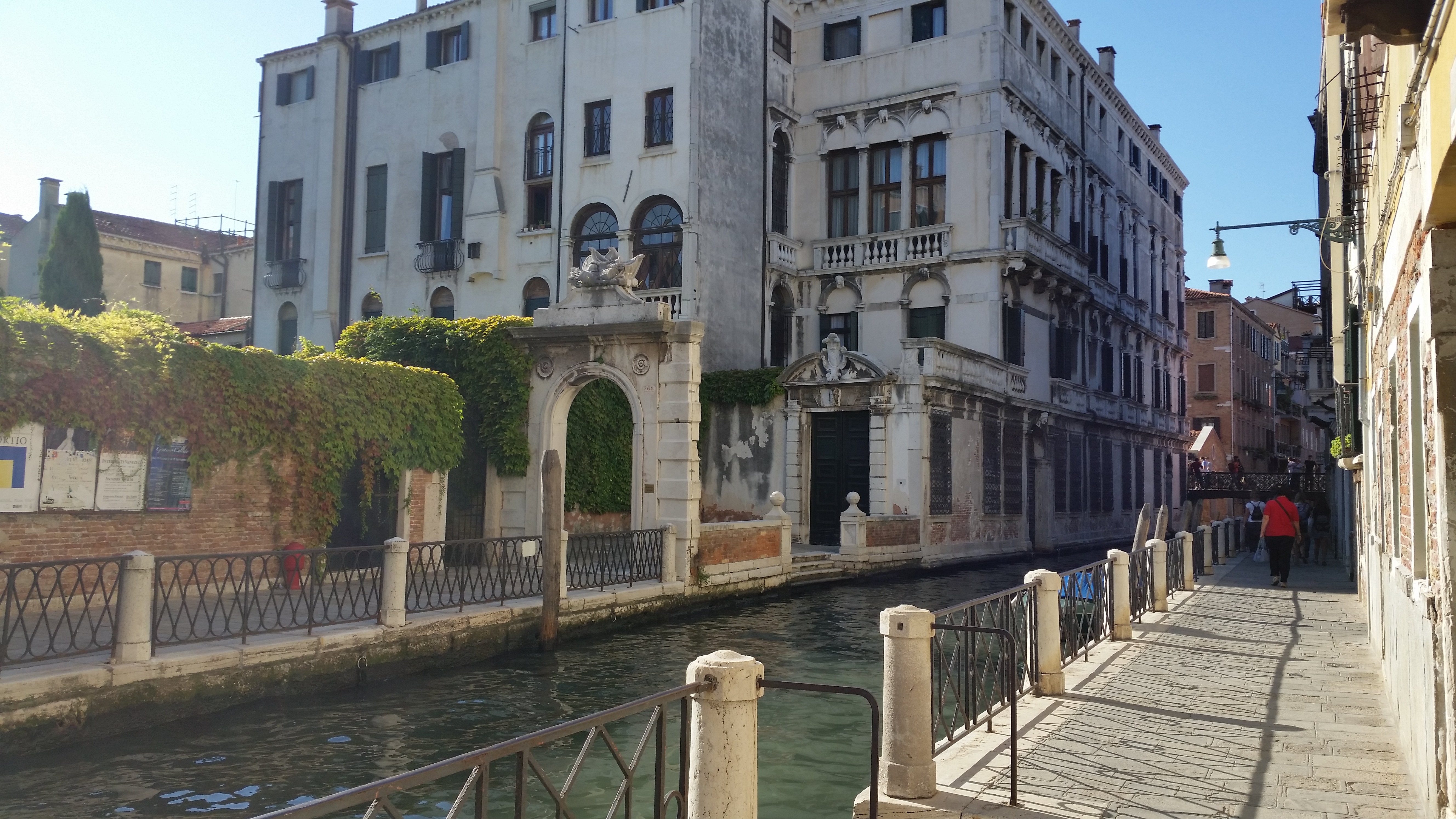
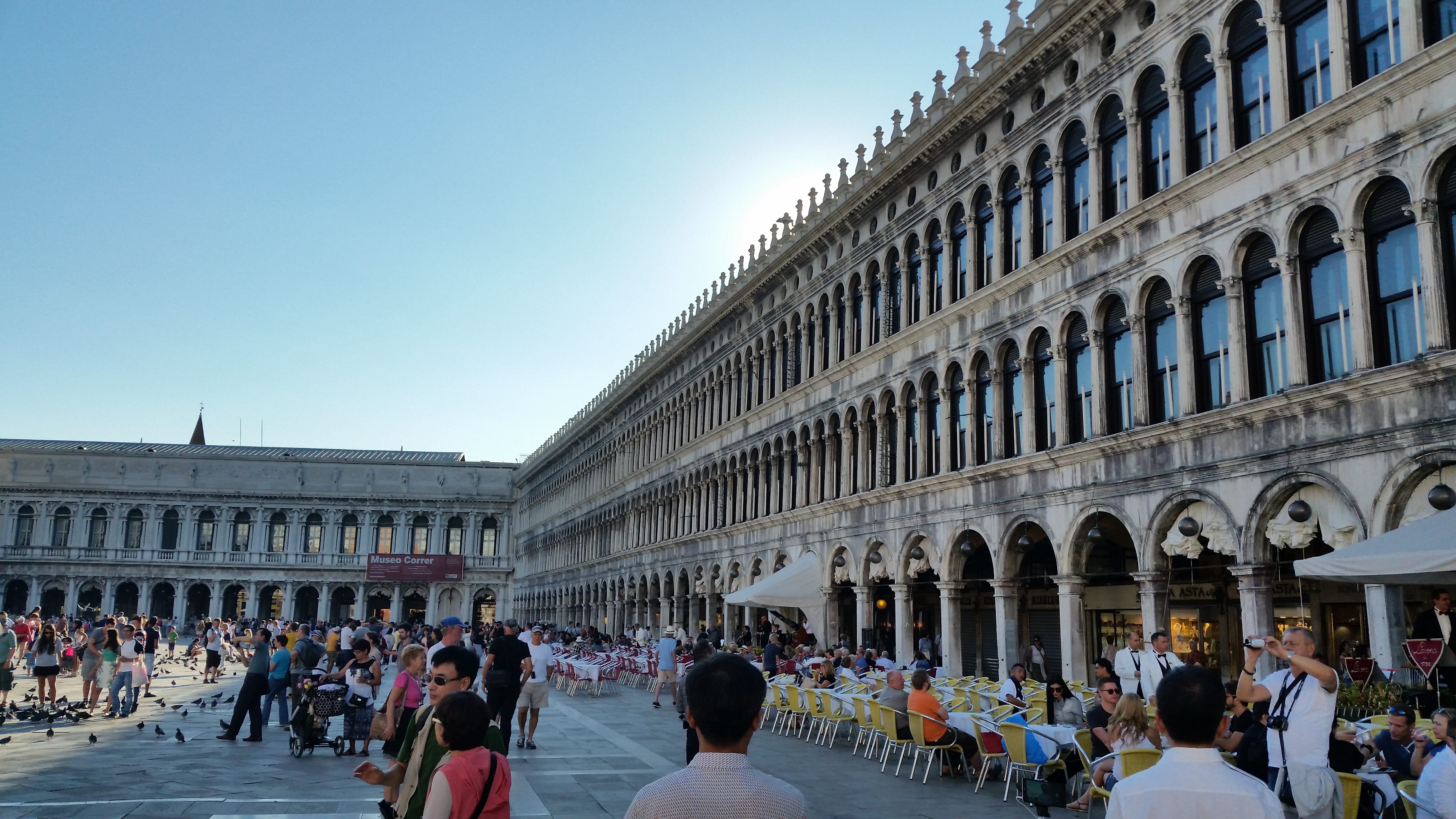
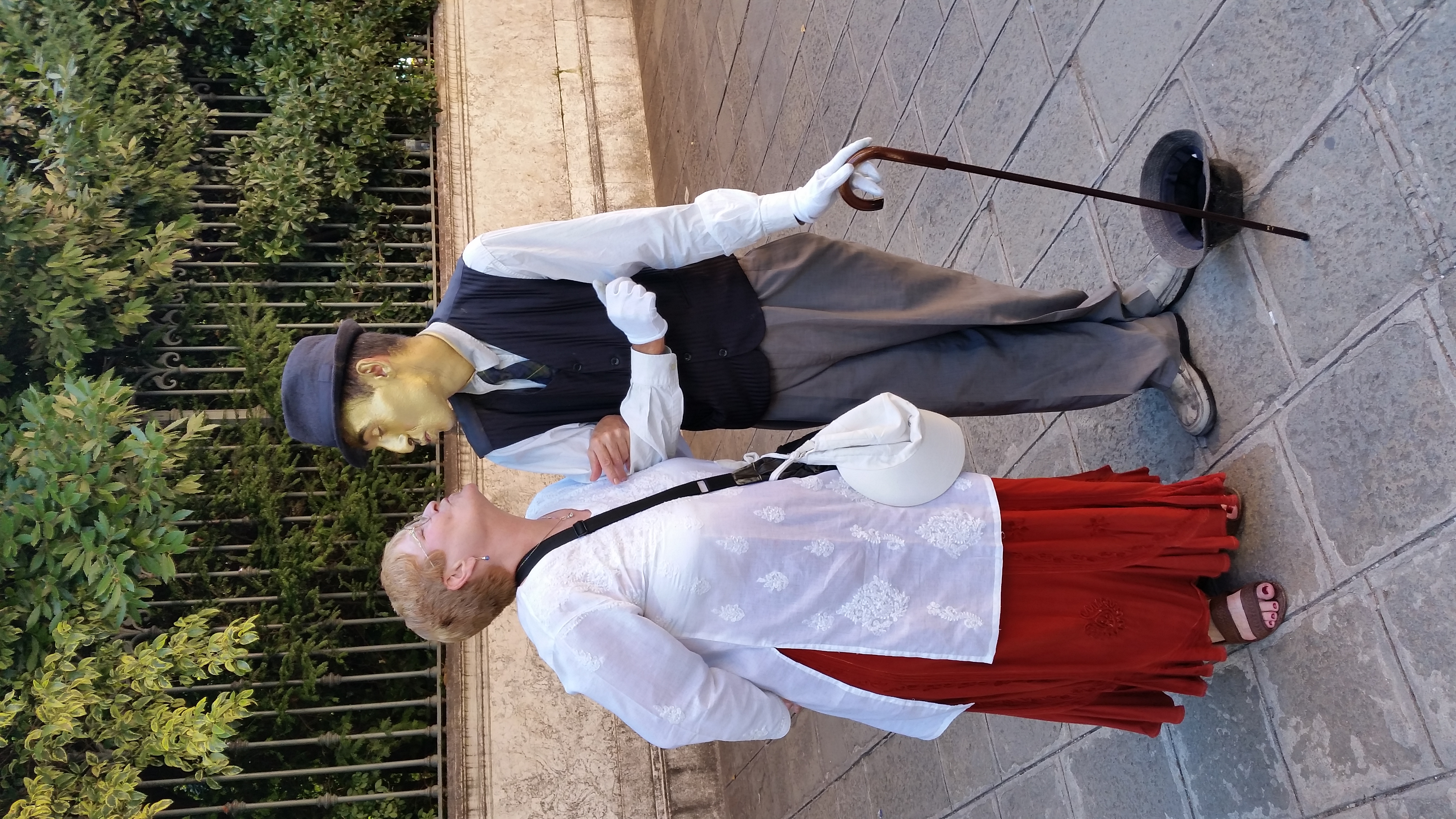
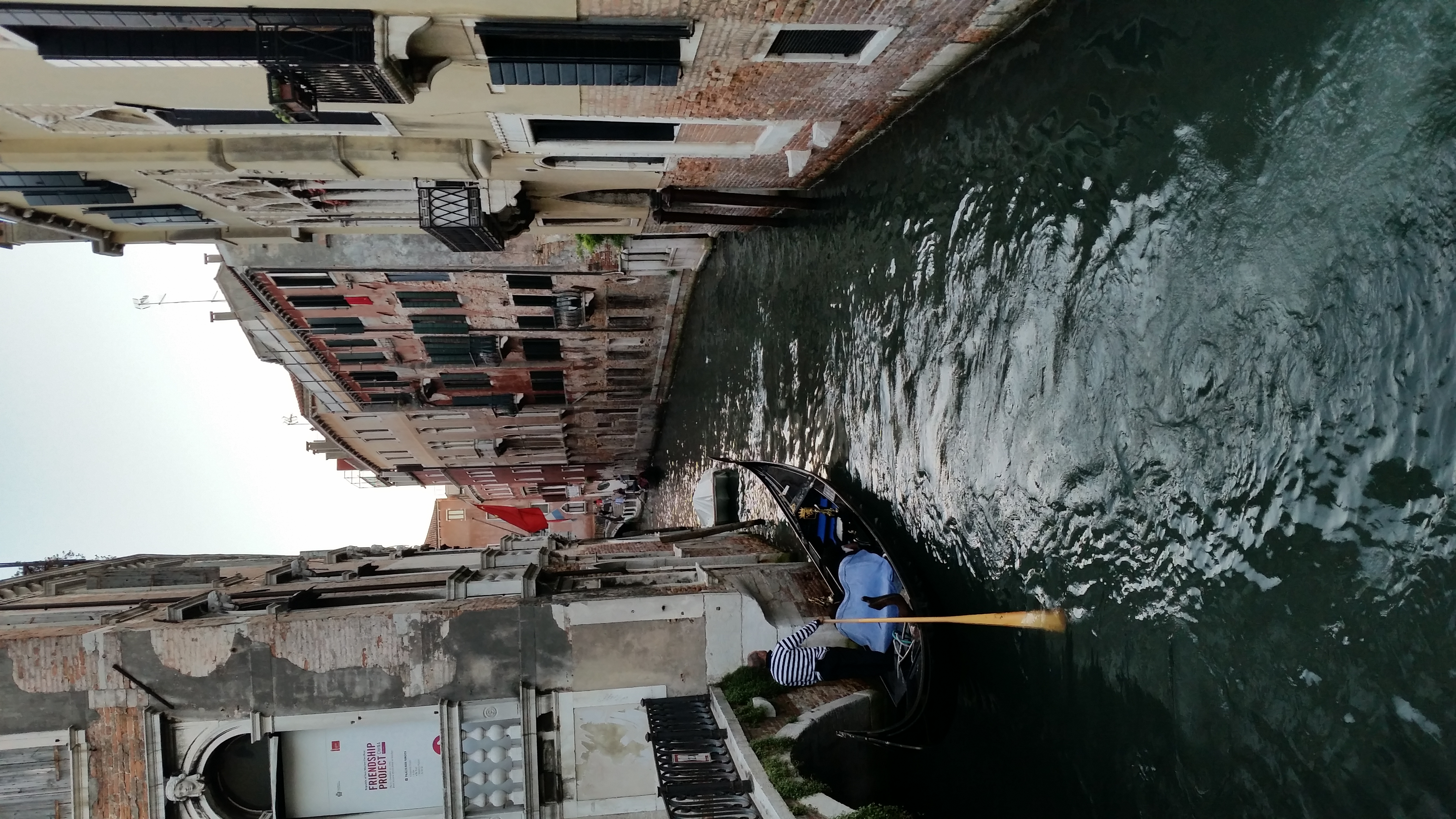
We arrived on September 5th, and Venice wasted no time introducing itself. We hadn't even found our accommodations yet when the streets started doing what Venice streets do — narrowing, turning, doubling back, refusing to go in the direction you're walking. I remember joking at some point about waiting for the caterpillar from Labyrinth to materialize out of one of the alleys and just start talking at us. It felt about that logical. We eventually found the place, dropped our bags, and that was already day one.A quiet canal winding between old buildings in Venice, ItalyA crowded square in Venice, ItalyMy mom posing with a street mime in VeniceThe next morning, before the tour started, my mom and I set out for Poveglia.
Poveglia
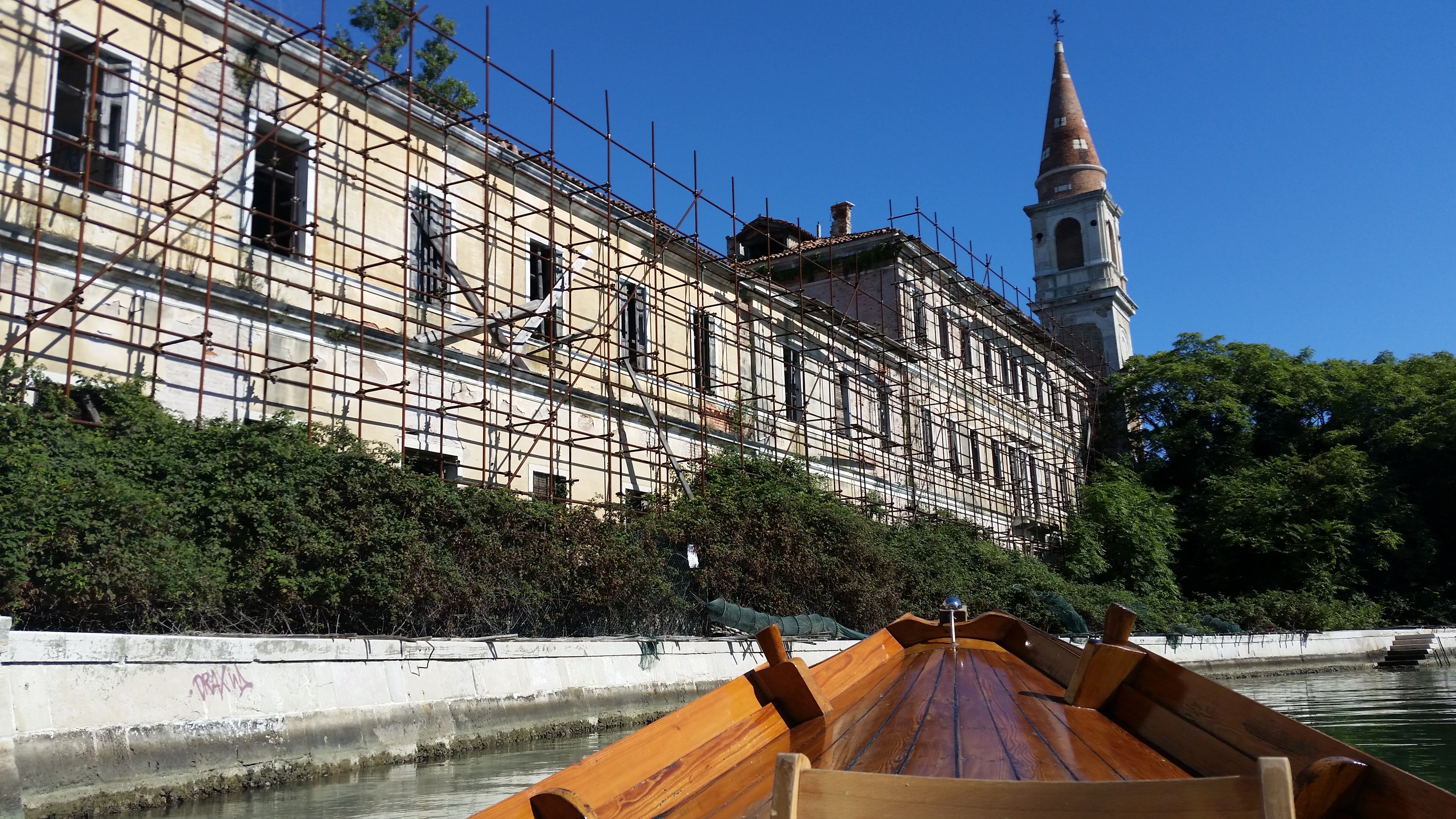
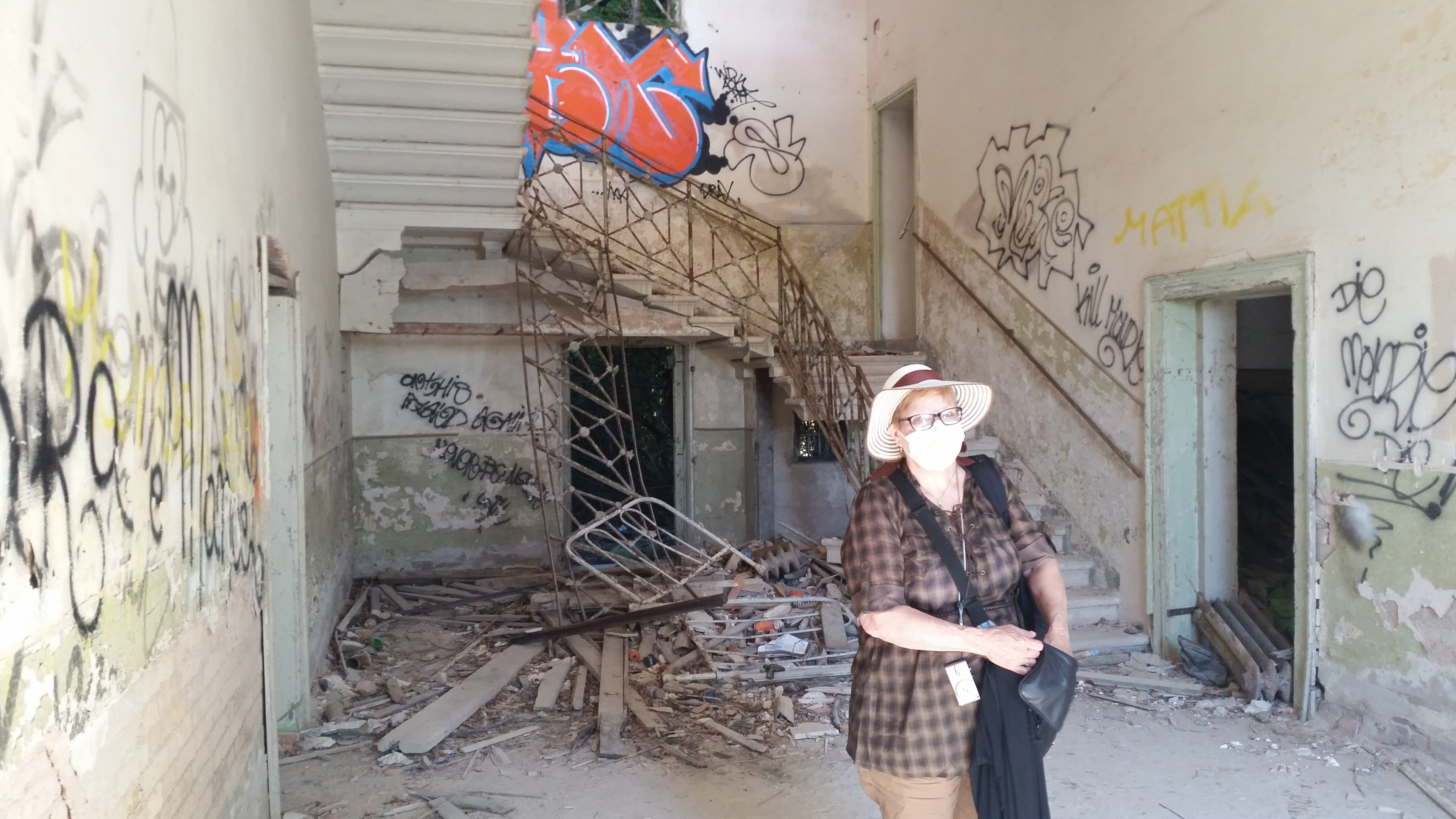
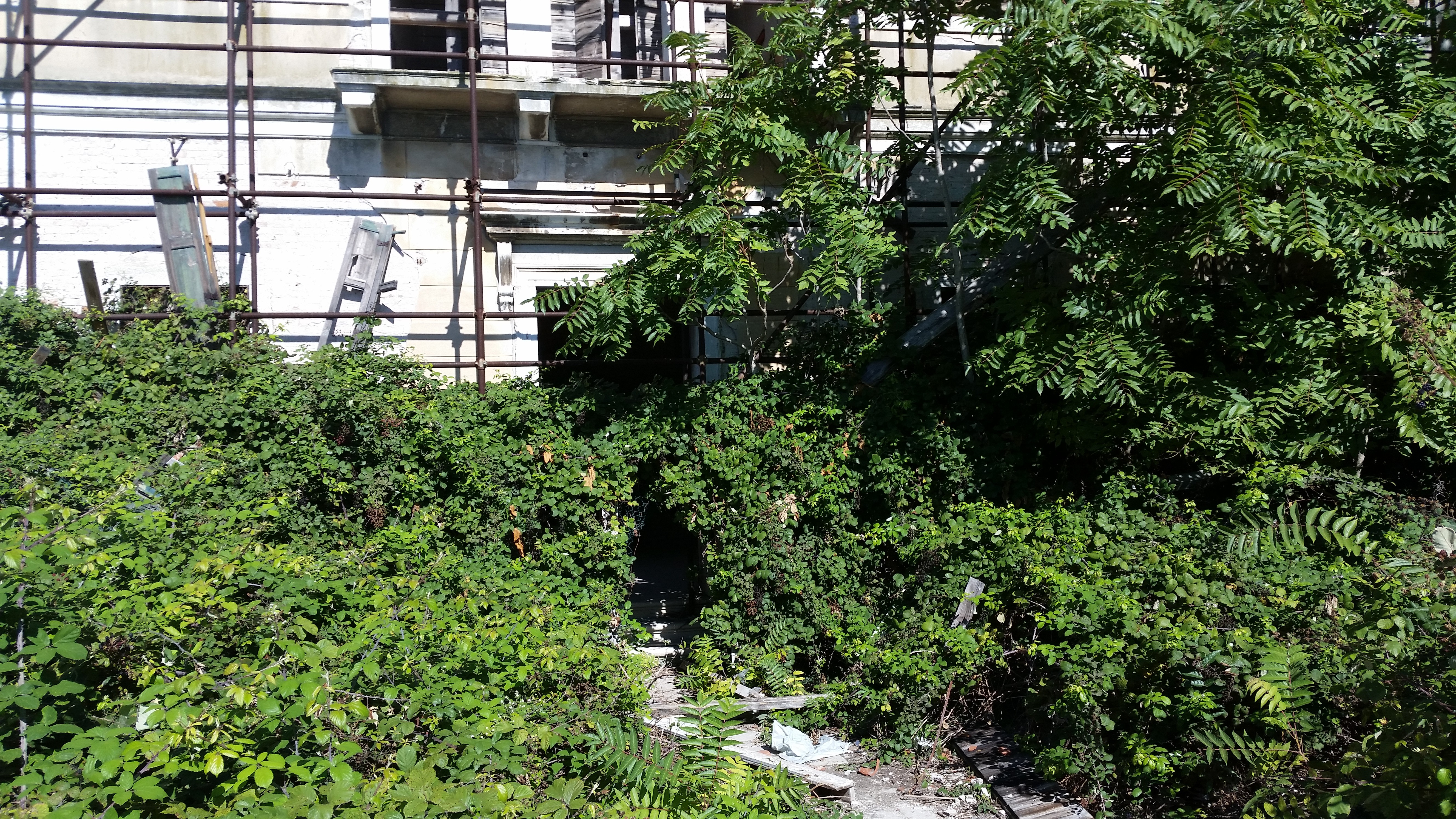
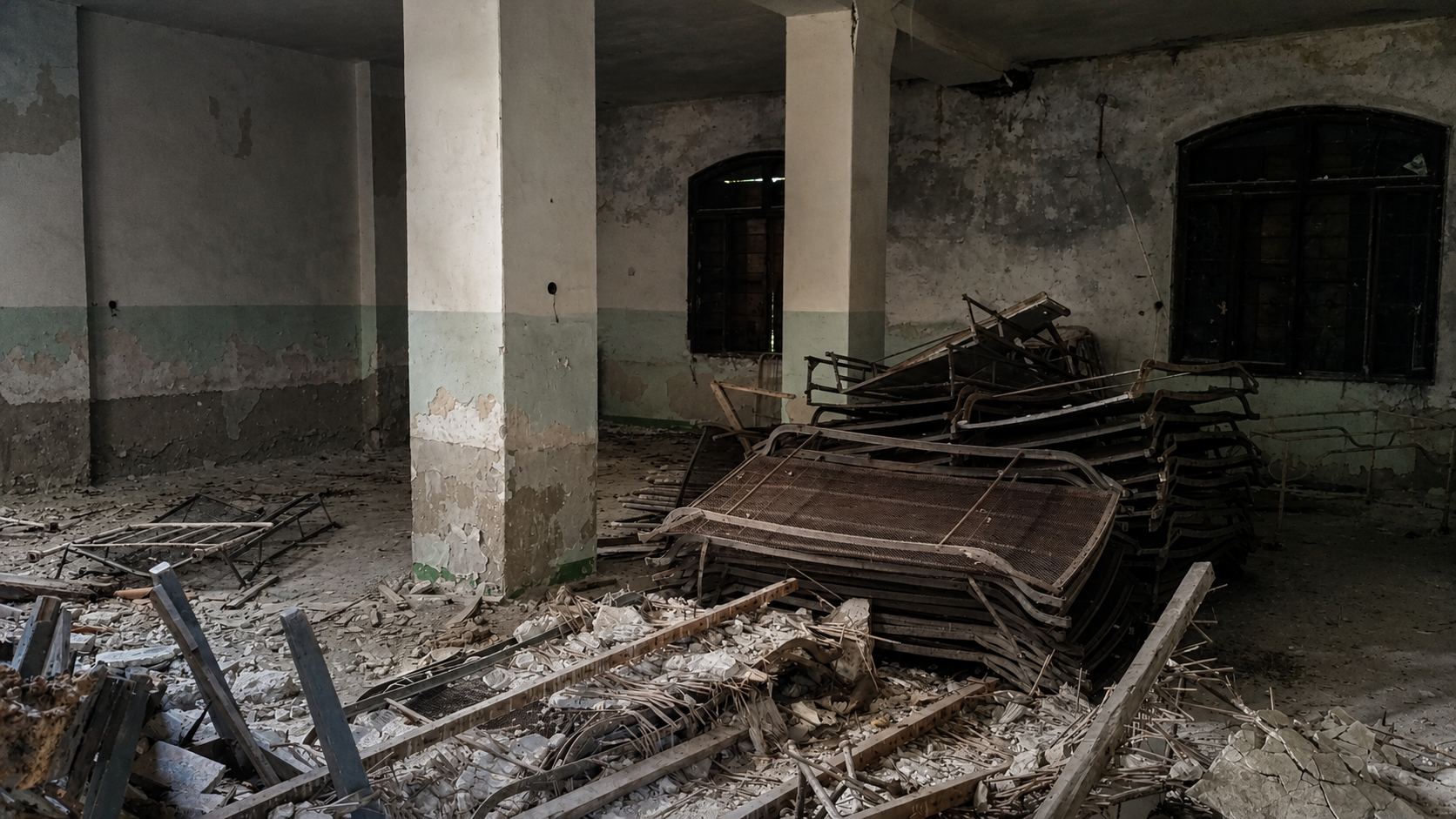
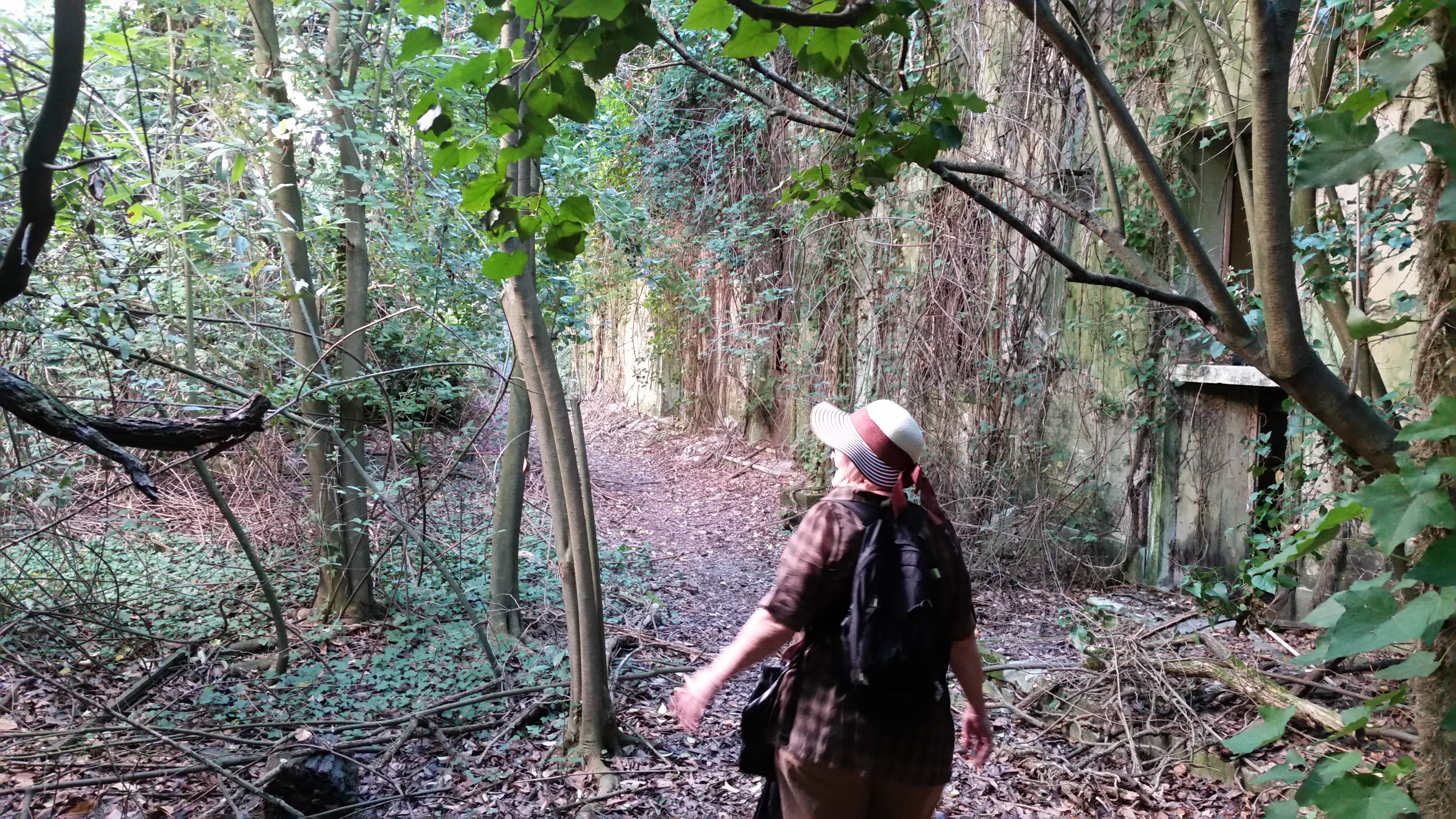
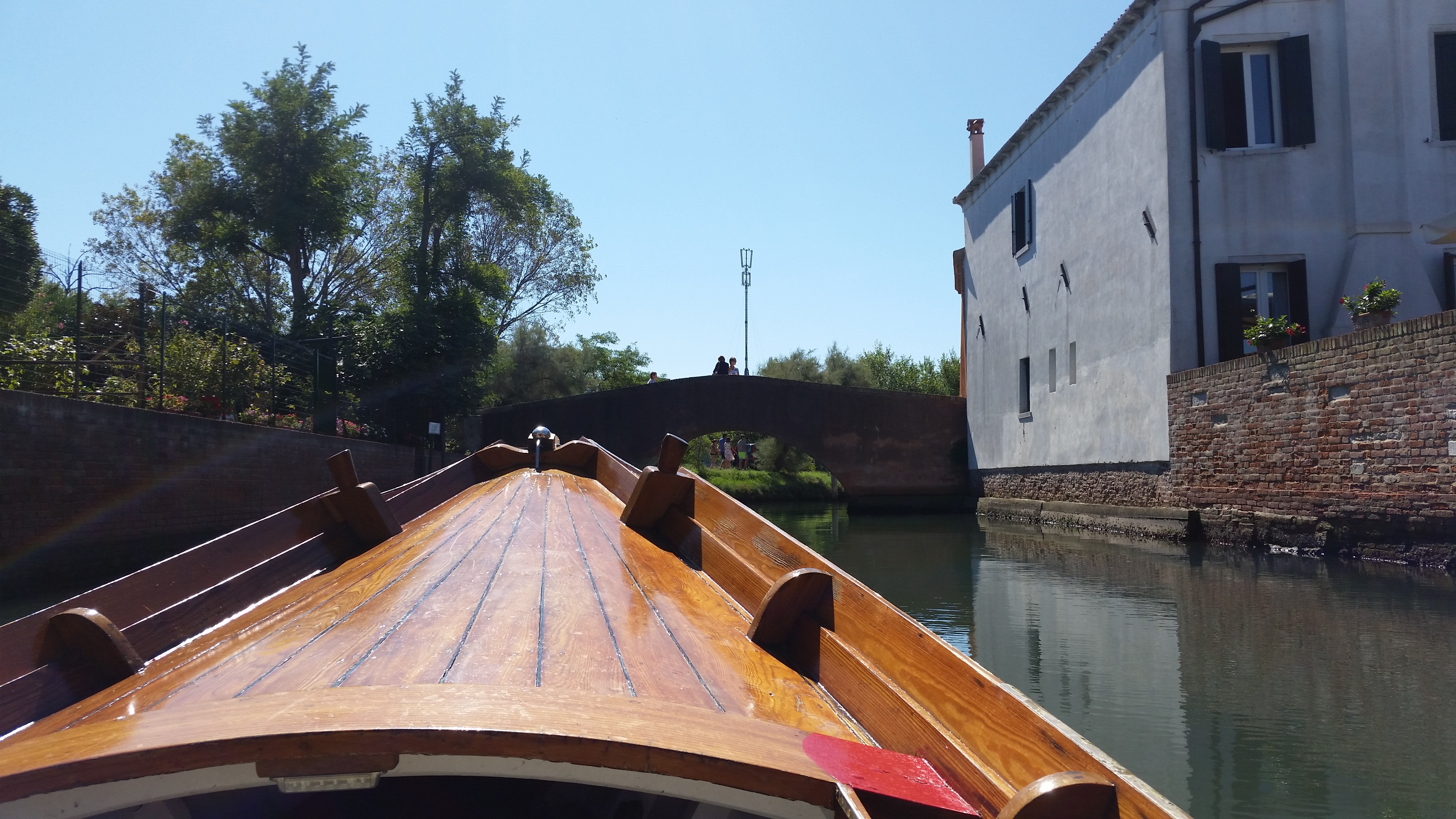
The boat took us out early. Poveglia sits a short distance from Venice and doesn't look like much from the water — a low island, trees, the outline of a collapsed bell tower. The island has a long history as a quarantine station. Plague victims were sent there in significant numbers, and by some estimates the soil contains the remains of over 100,000 people. It was later used as a psychiatric hospital until the mid-20th century, then abandoned entirely. The ruins of the hospital building are still standing, more or less.Crossing the Venetian lagoon by boat toward Poveglia islandPoveglia island and its collapsed bell tower seen from the waterOur guide made his position clear again as we approached: he was staying with the boat. My mom and I climbed out and spent maybe half an hour exploring. We wore masks — we were fairly confident there was asbestos in there, and possibly other things you shouldn't breathe, so it seemed like the right call. The building is stripped and deteriorating, floors sagging, walls opened to the sky in places, but it's still there and it's still an interesting place to walk through if you can get in.My mom wearing a mask inside the abandoned hospital on PovegliaAn overgrown doorway in the abandoned hospital on Poveglia islandThe decaying remains of the psychiatric ward on PovegliaMy mom exploring the overgrown ruins on Poveglia islandOn the way back, the guide made a brief stop at Giudecca, a long island just south of Venice's main islands that most tourists don't spend much time on. I wish I remembered more about it. What I do remember is that it was quieter and noticeably beautiful, and worth the detour.The quiet waterfront of Giudecca island in Venice
Back in Venice
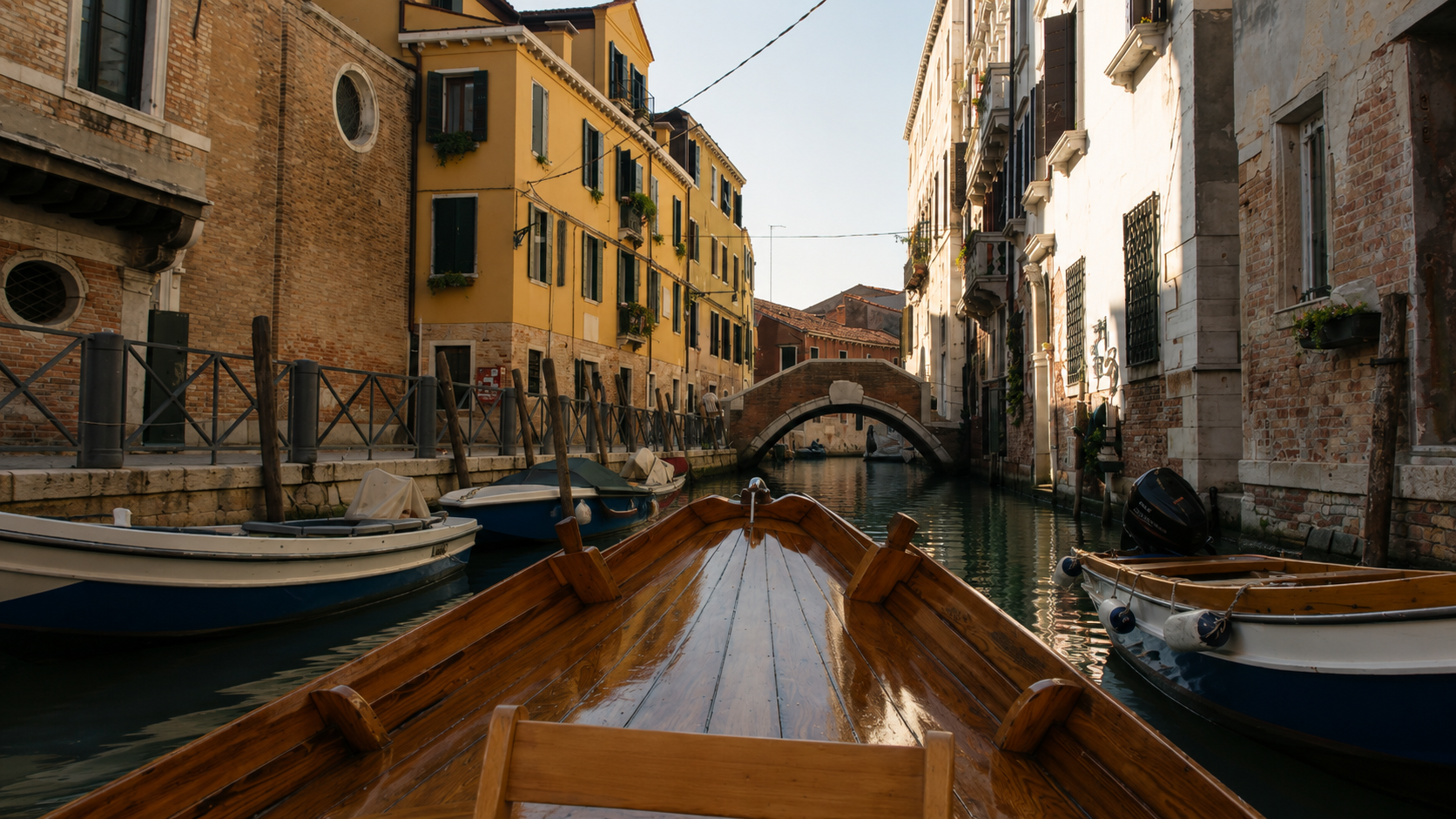
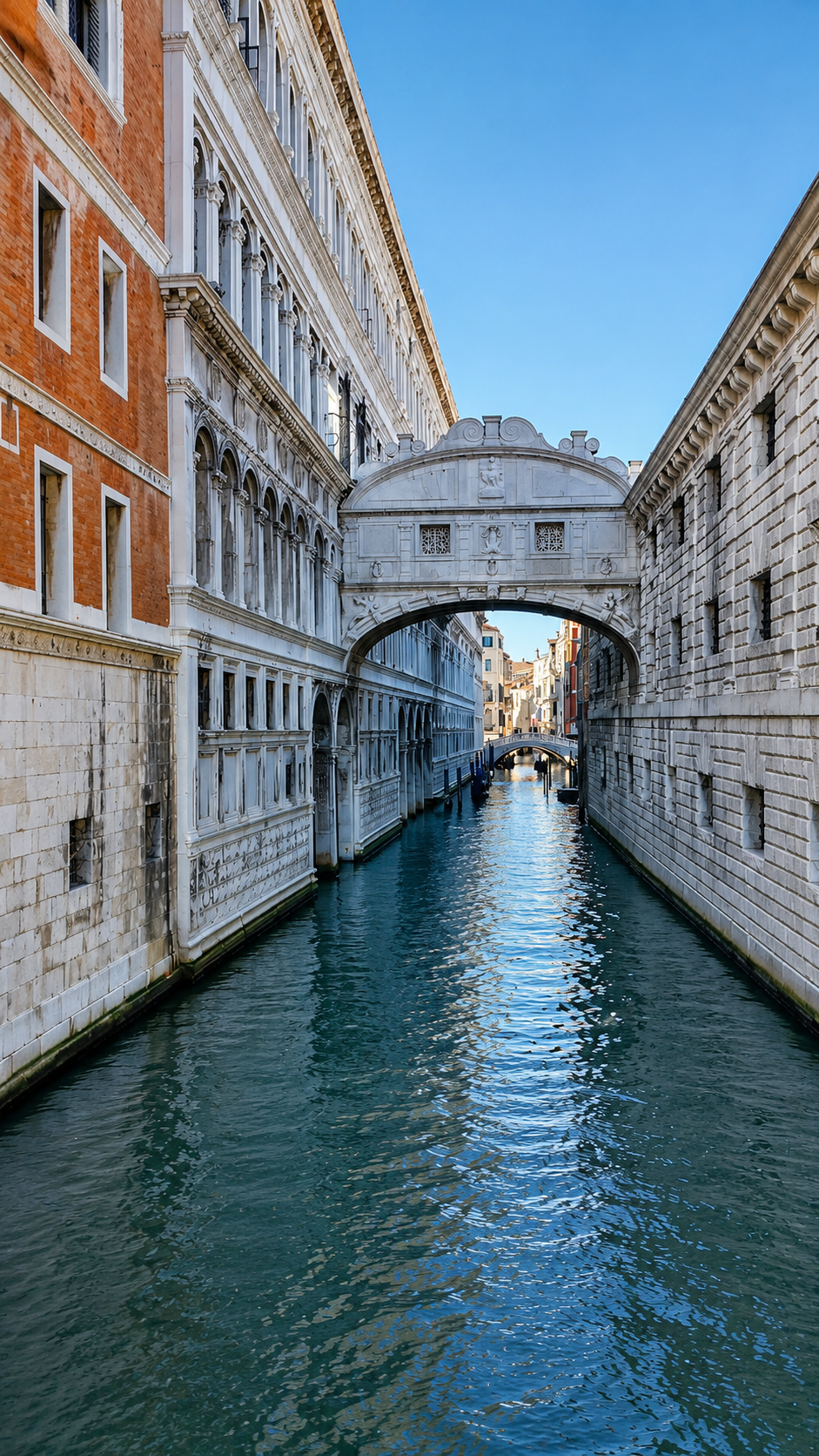
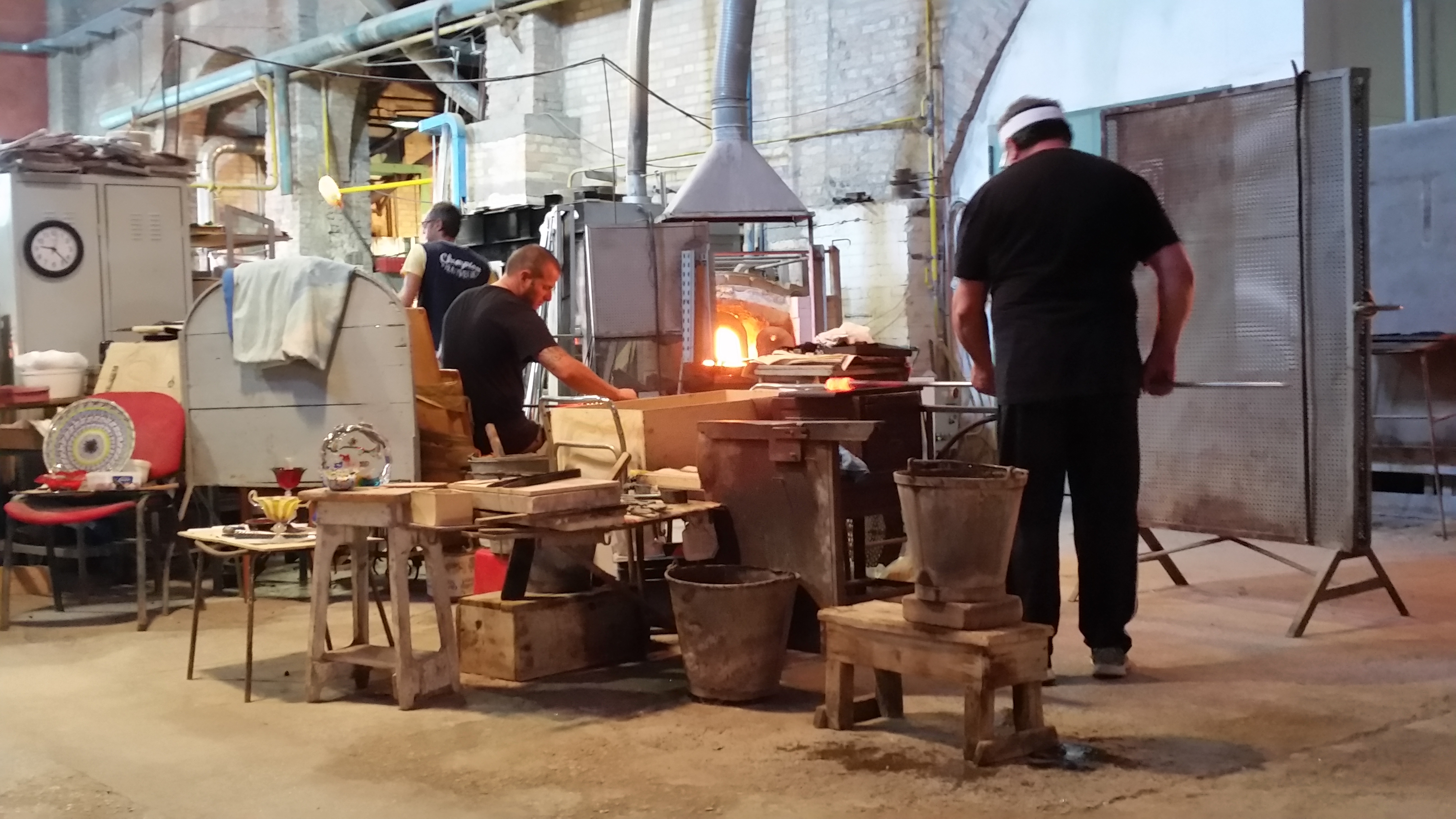
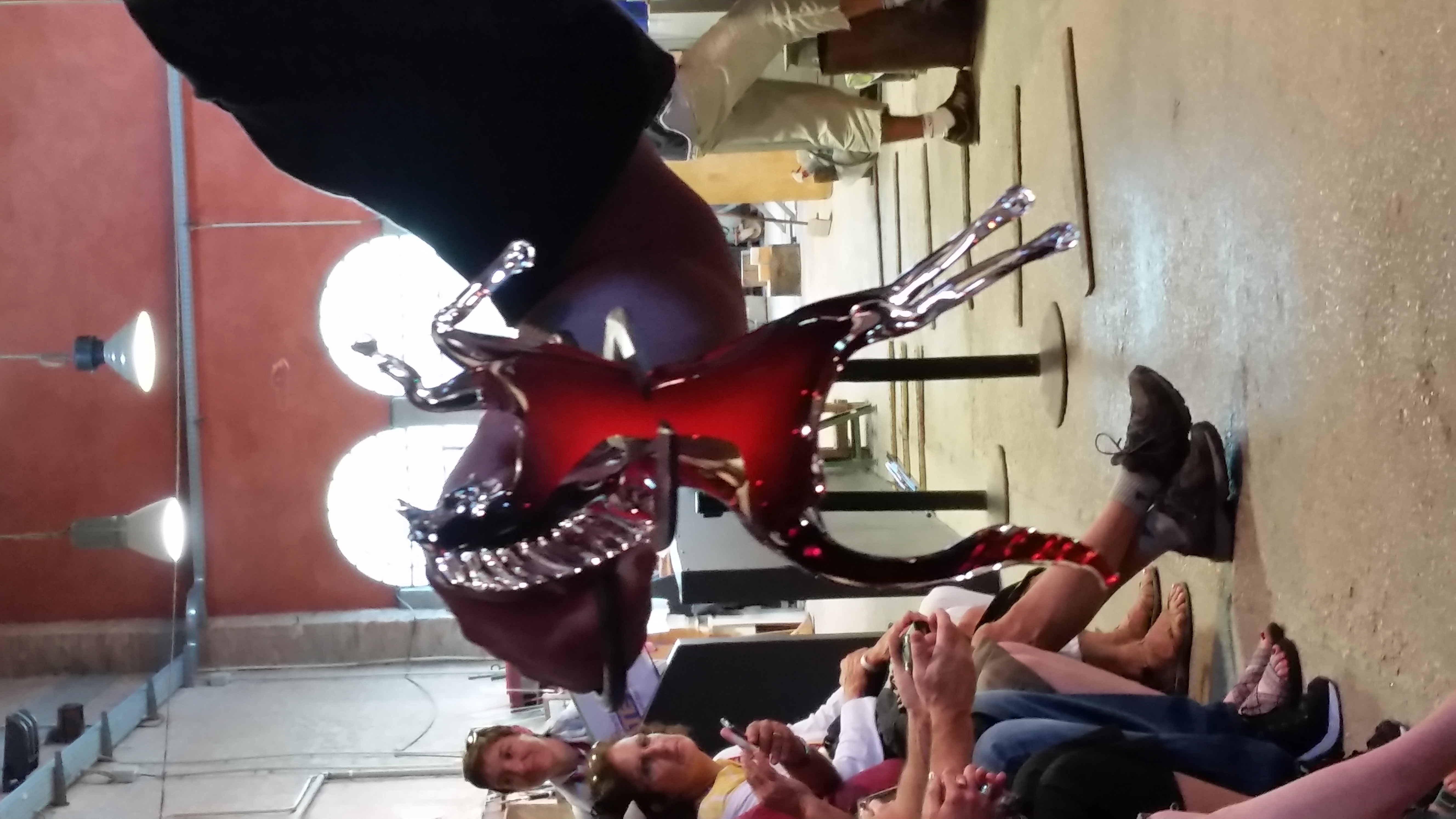
The tour picked up after that, and we had a few more days to actually explore the city properly — which in Venice means resigning yourself to the fact that you are going to get lost, repeatedly, and that this is just how it works. At one point we were absolutely certain we were heading the right way, navigating the tight alleys with real confidence, came around a corner, and walked straight out onto the waterfront. I looked across the water and recognized immediately the park our guide had mentioned — the one that meant you'd gone the wrong direction. There wasn't much to do except laugh, turn around, and try to figure out where it had gone wrong.A gondola on a narrow canal in Venice, ItalyVenice rewards that, though. The getting lost isn't a problem to be solved so much as the actual experience of the place. The alleys open onto small campos you weren't expecting, bridges appear over canals you didn't know were there, and you end up standing in front of something genuinely beautiful with no idea how you got there. We saw the Bridge of Sighs, wandered past monuments and palaces, and spent real time just moving through the city without any particular agenda. Being there in September helped — the crowds were manageable in a way they apparently aren't earlier in the year, which in a city that narrow makes a real difference.The Bridge of Sighs in Venice, ItalyThe tour included a glassblowing demonstration, which I have zero complaints about. I genuinely like watching glassblowing — there's something about the process that I find completely worth stopping for. They also had pieces available to buy afterward, the kind of small glass figures they produce in quantity, and I bought a glass horse. It was exactly the kind of souvenir you buy in the moment and then handle with less care than it deserved once you're home. I broke it not long after getting back to Ohio.A traditional glassblowing demonstration in VeniceA handmade Venetian glass horse
Pisa & Florence
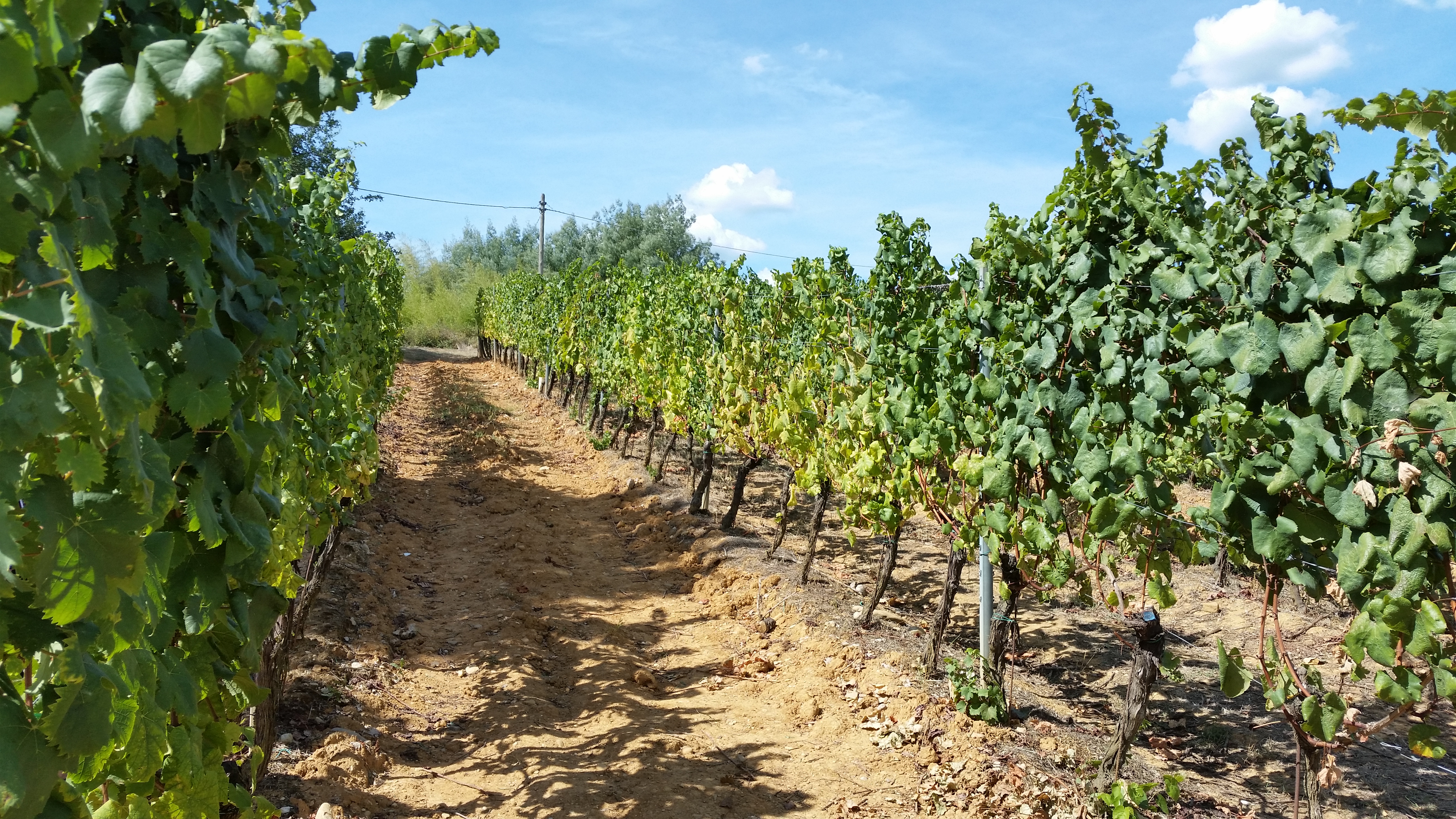
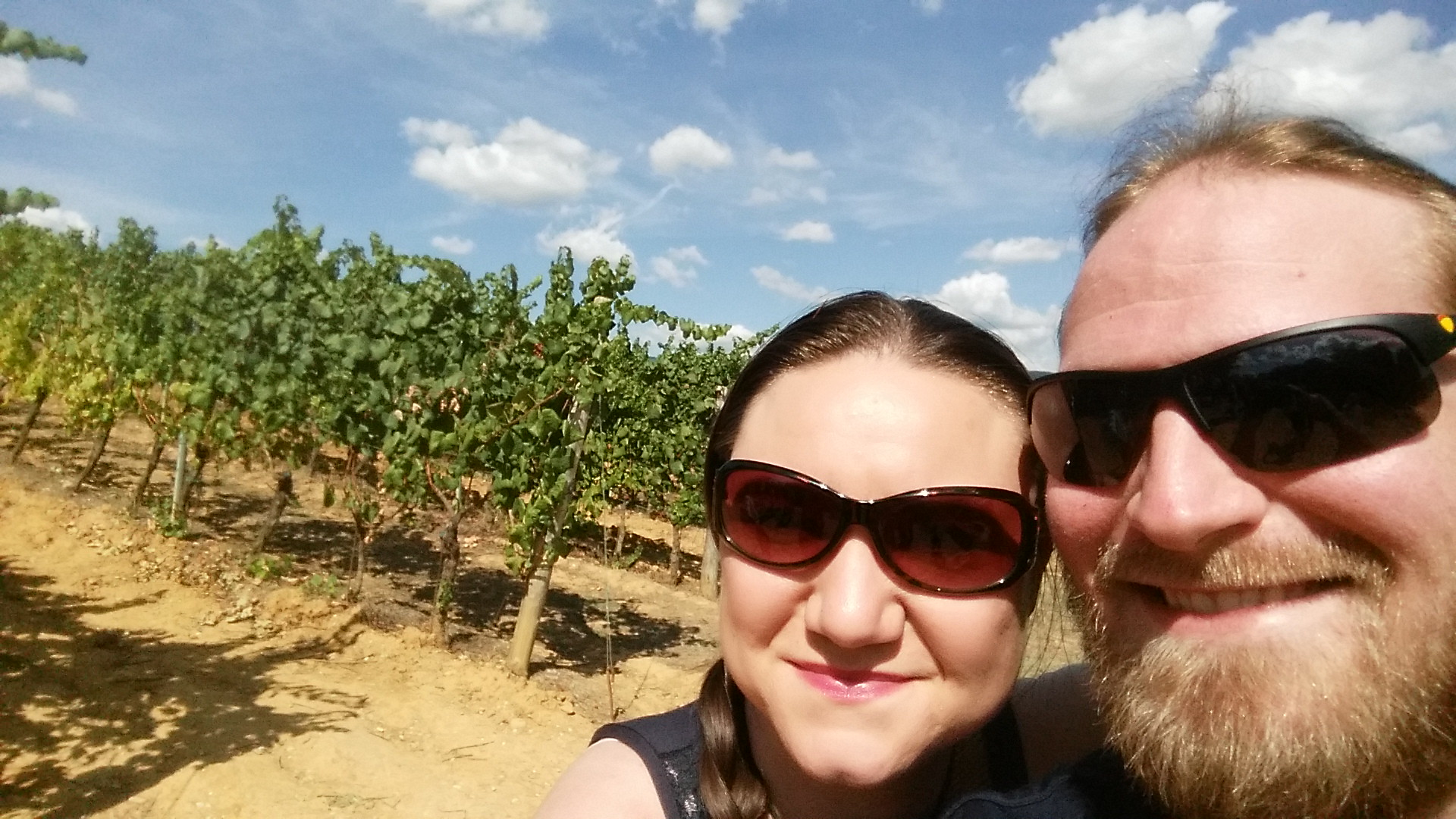
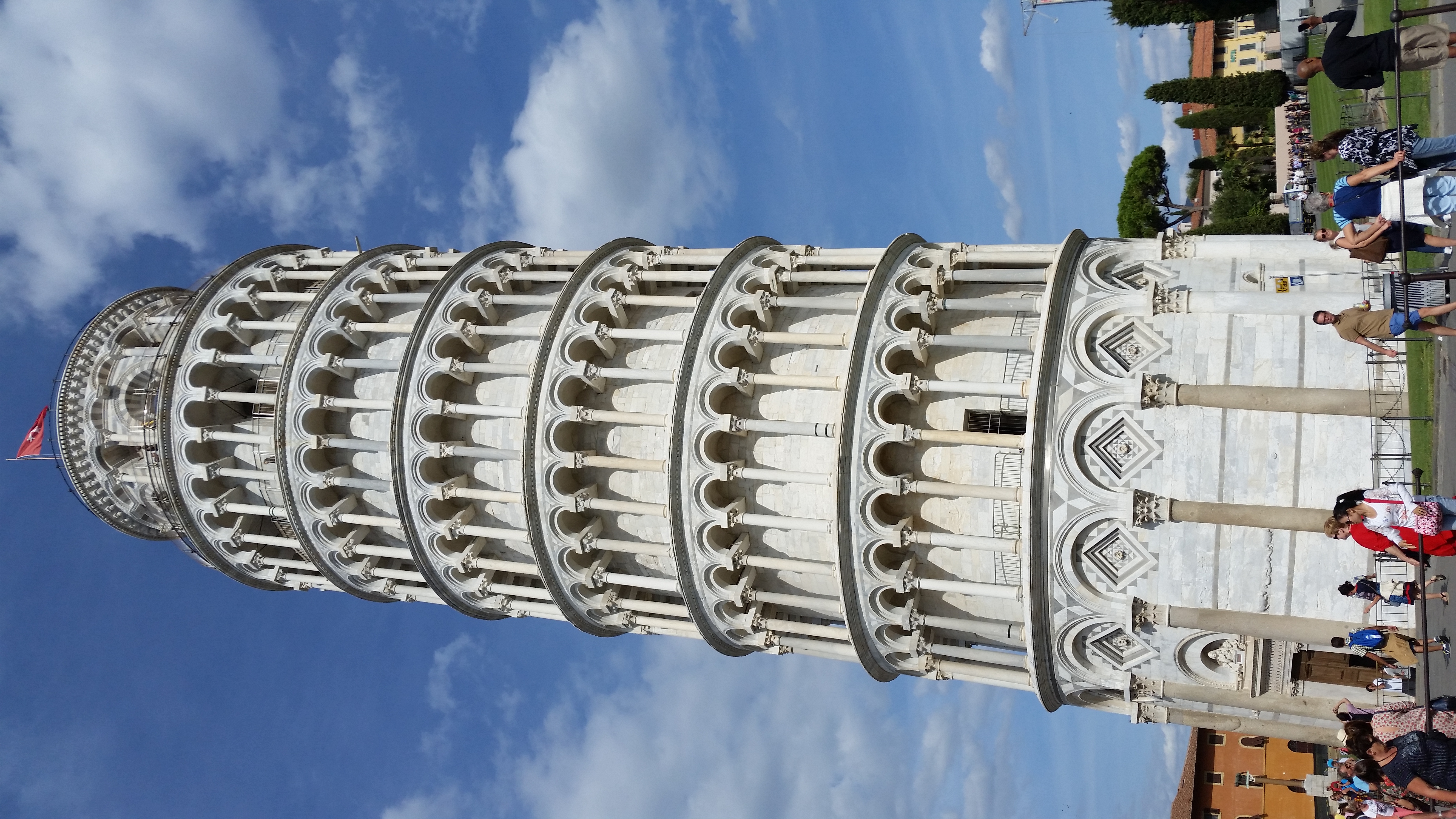
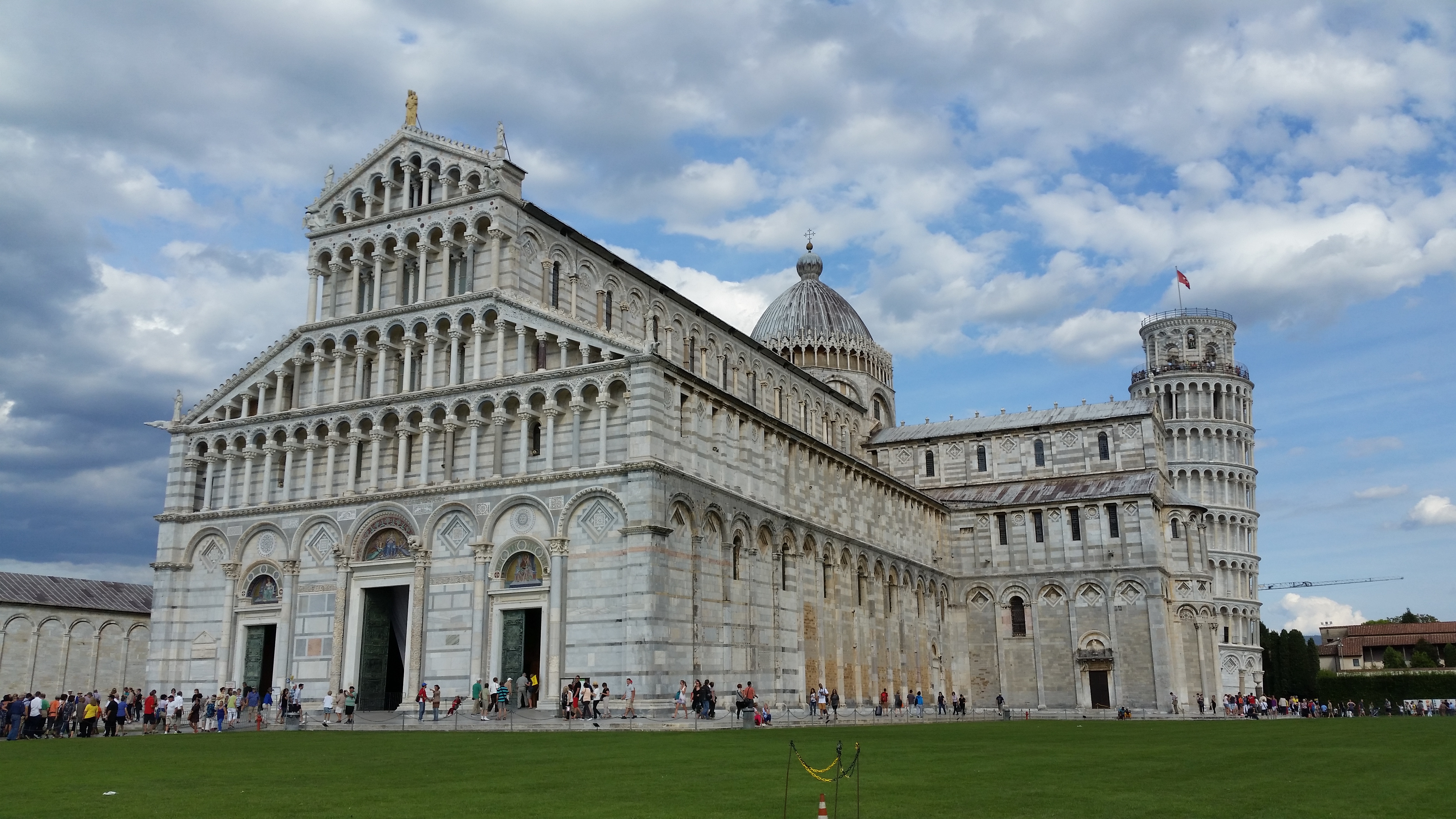
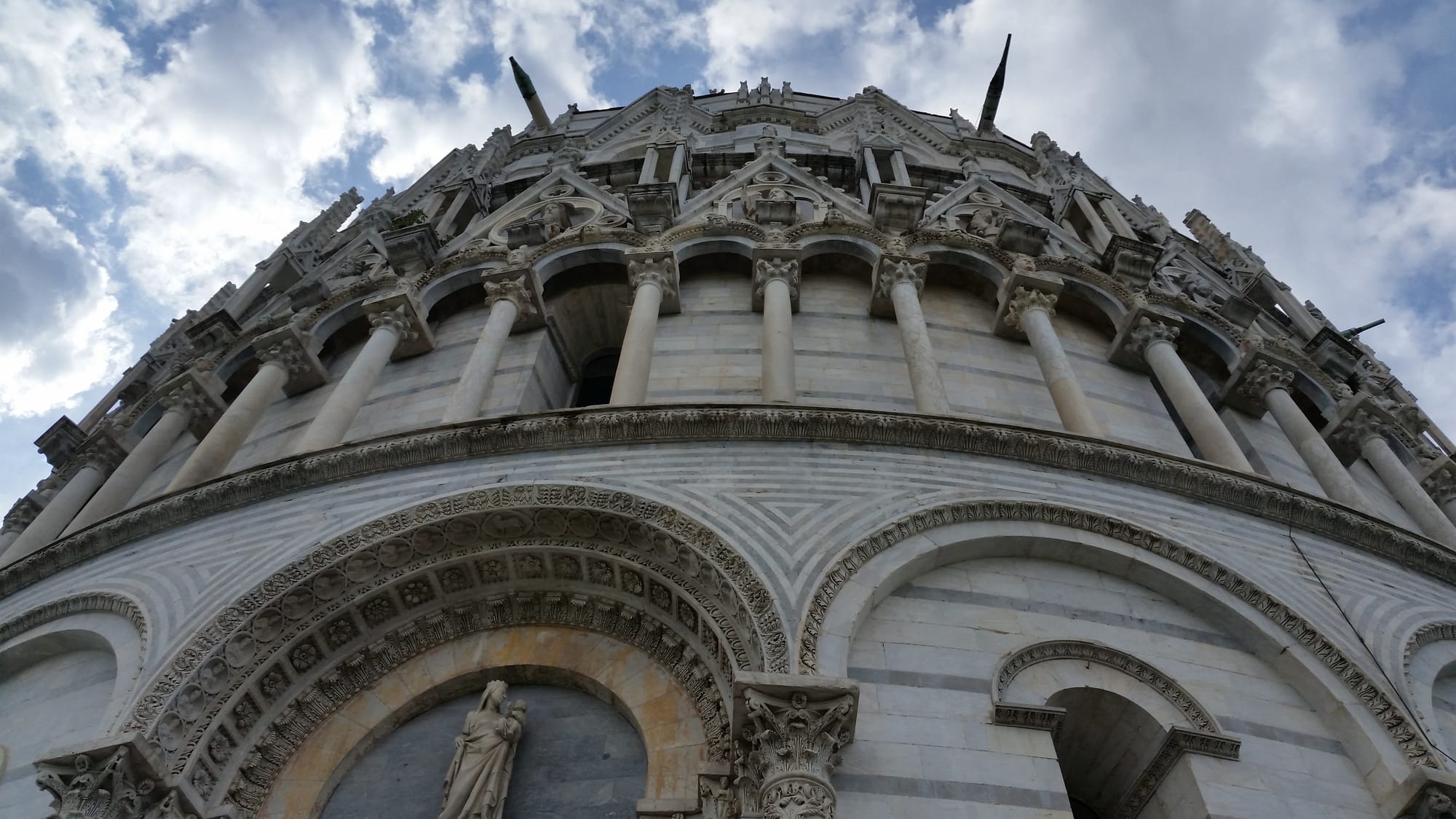
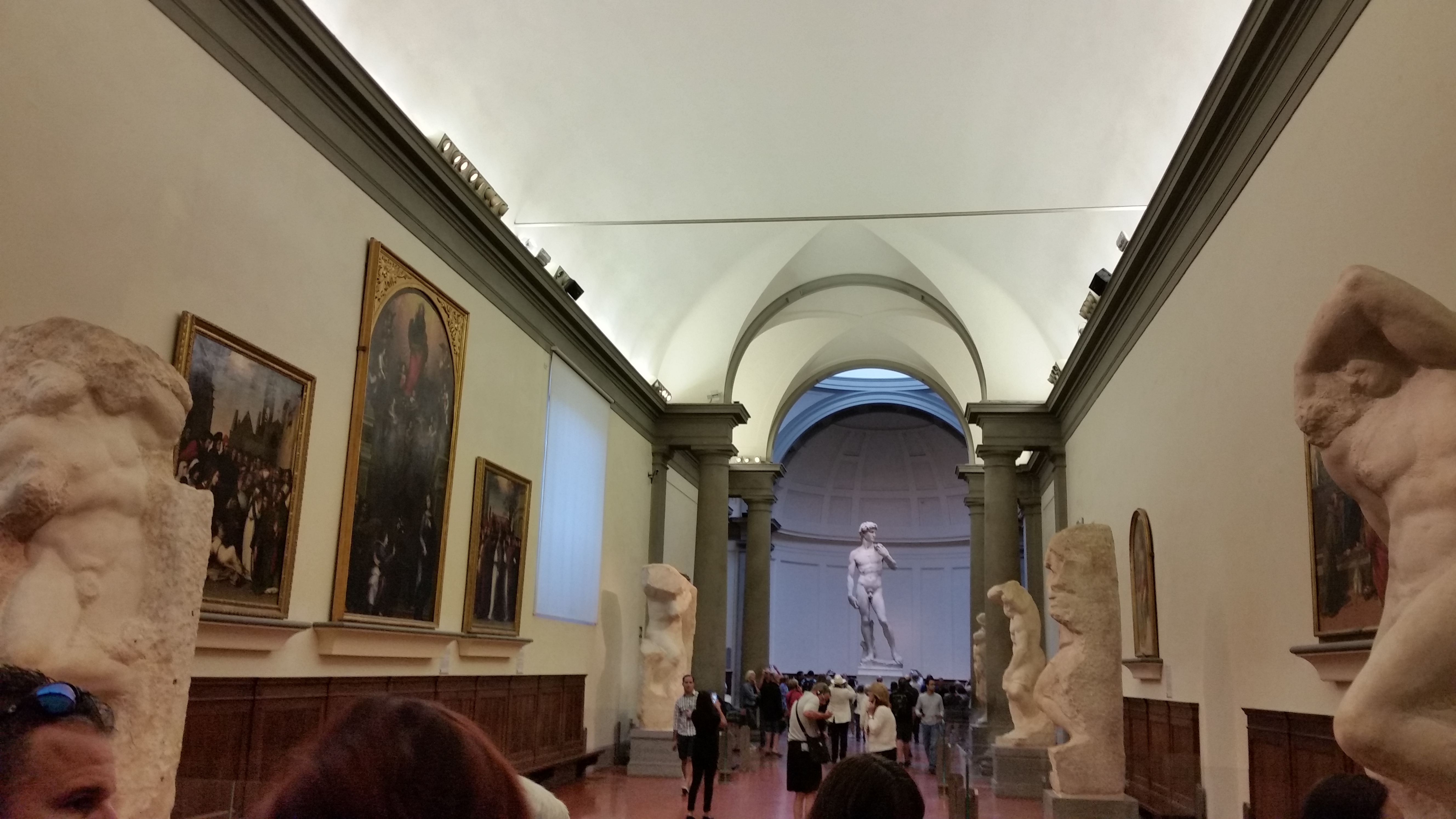
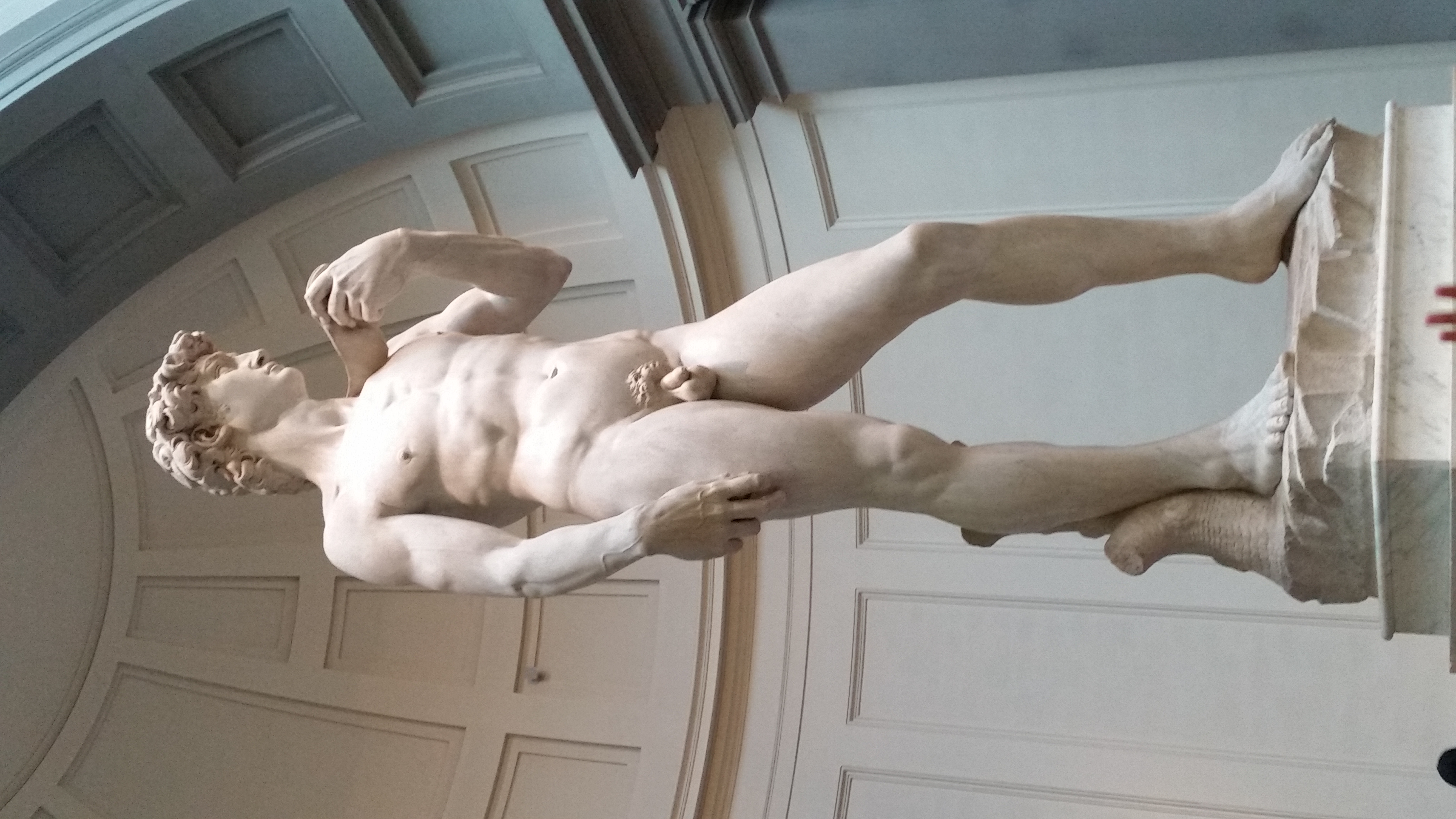
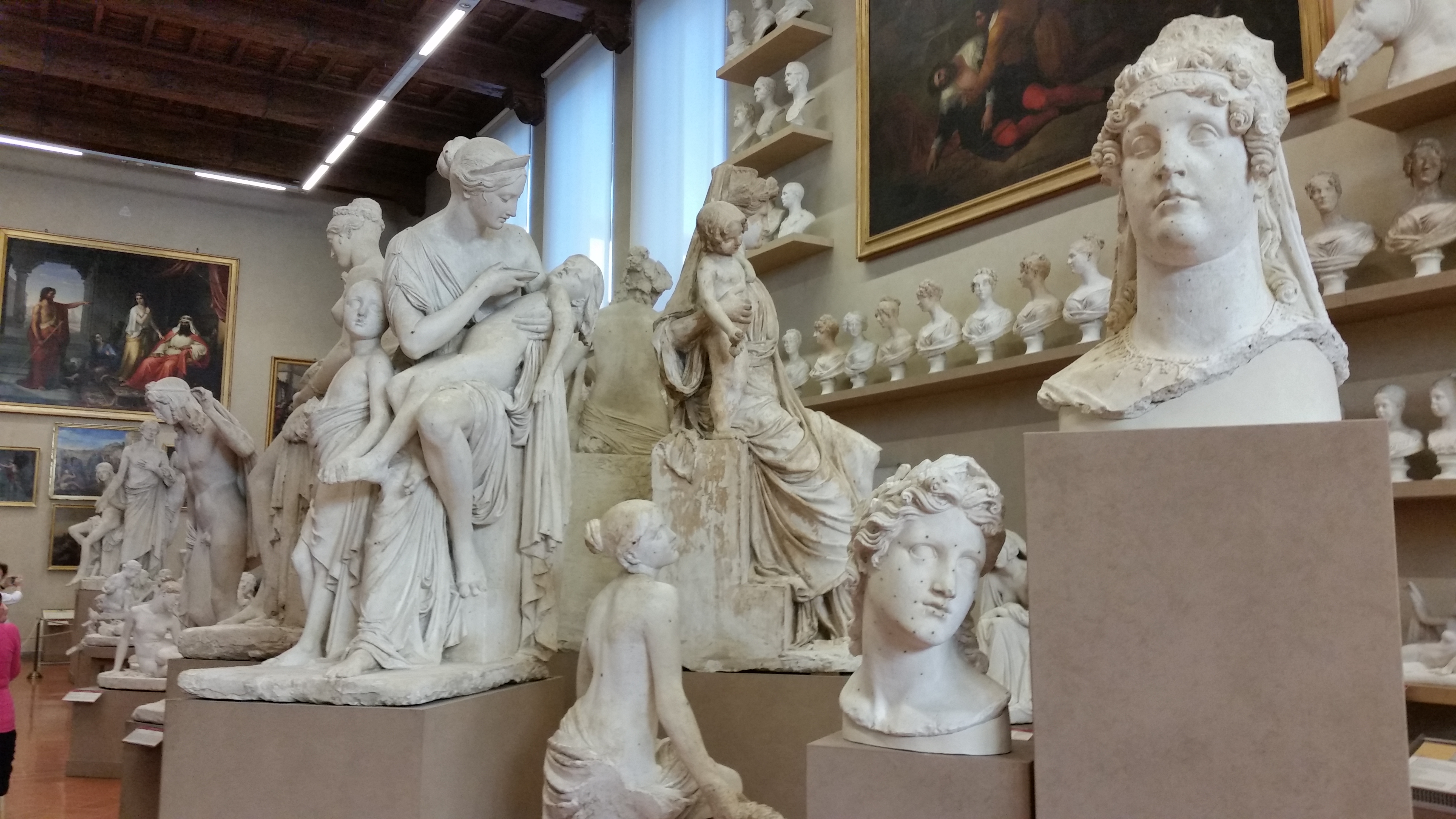
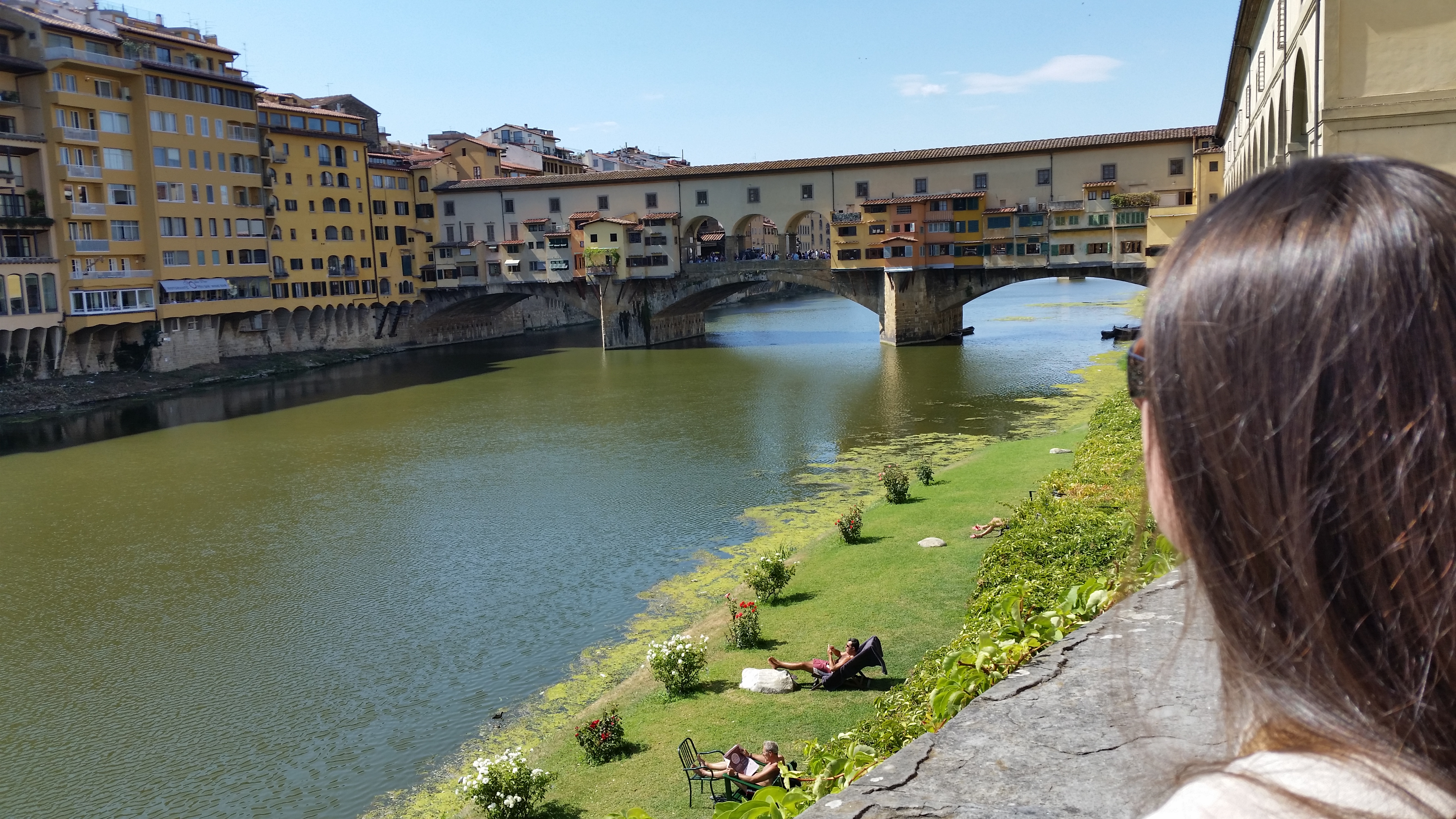
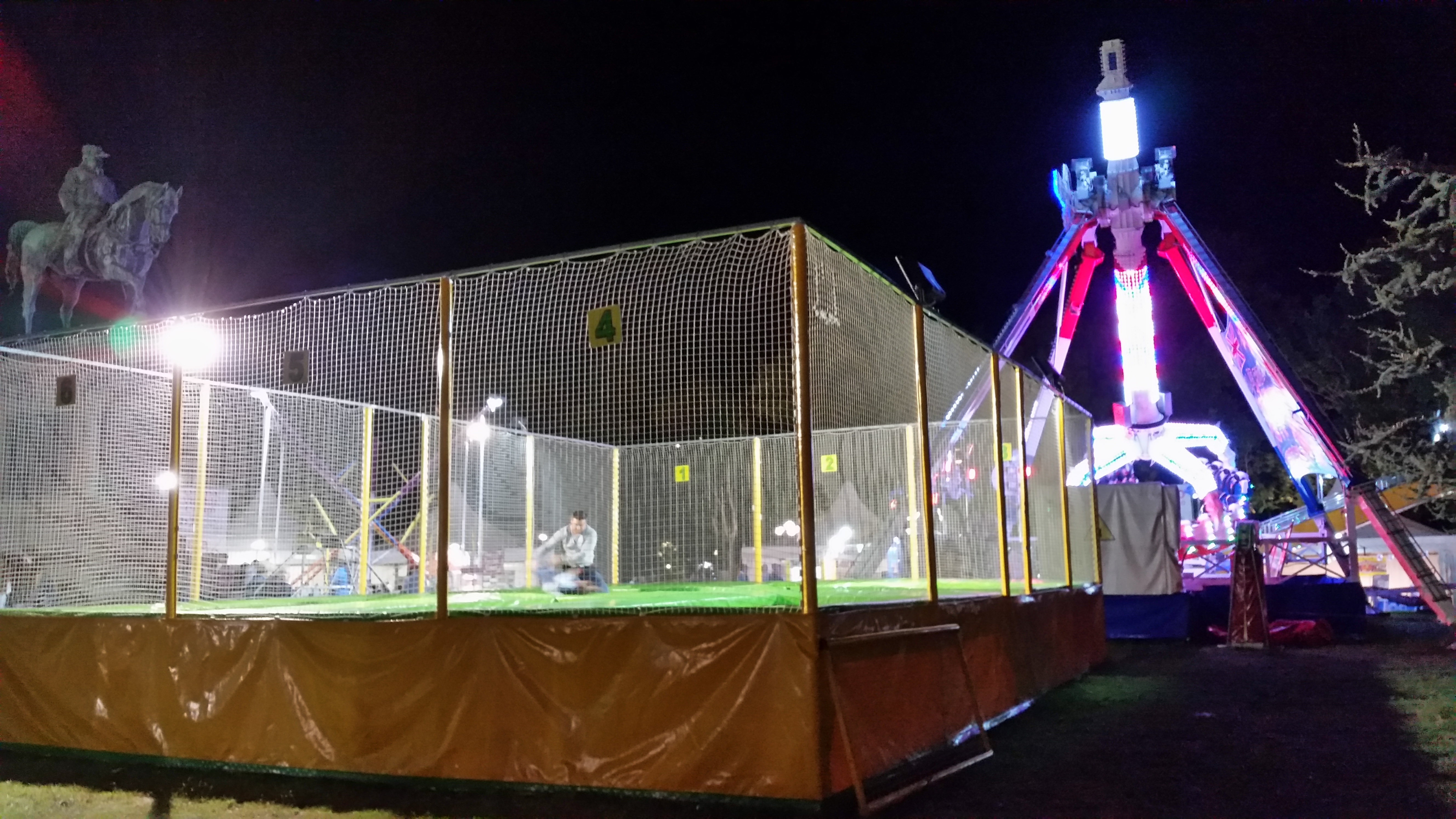
After a few days in Venice we headed south, stopping at a winery somewhere along the route — I have photos to prove it — though I couldn't tell you much about it beyond the fact that it looked the way Tuscan wineries are supposed to look.A vineyard at a Tuscan winery in ItalyMe and my sister at a Tuscan winery, ItalyOn the way we stopped in Pisa. We looked at the Leaning Tower, agreed it had a more dramatic lean than you expect from photographs, and moved on without paying to go inside — the line didn't justify it. What we spent real time on there was the Duomo di Santa Maria Assunta, the cathedral right beside the tower. At that stage in our travels we hadn't yet hit the wall on churches, and churches are how you see some of the best sculpture work in Italy, so you keep going until you can't anymore.The Leaning Tower of Pisa, ItalyPisa Cathedral, the Duomo di Santa Maria Assunta, beside the Leaning TowerThe Pisa Baptistery in the Piazza dei MiracoliThe real experience in Florence was the Accademia Gallery. The David is there, and yes, it's a good statue. But the thing I remember most is watching tour group after tour group file in, stand in the one room with the David for thirty or forty minutes, and then turn around and walk back out. Almost no one went further. The museum around it — the rest of the building, the rest of the collection — went almost entirely ignored. We did our look at the David, took the photos, and then went and saw everything else. That's the only way I'd recommend doing it.Crowds gathered around Michelangelo's David at the Accademia Gallery in FlorenceMichelangelo's David at the Accademia Gallery, FlorenceSculptures lining a hall in the Accademia Gallery, FlorenceThe tour guide we had at some point during Florence told us to avoid buying anything on the Ponte Vecchio because everything there was overpriced. Then that same guide took us to their partner leather shop, which had prices well above anything I'd seen on the bridge. I ended up buying a leather wallet on the bridge instead — soft lamb leather, around thirty dollars. I still use it. Over ten years later it doesn't look great, but it has held together, which feels like a reasonable outcome for thirty dollars.The Ponte Vecchio spanning the Arno River in FlorenceThe thing I remember most about Florence, though, wasn't on any itinerary. There was a pop-up carnival running across the street from our hotel — not a tourist setup, just a local fair — and we obviously had to go. Most of it was what you'd expect from a fair anywhere, but one detail has stuck with me ever since: it had a library. A full tent you could walk into, pick out a book, sit down, and read. And people were actually using it. I've never seen a carnival in the US do anything close to that, and I don't expect I ever will. Florence wasn't my favorite stop of the trip — the museums aside — but a local fair full of locals, with a working library in the middle of it, was one of the better nights of the whole thing.A pop-up local carnival in Florence, Italy
🎭
Unforgettable Experiences
Florence has incredible experiences worth booking in advance
Affiliate links • Helps fund my adventures at no extra cost to you
Malta
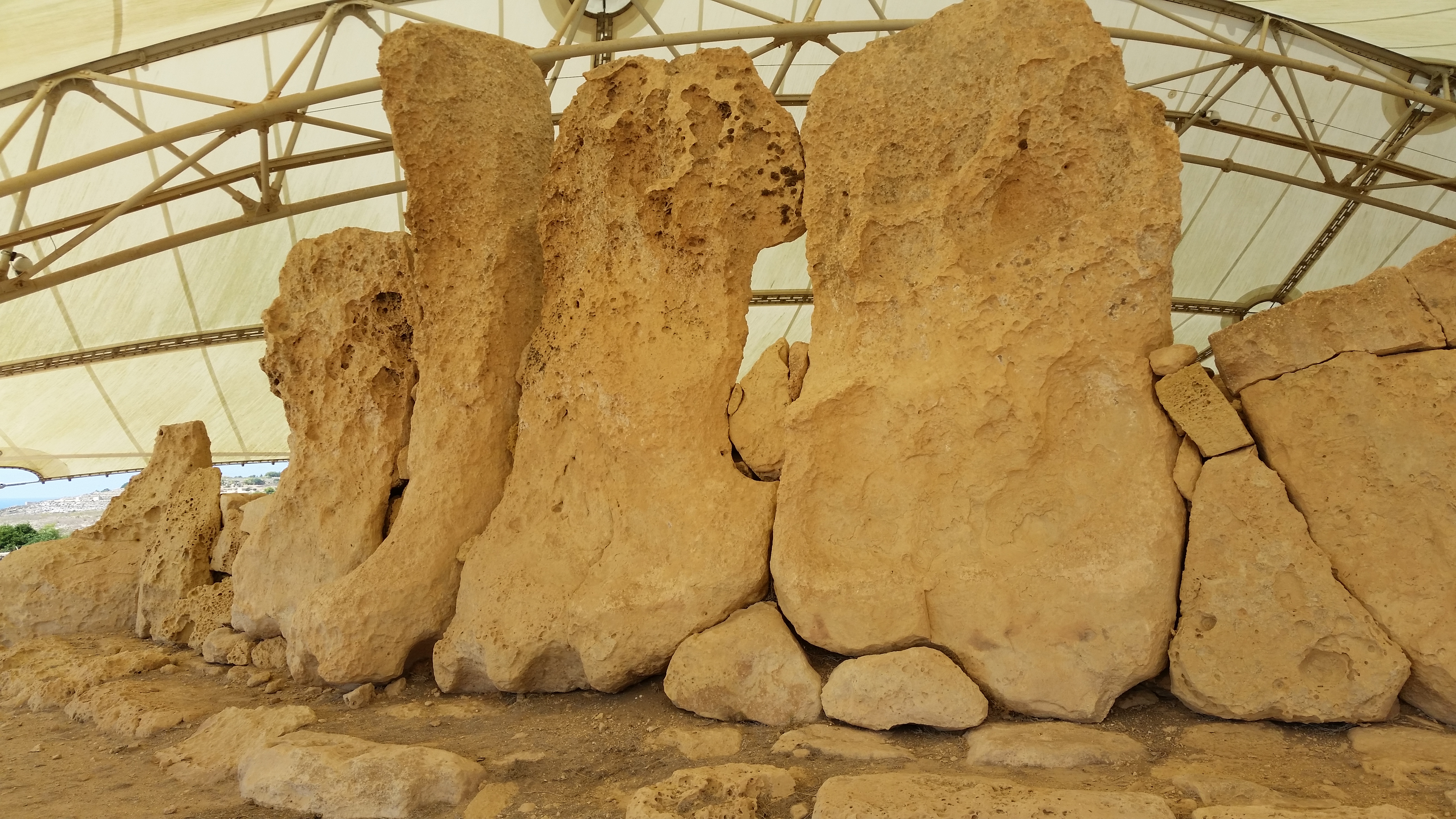
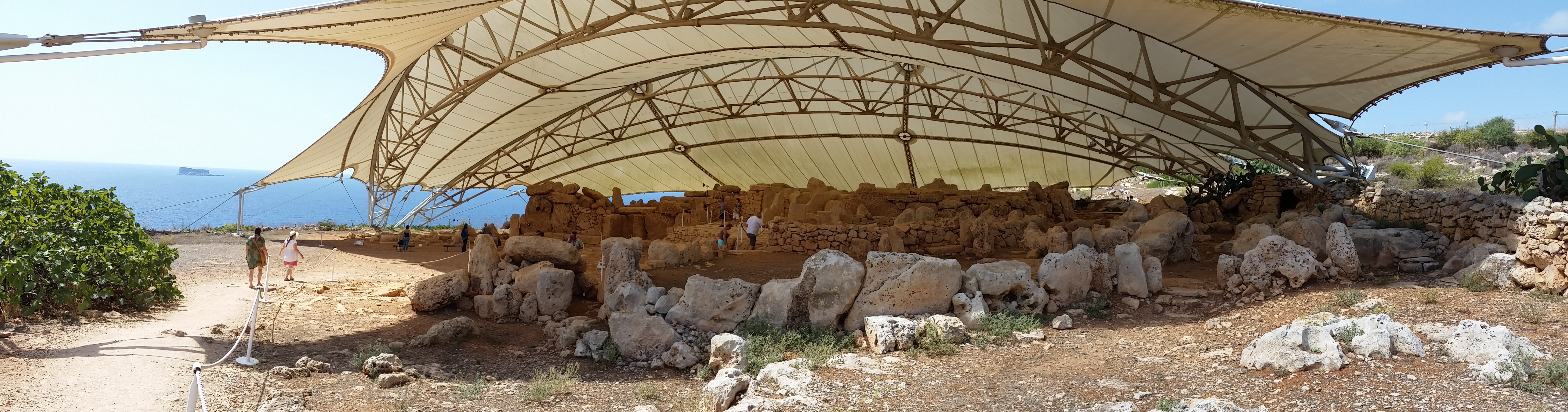
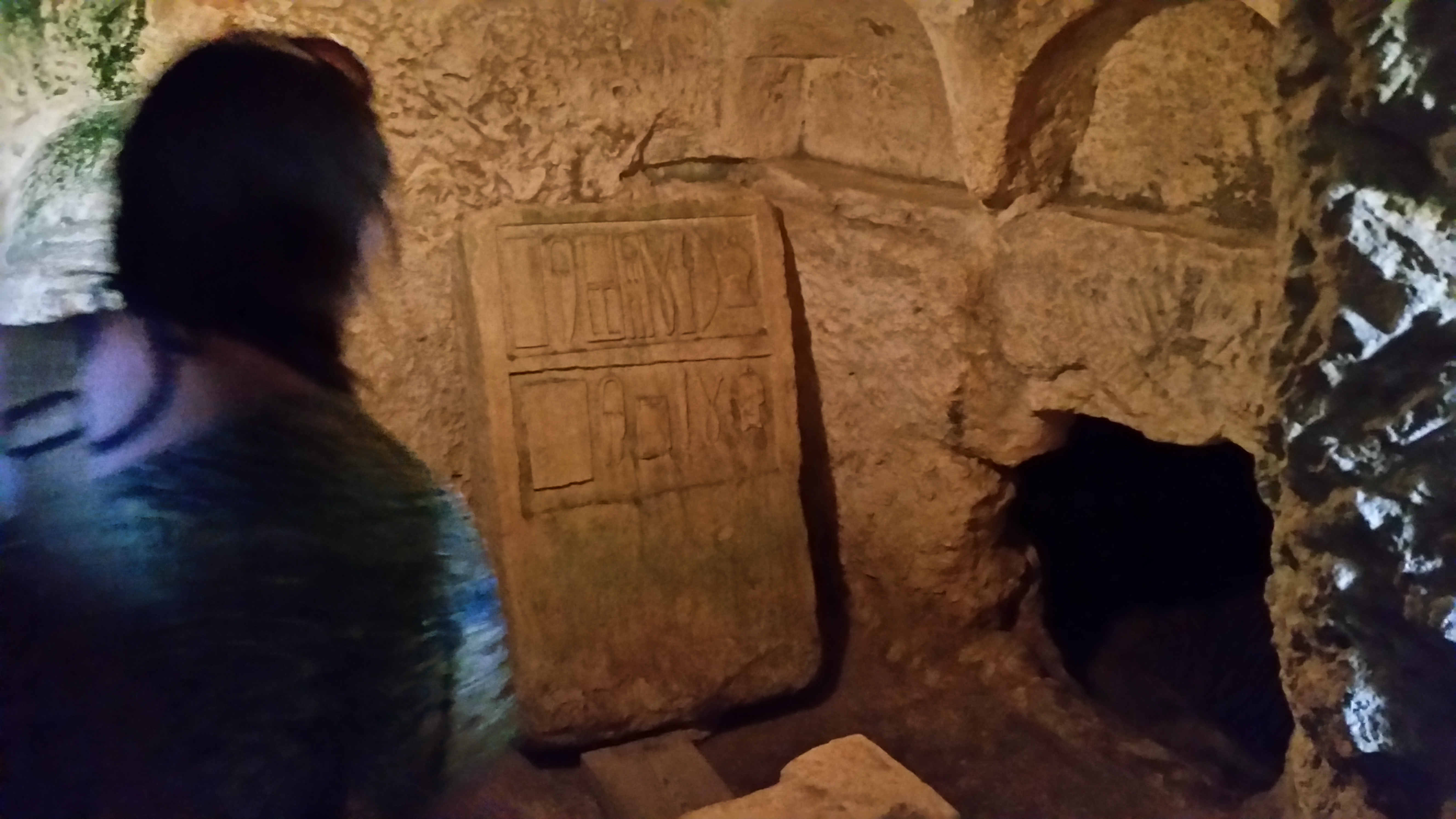
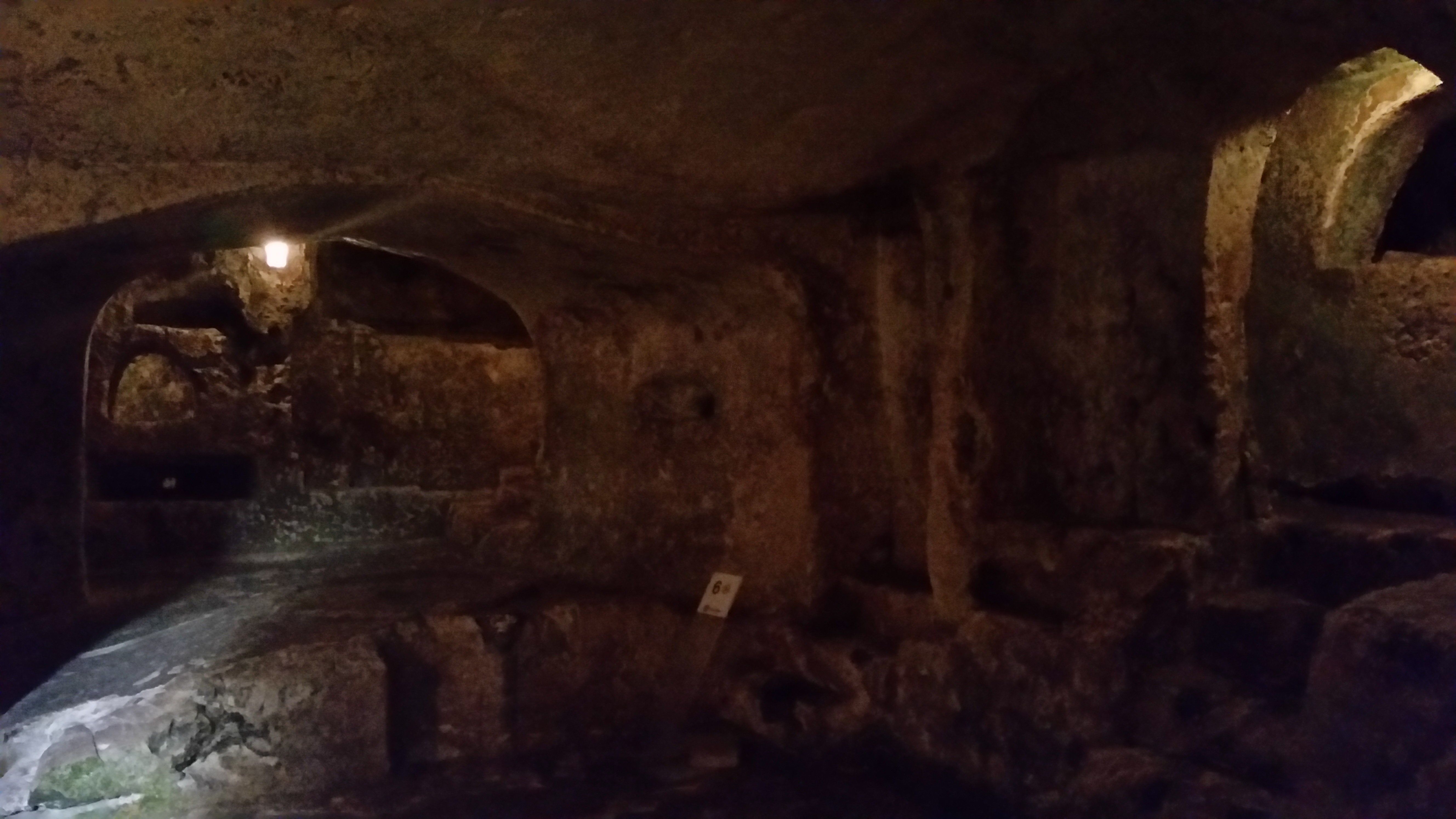
Rome was next, but that first stop was brief — just long enough to catch a flight to Malta, where we were spending a handful of days before coming back.Malta didn't go exactly as planned. Nothing went terribly wrong, we saw some genuinely incredible things, and I'd go back. But there was a logistical theme to the whole stay that started before we landed: I'd booked us in Valletta, which turned out to be the cruise ship town. Everything there opens when the ships arrive and closes when they leave. I didn't know that going in. It became relevant quickly.The sites we planned around were the Neolithic temples and the catacombs, and we managed both. Ħaġar Qim was one of them — a megalithic temple complex on the southern coast of the island, built somewhere around 3600 to 3200 BCE. For almost a decade after that visit, it held the record as the oldest site we'd ever stood in. Turkey eventually took that record, but Malta held it for a long time. St. Paul's Catacombs in Rabat were the other major stop, and they remain some of the most impressive catacombs I've been in — a large network of rock-cut tombs dating back to the 3rd century, well-preserved, and genuinely worth the trip if you're on the island.The megalithic temple of Ħaġar Qim on Malta's southern coastA wide panorama of the Ħaġar Qim temple complex in MaltaRock-cut tombs in St. Paul's Catacombs, Rabat, MaltaUnderground passages of St. Paul's Catacombs in Rabat, MaltaThe hop-on hop-off bus we used to get between sites was less impressive. It ran late, consistently. We'd later learn this was something of a theme — Italian public transportation had already prepared us for delays, but Malta had its own relationship with scheduled arrivals that went beyond anything we'd encountered before.I do remember getting the last bus back to Valletta at the end of one of those days and spotting a shop I'd wanted to get into before it closed. I ran. The shop owner was in the process of locking up and was not remotely happy that I made it in time. She made no effort to conceal this. I bought the thing anyway, said thank you, and left her to close up, which she did immediately and with visible relief.
The Taxi Day
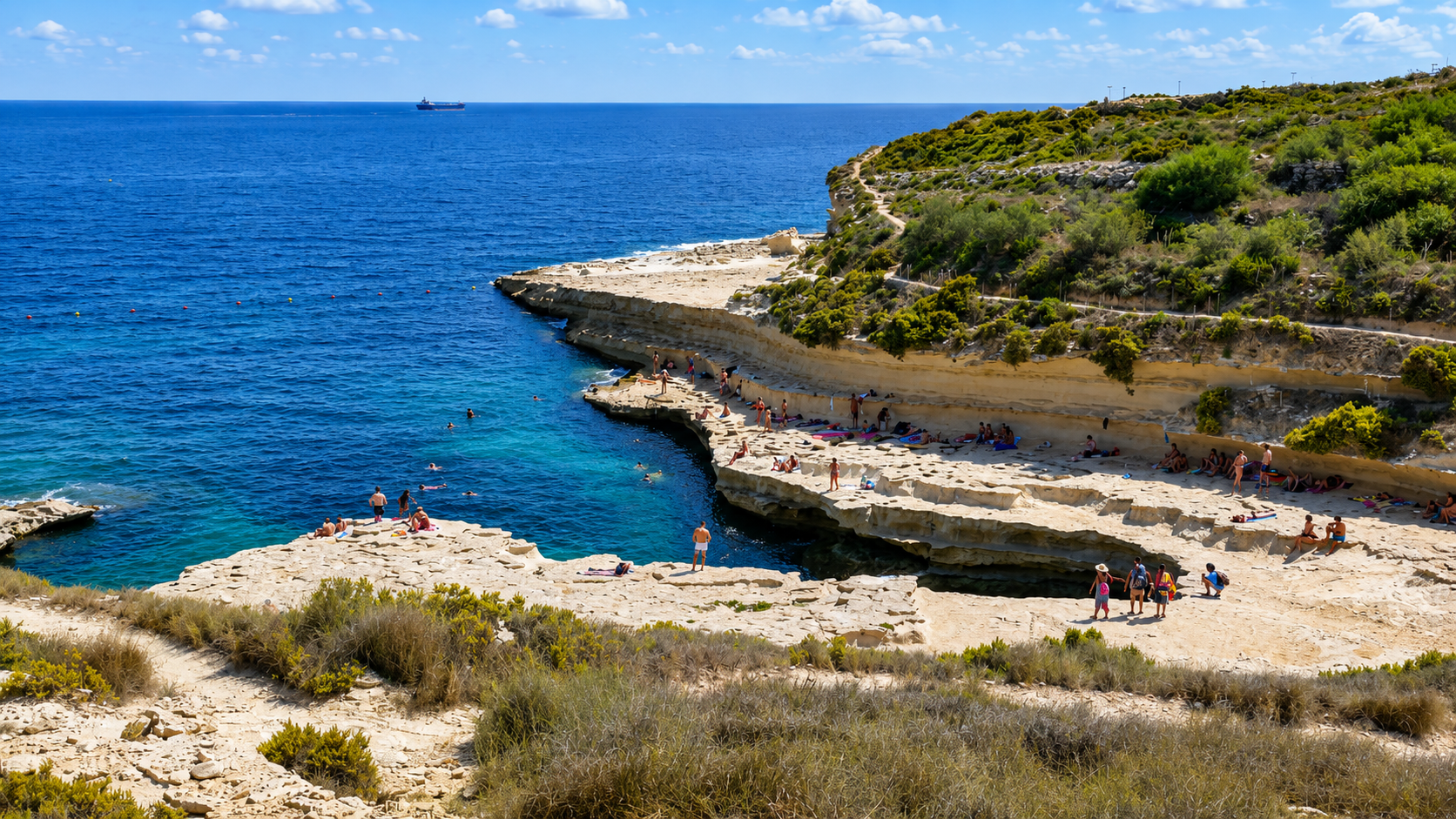
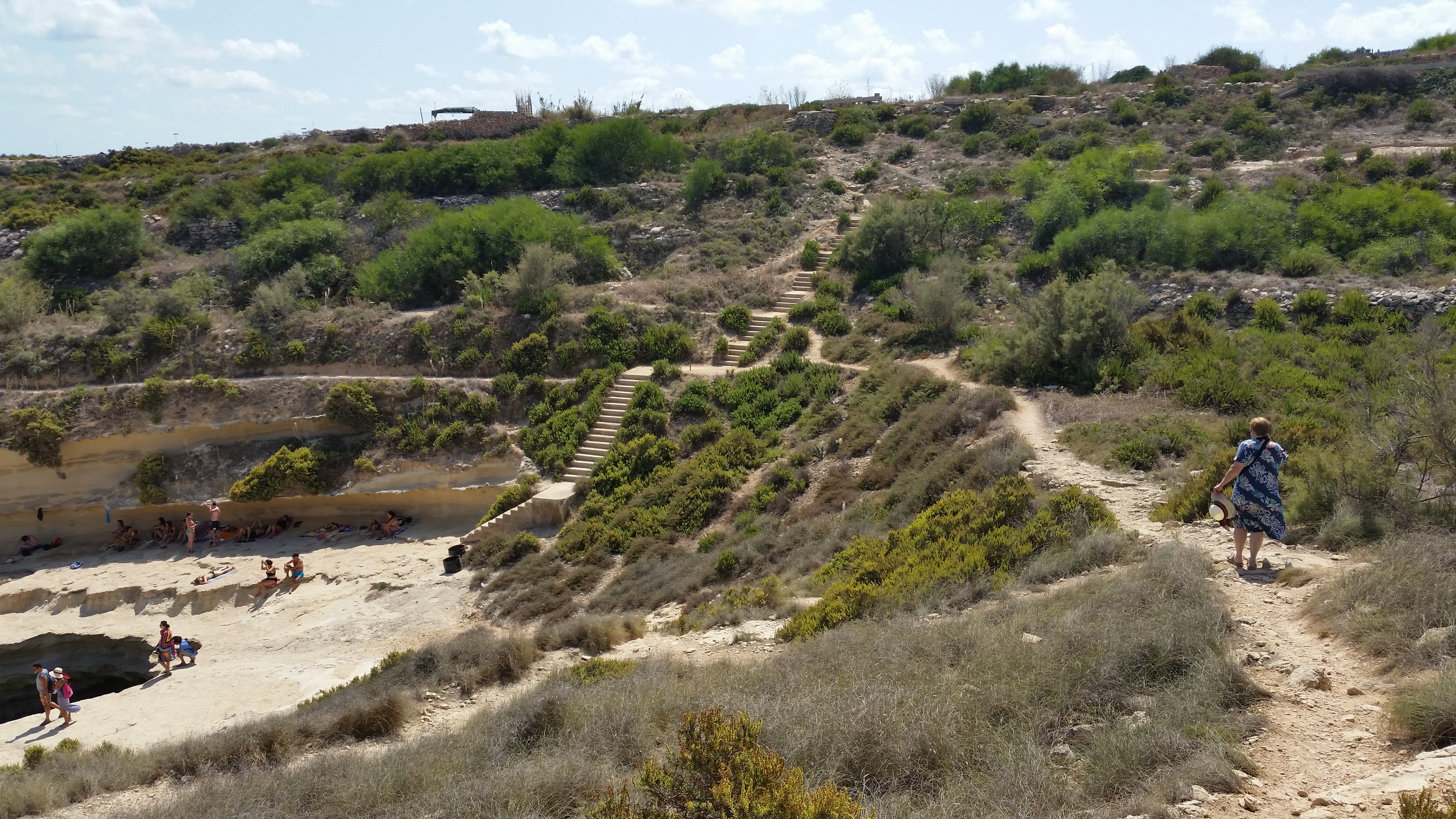
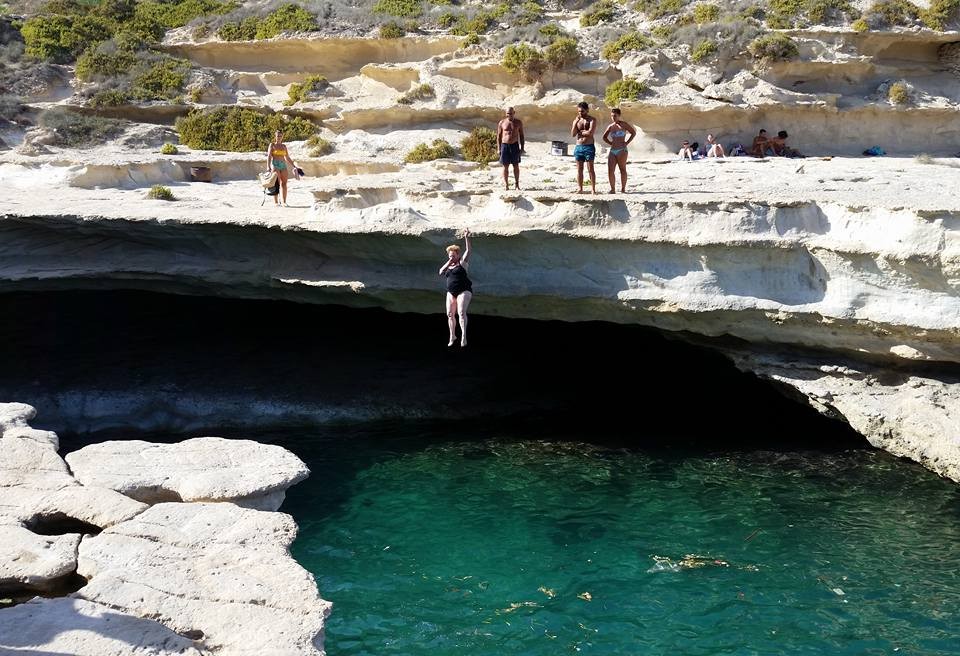
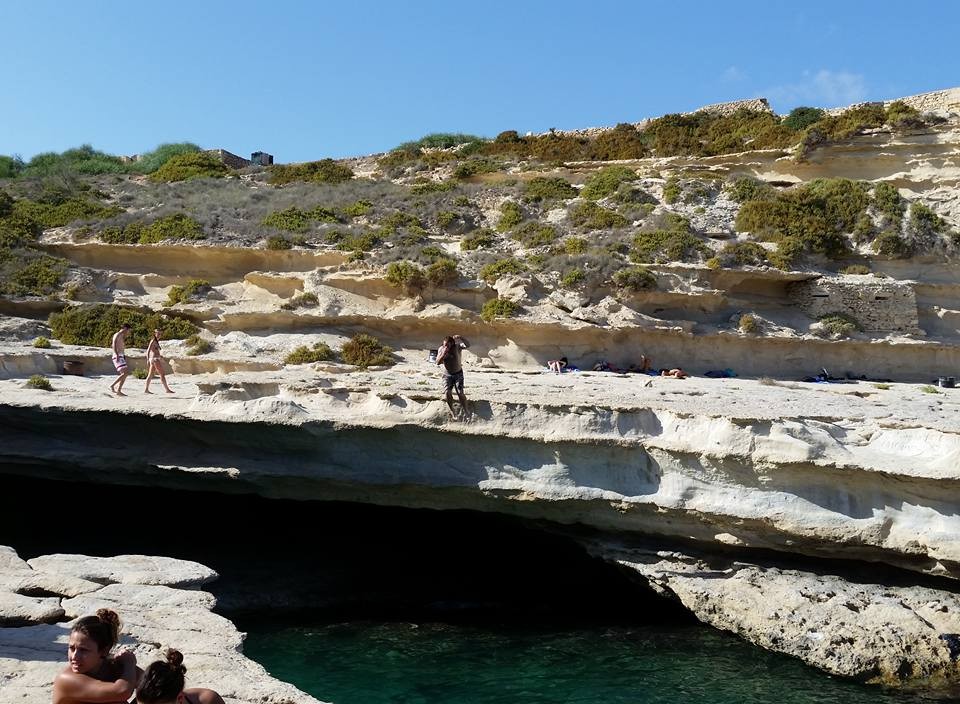
The second full day on Malta was supposed to involve a private tour guide who was going to take us around, including to the Azure Window — a natural limestone arch on Gozo that had been used as a filming location for Game of Thrones. We waited at the agreed time. Then we waited past it. About an hour after we were supposed to have been picked up, we accepted that nobody was coming and started looking for a taxi instead.We found one. What followed was a reasonable lesson in not assuming that a taxi driver on a small island knows how to get everywhere on that small island. We had St. Peter's Pool in mind — a swimming spot on the southeastern coast we'd heard about — and gave the driver the destination fully expecting this to be a simple conversation. Part of the reason I wanted to go there was the assumption that a popular swimming spot would have somewhere to buy food and drinks. That assumption also explained why none of us had brought water, except for my sister, who had thought about it and brought one bottle for the three of us.We watched the map on our phones as we drove, noticed fairly quickly that we seemed to be heading the wrong direction, mentioned it, showed her, and she admitted she wasn't quite sure where we were going. We got it sorted and eventually found it.St. Peter's Pool is not a beach. It's a rocky stretch of coastline where locals come to jump off a fifteen or twenty foot cliff into the water below, and when we arrived it was packed — all locals, all with their own beer, nobody who had expected to encounter three people from Ohio who'd been misdirected there by a taxi driver who'd needed navigational assistance to find it. The water was not particularly clear. There was trash floating in it. We took one look at this and immediately decided we were jumping.The rocky coastline and cliffs at St. Peter's Pool, MaltaMy mom jumped. I want to make sure that lands correctly. She is thirty years older than me, and she would freely acknowledge that her physique doesn't immediately suggest cliff jumping as a hobby. Every single person at that spot watched her walk toward the edge and assumed she was going over to look. She did not go over to look. She ran and launched herself straight off, and the crowd absolutely lost it — laughing, cheering, a few people clearly having already moved into position to go in after her if it came to that. It didn't come to that. She swam back through the trash to the edge and climbed out. It was one of the best things I've ever seen her do, in a long list of things she's done that have surprised me.My mom walking toward the cliff edge at St. Peter's Pool, MaltaMy mom launching herself off the cliff into the water at St. Peter's Pool, MaltaThere was also a dog. One of the regulars had a small dog, and the dog had a game it played at this cliff. Not fetch in the traditional sense — there was no ball, no frisbee, nothing that floats. The owner would throw a specific rock into the water. The rock sank, the way rocks do. And then the dog would run, jump off the cliff, swim down to the bottom, find that rock, and bring it back up. The same rock. Every time. It would drop it at the owner's feet, the owner would throw it back in, and the whole thing would start again. I don't know how to explain the physics of it beyond the fact that we watched it happen repeatedly and it was completely real. That dog is one of my clearest memories of the entire trip.There was also a regular there — an older guy with his name carved into the rock at the jumping spot, dated year after year, a kind of informal record of how long he'd been coming. He took a particular interest in my mom after she jumped, which I mean as the compliment it was intended to be.We'd told the driver we'd be ready at a set time and then walked away from the car — trusting a stranger to come back for us at a specific time in a place she'd had trouble finding in the first place. We were at a remote stretch of coast with no way back independently, in the heat, and there was nothing to buy. The only drinks anyone had were the beers the locals had brought for themselves, generously offered and genuinely not what I needed. So I jumped once or twice, did the math on the heat and the energy and the water situation, and stopped.Me going off the cliff at St. Peter's Pool, Malta We stood on the road at the agreed time and genuinely weren't sure if the taxi was coming back. We looked at the prickly pear growing along the roadside and had a real conversation about whether it was edible. It is, for the record. The taxi came back, and we had a pretty good laugh listing all the things we'd done that day that were questionable decisions.The Azure Window collapsed into the sea either that year or the one after. We missed it by a narrow margin and won't get another chance. That's the one part of that day with any real sting. The rest of it — the wrong turns, the cliff, my mom swimming through garbage back to the rocks, the dog with its one specific rock — I wouldn't trade any of it.
🎭
Unforgettable Experiences
Malta has incredible experiences worth booking in advance
Affiliate links • Helps fund my adventures at no extra cost to you
Pompeii
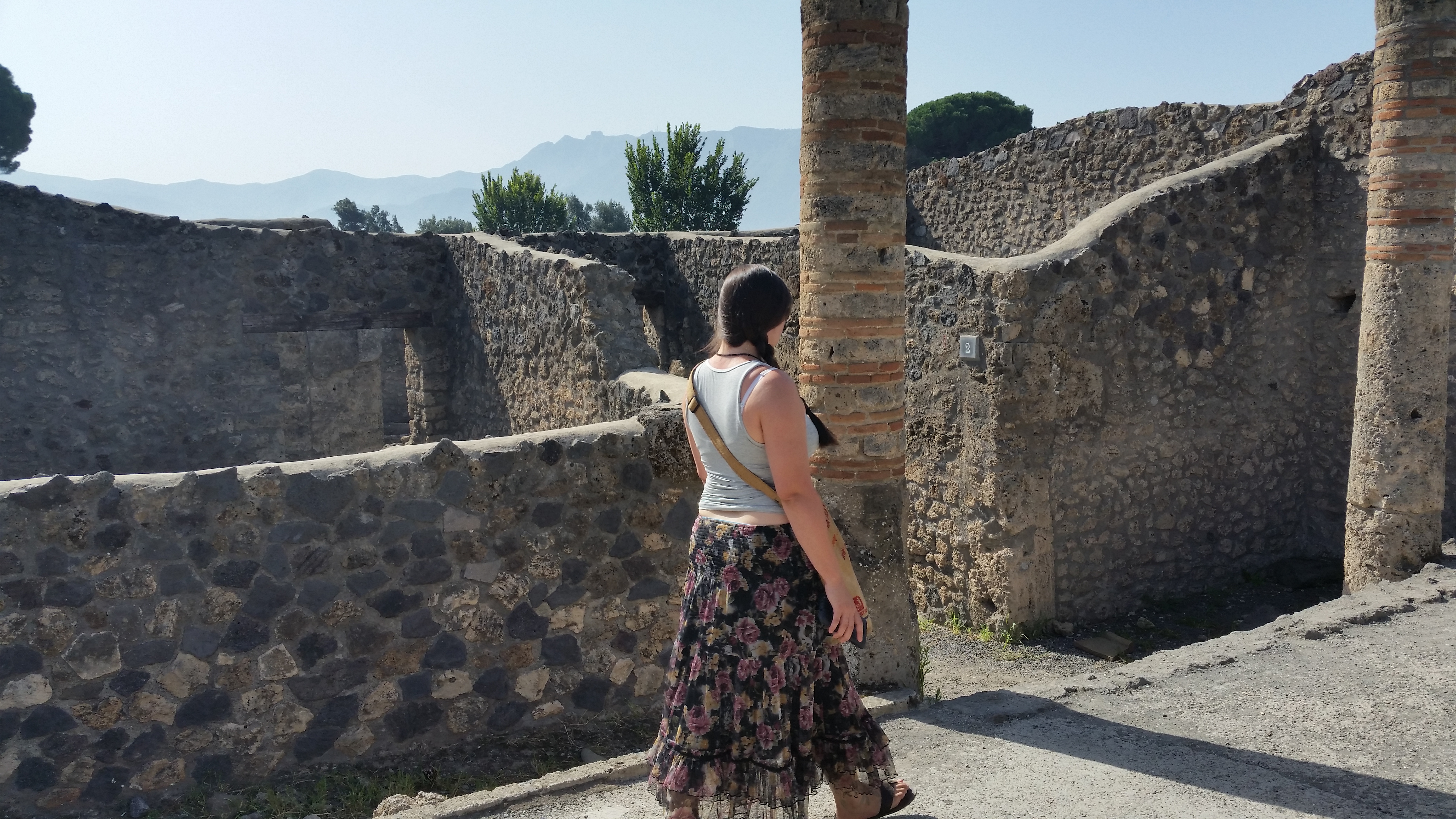
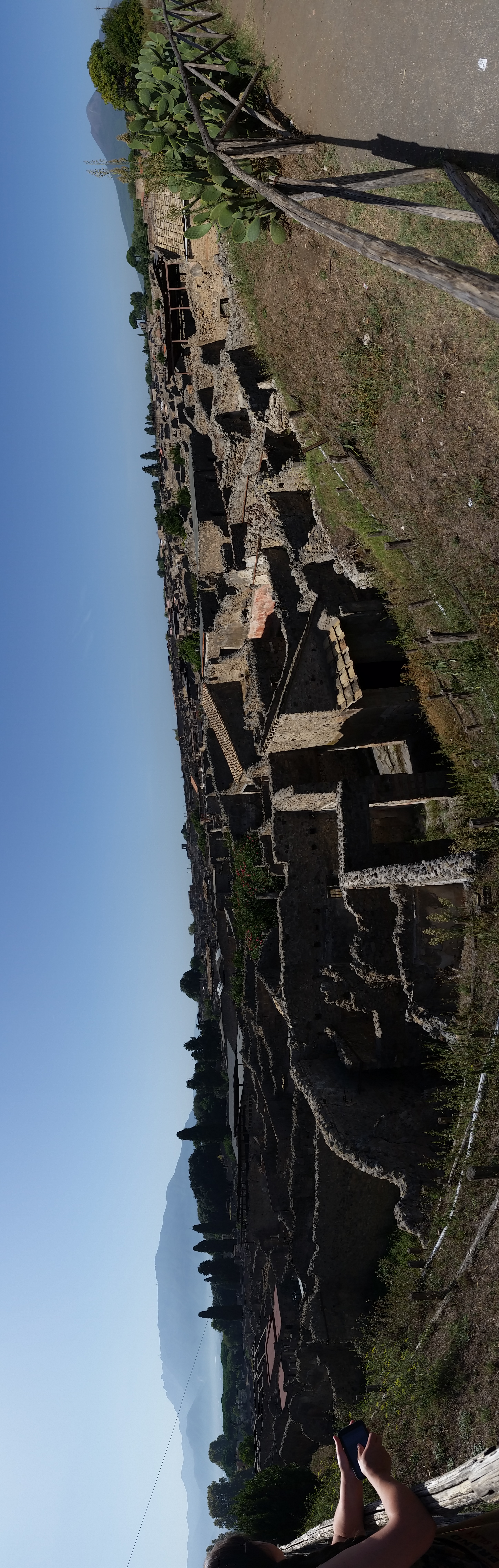
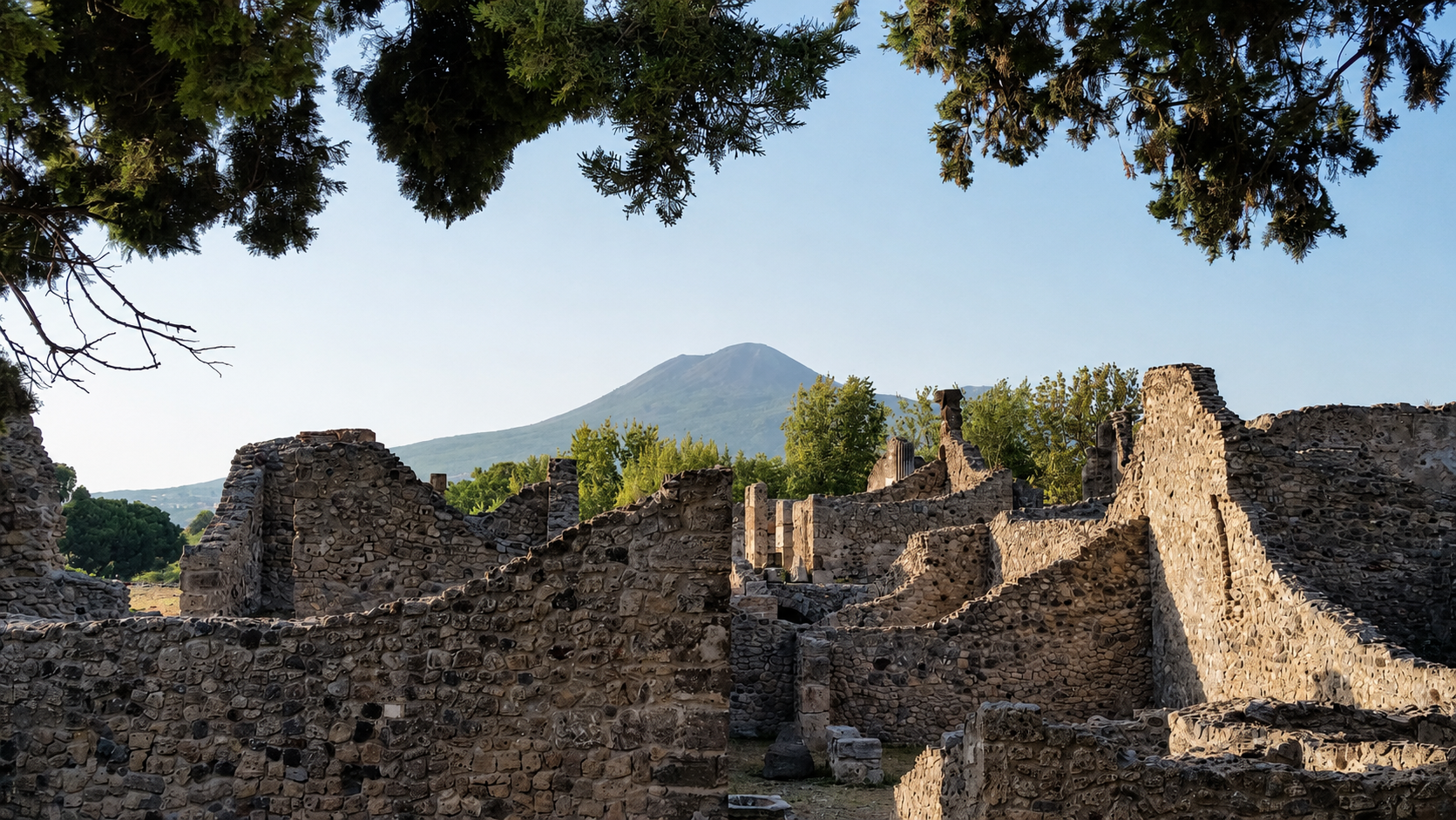
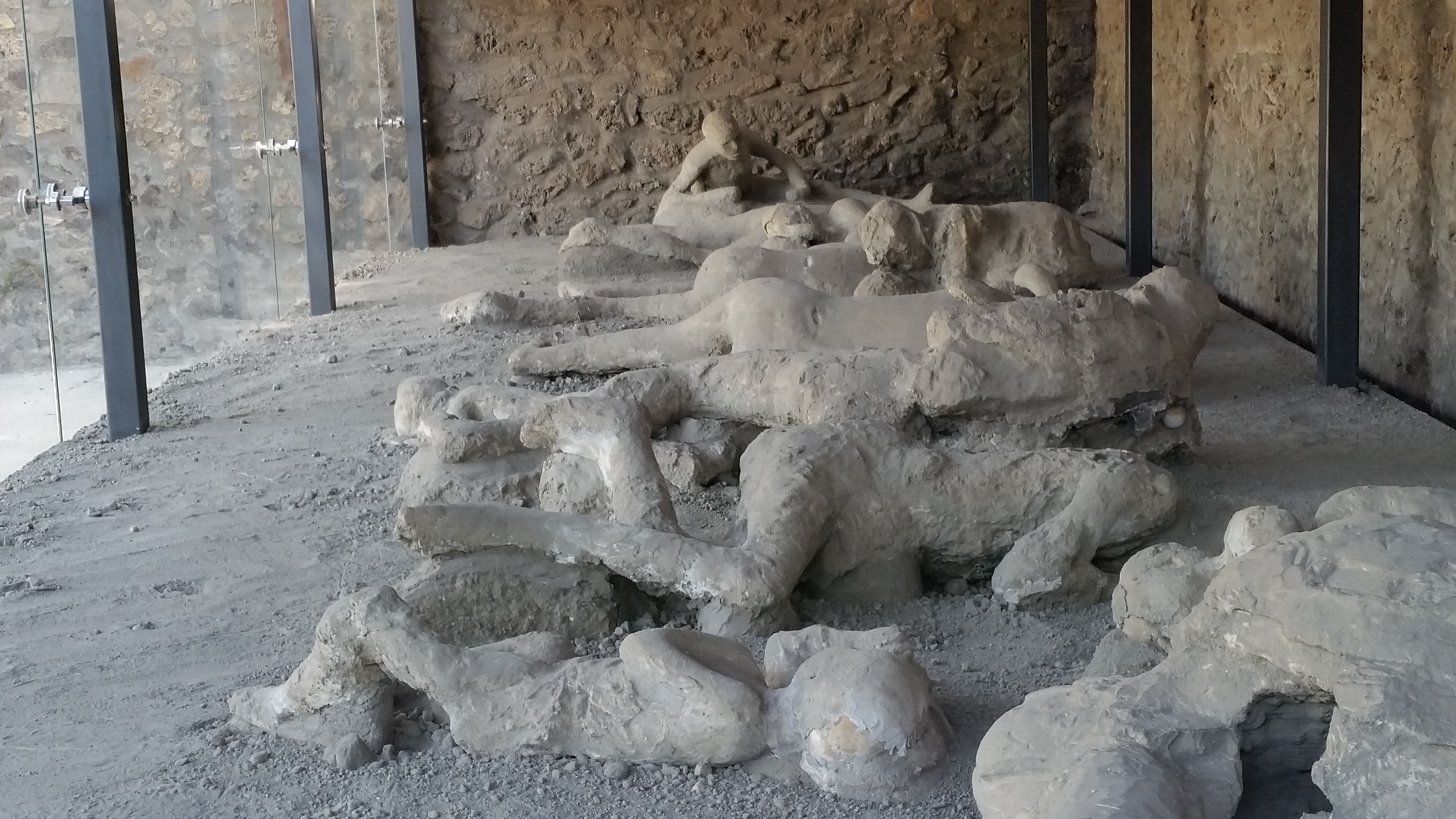
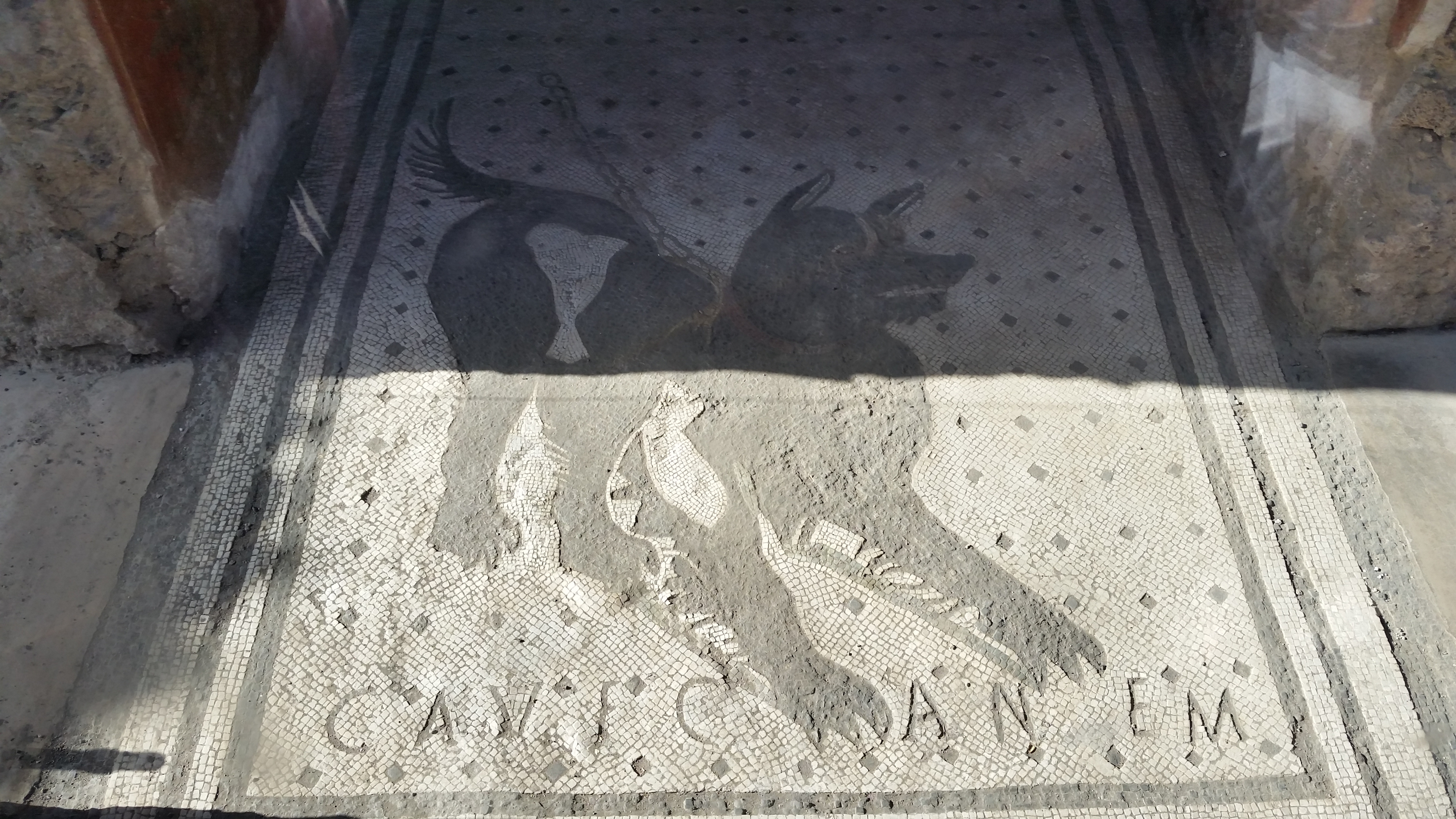
From Malta we flew back to Rome, which was the plan all along — Rome was always going to be where the trip really settled in. But before we got to the week in the city, there was one stop that couldn't wait.Pompeii was my sister's. Not in a passive way — she needed to be there at opening and stay until close, and she needed us to overnight nearby to make that possible. This wasn't going to be the version most people do, where you drive down, walk around for an hour or two, take the photos, and leave. We were going to do the whole thing. So we spent two nights near the site, walked up to the gates before they opened, and walked out when they locked them behind us at the end of the day.My sister exploring the ruins of Pompeii, ItalyWhat I hadn't accounted for was the scale of it. Pompeii is an entire city — streets, neighborhoods, bakeries, brothels, homes, thermopolia still with their counters intact — all of it laid out exactly as it was when Vesuvius buried it in 79 CE. You can spend a full day there and still feel like you've missed things.A wide view across the excavated ancient city of PompeiiMount Vesuvius rising behind the ruins of PompeiiPlaster casts of the victims of the eruption at PompeiiBut the moment I think about most from that morning wasn't the ruins. When we arrived at the gates just before opening, we weren't the only ones waiting. A couple of stray dogs had shown up too — on the outside, same as us. When the gates opened, we saw there were dogs on the inside as well, and what happened next stopped all three of us. The outside dogs went in and the inside dogs came to meet them, and it was the most obvious thing in the world — they were just checking in. The outside dogs had been out in the world overnight and were coming back to tell the inside dogs how it went. Whether or not that's actually what was happening is a separate question, but that's exactly what it looked like, and none of us had another interpretation. These dogs knew Pompeii's open times, they very obviously did this daily, and their day at Pompeii was done too when they followed us out at closing.The ancient "Cave Canem" (beware of dog) mosaic at PompeiiThe only real regret from that stop was not going to Naples to see the National Archaeological Museum, which holds the bulk of what was excavated from Pompeii and Herculaneum — the mosaics, the sculpture, the objects that survived. I went back years later on a solo trip and finally made it there, and that visit was what eventually became the start of this YouTube channel. The footage is rough in ways that are genuinely hard to watch now. But that's where it started.
Rome
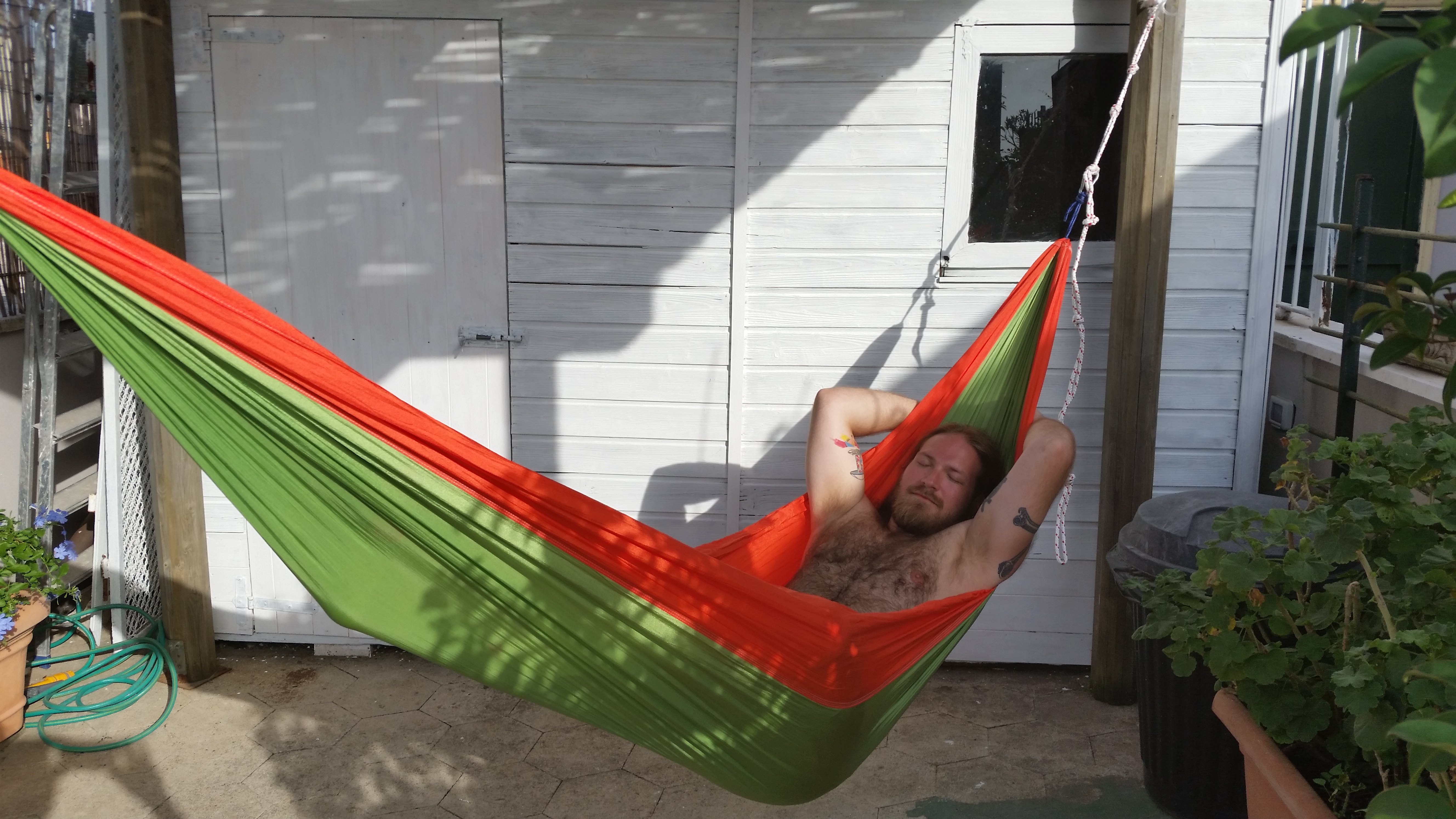
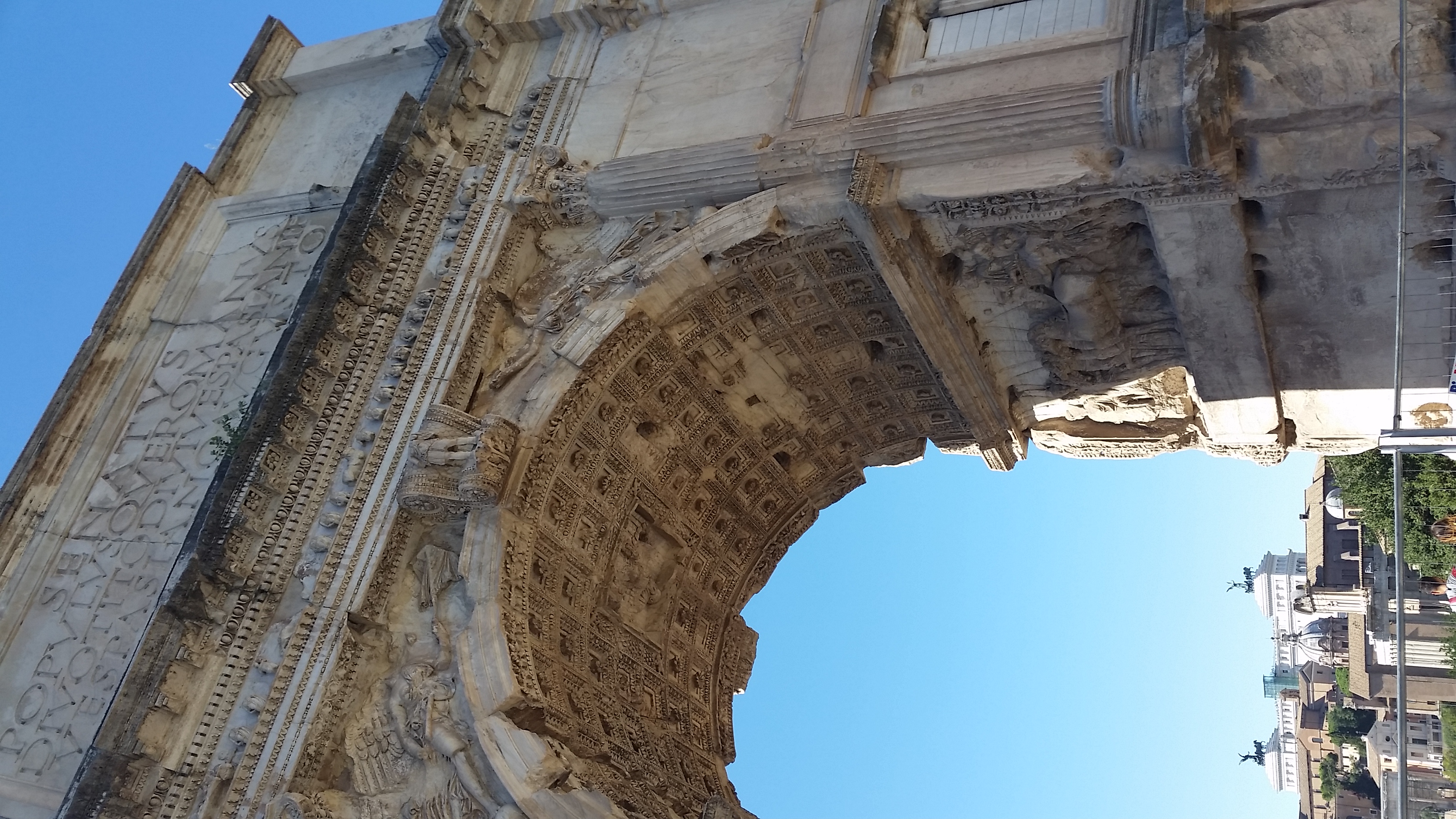
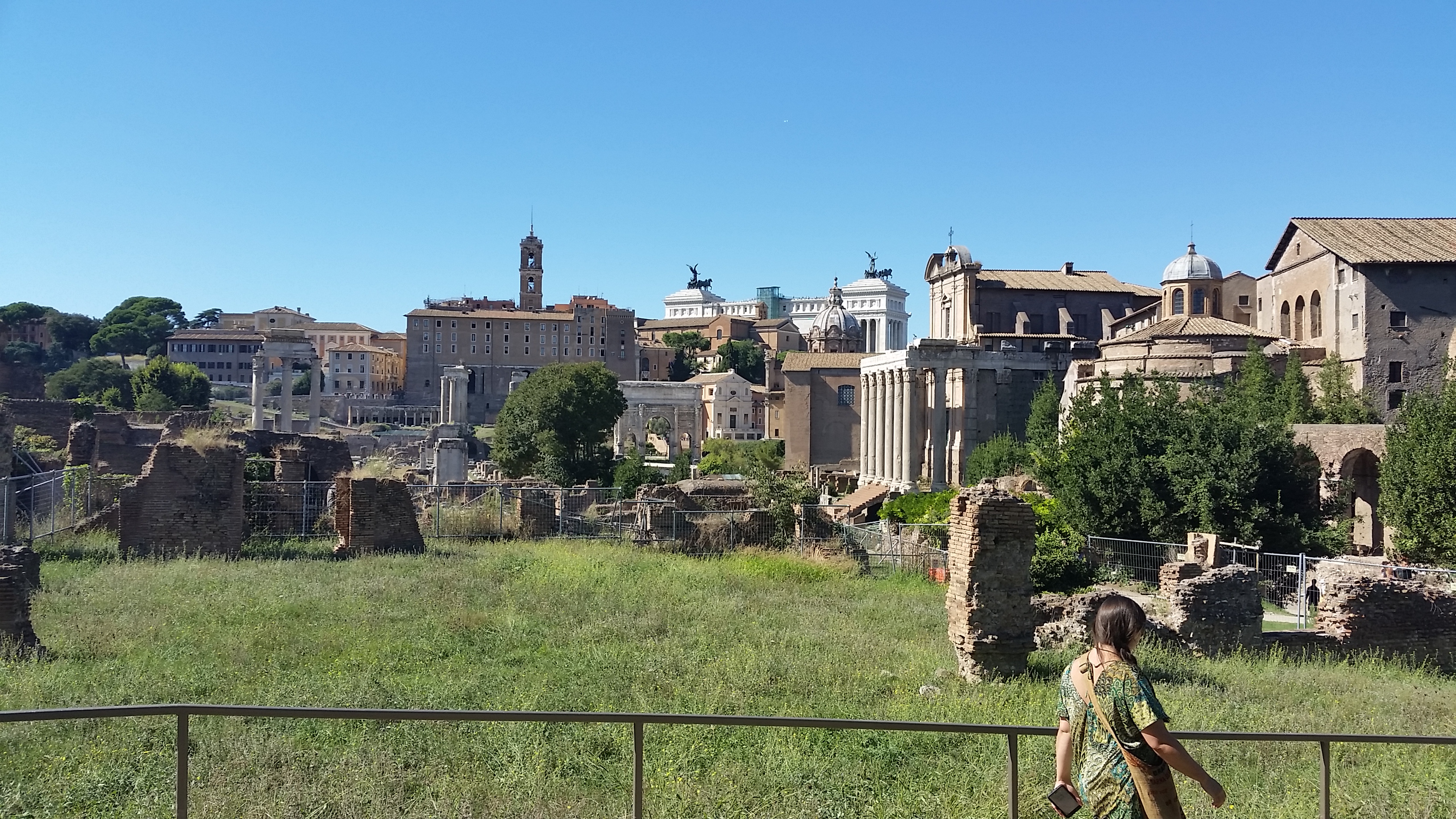
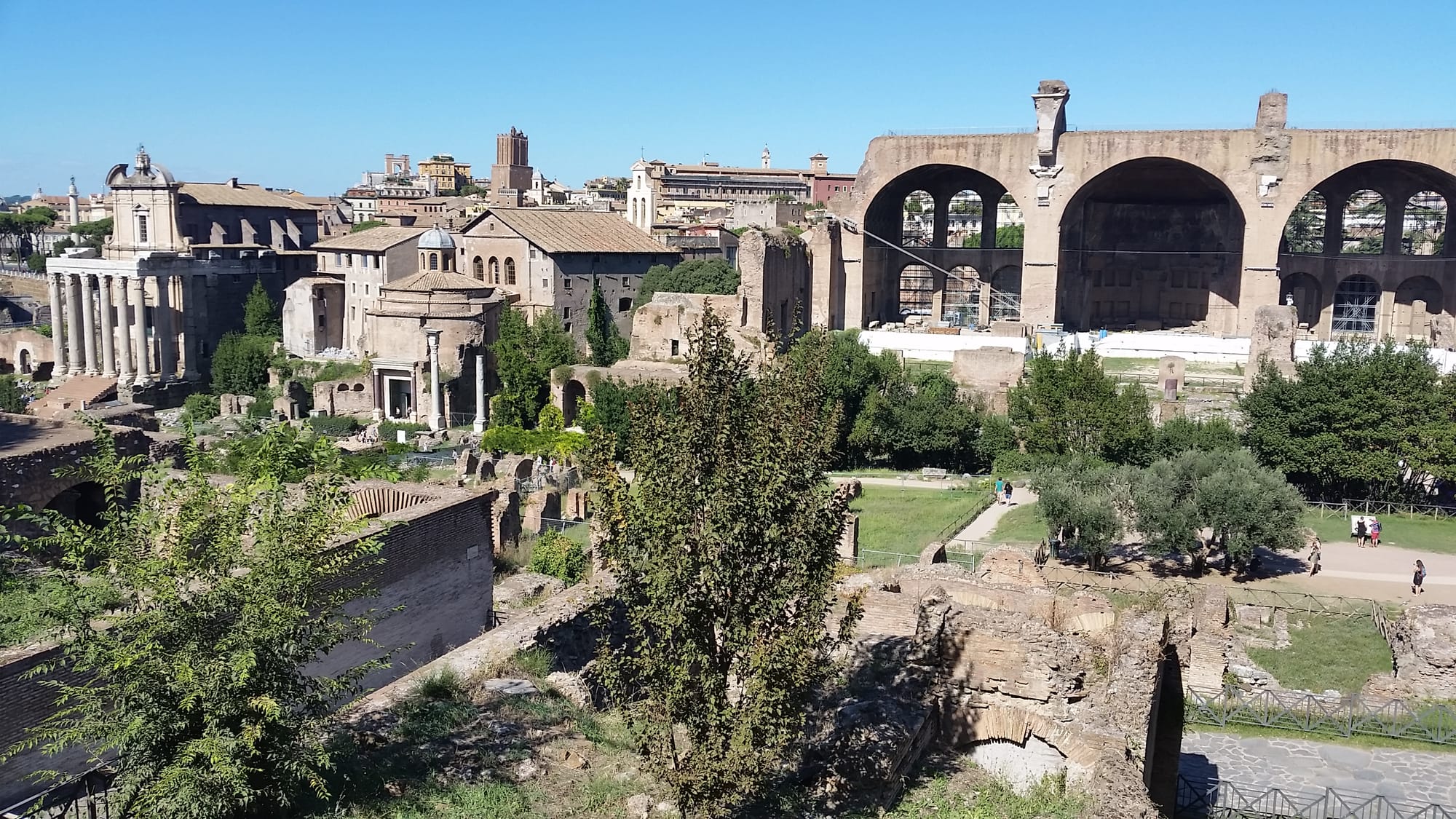
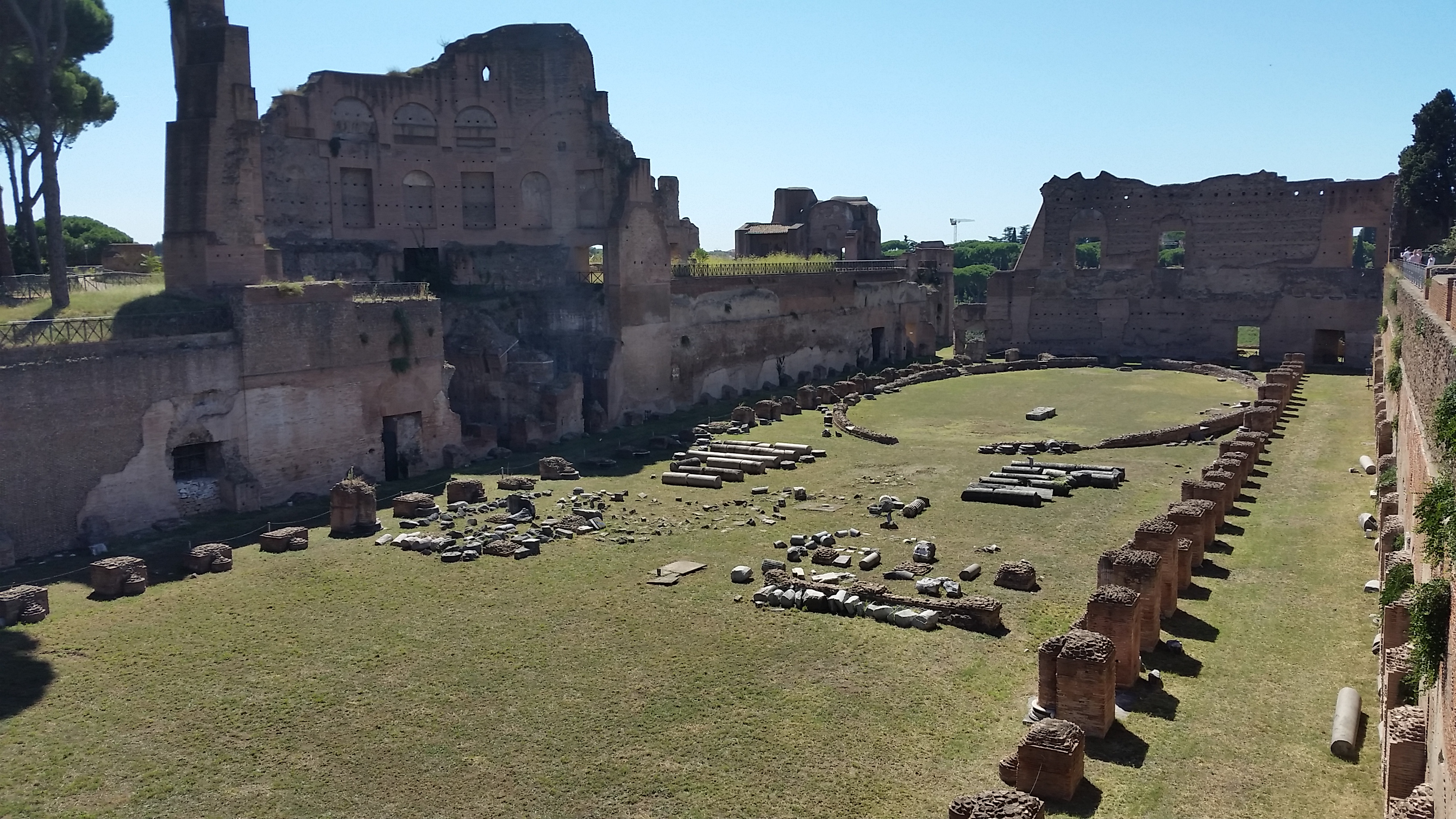
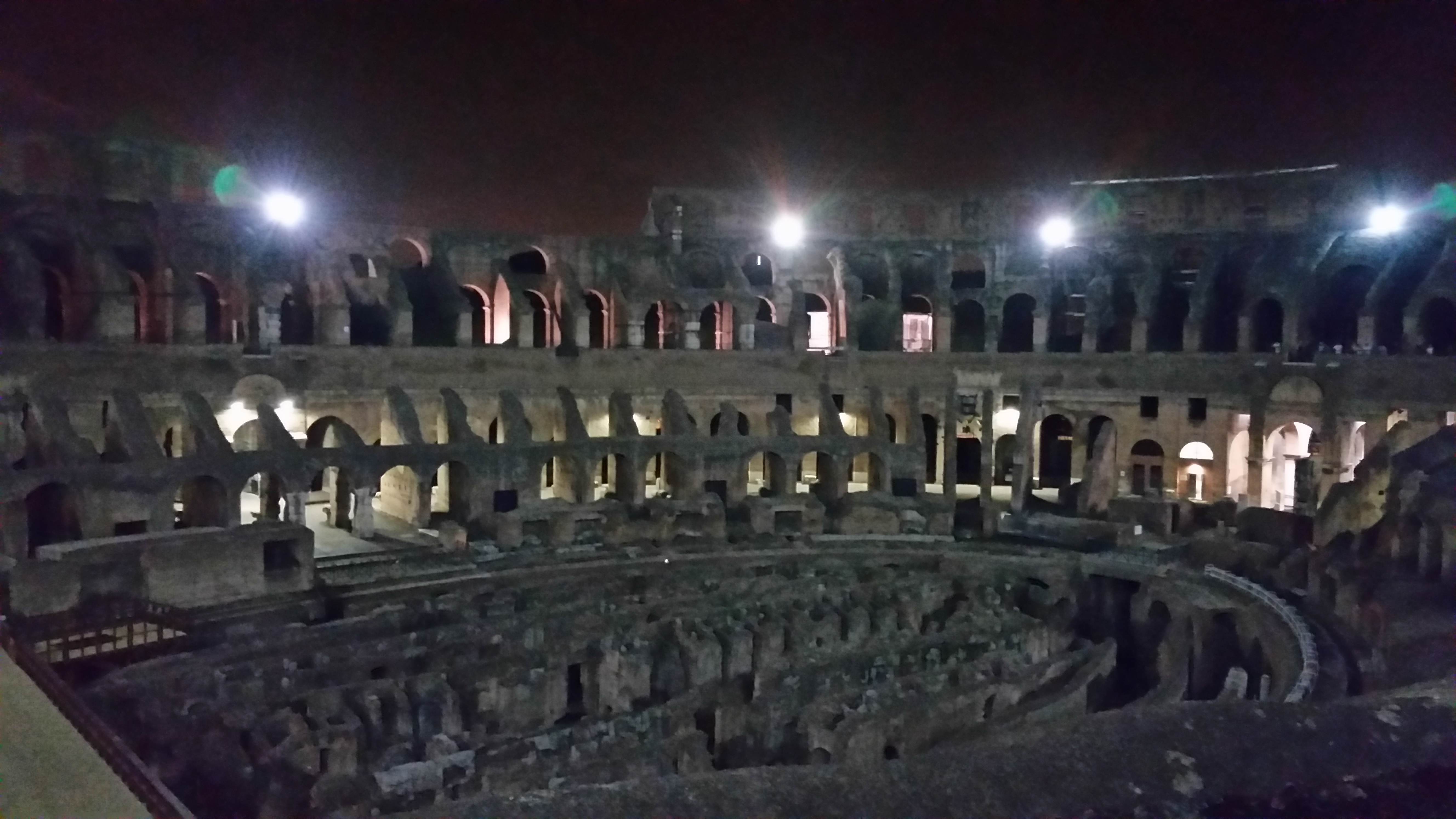
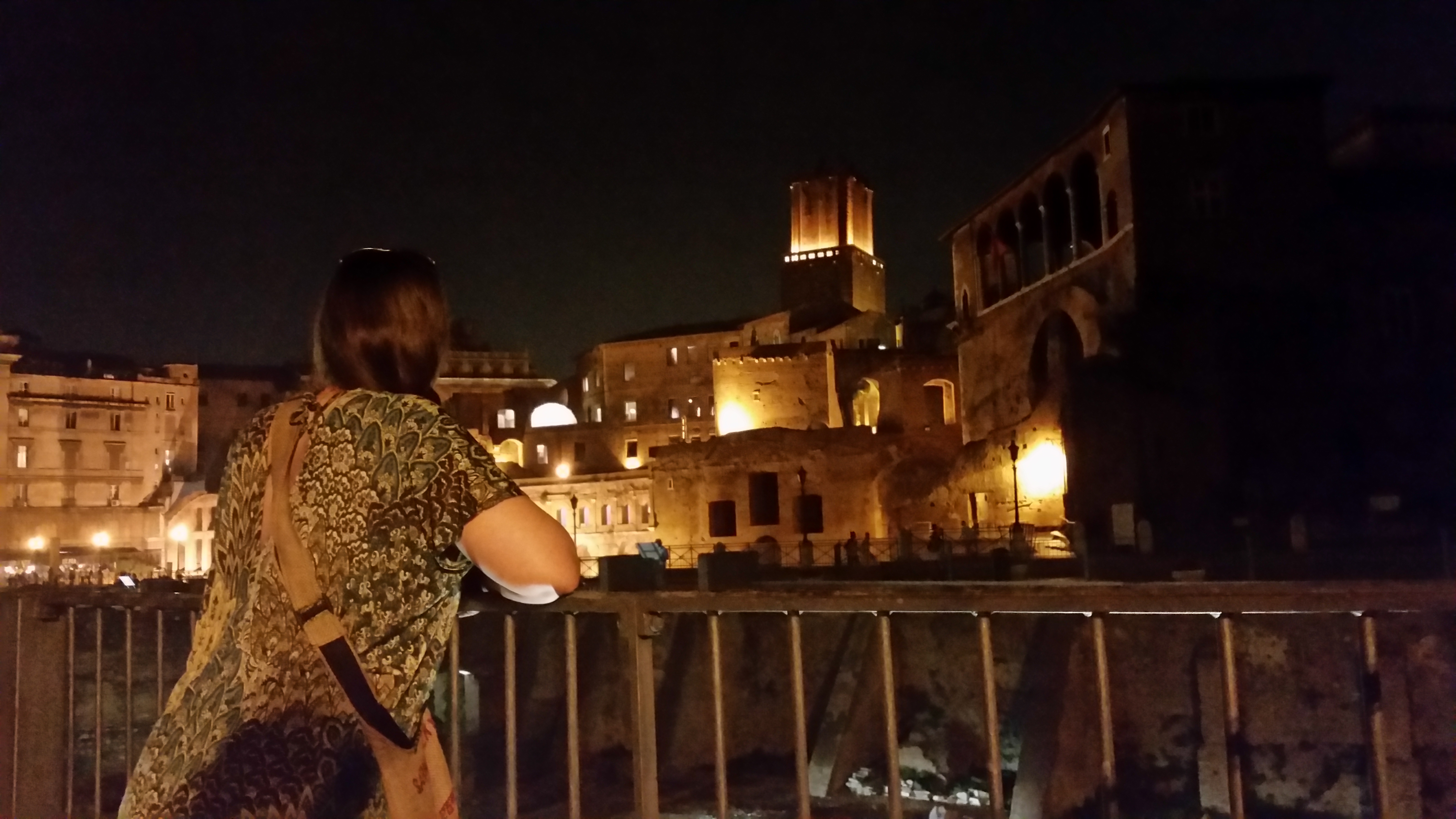
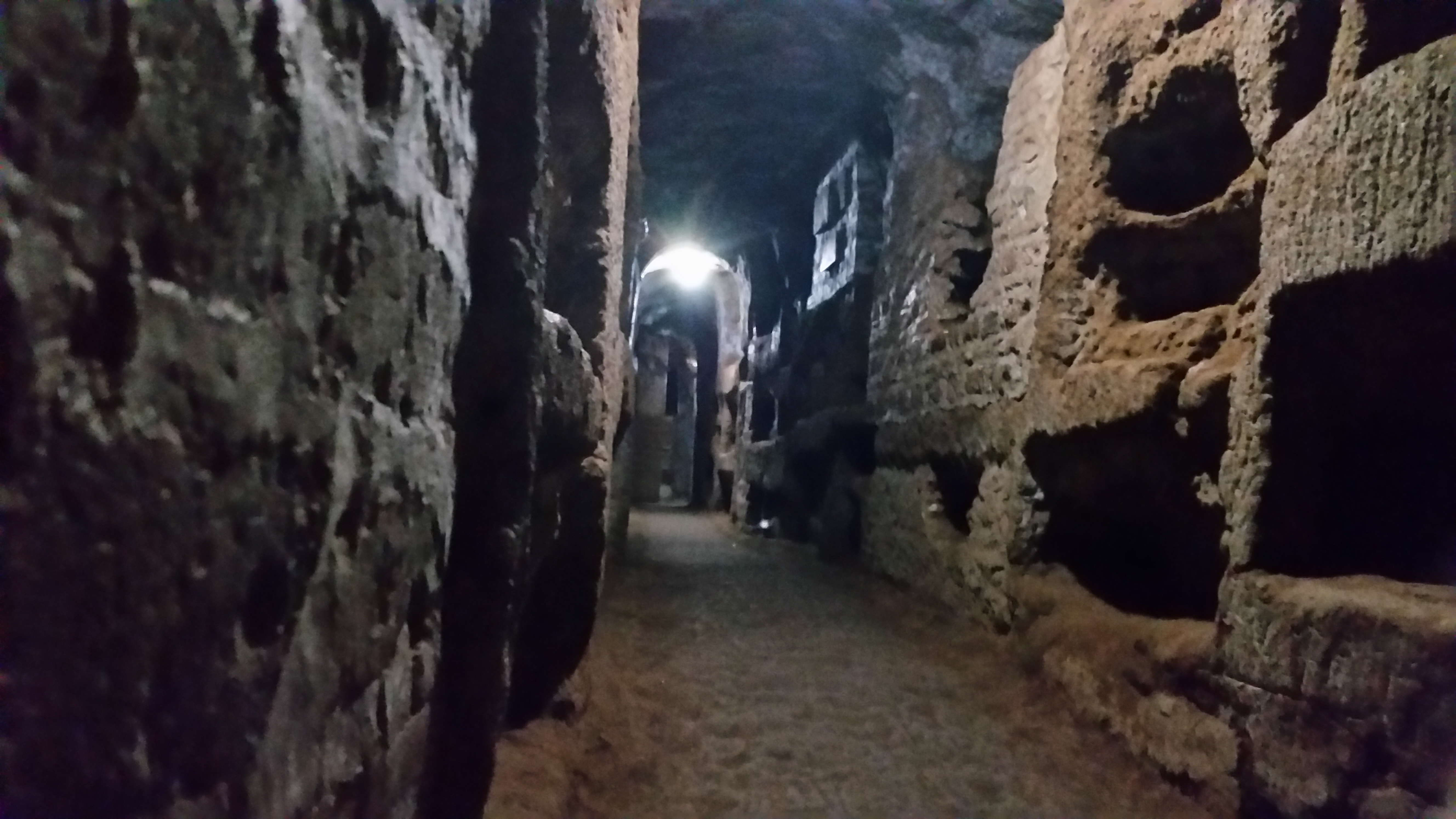
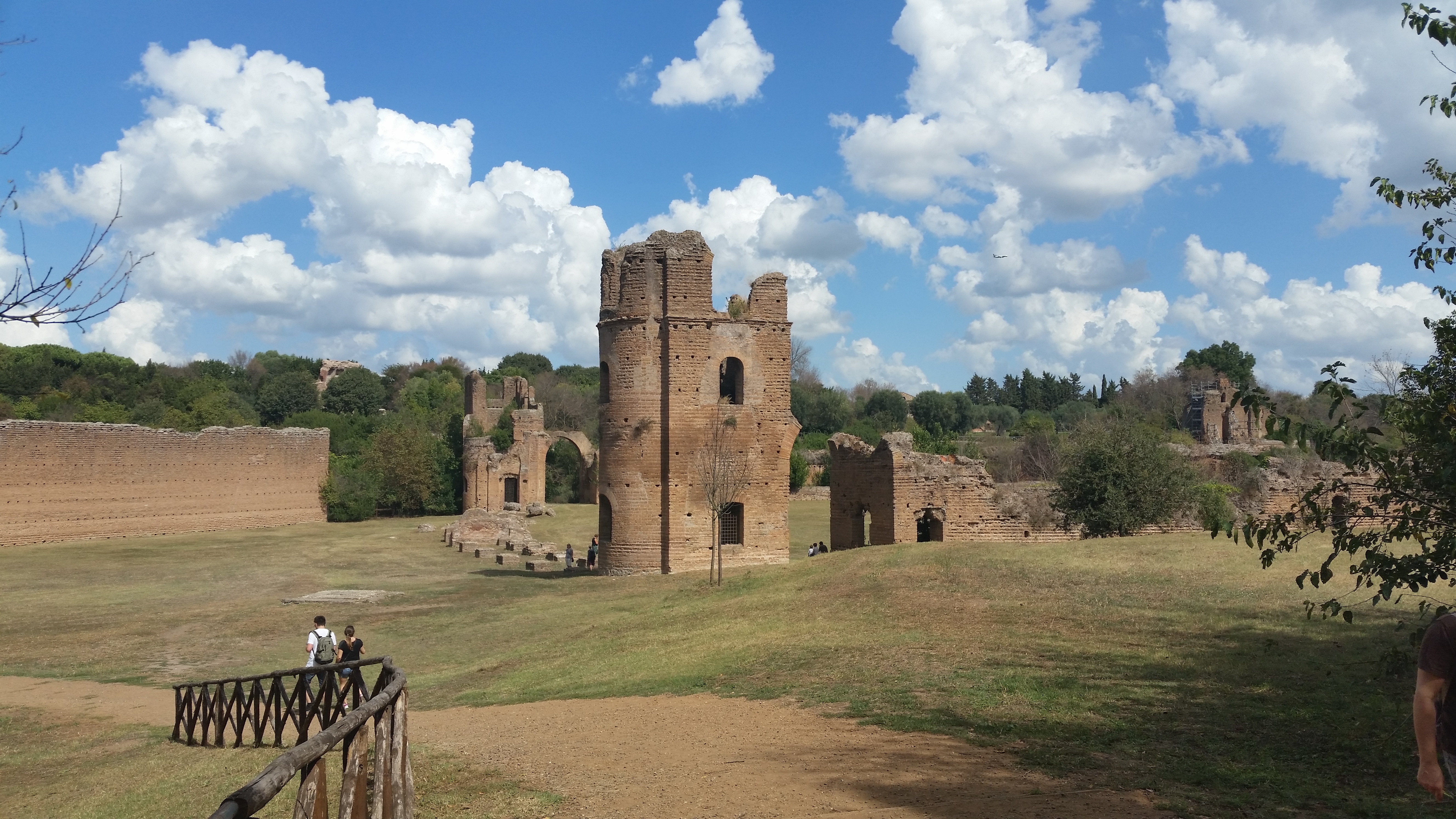
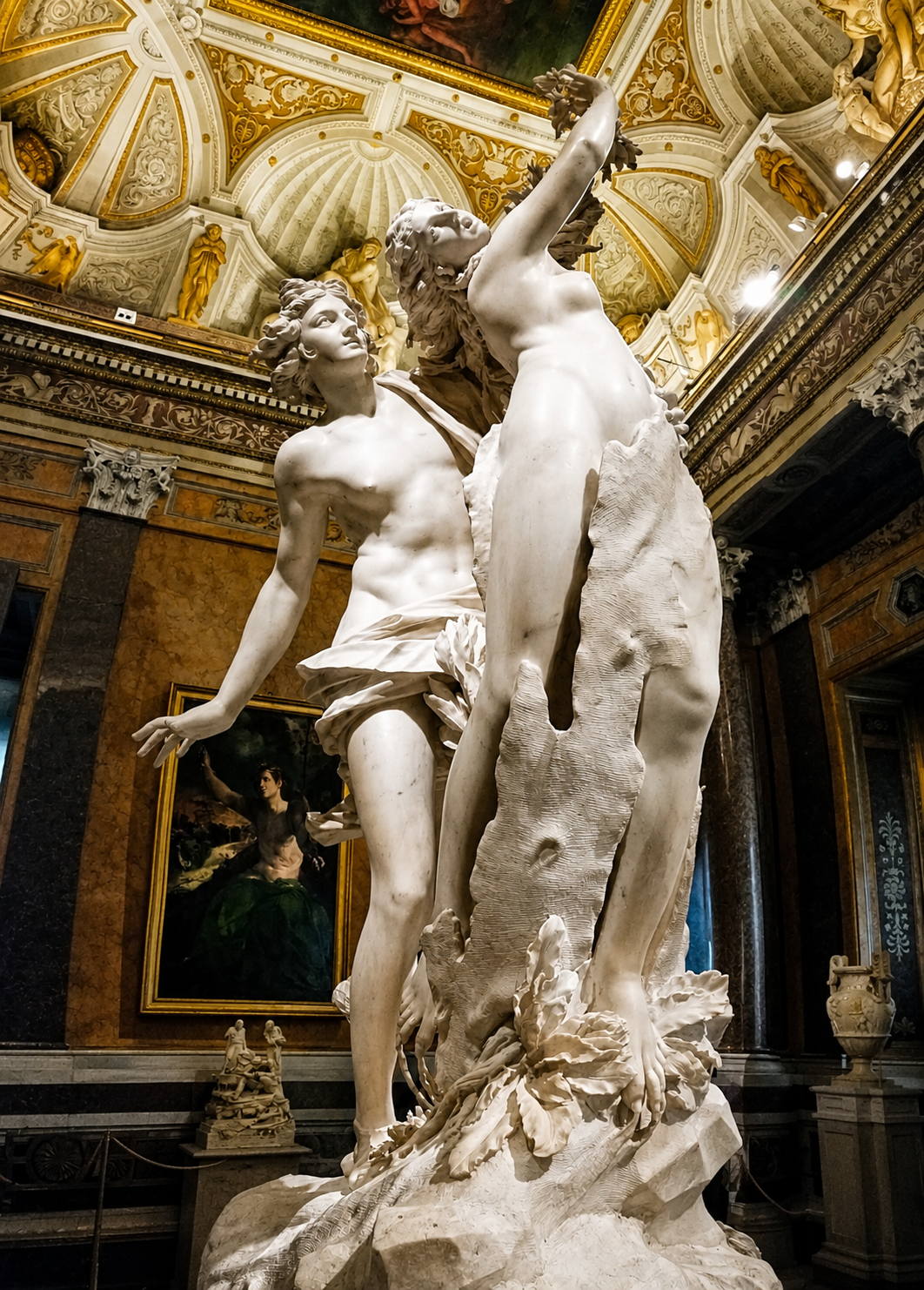
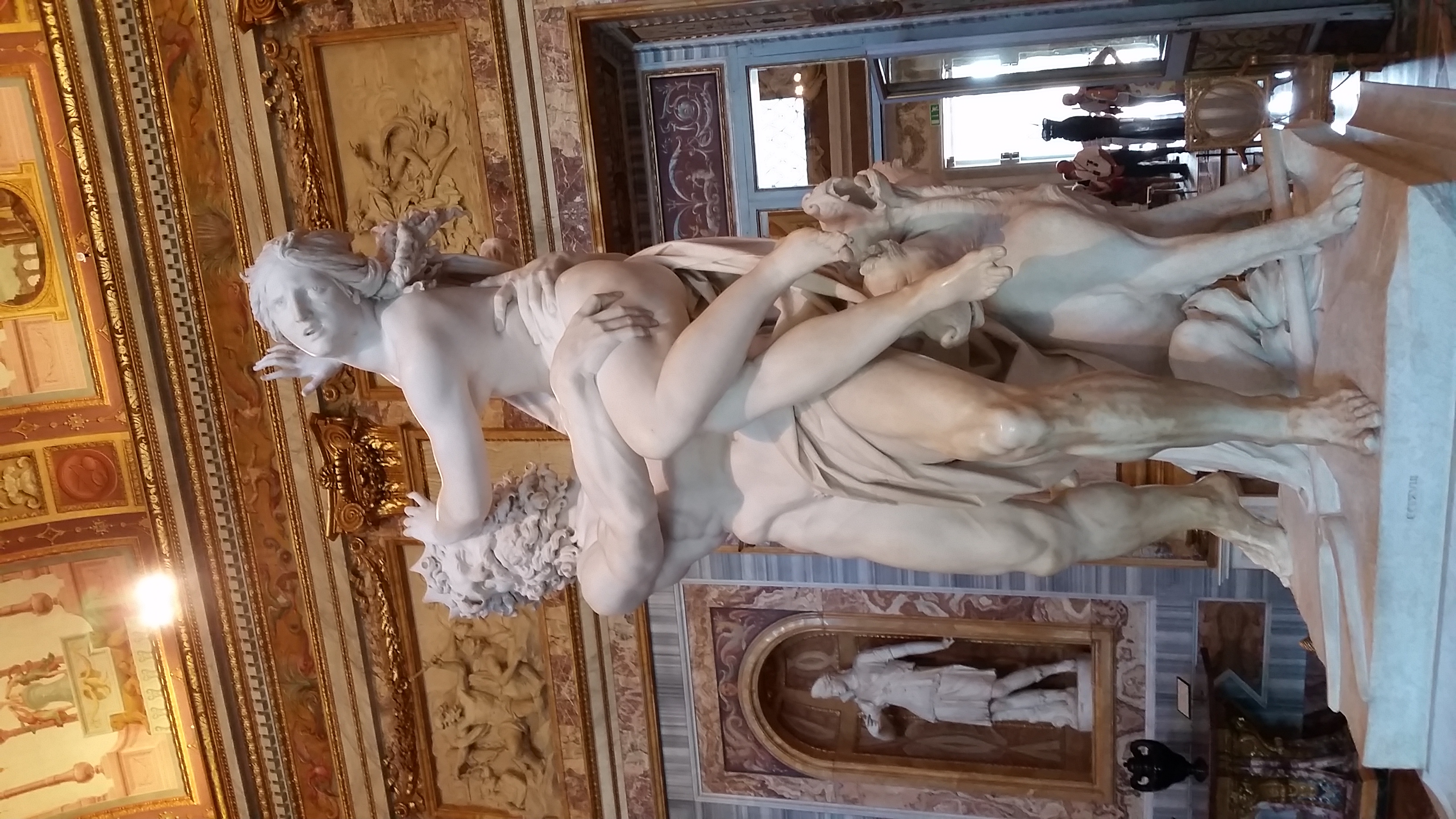
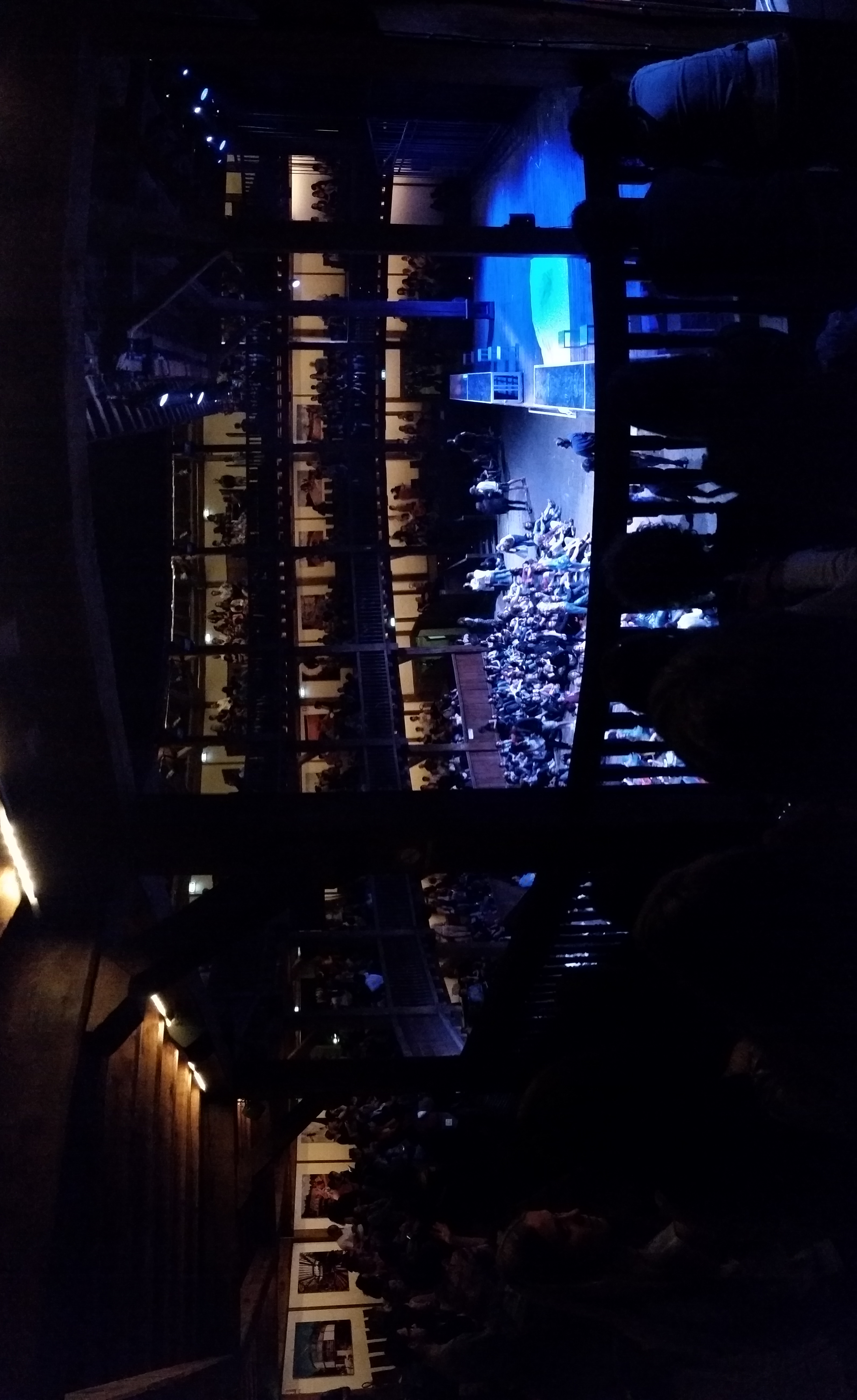
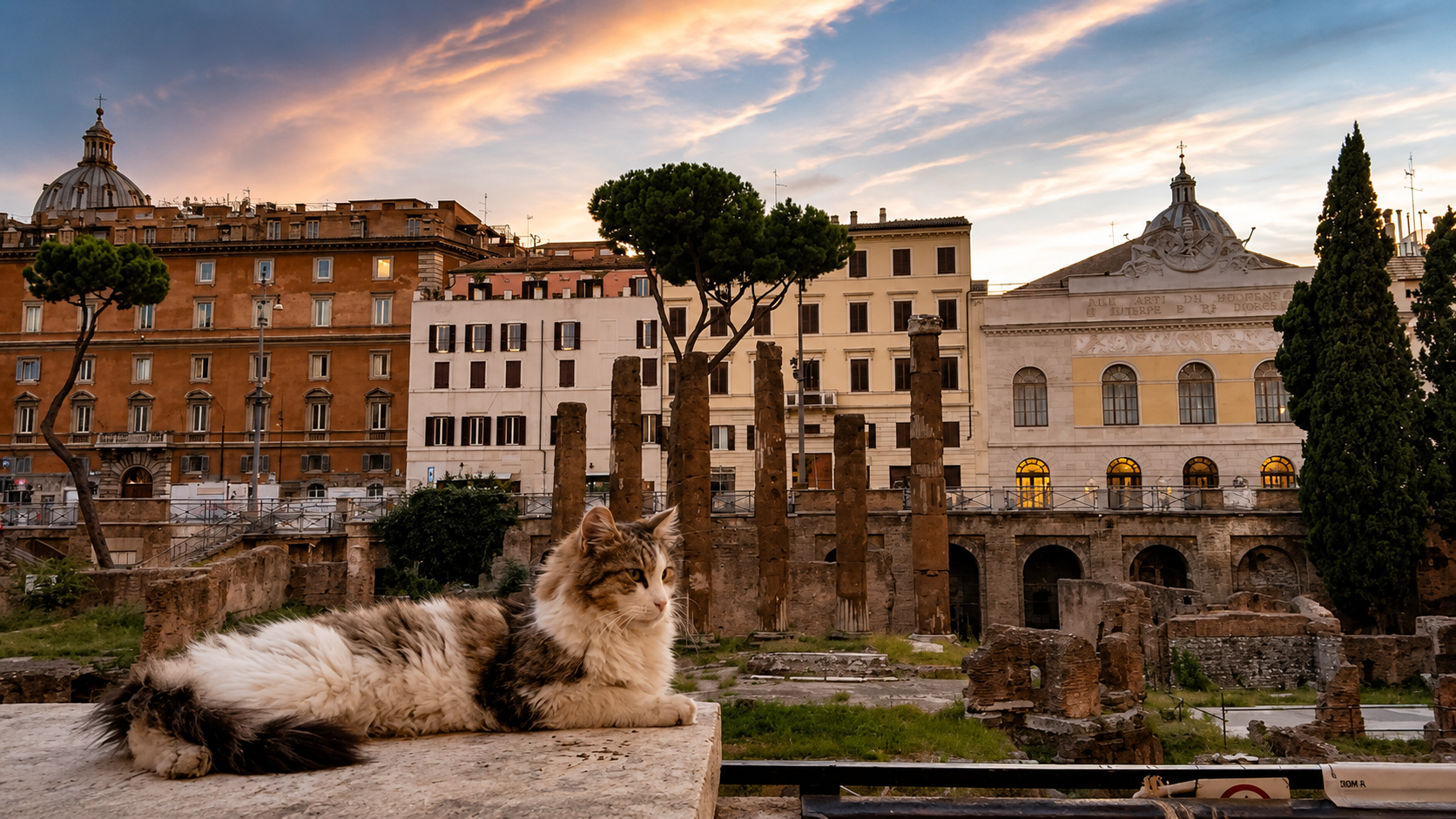
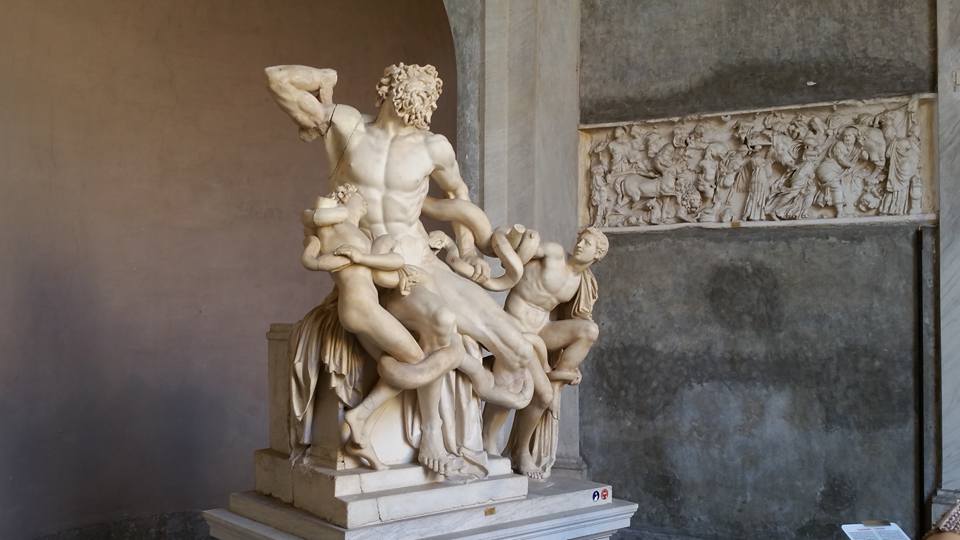
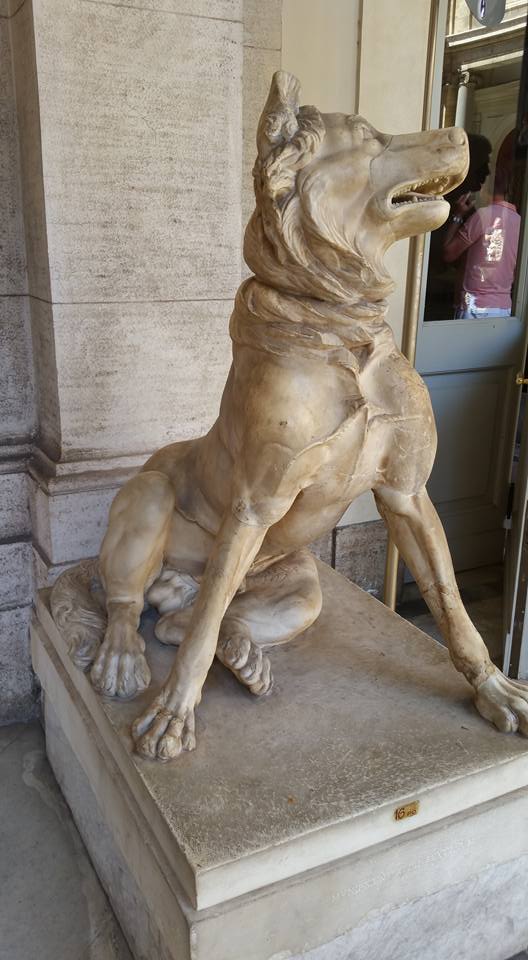
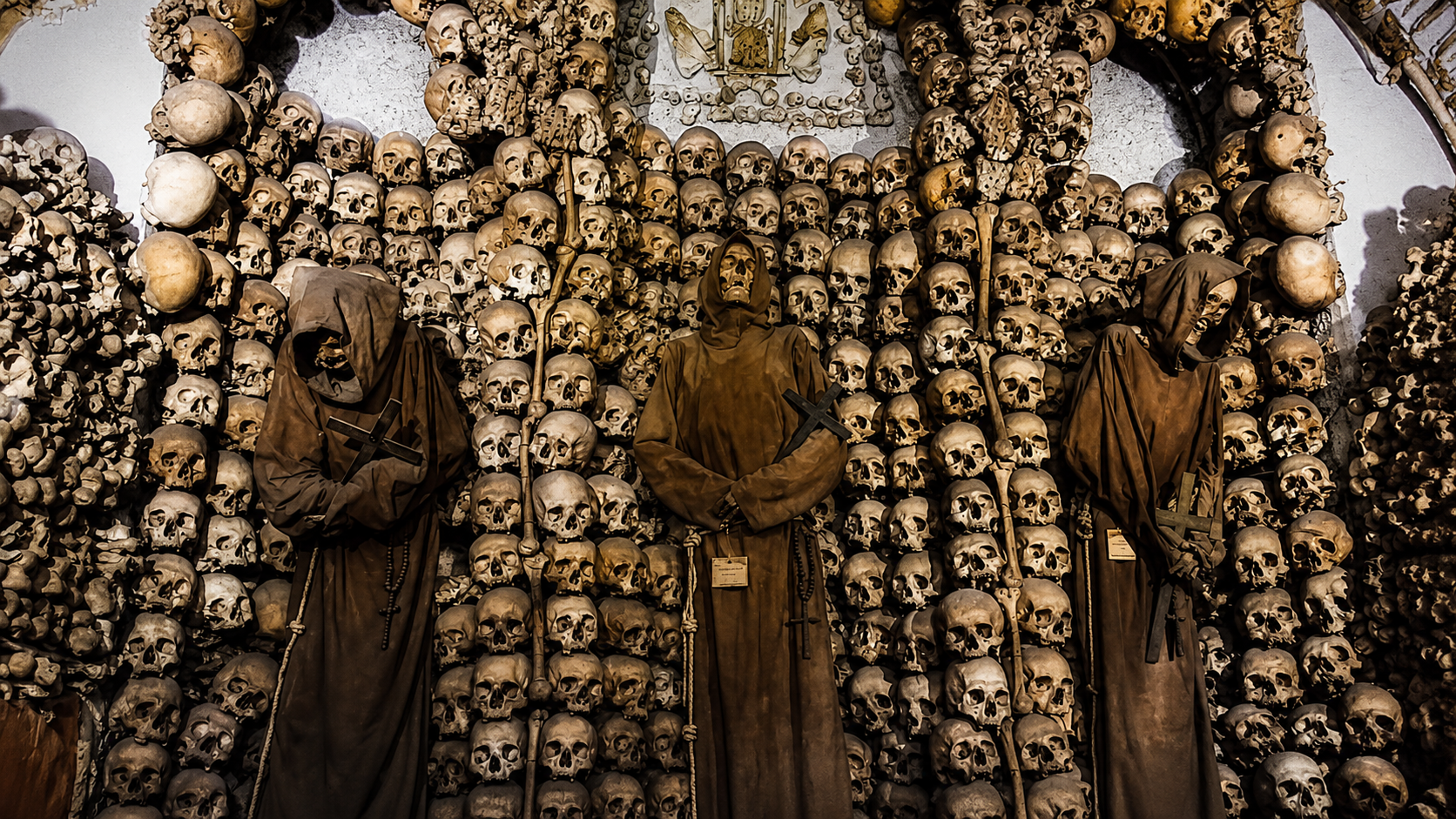
The real Roman stay was a week, and this was our first time doing Rome properly — not as a tour stop but as a place we were actually settling into for a few days. It was also our first real Airbnb experience, back when Airbnb was early enough as a company that the whole thing still felt slightly experimental. My sister found an apartment with a rooftop terrace in a location where you could see the Colosseum. We don't normally spend money on accommodations — the rule has always been that a place to sleep doesn't need to be impressive, just comfortable — but this was apparently priced like early Airbnb, which is to say it fit the budget without much of a stretch. I'd brought a small hammock. I set it up on the terrace and laid there watching the Colosseum lit up at night. That image is still pretty hard to beat.Me in a hammock on a rooftop terrace overlooking the Colosseum in RomeThe week was museums and ruins, which is how Rome should be done.Most of it was spent in the old city. We walked the Roman Forum end to end — what's left of the political and religious heart of the empire, now a long run of broken columns, triumphal arches, and foundations you have to rebuild in your head as you go. The Arch of Titus and the Arch of Septimius Severus are both still standing, which helps. From there it's a climb up Palatine Hill, where the emperors lived: the ruins of the imperial palaces, the Domus Augustana and the Flavian Palace, spread across the top of the hill, with the Forum falling away on one side and the long oval of the Circus Maximus on the other. The scale of the place only really registers once you're standing in the middle of it.The Arch of Titus in the Roman Forum, RomeMy sister among the ruins of the Roman Forum in RomeA wide view across the ruins of the Roman ForumThe ruins of the Flavian Palace on Palatine Hill, RomeAnd the Colosseum, which needs no introduction. We saw it in daylight and again lit up after dark, and the night version is the better one — the crowds fall away and the whole structure takes on a different weight floodlit against a black sky.The Colosseum lit up at night in Rome, ItalyMy sister among floodlit Roman ruins at night in RomeOne day we got out of the center entirely and down the Appian Way — the old Roman road, still paved in stretches with its original basalt stones, running south out of the city past tombs and ruins. The Catacombs of Rome are out that way: miles of underground burial tunnels cut into the soft volcanic rock, the dead stacked in niches along the walls. Above ground nearby sit the remains of the Circus of Maxentius, a chariot-racing track far better preserved than the famous Circus Maximus, sitting almost empty in a field. It's a quieter, emptier Rome than the center, and worth the trip out.The Catacombs of Rome along the Appian WayThe ruins of the Circus of Maxentius on the Appian Way, RomeThe Borghese Gallery was probably the single most memorable of the museums — a collection of sculpture that I think is genuinely underappreciated relative to how extraordinary it is. The Bernini pieces in particular: the Apollo and Daphne sculpture, marble carved to look like bark growing over skin, a human being mid-transformation into a laurel tree. It's the kind of thing you stand in front of for longer than you planned and still feel like you left too soon. The gallery restricts photography now, but at the time there was some allowance without flash. I'd recommend it to anyone going to Rome without reservation, and if you're going, budget more time than you think you need.Bernini's Apollo and Daphne sculpture at the Borghese Gallery, RomeBernini's Rape of Proserpina sculpture at the Borghese Gallery, RomeOn the Borghese grounds there's also a reproduction of the Globe Theatre — a working outdoor venue. We found something performing during our stay and bought tickets on the logic that being inside a Globe Theatre in Rome was worth doing regardless of what was on. The production was entirely in Italian, which makes complete sense — we were in Italy, the venue wasn't built with Ohio tourists in mind — and we followed roughly none of the plot, but we stayed through the whole thing and had a genuinely good time doing it. Sitting outside on a warm Roman night watching Shakespeare performed in a language you don't speak is a stranger and better experience than it sounds.The reproduction Globe Theatre in Villa Borghese, RomeSomewhere in the middle of the city is Largo di Torre Argentina — a sunken square of ruins sitting below street level, holding four Republican-era temples that are among the oldest in Rome. It's also the spot where Julius Caesar was actually killed; the Curia where the Senate was meeting that day stood right there. What it's best known for now, though, is the cats. The ruins have been a cat sanctuary for decades, and the place is full of them, lounging around two-thousand-year-old temple foundations like they own the lease. At the time we could only look down into it from the railing above, which was enough.The Republican-era temple ruins of Largo di Torre Argentina at sunset, RomeThe Vatican happened, and it didn't go well. Not because of the Vatican itself, but because of how the Vatican handles the volume of people it processes every day. The museum is organized entirely around moving as many visitors as possible through one room — the Sistine Chapel — and the experience of getting there involves being packed into corridors with a density I found genuinely alarming from a fire safety standpoint. You can't stop. You can't look at anything properly. You're being herded, and you arrive at the ceiling thirty or forty feet above you in a room so crowded you can barely turn around, with staff yelling at anyone who tries to take a photo.We lost Daphne somewhere in the crowd. She'd had enough of being herded and broke off on her own, with no agreed meeting point and no real way to reach each other. I went looking for her, found her, said something I probably didn't need to say at that volume, brought her back to my mom, and at that point we were all too fired up to agree on anything practical. We left. That was my Vatican experience: a crowded hallway and a ceiling I could barely crane my neck at. I never really saw the art. Daphne did — in the time she'd broken away before I found her, she saw it properly, and the photos just below are hers. By her account, and her camera's, it was extraordinary. That's the part that stays with me: I pulled her out of something genuinely amazing because I was too wound up about losing her to stop and look. We've since made up about it — there's nothing to hold a grudge over — but it remains the worst hour of that trip by a comfortable margin. If I go back to Rome, which I will at some point, I'll do the Vatican alone, without a tour, slowly, and early. That's the only approach that makes sense.Laocoön and His Sons in the Vatican Museums — one of Daphne's photos, from the time she'd broken away from the crowdA marble dog in the Vatican Museums — also Daphne'sThe last stop worth mentioning from Rome is the Capuchin Crypt on Via Veneto. The bones of roughly 3,700 Capuchin friars are arranged throughout a series of underground chapels — not stored, arranged. Chandeliers made from vertebrae, archways built from femurs, entire walls and ceilings constructed from human remains organized into decorative patterns, with a placard near the entrance that reads: "What you are now, we once were; what we are now, you shall be." Photography restrictions mean I may not have much from the visit, but I do have the t-shirt, which is the correct souvenir for a place like that. If you're into the weird and macabre end of travel and you find yourself in Rome, it's worth the detour.A bone-decorated chapel in the Capuchin Crypt on Via Veneto, RomeA few more frames from that week in Rome:
Tap any photo to enlarge
Want to see it yourself? Plan a trip to Italy and Malta
VagaPlan builds a day-by-day itinerary around how you travel, with real sites, opening hours, costs and booking links. Start with Italy and Malta already filled in and get 3 trip ideas free.