Freedom on Wheels
Rent a car in Cancun for total flexibility — I always do
Affiliate links • Helps fund my adventures at no extra cost to you
What It Was
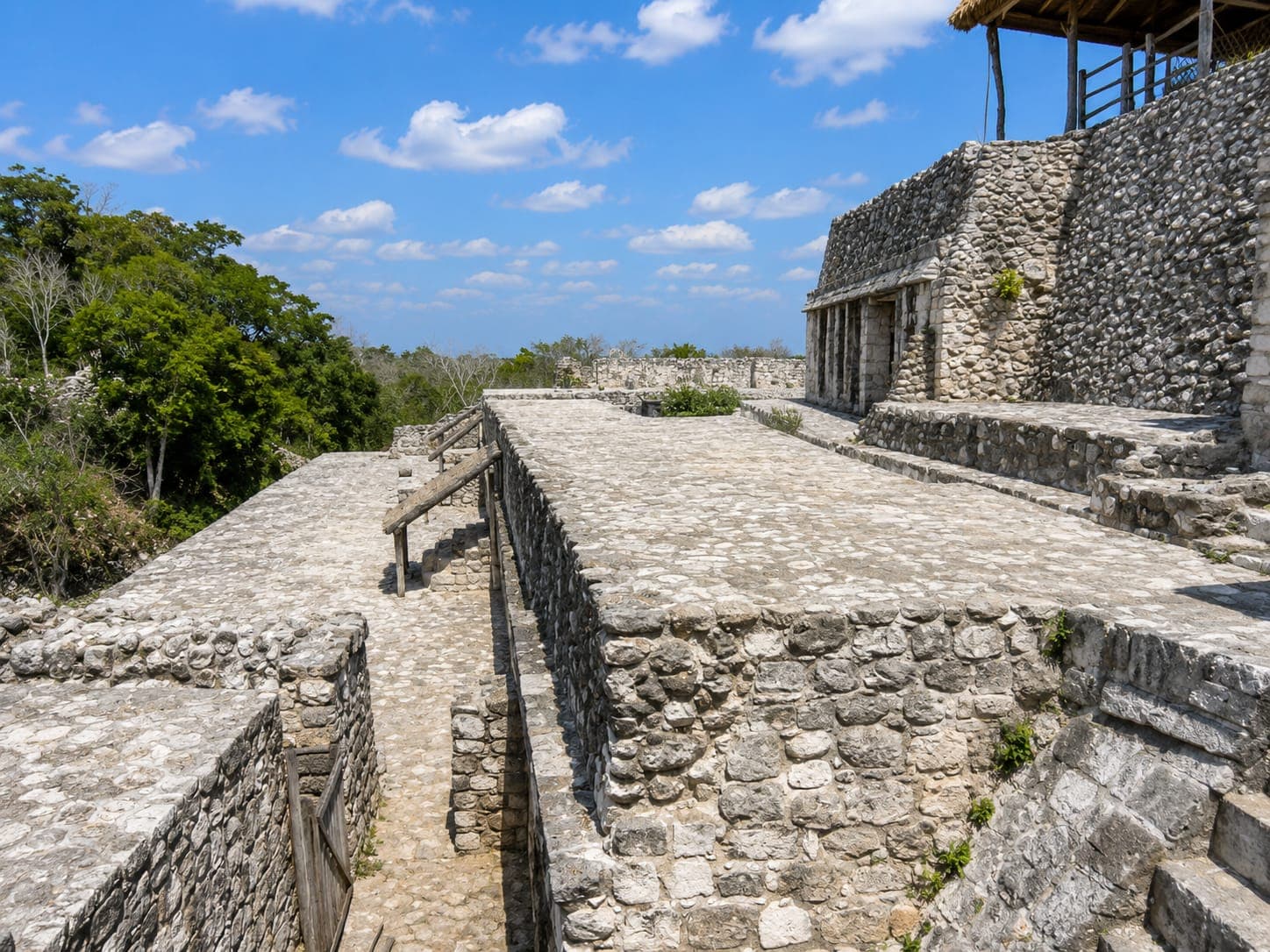
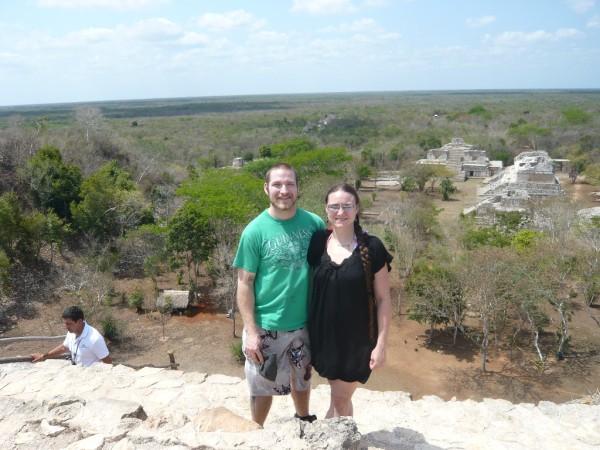
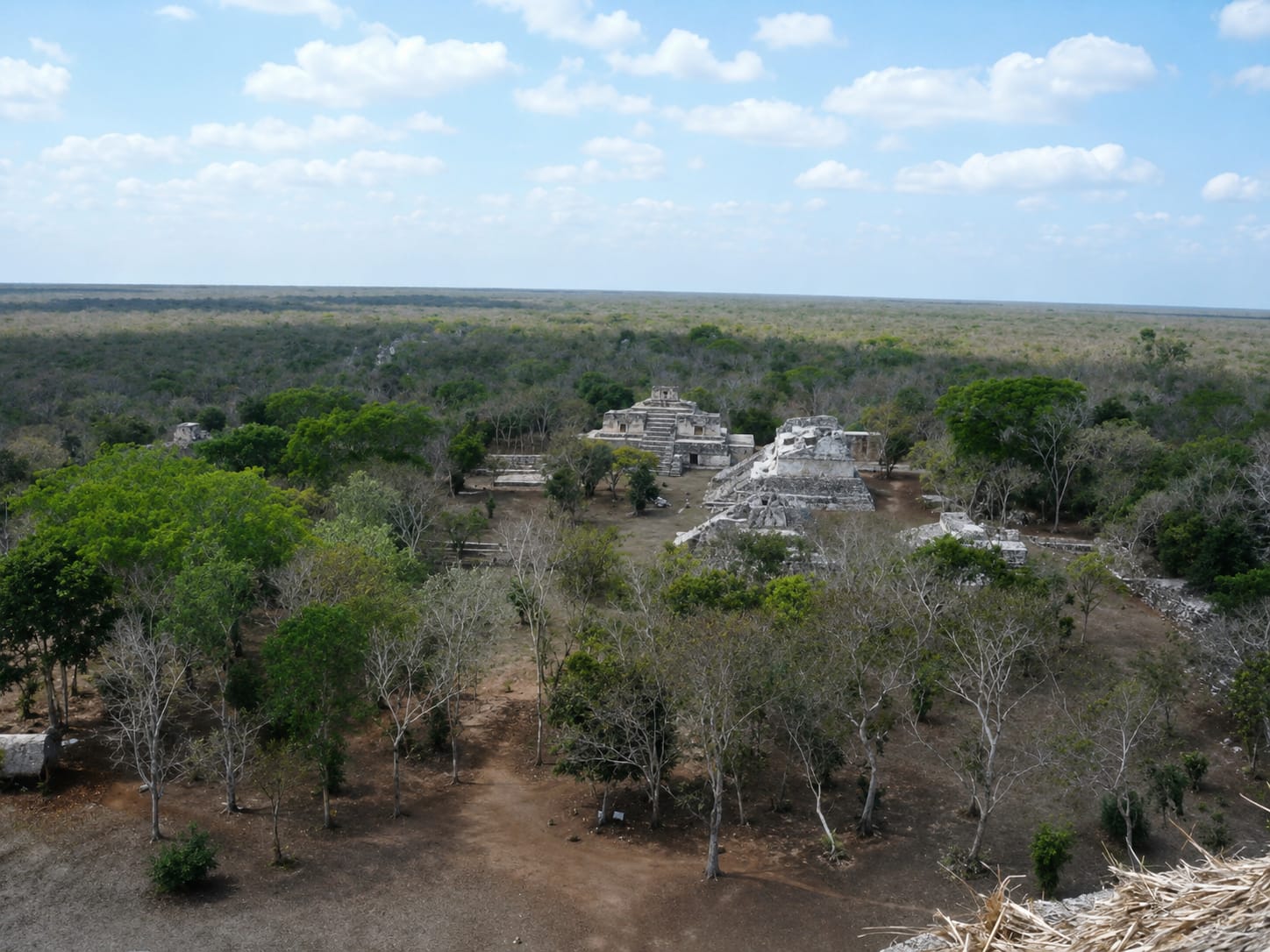
Ek' Balam means Black Jaguar in Yucatec Maya — though some inscriptions suggest the original name of the site was Talol, and in the Terminal Classic period the name Ek' Balam may have referred to a ruler rather than the place itself. The city dates back to the Middle Preclassic period, around 700 to 300 BCE, based on pottery fragments. Most of the visible construction dates to the Late Classic heyday, roughly 600 to 900 CE, when it functioned as the capital of a regional Maya kingdom.At its peak, the population was somewhere between 10,000 and 20,000 people — mostly farmers and laborers supporting a royal court and noble class who lived on the elevated platforms of the central ceremonial area. The site covers about twelve square kilometers, but the walled core where the elite lived and governed is just over one square kilometer. That core is surrounded by two concentric defensive walls — an unusual feature in Yucatan Maya cities. The outer wall is simpler and appears purely functional. The inner wall is more elaborate, with raised platforms along its interior edge. Archaeologists debate whether they were defensive or ceremonial, or both; the Late Classic period in the northern Yucatan was increasingly defined by warfare, and some scholars think chronic regional conflict is what eventually brought the city down.Five sacbeob — raised white stone causeways — lead into the central plaza through the walls and gates. There's an entrance arch still standing on four legs at the main access road, probably ceremonial in purpose.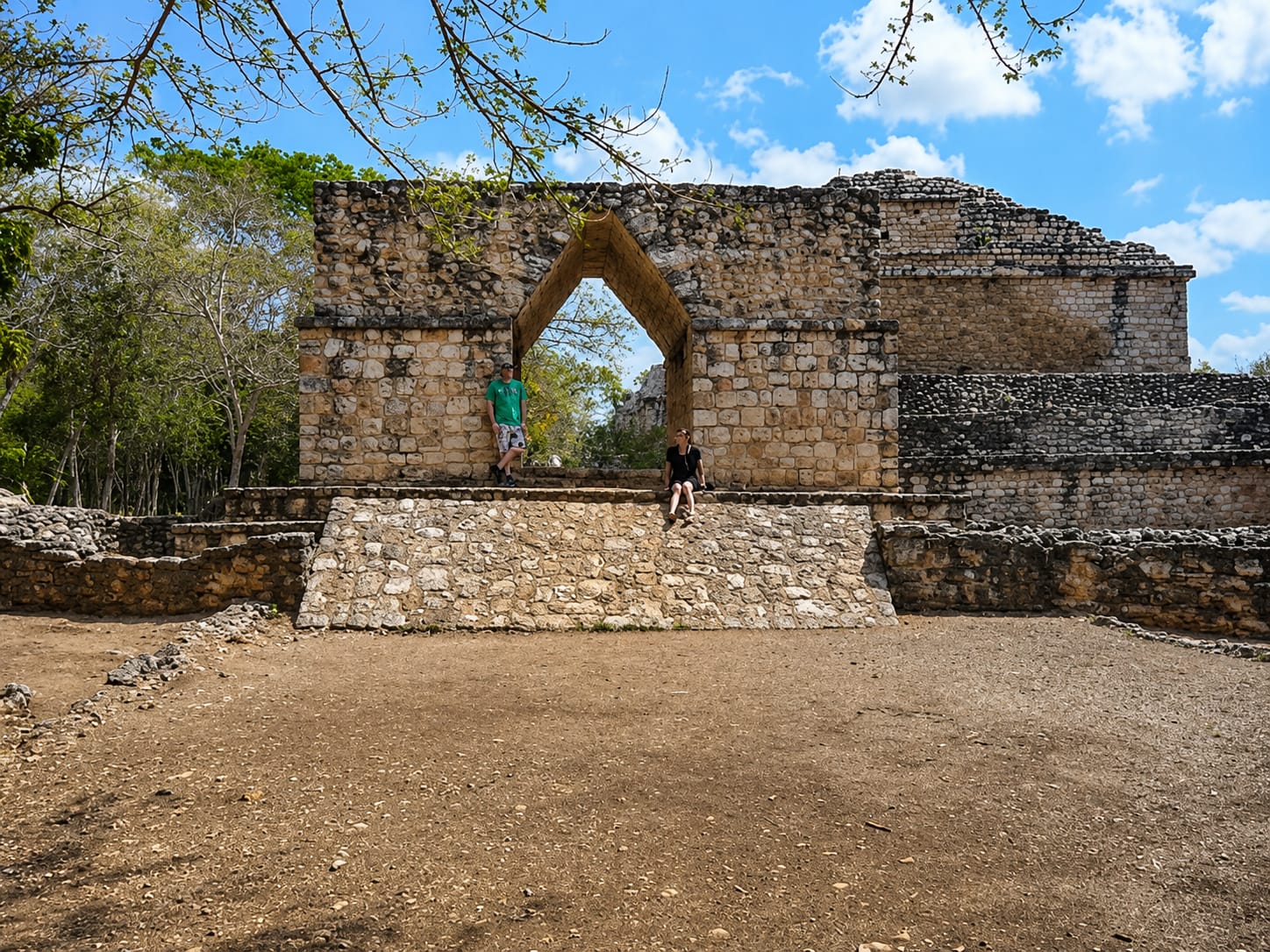
The King in the Pyramid
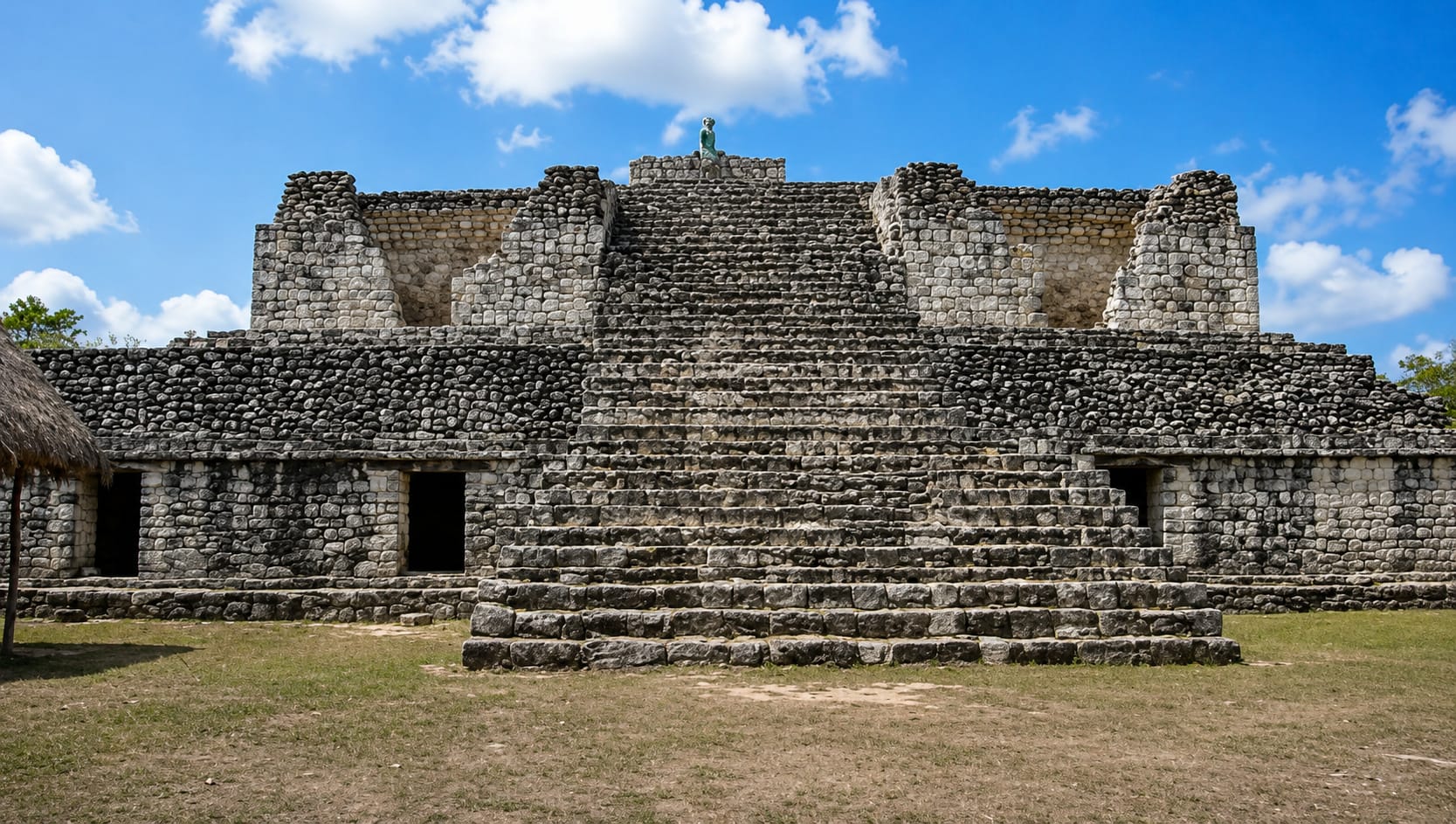
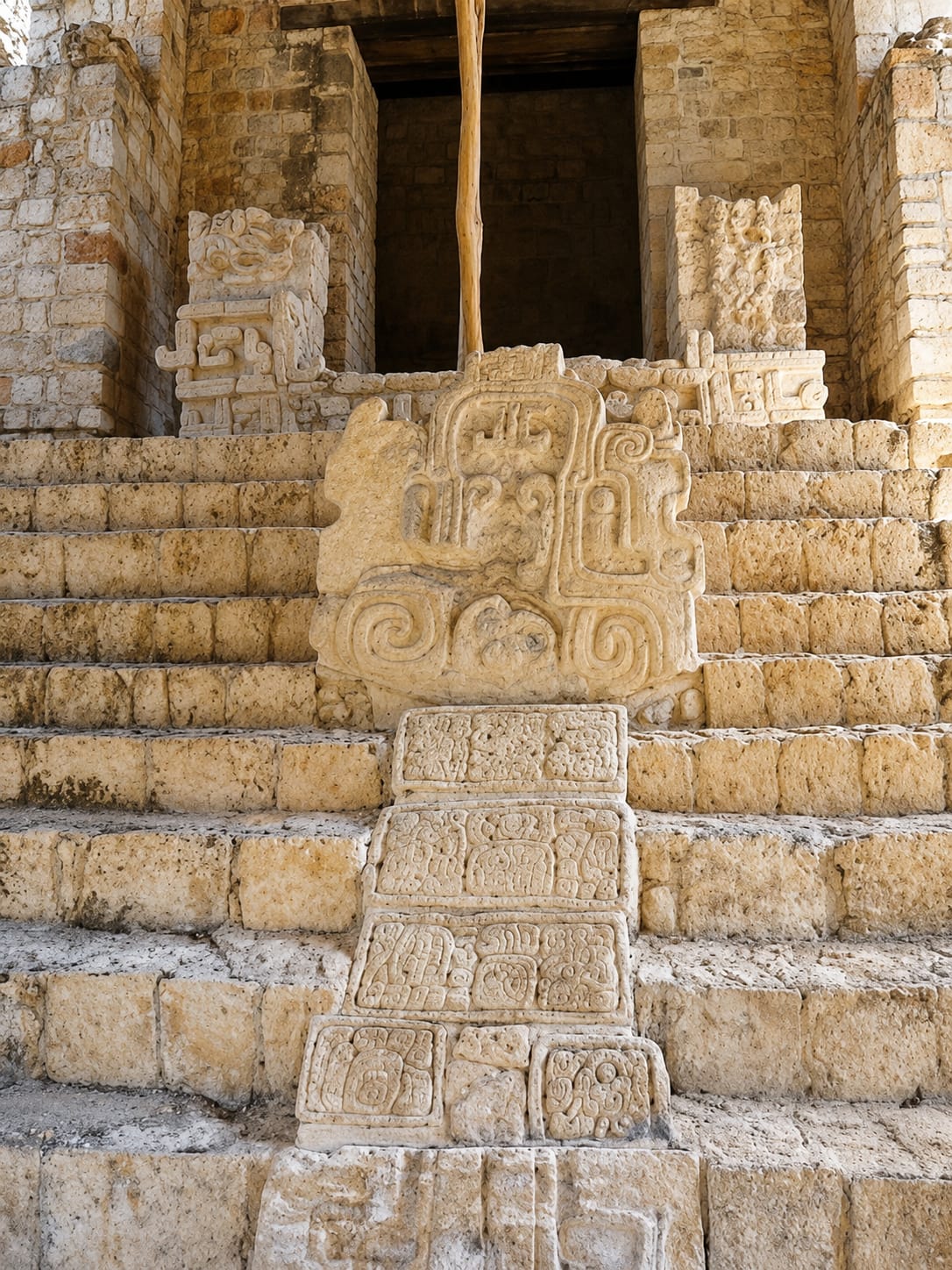
The dynasty that built Ek' Balam's monumental core was called the Balam dynasty — the jaguar dynasty; the name is not coincidental. The black jaguar was one of the most significant symbols in Maya cosmology, associated with the underworld, with night, with rulership. The noblest Maya lineages claimed descent from it.The most documented ruler was Ukit Kan Le'k Tok', whose name translates roughly as "the father of the four flint fronts." He came to power around 770 CE — and here's the detail that distinguishes him from most rulers of comparably powerful cities: he appears to have arrived at Ek' Balam from elsewhere. His architectural style connects back to the Chenes and Rio Bec cities far to the southwest, and he shows no influence from the dominant Puuc or Toltec traditions that shaped his neighbors Uxmal and Chichen Itza. Whoever he was before he arrived, he built something that had no real local precedent.During his roughly thirty-year reign, Ek' Balam became the dominant power in northeastern Yucatan, superseding Coba to the southeast. His name appears in inscriptions at Ichmul, a site 25 kilometers to the west — a sign of political reach that extended beyond the city itself. He brought in the best artisans from across the region to build, paint, and carve. What they produced is the reason you go.In 1994, excavators working on the Acropolis — which until the excavations of the late 1980s had appeared to be only a large mound — found a sealed chamber on the fourth level. Inside was the tomb of Ukit Kan Le'k Tok', intact.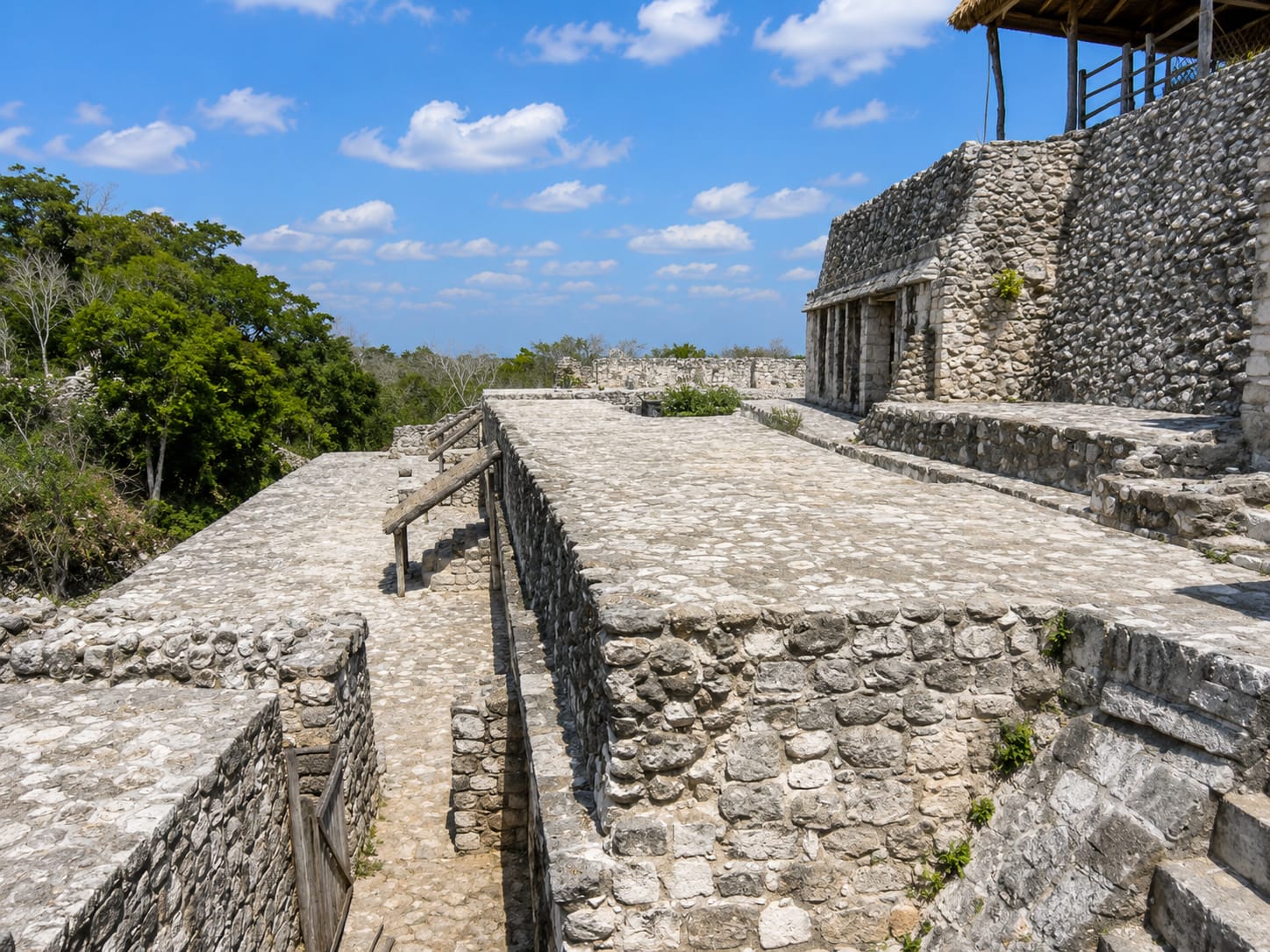
Why Nobody Knows About It
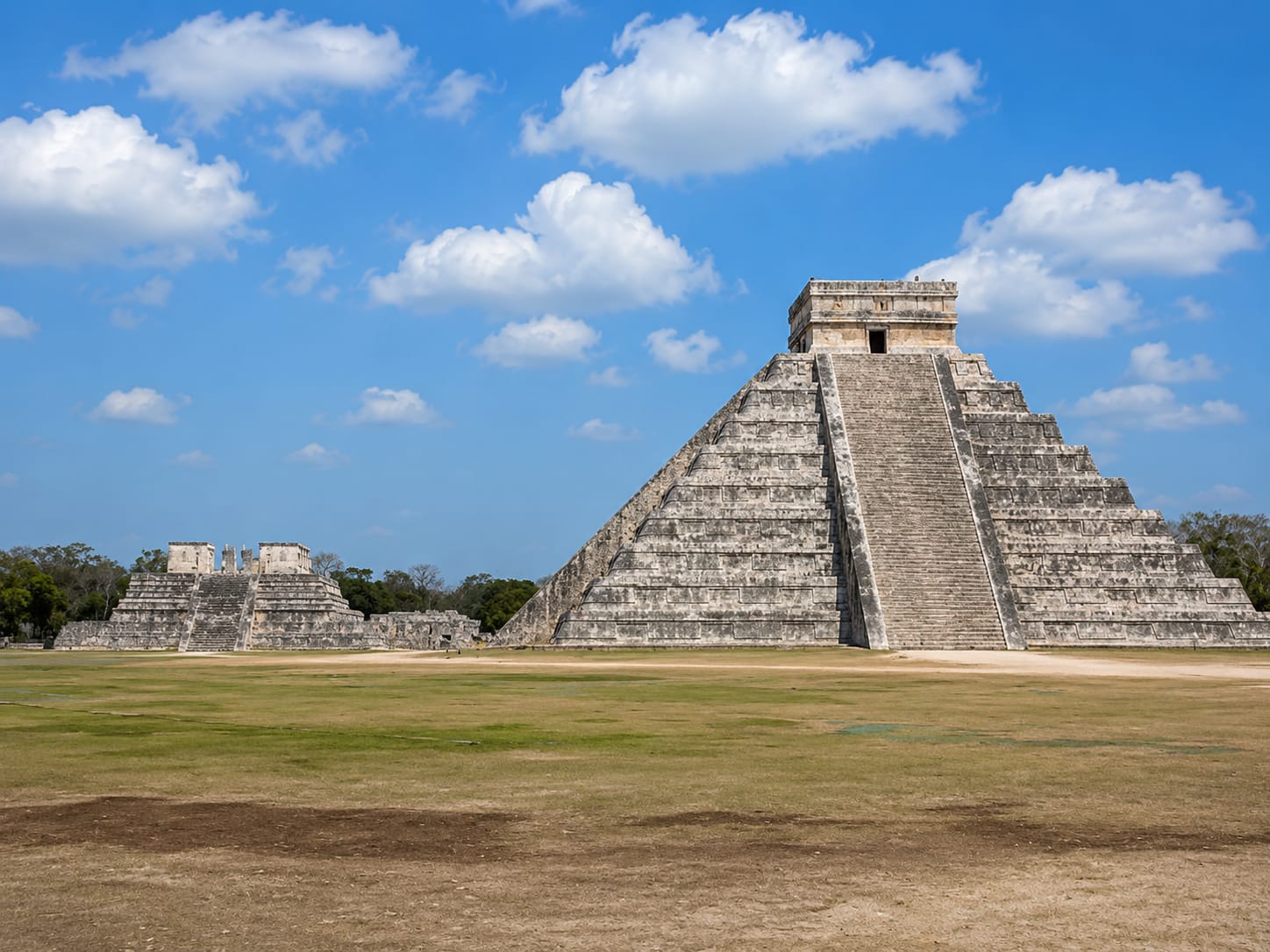
The short answer is that Chichen Itza had a 150-year head start.European scholars were documenting Chichen Itza seriously from the mid-1800s. John Lloyd Stephens described it in 1843. The Carnegie Institution ran major excavations there through the 1920s and 30s. By the time UNESCO designated it a World Heritage Site in 1988, it had been the defining Maya site in the global imagination for over a century.Ek' Balam was visited briefly by French archaeologist Désiré Charnay in the 1880s, then essentially left alone for another hundred years. Bill Ringle and George Bey III conducted the first modern explorations in the 1980s. The tomb wasn't found until 1994. INAH has been conducting ongoing excavation and restoration work since. Of the more than forty structures within the walled enclosure, most remain unexcavated. The site is, by the standards of the discipline, brand new.There's also a political explanation that goes back to the 9th century. Chichen Itza's influence expanded dramatically across the northern Yucatan in the Terminal Classic period — roughly 800 to 1000 CE — and part of how that expansion worked was by absorbing or eclipsing rival centers. Ek' Balam's power declined precisely as Chichen Itza's peaked. The Maya collapse around 900 CE hit it hard. The city contracted sharply, though it didn't disappear entirely — a late 16th-century Spanish colonial document called the Relación Geográfica mentions it by name, suggesting a community still associated with the site even then. But by the time the Spanish arrived in force, Chichen Itza and Uxmal were the sites carrying political and religious significance anyone outside the region recognized. Ek' Balam was a place people knew about locally and didn't particularly write down for outsiders.Then the jungle grew back over it, the way it does, and that was mostly that until 1987.What It's Like
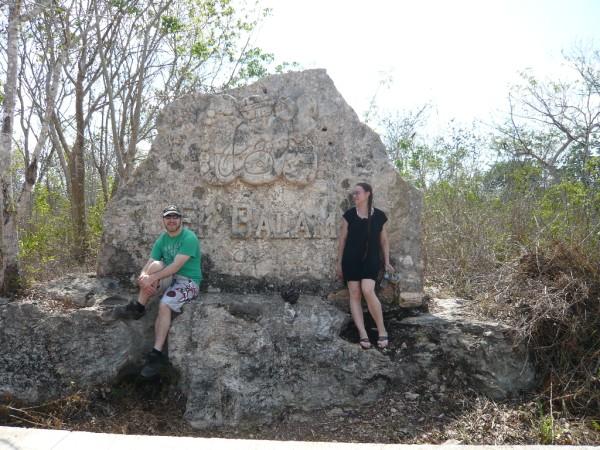
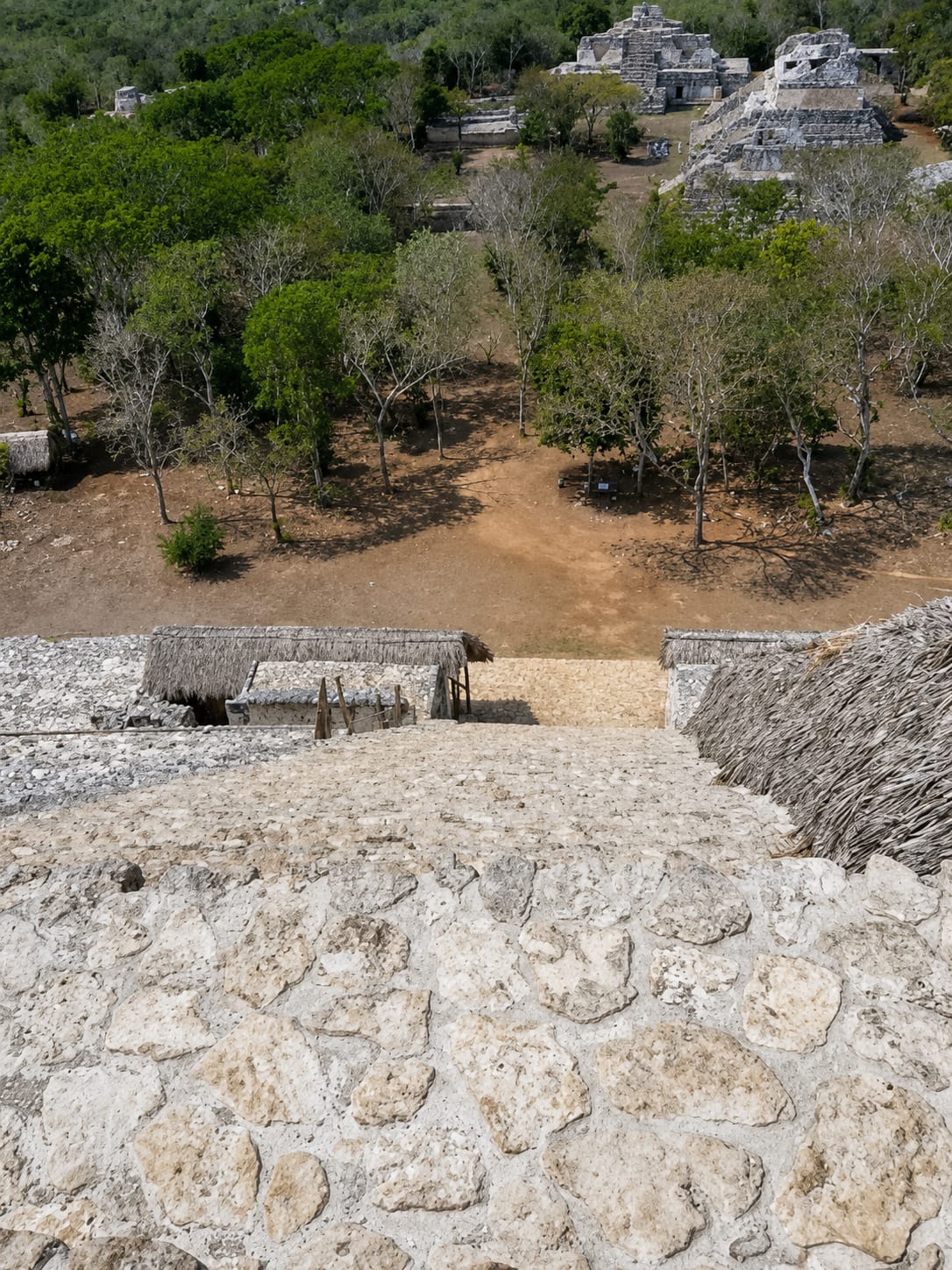
My sister booked us into Genesis Eco-Oasis, a small lodge that sits directly adjacent to the ruins — close enough that you can hear the birds from the site in the morning. I am not a morning person. I became one temporarily.


Planning your next trip?
However you travel — no idea where to start, a rough plan, set dates or totally flexible, any budget, any style, even bringing the pets — VagaPlan builds the whole trip around you. Get 3 custom trip ideas free, then unlock the full day-by-day itinerary when you're ready.
Unforgettable Experiences
Yucatan has incredible experiences worth booking in advance
Affiliate links • Helps fund my adventures at no extra cost to you
Further Reading
Books about Yucatan — history, culture, and the context that makes travel richer
Affiliate links • Helps fund my adventures at no extra cost to you
Support My Travels
Affiliate links
Affiliate link — helps fund the adventures at no cost to you
More in the Series
Next Article