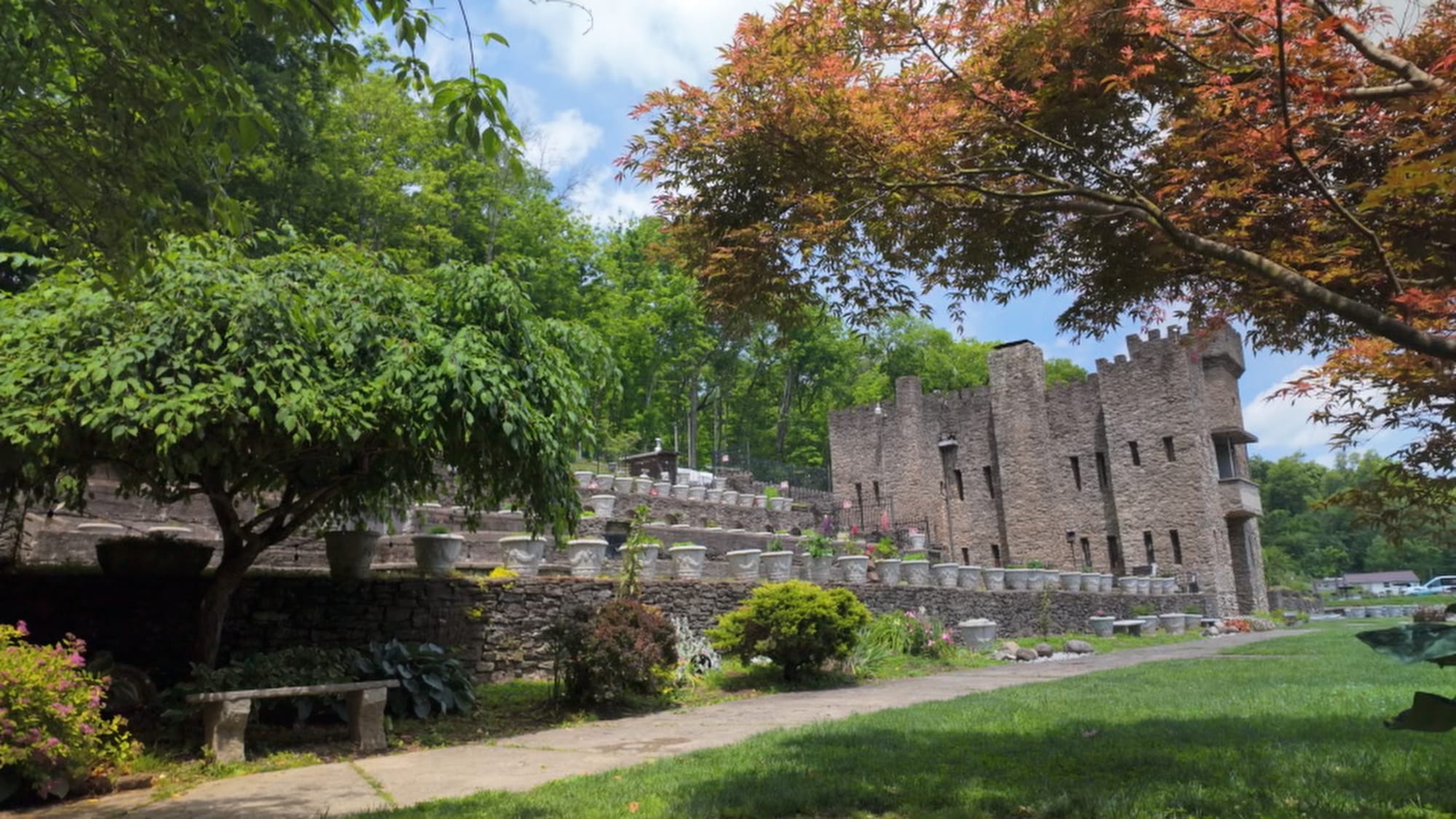
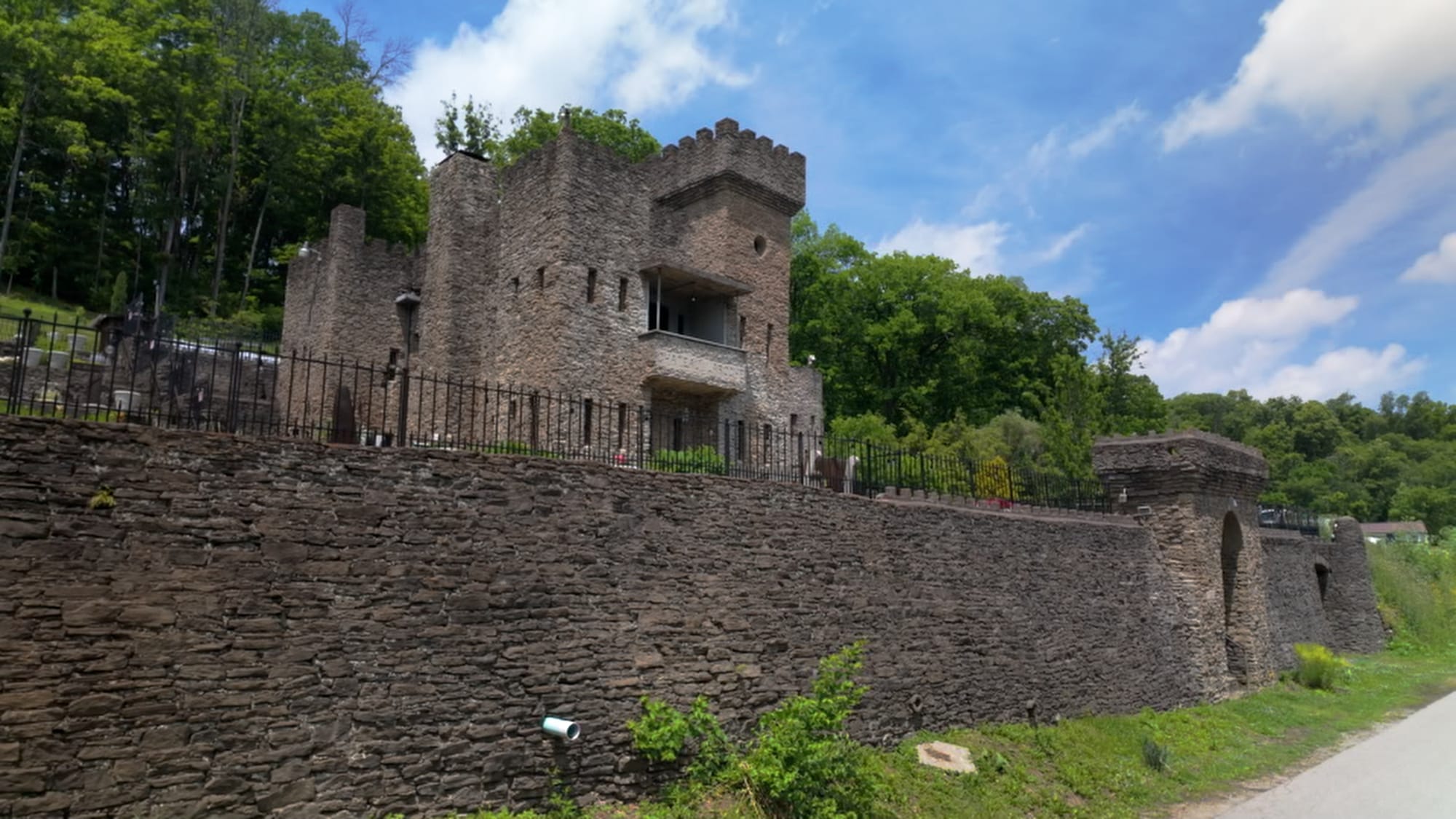
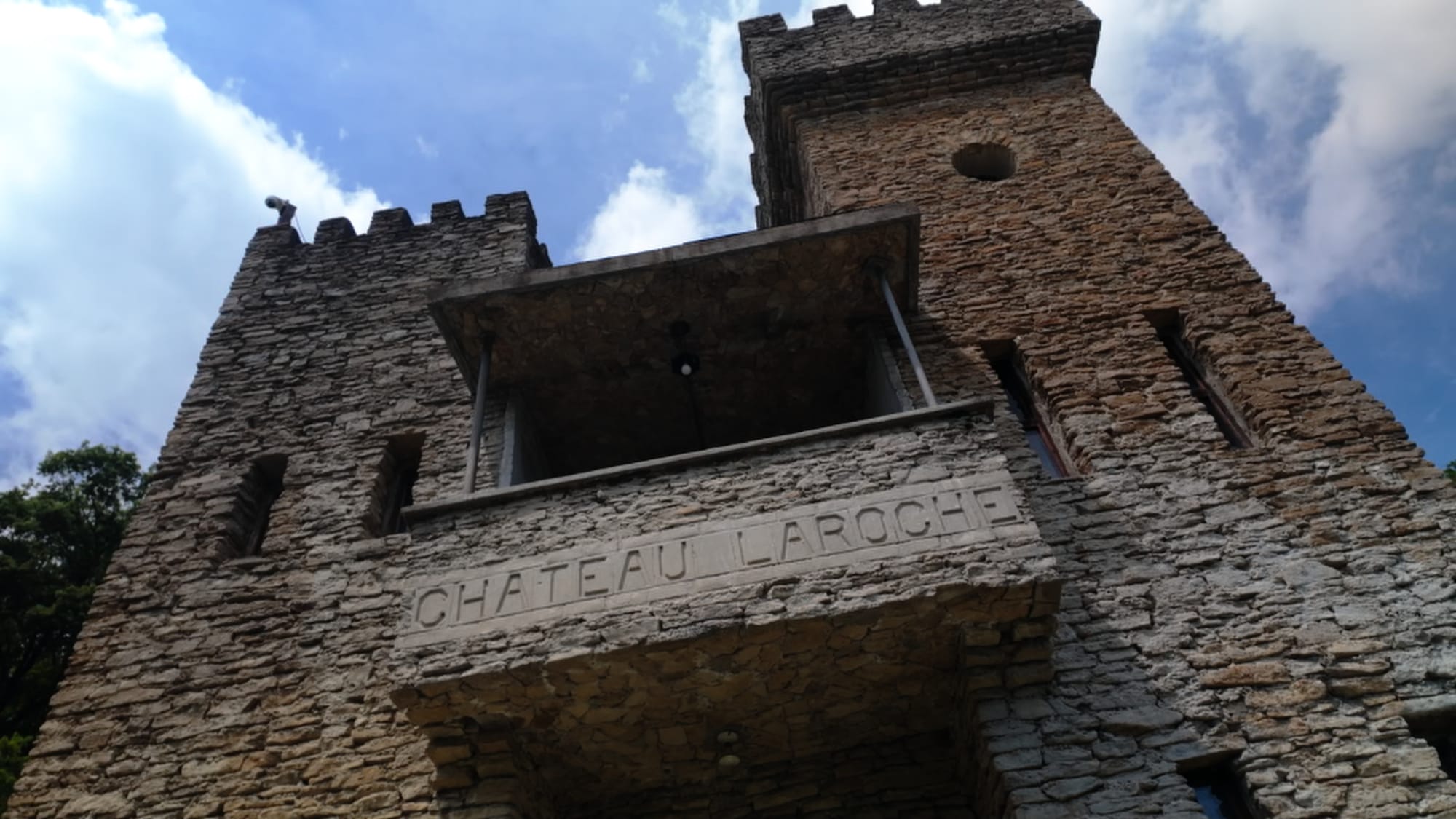
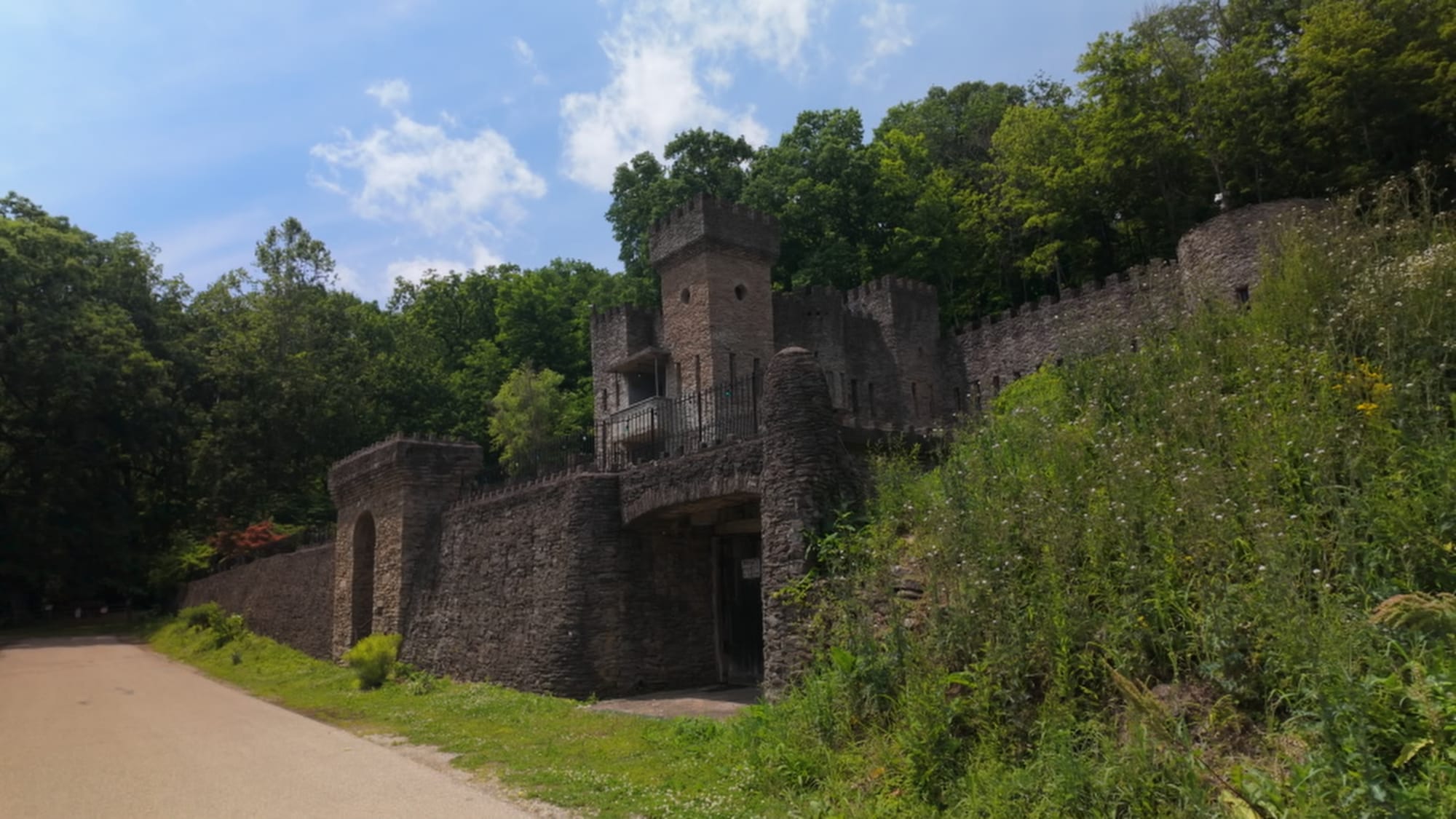
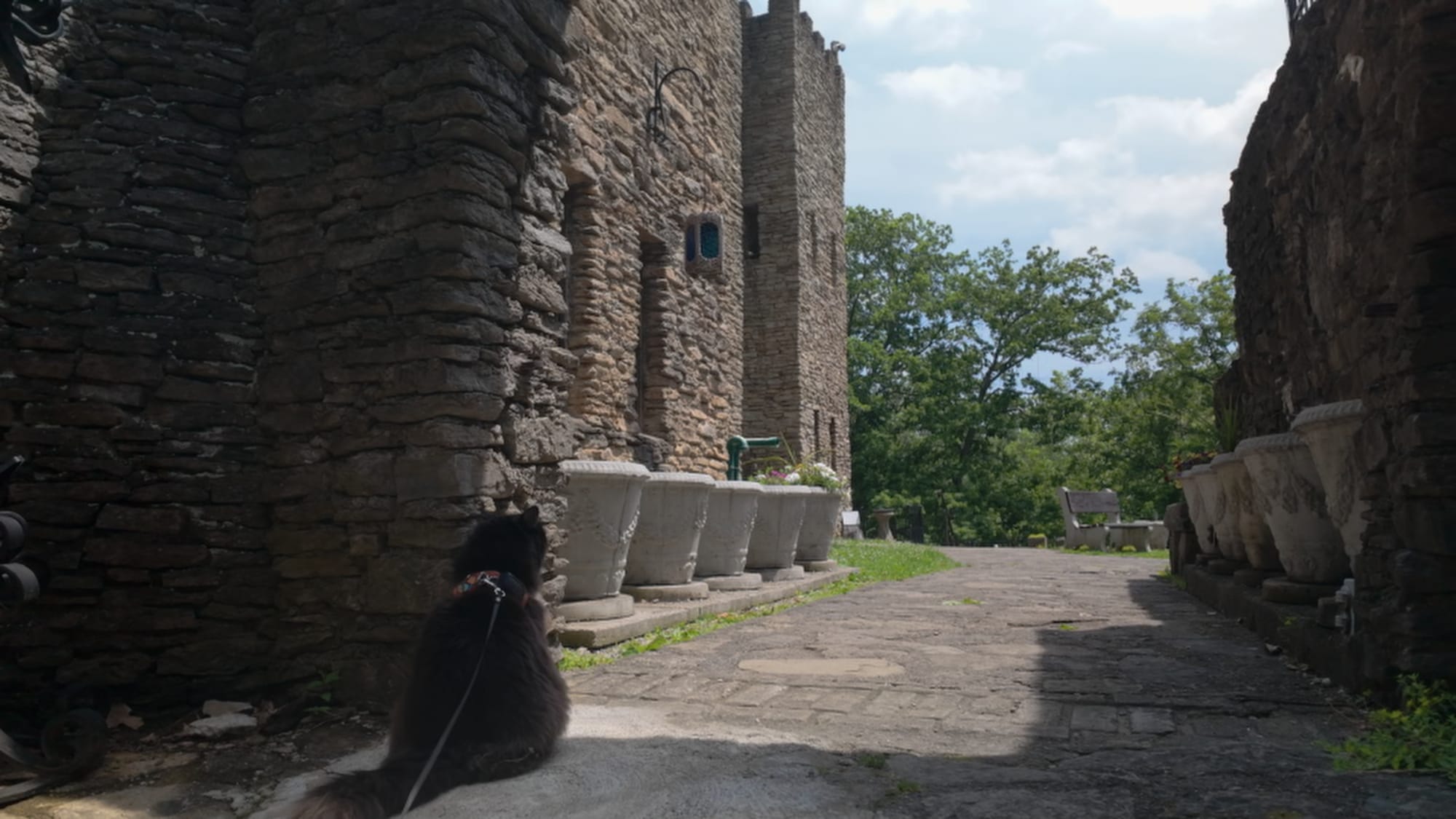
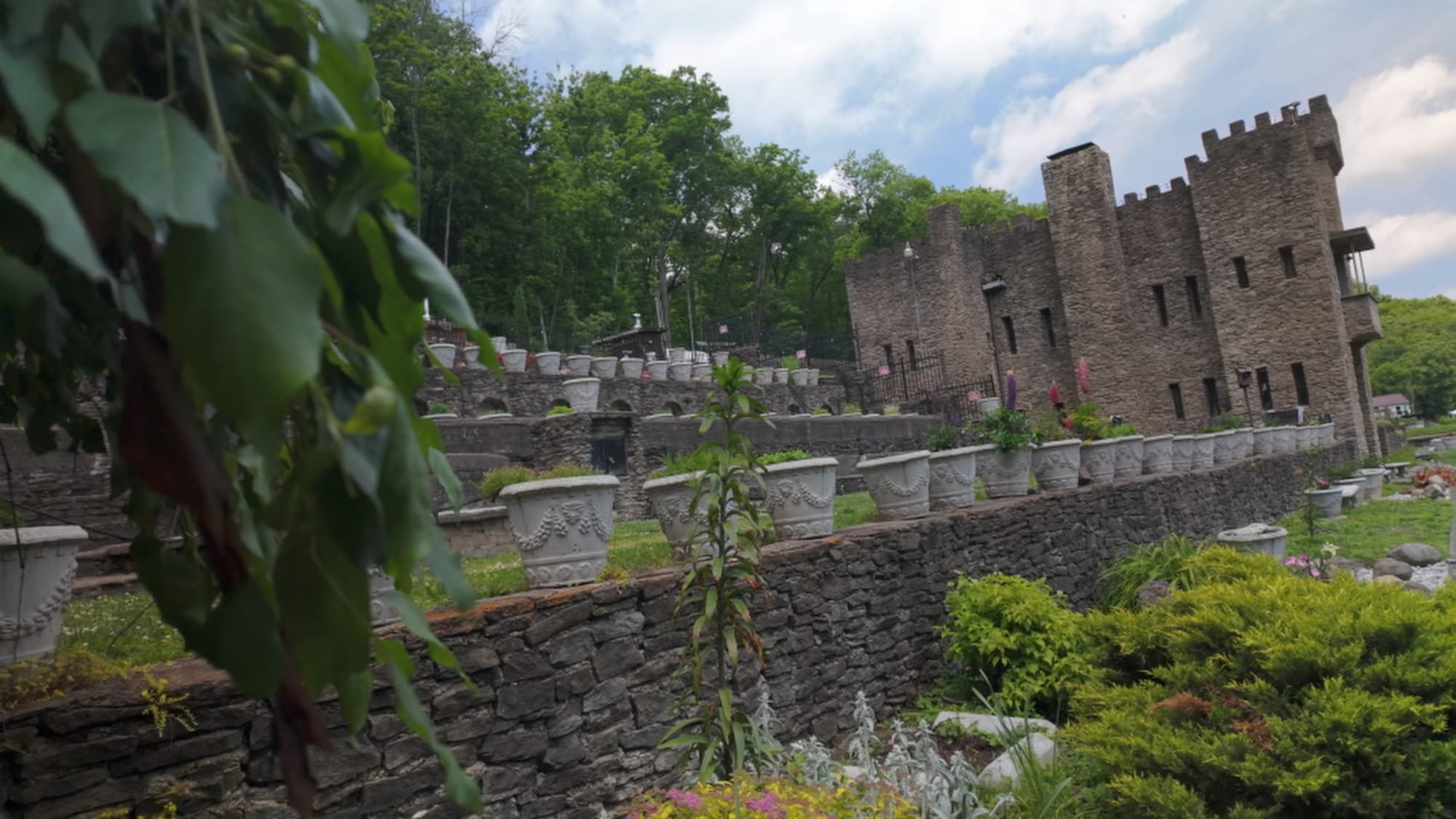
In 1929, a man decided to build a castle.He had no crew. No contractor. No heavy equipment. He pulled stones out of the river below his property and carried them up the bank in buckets, and when the river ran out of usable stone, he started casting his own bricks in quart milk cartons. He kept at it for fifty-two years — through the Depression, through another world war, through old age, through people breaking in at night to rob him — and he was still building when he died.This is Château Laroche, better known as Loveland Castle, on the banks of the Little Miami River about twenty-five miles northeast of Cincinnati. It took me about three and a half hours to get there from Akron, and it is one of the strangest, most sincere places I've ever stood inside.The first three episodes in this series were about things people made and then left behind. A boulder in a forest. A carved sandstone ledge. Two hundred brick ovens in a valley. All of them abandoned, all of them slowly being taken back by whatever grows around them.This one is different. This one is still running. The organization the builder founded nearly a century ago still owns it, still maintains it, still staffs it. When you visit, the people taking your five dollars at the door are knights — actual sworn members of an order the builder created — and some of them will tell you, with complete sincerity, that he never really left.
The Man the Army Declared Dead
Harry Delos Andrews was born in 1890. He graduated from Colgate University, where he'd trained in Greek and Roman architecture, reportedly spoke seven languages, and went to France in the First World War as a medic.While he was there, he contracted spinal meningitis — and the army recorded him as dead. It took six months to sort out the paperwork and establish that Harry Andrews was, in fact, still breathing. By the time word made it back to Ohio, his fiancée had already married someone else.So he didn't come home. He stayed in Europe — working, traveling, and above all visiting castles. French, German, English. He studied how they were built, stone by stone, adding medieval architecture to the classical training he already had. The military hospital where he'd spent those six months being slowly declared alive was the Château de la Roche in southern France. Remember that name.He also came out of the war with a very specific grievance. Andrews wasn't a pacifist — he didn't object to war itself. He objected to modern warfare. Killing at a distance. Industrialized, anonymous, mechanical death on a scale nobody had ever seen. He thought there was something comparatively honest about medieval combat — two people, face to face, under a code. Whether that holds up philosophically is a separate question. But he'd spent years inside the real version of the other thing, patching up what it did to people, and that was the conclusion he carried home.
A Sunday School Class and a Pile of Missing Camping Gear
Andrews eventually made his way back to Ohio. He worked for a newspaper, became a notary public, and started a Sunday school class for boys who liked to camp. The group spent weekends on a stretch of riverbank along the Little Miami — land that had come to Andrews through a newspaper subscription promotion years earlier, which is somehow the most 1920s sentence in this entire story.The boys would leave their gear out between trips, and it kept disappearing. So Andrews made them an offer: bring me stones up from the river, and I'll build you two stone shelters to lock it in.Once the shelters started going up, they looked unmistakably like towers. The boys had taken to calling themselves the Knights of the Golden Trail. And Andrews figured knights needed a castle.Construction started June 5th, 1929. He was thirty-nine years old, working from architectural plans he'd drawn up himself. At some point over the following decades, those plans went missing. He kept building anyway — from memory.
56,000 Buckets
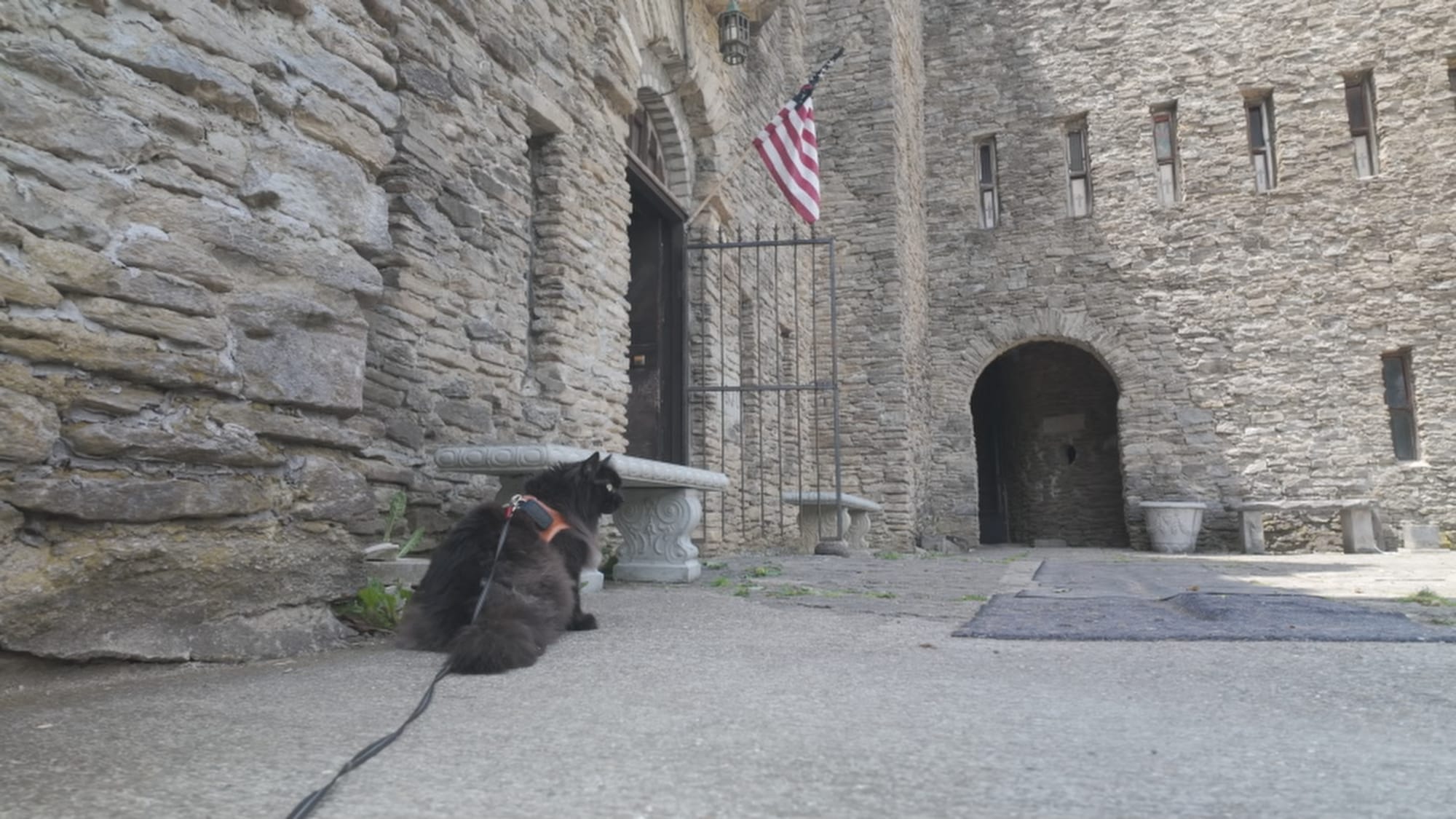
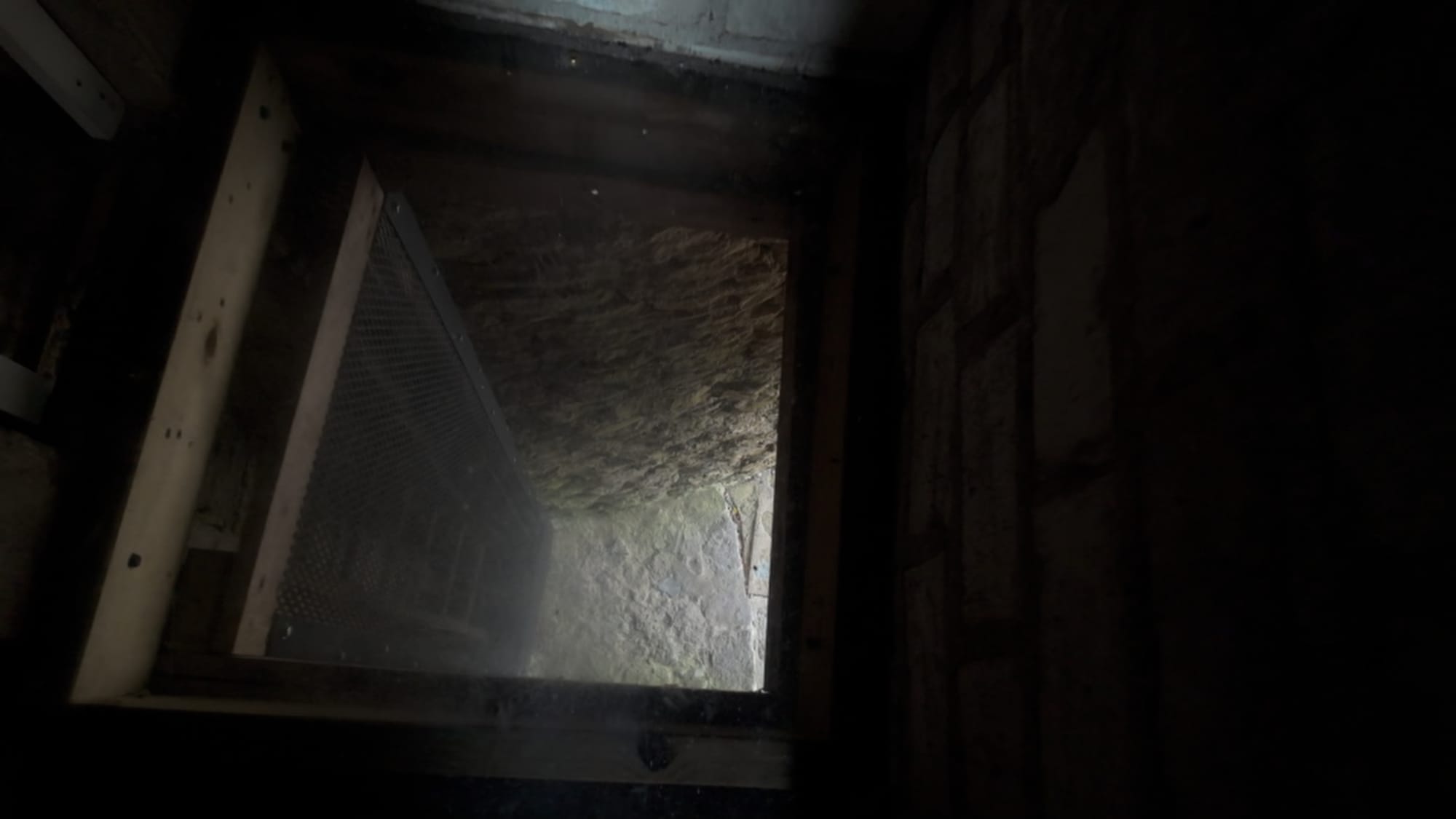
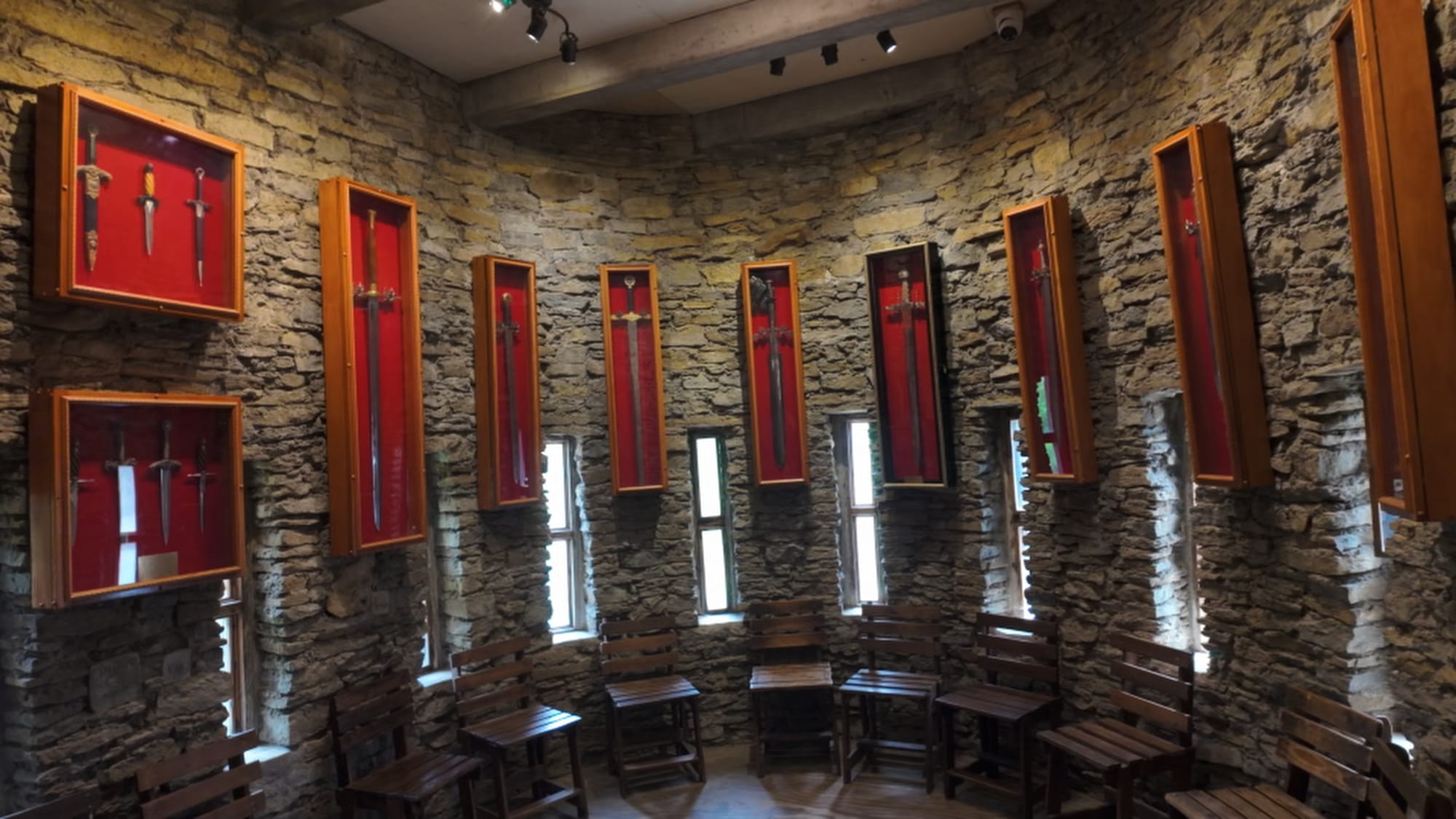
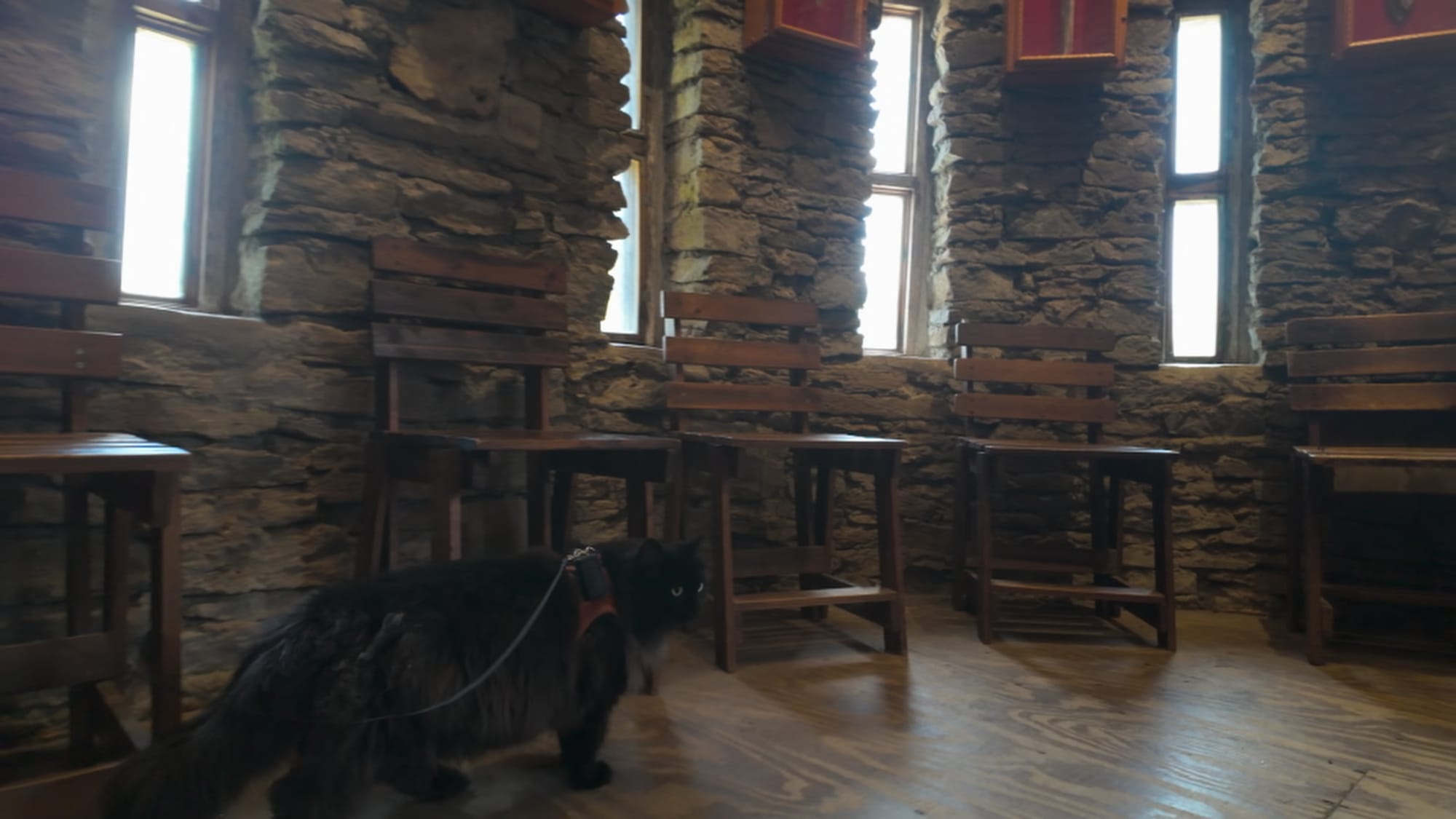
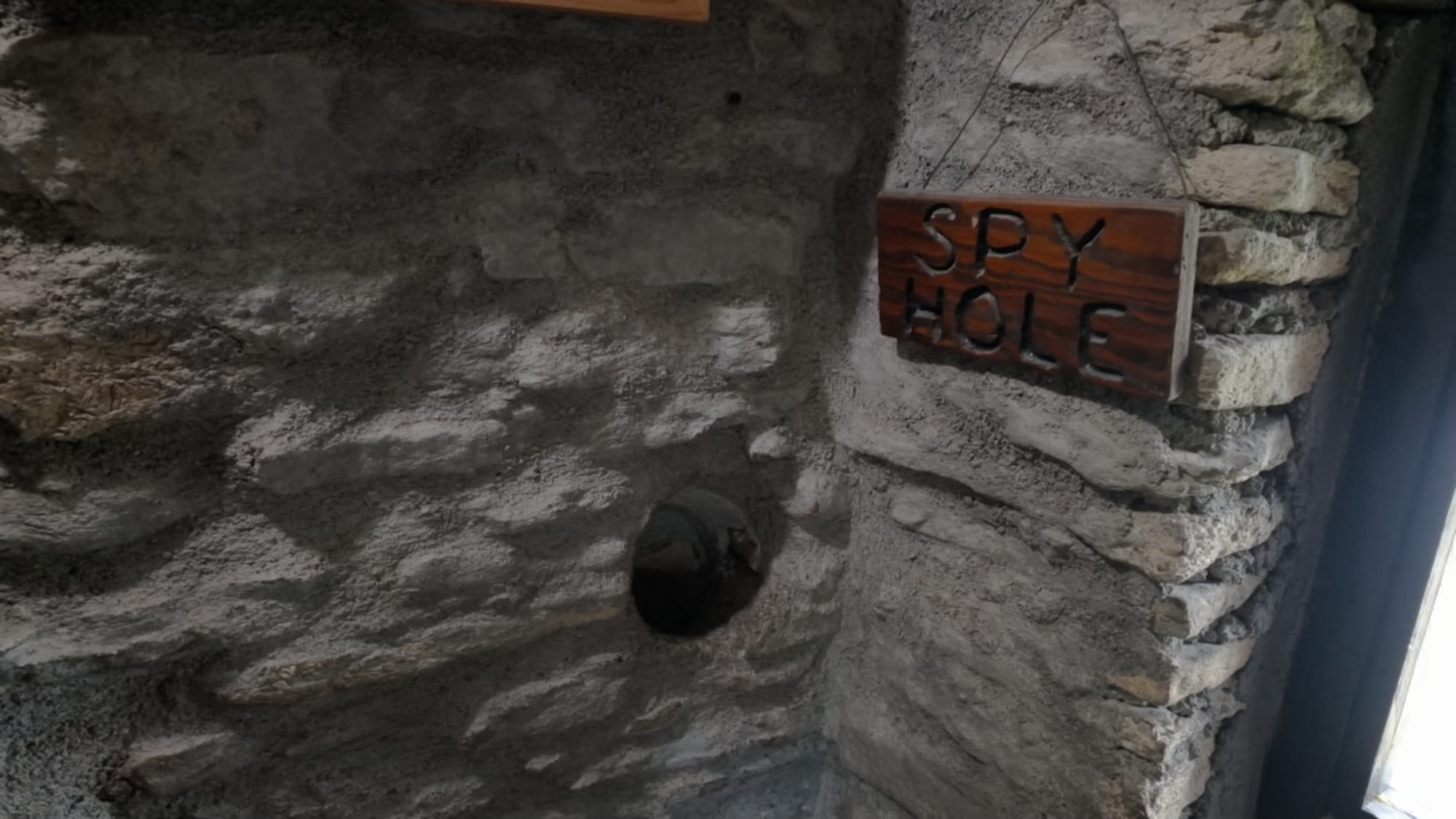
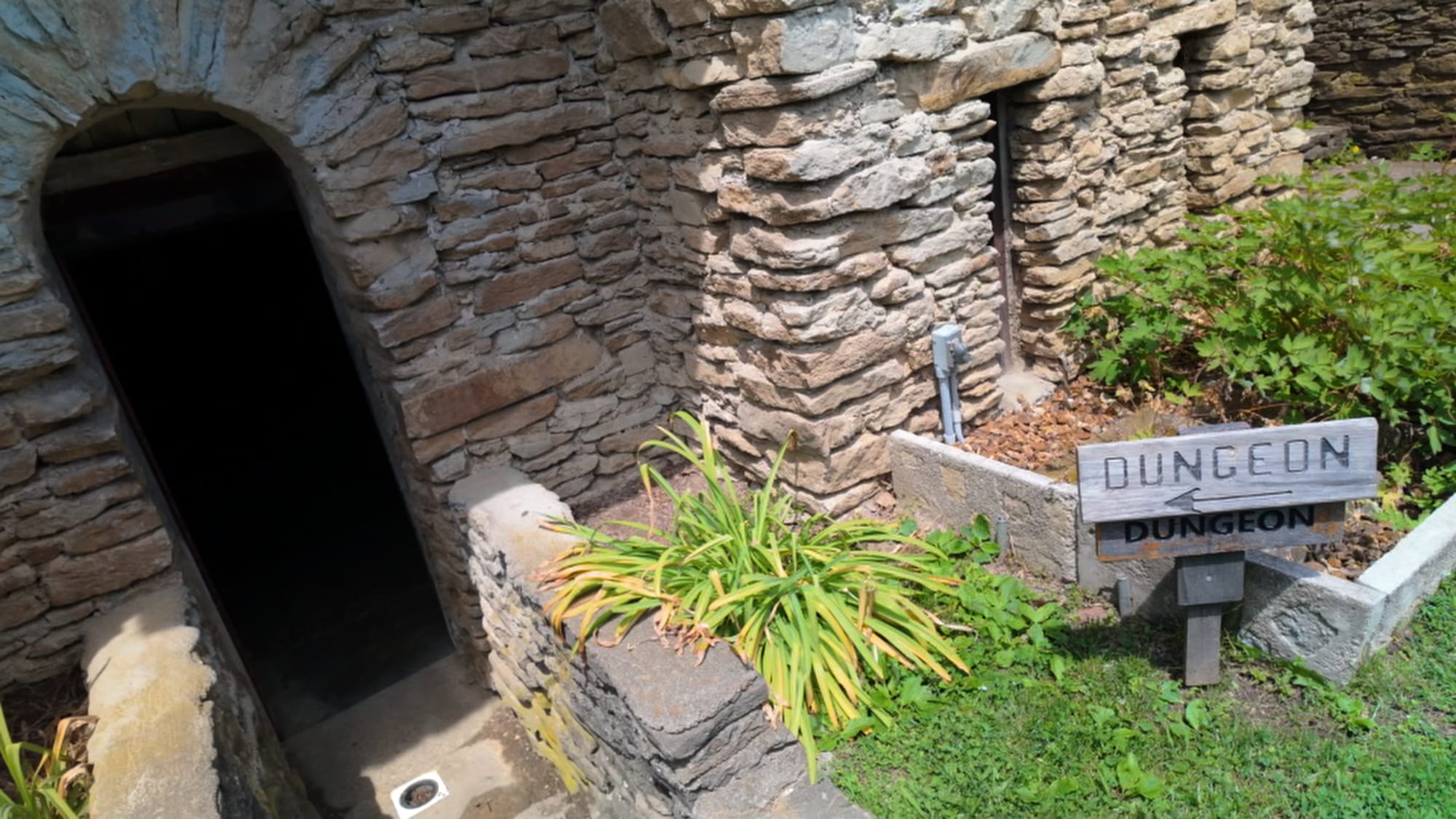
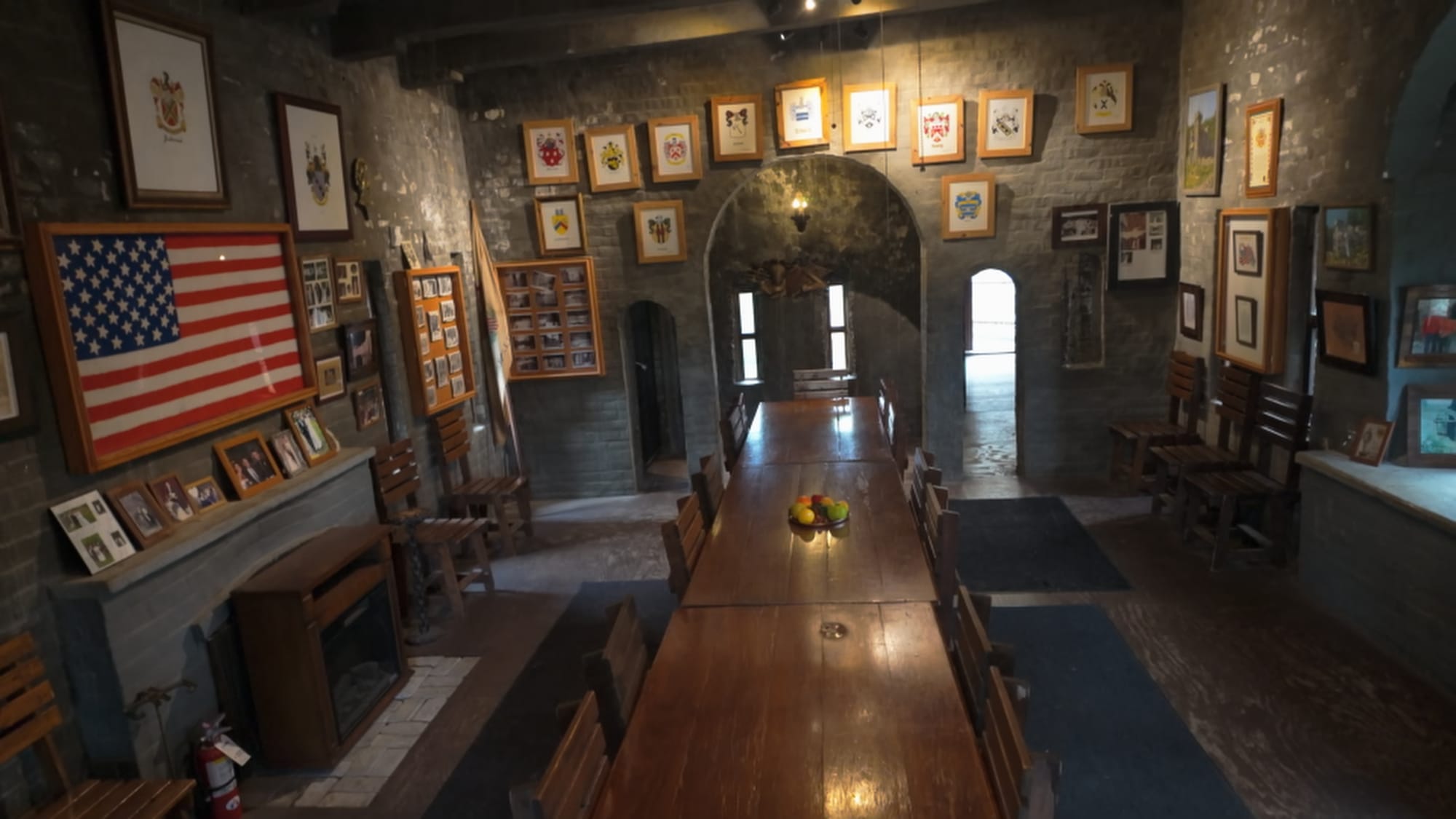
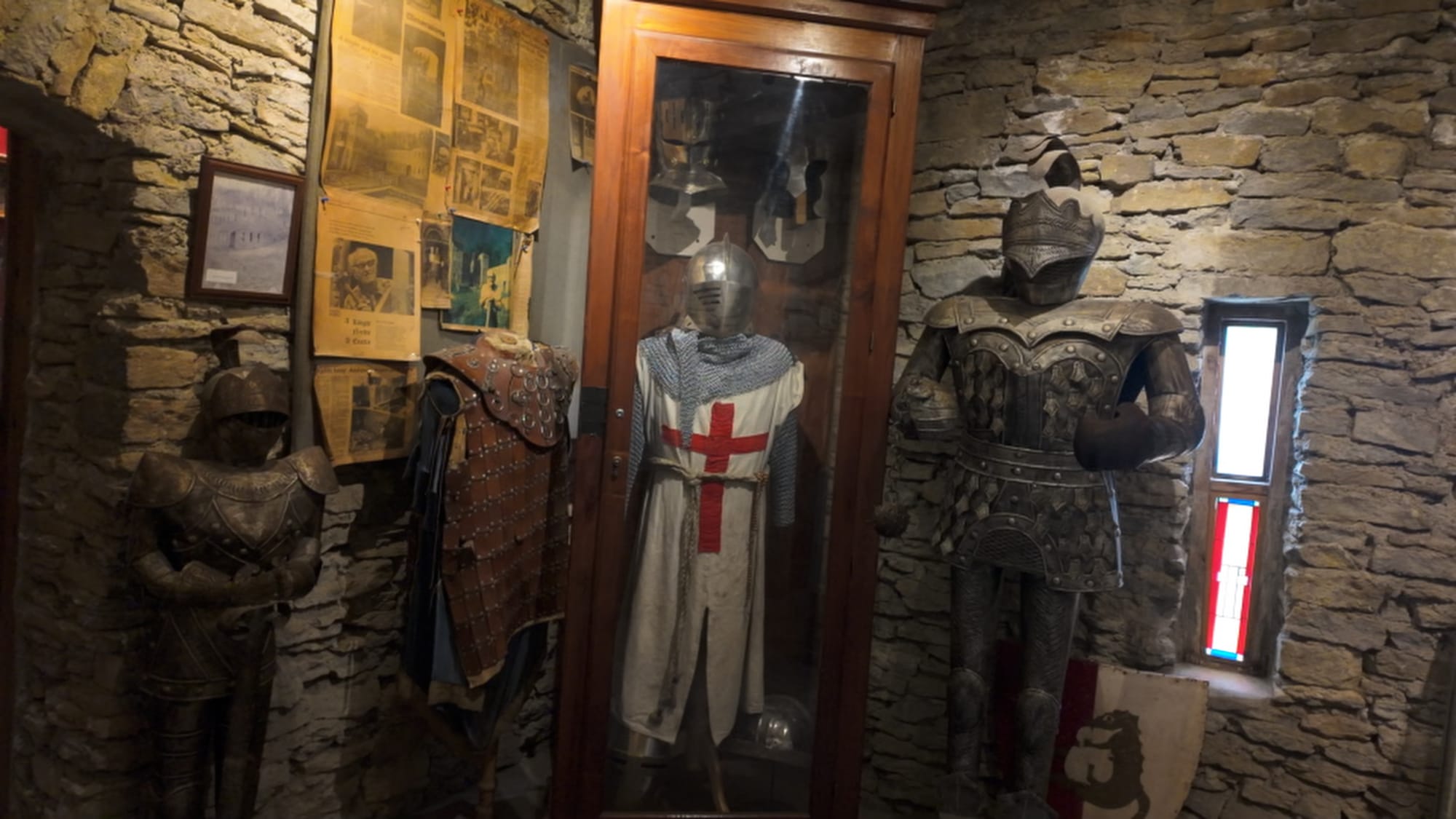
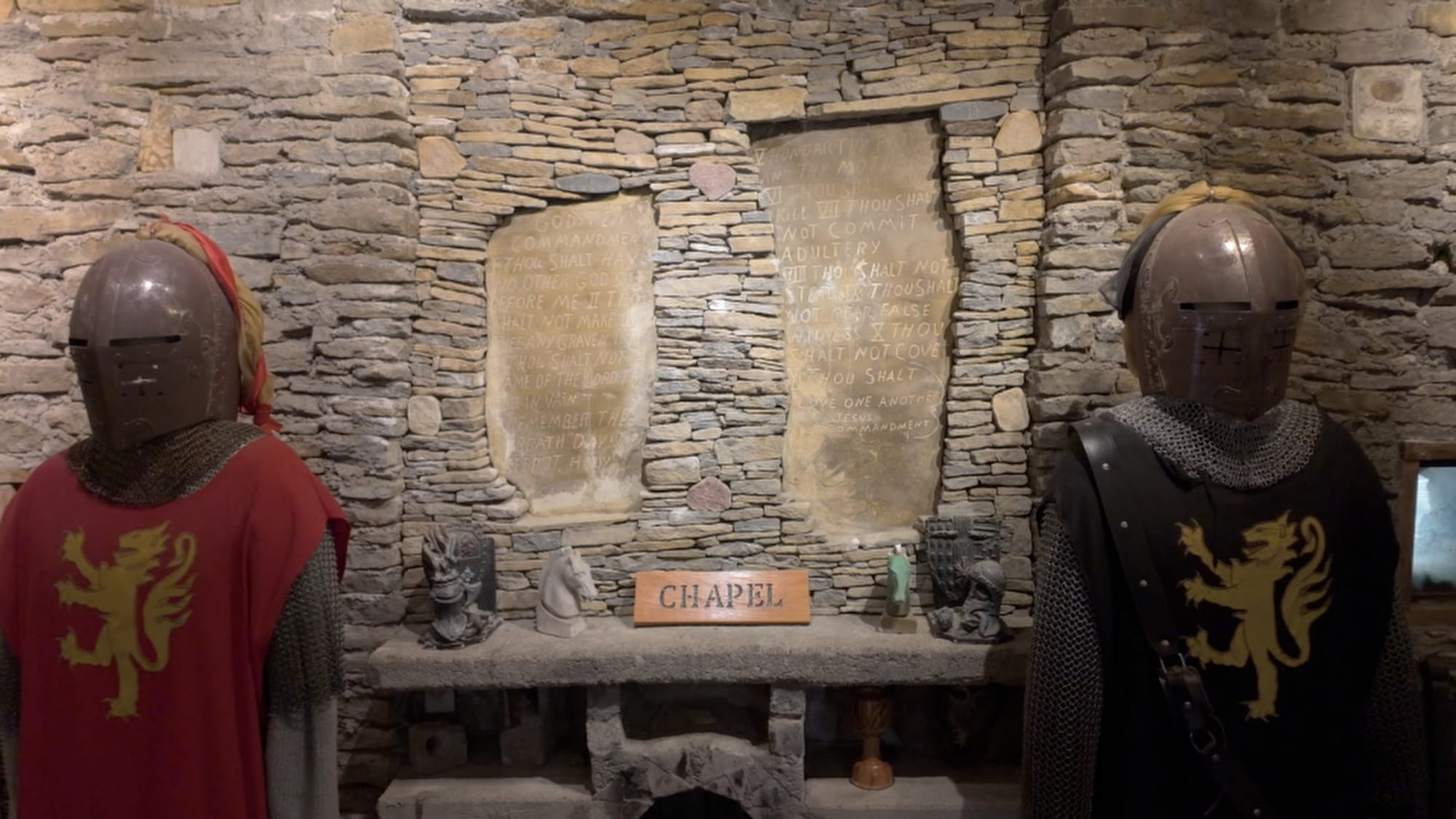
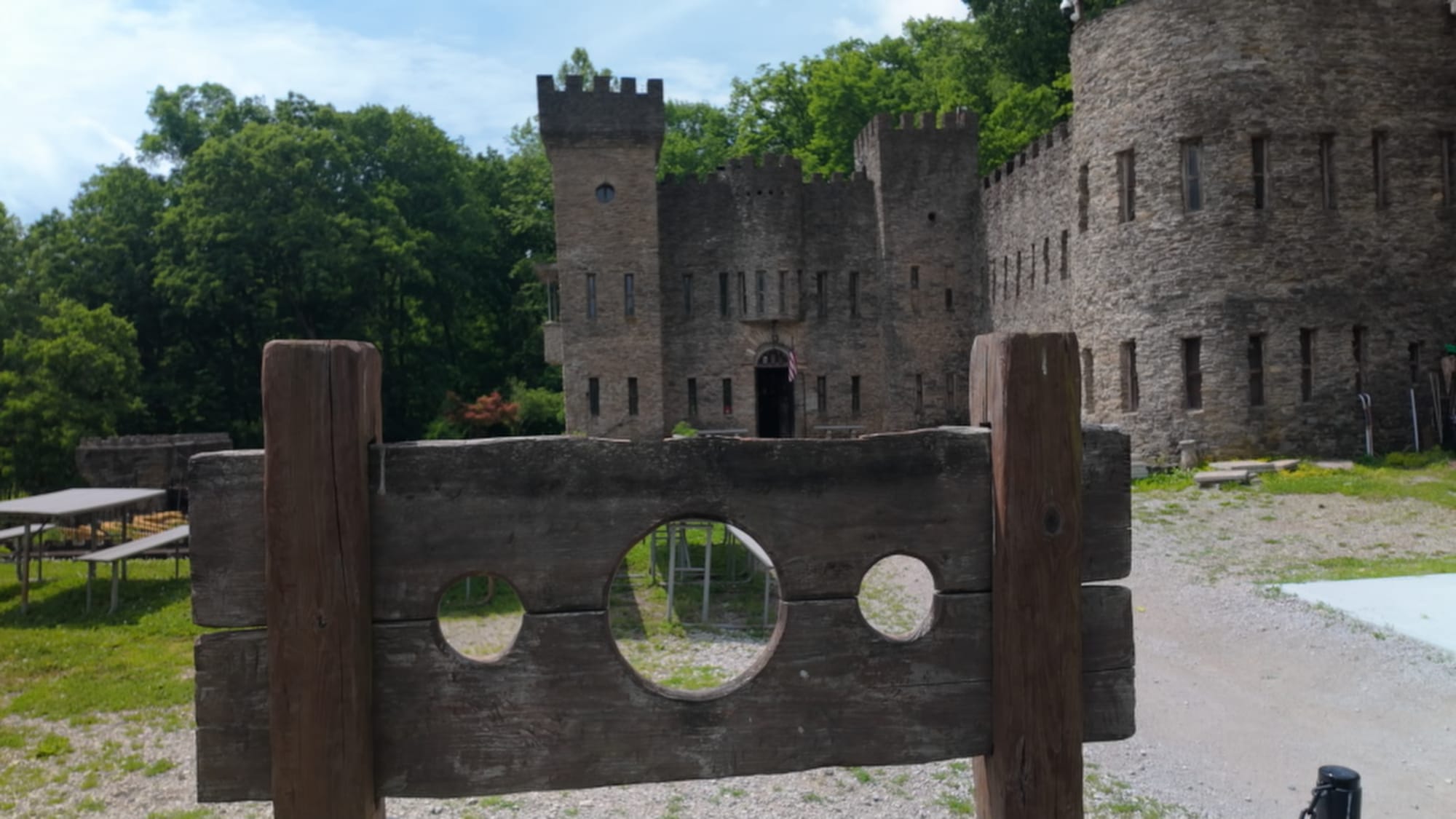
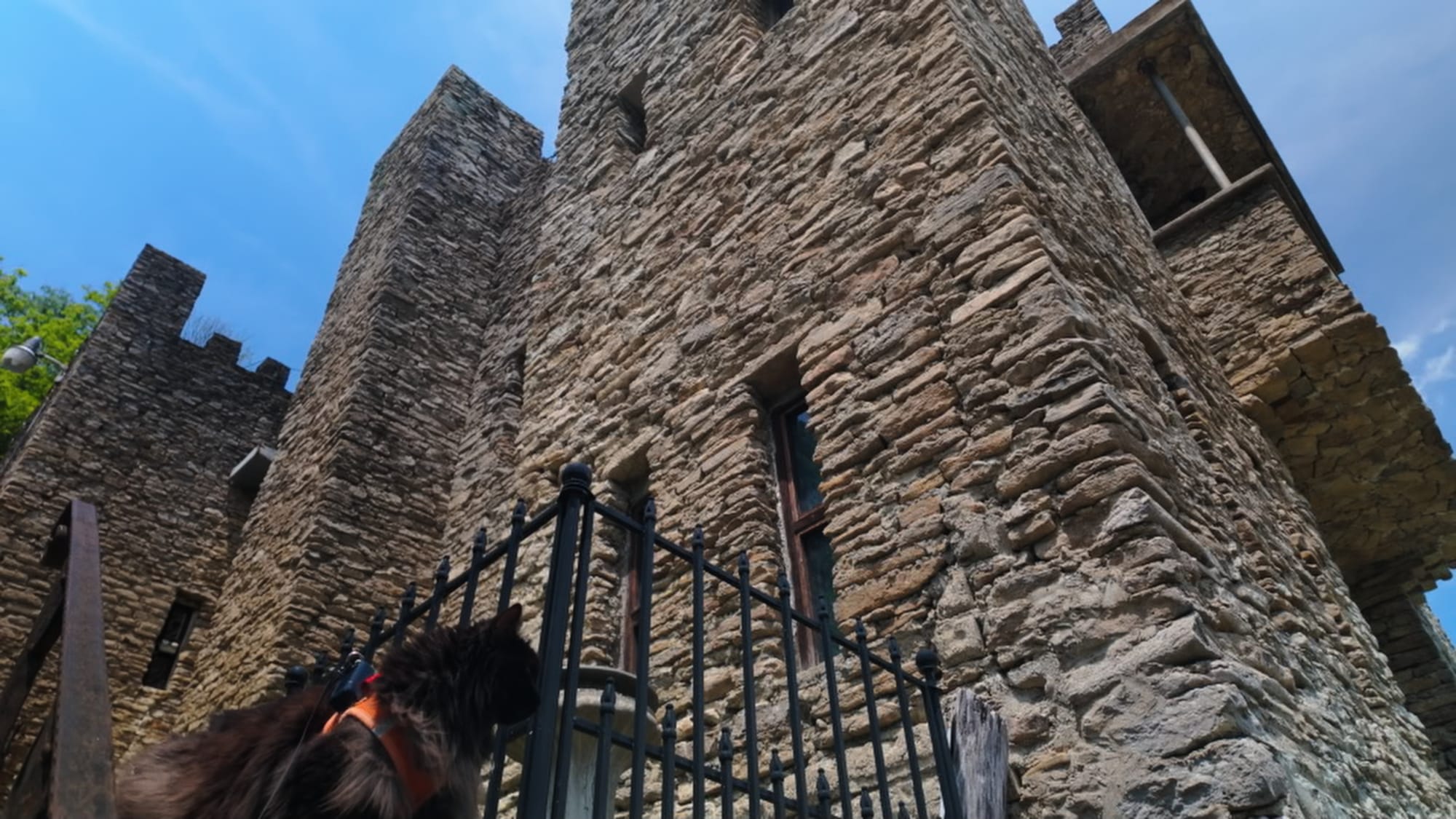
He did most of the work himself. Over five decades, that adds up to numbers that stop making sense when you say them out loud.The walls are river stone and homemade brick. When the Little Miami ran short of usable stone, Andrews started casting his own — pouring concrete into quart milk cartons and letting them cure into uniform blocks. He used 32,000 of them. He carried 56,000 buckets of stone up from the riverbank. He moved 54,000 five-gallon buckets of dirt.And those aren't rounded guesses. Andrews kept a running tally of all of it, and the tally is still posted on the kitchen wall. The man audited his own obsession.The details are where it stops being a folly and starts being a fortress. The front door is three layers of wood held together with 2,530 nails — built specifically so that nobody could chop through it with an axe. Above the entrance there are murder holes: gaps in the stonework overhead, positioned for dropping unpleasant things on anyone who makes it that far. These aren't decorative nods to castle aesthetics. They're functional by design. Harry Andrews built a real defensive structure in a Cincinnati suburb, on the apparent theory that you never know.Inside, the second floor has a ballroom, and this is where the castle's name comes full circle: Andrews modeled it after a room in the actual Château de la Roche — the military hospital where he spent six months as a dead man on paper. He named his life's work after the place that misplaced his life. Today the ballroom holds much of the castle's collection — swords, period weaponry, and displays from Andrews' life.There's a spy hole up there too — a gap in the stonework positioned so you can watch the front door and the floor below without being seen from either. Andrews built it in and, by all accounts, used it.The rest of the interior runs the full medieval program. There's a dungeon. There's a dining room. There's a full suit of armor standing watch. There's a chapel with the Ten Commandments displayed — which, as you'll see, wasn't decoration either. For the Knights of the Golden Trail, the Commandments are literally the only vows of the order.
The Secret Room
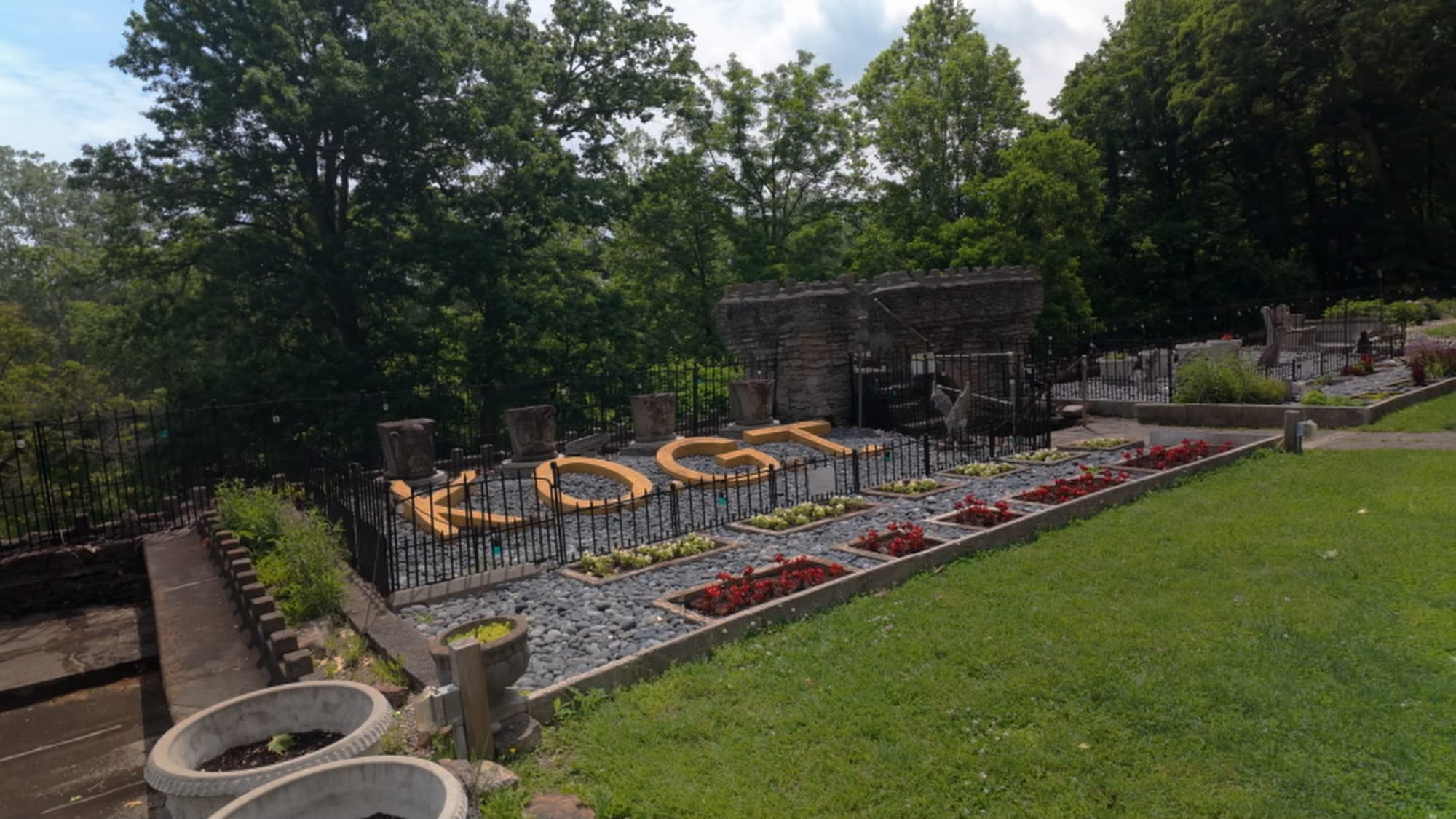
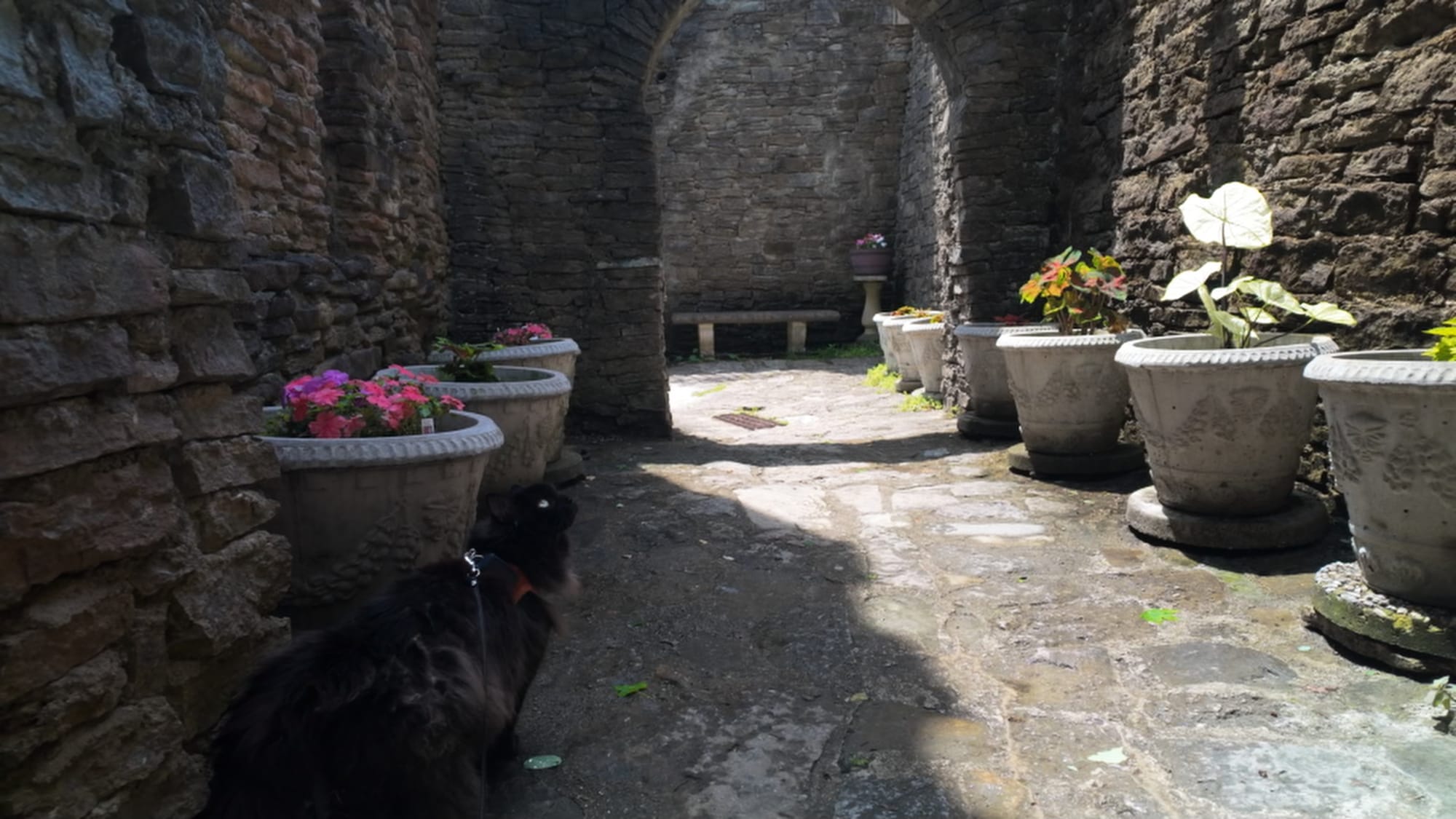
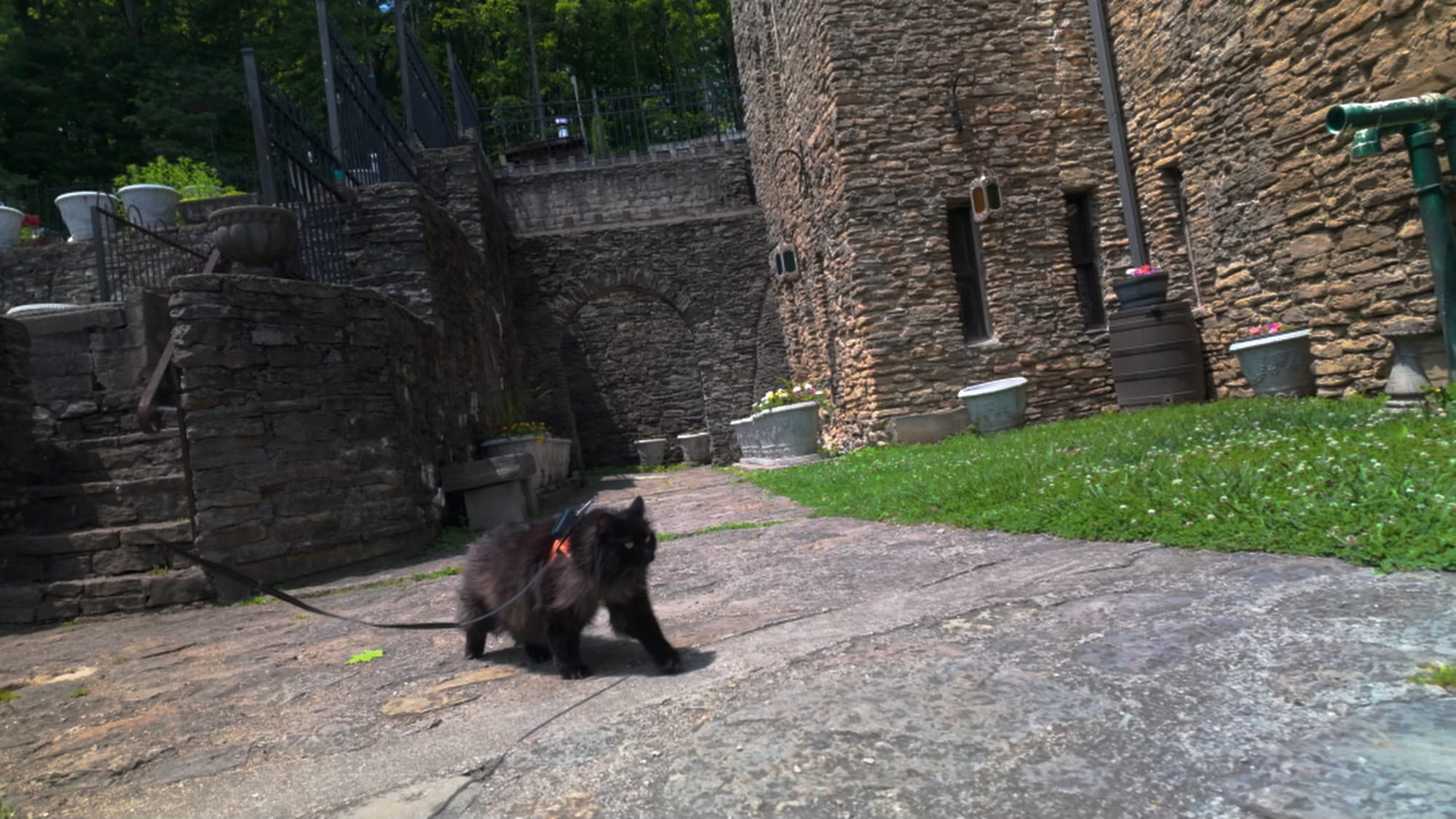
Here's my favorite detail in the entire place, and it's one you can't fully appreciate until you know how long he kept it.Andrews built a secret room into the garden wall outside, its entrance disguised as one of the arches. Nobody knew about it. Not the Knights. Not the visitors. Apparently not one single person Andrews ever spoke to in his life. It only came to light because the arch collapsed from neglect years after his death, and suddenly there was a room where no room was supposed to be.Fifty-two years of building, thousands of visitors, an entire order of knights he personally trained — and he never mentioned it to a soul. Some people keep a diary. Harry Andrews kept a room.The garden wall itself is its own quiet monument — by the castle's own reckoning it contains nearly as many stones as the castle. The Knights have expanded the gardens since, and the walking paths wind down through the flowers toward the river.
An Argument in Stone
Step back from the murder holes and the milk-carton bricks, and the whole project comes into focus as one long argument.Andrews came back from a war that killed somewhere around twenty million people, and he spent the rest of his life building a rebuttal. The argument was that a different set of values had once existed — the chivalric code, the ideals of knighthood, a moral structure that modern industrial warfare had thrown out with everything else. He carved the Ten Commandments into his walls. He founded an order of knights and made those Commandments their only vows — the castle's standing invitation was that any man "of high ideals who wishes to help save civilization" could join.You don't have to agree with his premise. Medieval warfare was plenty horrific, and the chivalric code was honored about as consistently as most codes. But Andrews wasn't arguing from a book. He'd spent years inside what anonymous, industrialized killing actually looked like, at the closest possible range, as the person trying to sew it back up. The castle is what he did with that.
The Hard Years
His last years here weren't gentle. By his late eighties, Andrews was living at the castle mostly alone, and there were people who gave him real trouble — stealing from the donation box, vandalizing the garden, coming around at night. He kept himself armed: a shotgun at first, then a pistol he carried on him. He wrote that prowlers were "likely to be greeted accordingly." At around ninety years old, someone beat him with his own gun.He kept building.In April 1981, Andrews was on the castle grounds burning trash. He was ninety-one, pistol in his back pocket the way he always carried it by then. The wind shifted, his pants caught fire, and in the scramble to get the gun clear of the flames, the fire burned up his legs. He died sixteen days later of gangrene.The year before, he'd told the Cincinnati Enquirer he figured he had six or seven years of work left in the castle.He didn't finish it. The unfinished section of roof is still there.
The Knights Are Still Here
The castle passed immediately to the Knights of the Golden Trail, who have owned and operated it ever since — which makes this the rarest kind of place this series covers: a one-man obsession that didn't get abandoned.The organization Andrews started as a Sunday school camping group in the 1920s still functions. More than three hundred people have been knighted over the years; around fifty members are active today. You can't just sign up — you have to be sponsored by someone already in the order. Harry wanted them to keep building after he was gone, so he taught them how, and they still do the maintenance and the staffing themselves. When you visit, the person greeting you at the door is a knight.After Andrews died, his ashes were scattered on the grounds. He's here in the most literal sense — in the soil of the property he spent fifty-two years hauling, stone by stone, out of the river below.The Knights will tell you he never really left in any other sense either. Things go missing and turn up somewhere else. Doors close on their own. Voices, footsteps, a figure seen where no one's standing — the stories are consistent, and consistently unbothered: whatever it is, it's playful, not malicious. It likes to hide the Knights' things around the castle. His old office is kept exactly the way he left it — typewriter, coffee cup, a newspaper dated 1981 still on the desk.Andrews said once, while he was still alive, that all castles ought to have a ghost. He would say that.
Visiting Loveland Castle
Château Laroche sits at 12025 Shore Road in Loveland, Ohio, on the east bank of the Little Miami River — about twenty-five miles northeast of downtown Cincinnati, and roughly three and a half hours from the Akron/Cleveland area. The last stretch of Shore Road is narrow and residential; take it slow.Unlike most stops in this series, this one has hours and a door charge, because there are actual humans running it. From April through September the castle is open daily, 11am to 5pm; from October through March it's weekends only, same hours. Admission is $5 per person, kids five and under free — and given that the money goes to a volunteer order of knights maintaining a hand-built castle, it might be the best five dollars in Ohio.A few things worth knowing before you go:Give yourself time for the grounds, not just the building. The gardens run down toward the river, the walls repay a slow look — remember, one of those arches hid a room for decades — and picnicking on the grounds is genuinely encouraged. Bring lunch.Read the kitchen wall. The tally Andrews kept of his own labor — the buckets, the bricks, the stones — is still posted there, and it reframes everything you just walked through.Talk to the Knights. They're volunteers, they know the place intimately, and several of them have their own stories about Harry — both the living version and, if you ask nicely, the other one.
🥾
Gear for the Trail
The boots, layers, and daypack worth having before you hit the trail
Affiliate links • Helps fund my adventures at no extra cost to you
One Person, One Thing They Needed to Build
Four episodes into this series, the through-line keeps being the same: one person, one thing they needed to make, and a place that exists entirely because they decided it should.A blacksmith's political monument. A bricklayer's grief. Two hundred ovens and the town they fed. And now a medieval castle — built by hand, stone by stone, bucket by bucket, by a man who came home from the first industrialized war convinced that everything the modern world was doing was wrong, and who spent the next fifty-two years building something older and more honest to point at.He never finished it. His knights are still working on it. That might be the most medieval thing about the whole place — real castles were never finished by the people who started them either.Ohio Hidden Corners is an ongoing series covering the overlooked, the odd, and the genuinely worth finding across Ohio. Episode 4 covers Loveland Castle in full — watch it below.
Coming up next: Fort Ancient. Three and a half miles of earthen walls on a bluff above this same river, built starting around 100 BCE — half a million cubic yards of earth carried up the hill one basket at a time, over so many generations that nobody who carried the first basket lived to see it finished. It's called a fort. It was never a fort. Subscribe if you want to see it.
Want to see it yourself? Plan a trip to Southern Ohio
VagaPlan builds a day-by-day itinerary around how you travel, with real sites, opening hours, costs and booking links. Start with Southern Ohio already filled in and get 3 trip ideas free.