Ħaġar Qim: Malta's Temples Are Older Than the Pyramids and Stonehenge
Older Than the Pyramids, Older Than Stonehenge
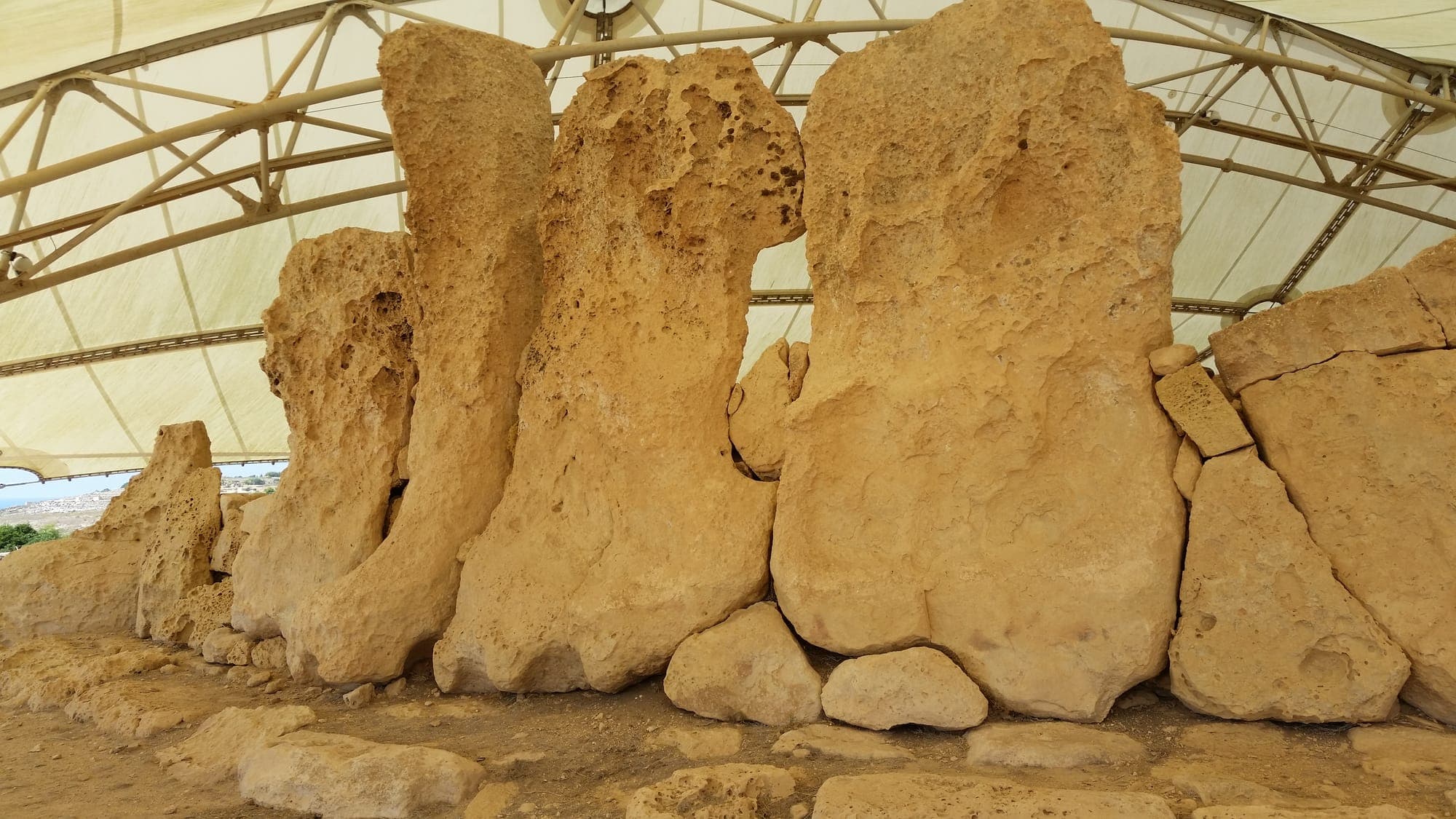
We came to Malta to see two things specifically: the Neolithic temples and the catacombs. Everything else about the stay went sideways — the town we based ourselves in ran on cruise-ship hours, the buses ran late as a matter of policy, and a private guide we'd booked simply never showed up. But the temples, we got. And Ħaġar Qim is the one I think about.The thing that's hard to communicate about a site this old is that "ancient" stops being a useful word. We use it for the Romans, for the Egyptians, for the Greeks. Ħaġar Qim is ancient to them. When the first stones of Stonehenge were being dragged into position, this temple had already been standing on its ridge for a thousand years. The people who built it had no metal tools, no wheel in any practical sense, no written language that's survived. They were a late Stone Age society — and they were moving and shaping stones that weigh as much as a truck.The largest single stone at Ħaġar Qim is around seven meters long and weighs somewhere in the region of twenty tonnes. The tallest upright megalith stands over five meters. These were quarried, moved, and set in place by people working with stone, bone, antler, and rope. There's no shortcut explanation for how. They just did it, repeatedly, across the Maltese islands, for centuries.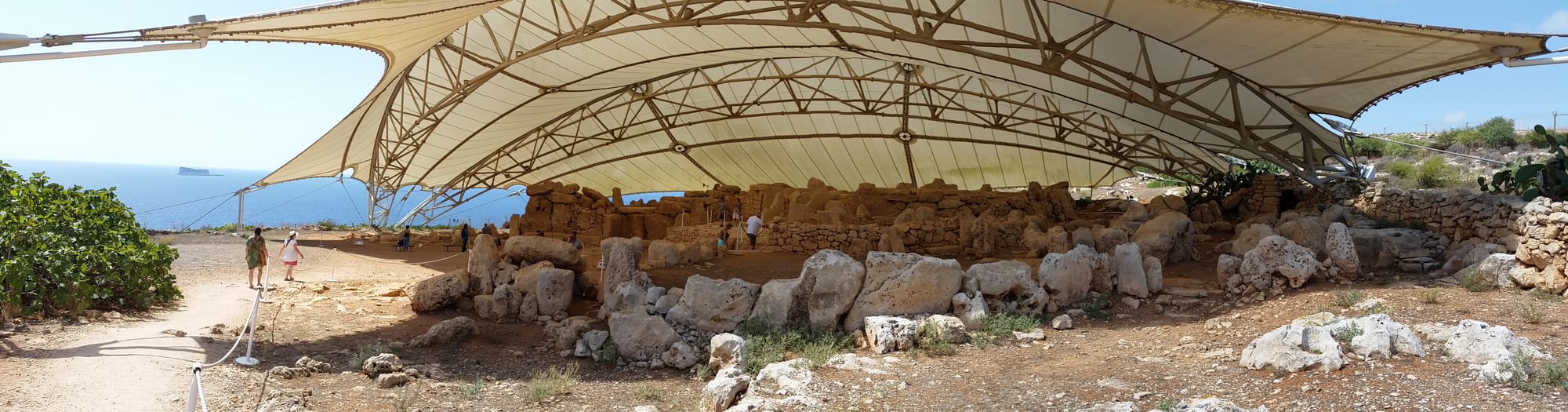
Who Built It
Ħaġar Qim belongs to what archaeologists call the Ġgantija phase of Maltese prehistory, roughly 3600 to 3200 BCE — named after another, even older temple complex on the neighboring island of Gozo. It's one of a whole family of these structures. Malta, a country you can drive across in under an hour, holds several of the oldest temples on Earth: Ġgantija, Ħaġar Qim, Mnajdra, Tarxien, Ta' Ħaġrat, and Skorba. Together they make up the "Megalithic Temples of Malta," a UNESCO World Heritage Site first inscribed in 1980 and expanded in 1992.The people who built them are something of a mystery. They were a farming society that arrived on Malta from Sicily in the Neolithic and, over time, developed a temple-building culture unlike anything around them. They produced remarkable art: carved spirals, animal reliefs, and a series of corpulent human figures — the so-called "fat ladies" of Malta, including the famous statuette sometimes called the Venus of Malta. These figures, along with altars and decorated stone blocks recovered from the site, point to a religion organized around fertility, the dead, and possibly a mother-goddess, though "possibly" is doing real work in that sentence. We genuinely don't know what they believed. We can only read it off the stones they left.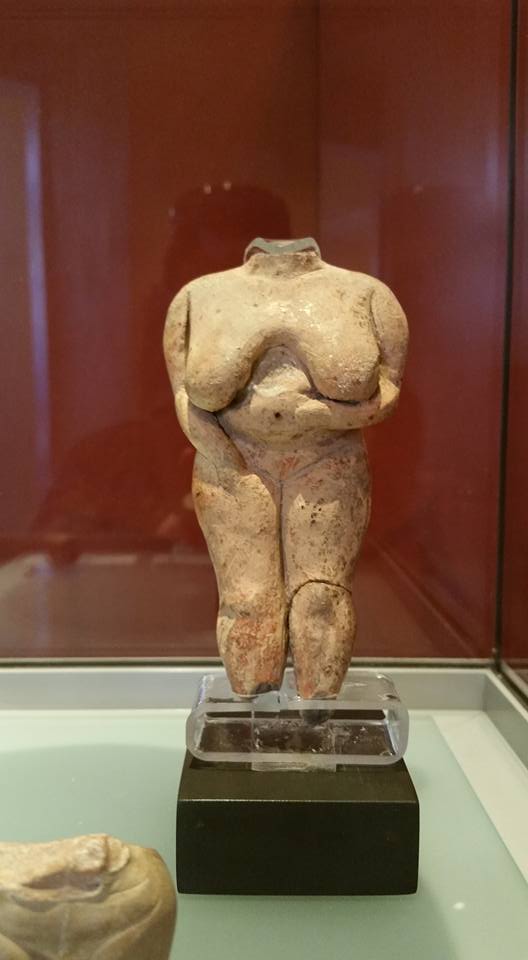
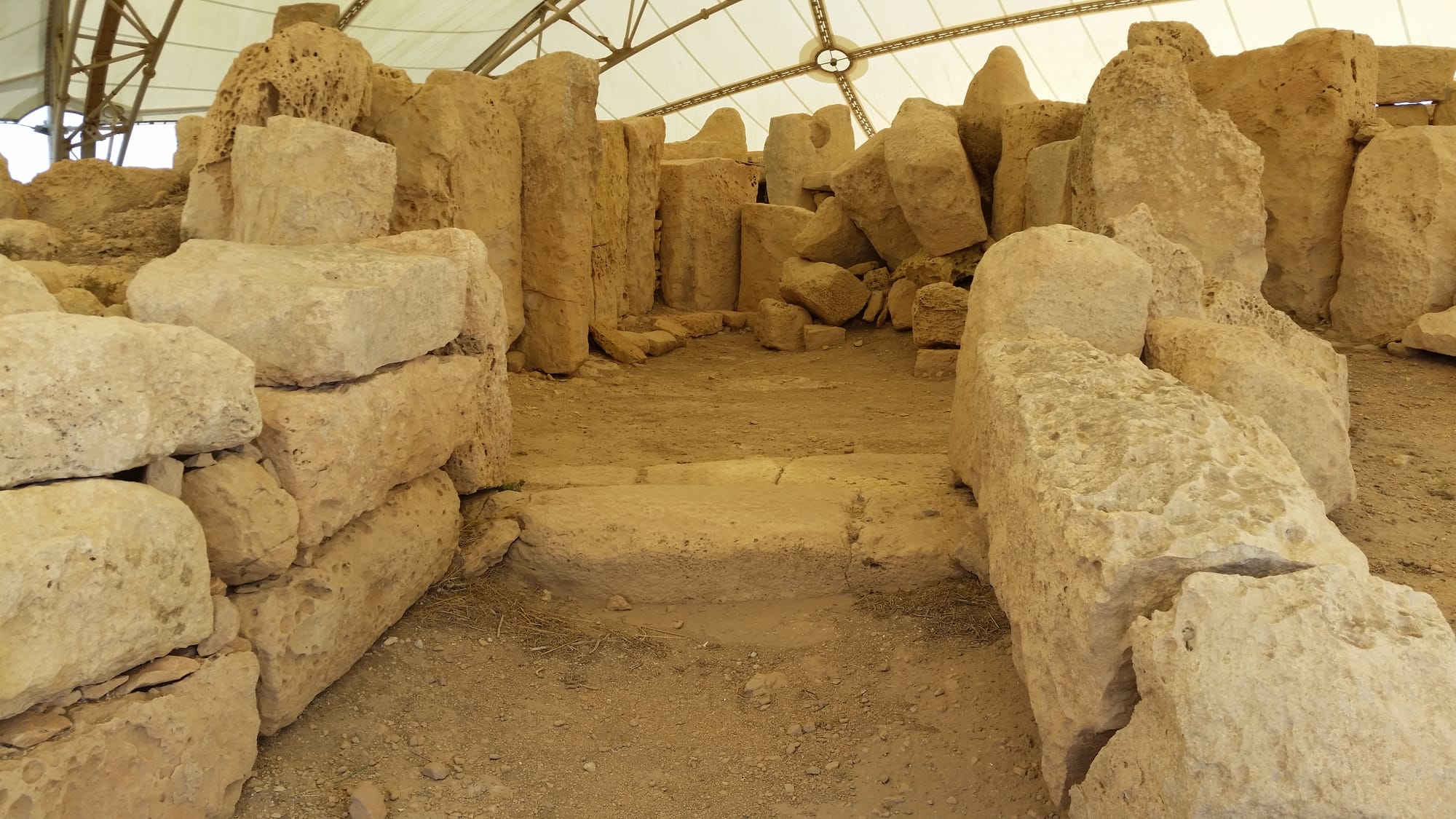
Walking the Temple
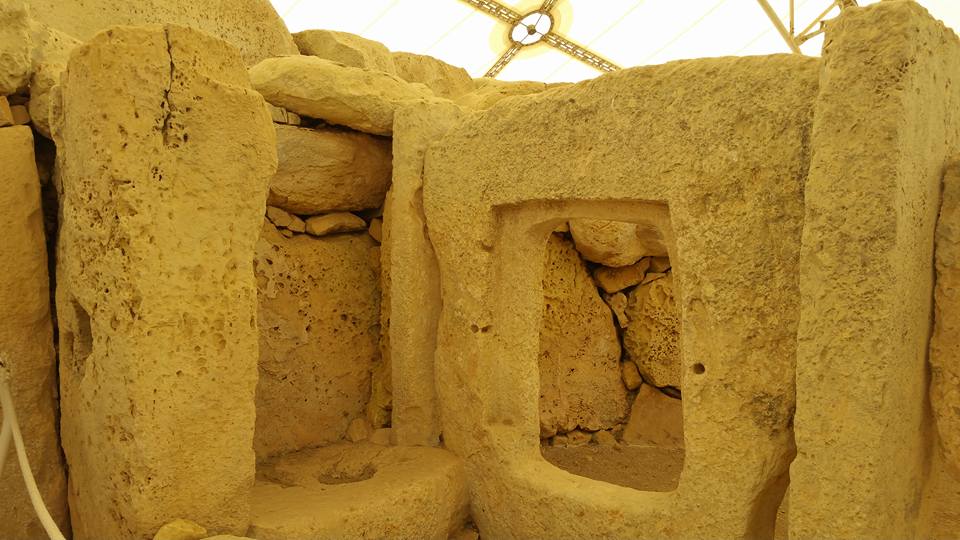
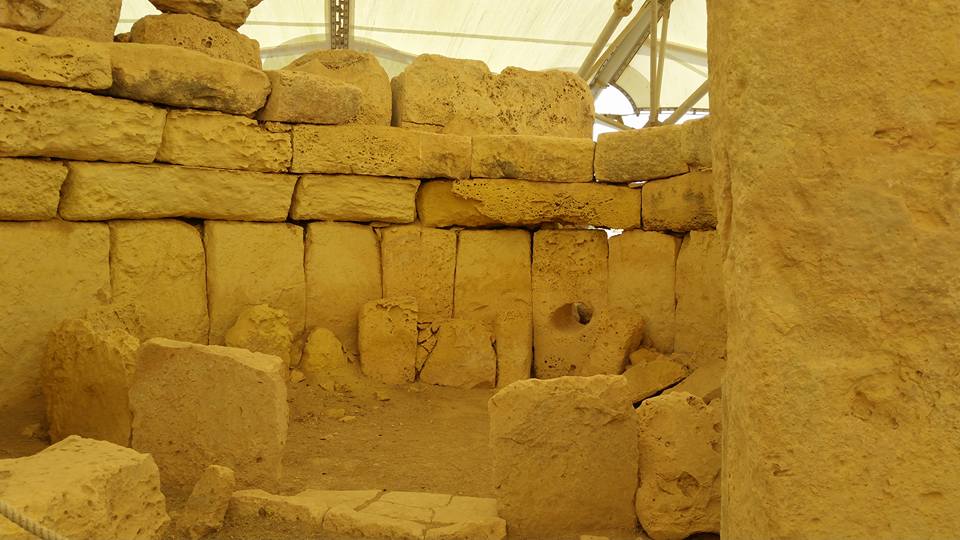
What strikes you on the ground is the scale and the craft at the same time. The complex is built from globigerina limestone — a soft, golden local stone that was easy to work but, as it turns out, weathers badly. That's why Ħaġar Qim now sits under a large protective tent canopy, erected in 2009 to shield the stones from the sun and rain that were slowly eating them after five and a half thousand years of exposure. It looks slightly strange in photographs, a Stone Age temple under a modern tensile roof, but it's the reason the temple is still legible at all.Inside, the temple is a series of curved chambers — the rounded, lobed floor plan you find across the Maltese temples, sometimes compared to a cloverleaf. There are doorways cut cleanly through single slabs of stone, internal altars, and a famous "oracle hole" — a small port-hole window worked through the rock. There's also an alignment built into the place: at the summer solstice, the rising sun throws a beam of light through a specific opening and strikes the interior. These people were tracking the sky and engineering their buildings around it, millennia before anyone wrote down how.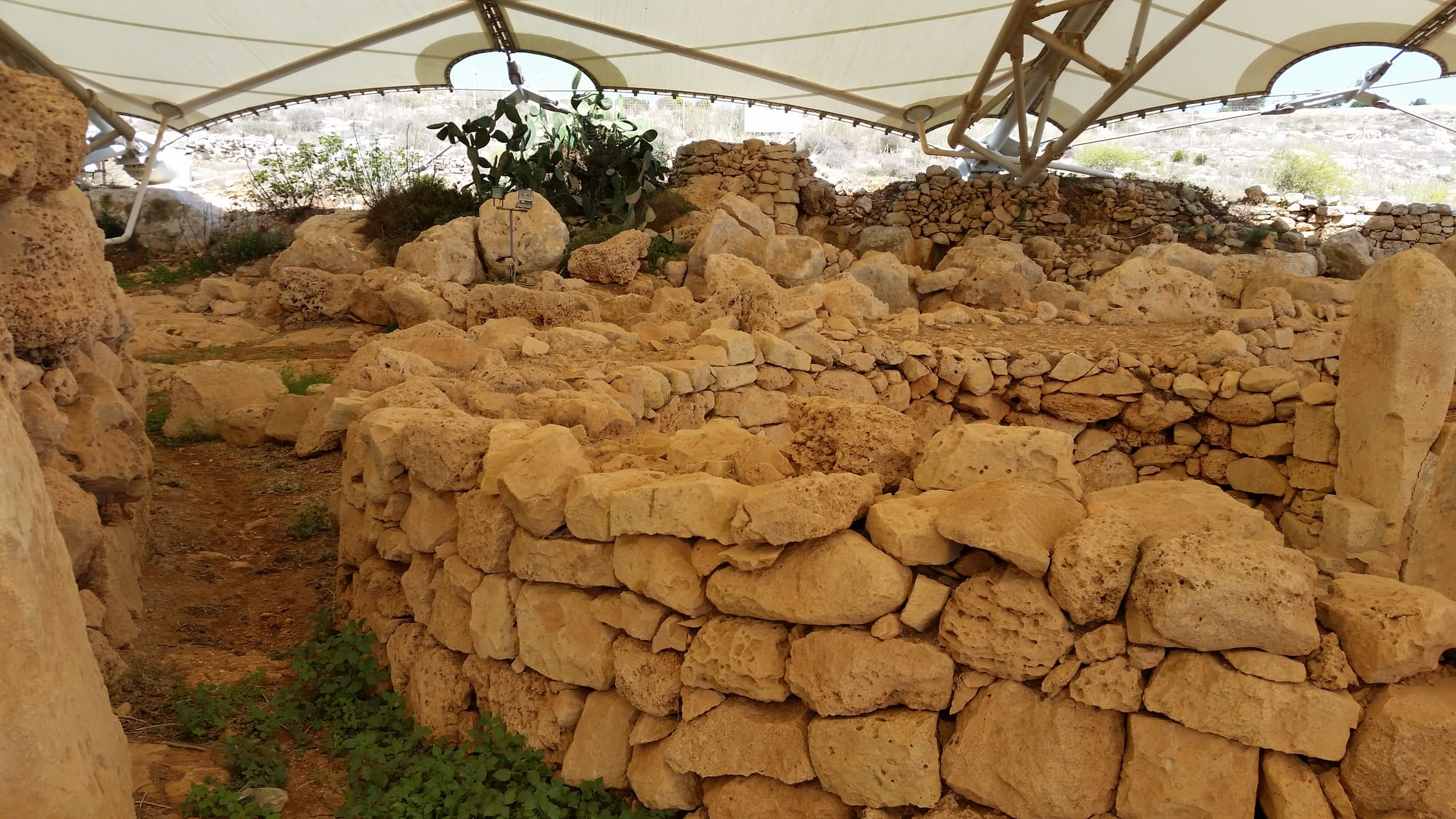

Mnajdra, Just Down the Hill
About five hundred meters downhill from Ħaġar Qim, closer to the water, sits a second temple complex: Mnajdra. The two are sold on one ticket and almost always visited together, and you should do both. Mnajdra is, if anything, the more astronomically precise of the pair. Its main temple is aligned so that at the spring and autumn equinoxes, sunlight falls directly through the central doorway, and at the solstices it strikes the edges of the entrance. It's a working solar calendar built out of multi-tonne stone blocks by people who left no writing behind. The walk down to it, across open coastal scrub with the sea in front of you, is part of the experience.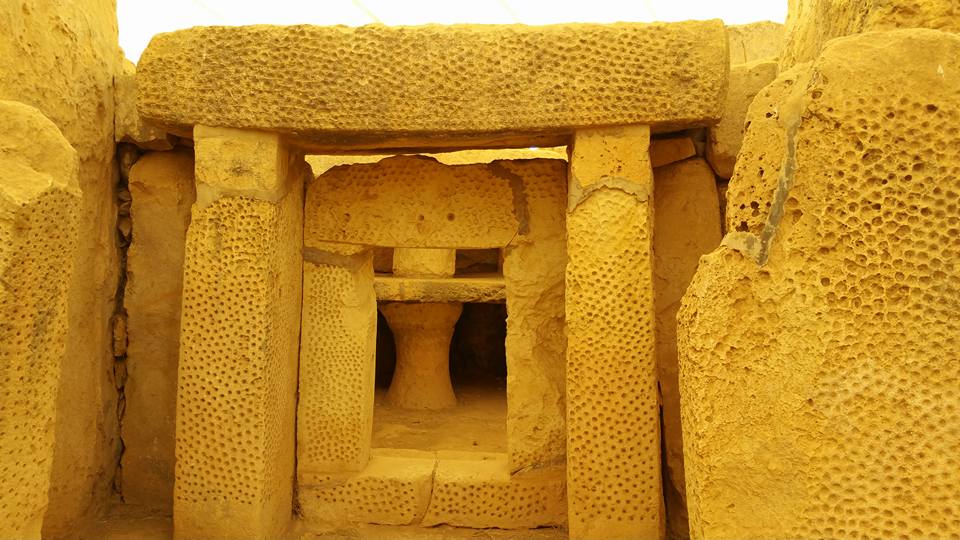
The Civilization That Vanished
Here's the part that lingers. The temple-building culture that produced Ħaġar Qim, Mnajdra, and the rest didn't slowly evolve into something else. Around 2500 BCE, it disappeared. The temple-building stopped, the population seems to have collapsed or dispersed, and the islands were eventually resettled by a completely different Bronze Age people who had no connection to the temples and, as far as we can tell, no idea what they had been for.Why is unknown. The leading theories involve environmental stress — soil exhaustion from centuries of farming a small island, drought, resource depletion, possibly disease or social collapse on top of it. A society sophisticated enough to track the solstices and move twenty-tonne stones built these temples for the better part of a thousand years, and then it was simply gone, leaving the most advanced architecture in the prehistoric Mediterranean to a people who would never build anything like it again. The temples stood empty for the next four and a half thousand years until archaeologists started excavating Ħaġar Qim in 1839.Unforgettable Experiences
Malta has incredible experiences worth booking in advance
Affiliate links • Helps fund my adventures at no extra cost to you
How to Visit Ħaġar Qim
Where it is. Ħaġar Qim sits on the southern coast of Malta, near the village of Qrendi, on a ridge above the sea facing the islet of Filfla. It's managed by Heritage Malta, with a visitor center and a small interpretation museum at the entrance.Getting there. This is the part Malta makes harder than it should be. The temples are on the rural south coast, and public transport out there is slow and unreliable — we learned the hard way that Maltese buses keep their own schedule. If you can, rent a car. The island is tiny, and a car turns the temples from a half-day logistical ordeal into a relaxed morning. If you're relying on buses, build in far more time than the map suggests and go early.One ticket, two temples. Your admission covers both Ħaġar Qim and Mnajdra, which are a short walk apart. Do both — Mnajdra's solar alignments and its setting closer to the water are worth the extra twenty minutes downhill.See the finds in Valletta. The most important objects excavated from the temples — the "fat lady" figurines, altars, and decorated stones — aren't kept on site. They're in the National Museum of Archaeology in Valletta. If you want the full picture, pair the temples with a visit to the museum. The stones tell you the scale; the museum tells you about the people.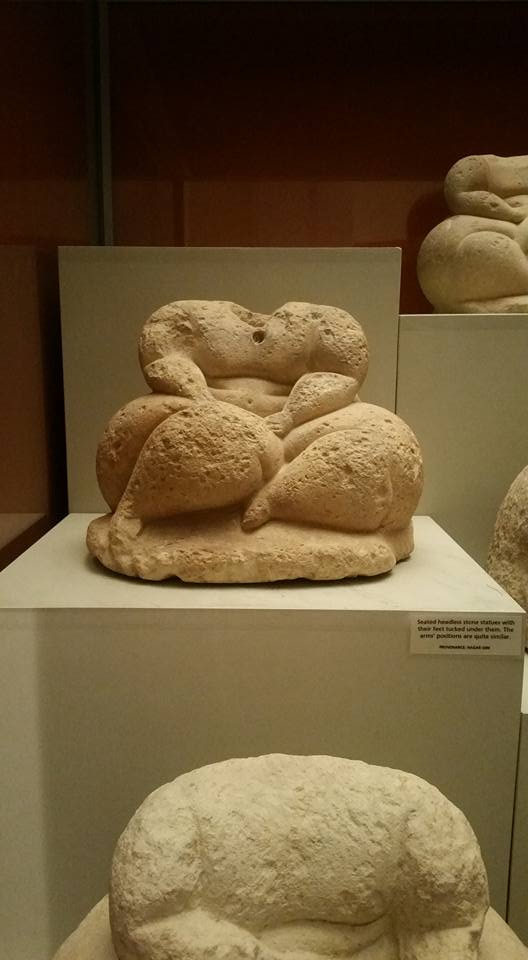
Frequently Asked Questions
How old is Ħaġar Qim?
Ħaġar Qim was built around 3600 BCE, during the Ġgantija phase of Maltese prehistory. That makes it roughly a thousand years older than the Great Pyramid of Giza (c. 2560 BCE) and older than the standing stones at Stonehenge (c. 2500 BCE). It's one of the oldest free-standing stone structures in the world.Is Ħaġar Qim really older than the pyramids and Stonehenge?
Yes. The Egyptian pyramids and the Stonehenge sarsen circle both date to around 2500–2560 BCE. Ħaġar Qim was already standing by roughly 3600 BCE, predating both by about a millennium. Malta's temples are among the oldest religious buildings ever discovered.Who built the Maltese temples?
A Neolithic farming society that had settled Malta from Sicily. They built a series of megalithic temples across the islands over several centuries using no metal tools, then mysteriously vanished around 2500 BCE. The islands were later resettled by an unrelated Bronze Age culture.Can you go inside Ħaġar Qim?
Yes. Ħaġar Qim is open to visitors through Heritage Malta, with a visitor center on site. The temple is now sheltered under a protective tent canopy installed in 2009 to slow the weathering of its soft limestone. Admission also covers the nearby Mnajdra temple.How do you get to Ħaġar Qim?
It's on Malta's southern coast near Qrendi. Renting a car is the easiest way — Malta is small, but public transport to the rural south is slow and unreliable. Buses do run there, but allow significantly more time than you'd expect if you use them.
Planning your next trip?
However you travel — no idea where to start, a rough plan, set dates or totally flexible, any budget, any style, even bringing the pets — VagaPlan builds the whole trip around you. Get 3 custom trip ideas free, then unlock the full day-by-day itinerary when you're ready.
Freedom on Wheels
Rent a car in Malta for total flexibility — I always do
Affiliate links • Helps fund my adventures at no extra cost to you
Further Reading
Books about Malta — history, culture, and the context that makes travel richer
Affiliate links • Helps fund my adventures at no extra cost to you
Support My Travels
Affiliate links
Affiliate link — helps fund the adventures at no cost to you
More in the Series
Next Article