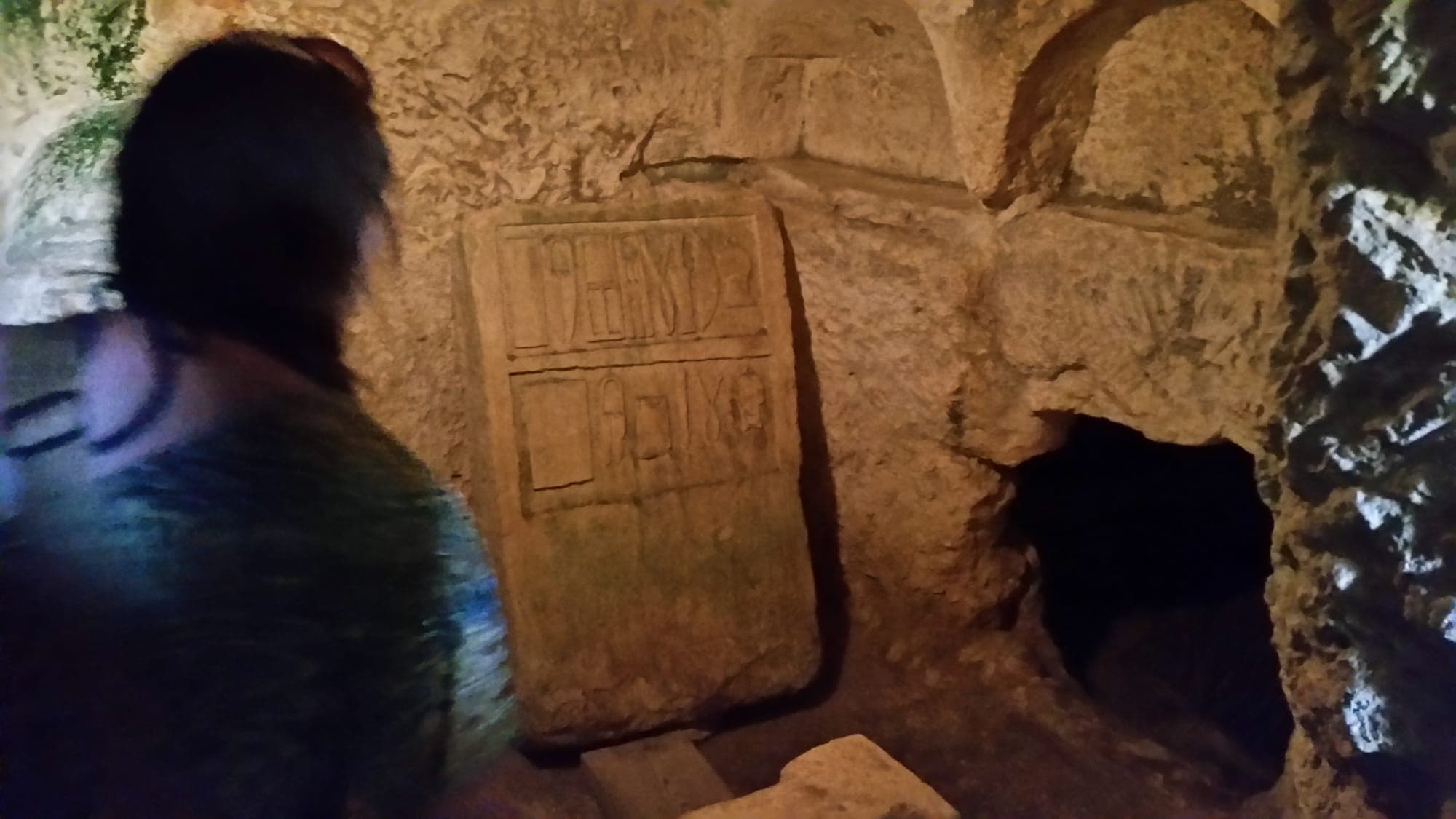
Outside the Walls of the Living
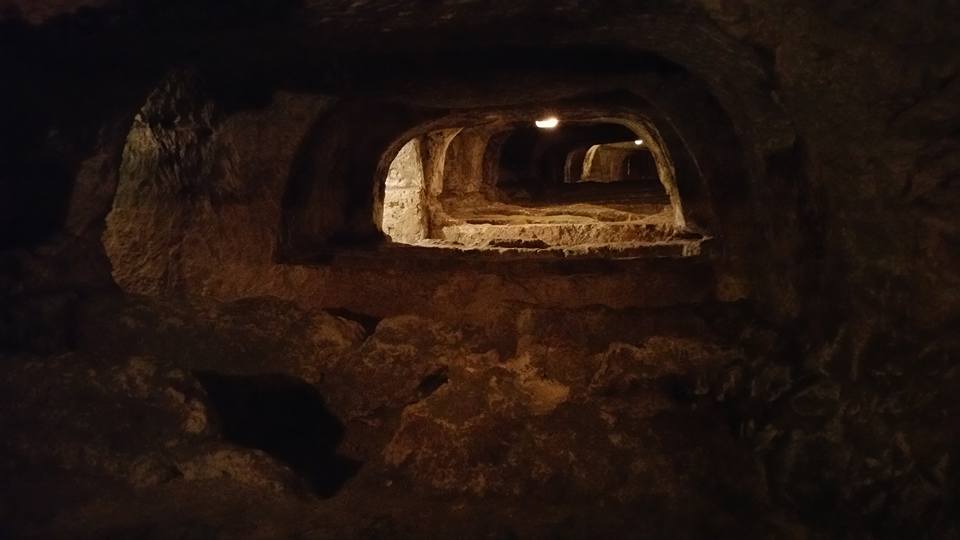
To understand why the catacombs are where they are, you have to understand Roman burial law. The Romans did not permit burial inside city walls — the dead were ritually impure, and the living kept them at arm's length. Cemeteries went outside the town, typically lining the roads that led away from it.That's exactly the relationship between Rabat and Mdina. Mdina was the fortified old capital of Malta, the walled city on the hill. Rabat — the name comes from the Arabic for "suburb" — is the settlement that grew up outside the walls. And beneath Rabat, in the soft globigerina limestone that's easy to carve and holds its shape, the people of Roman and Byzantine Malta dug their dead a city of their own.St. Paul's Catacombs is the largest of these complexes — somewhere around 2,200 square meters of excavated galleries — and it's only one part of a much wider underground cemetery zone that includes the nearby St. Agatha's Catacombs and others. The full extent of what's down there under Rabat has never been completely mapped.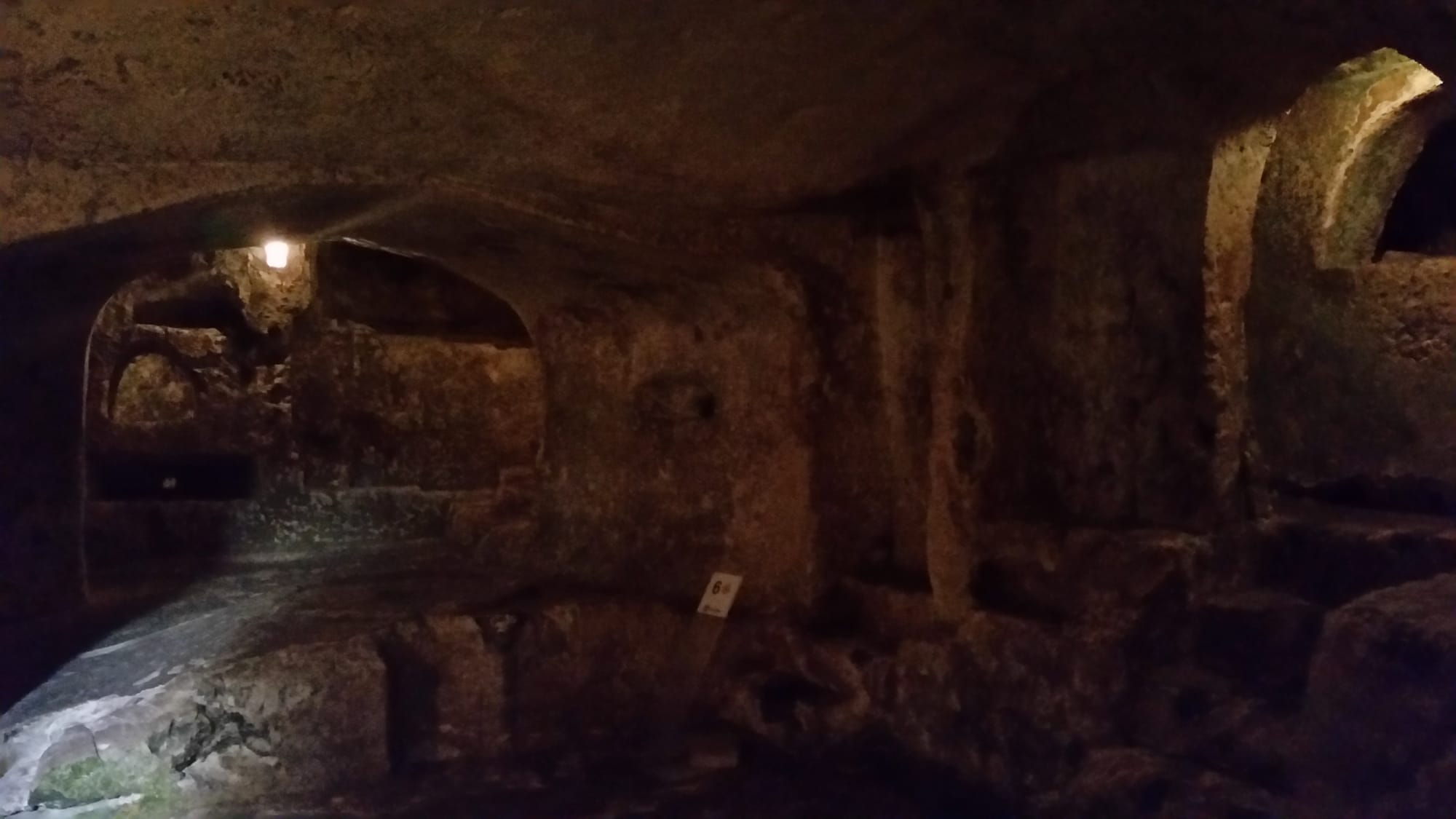
What's Down There
The catacombs date from roughly the 3rd century AD onward, with the system expanding and staying in use into the Byzantine period — several centuries of continuous burial cut by hand into the rock. What you walk through is a network of low passages opening into chamber after chamber, every surface worked into graves of one kind or another.The variety of tomb types is part of what makes it worth seeing. There are loculi — simple rectangular slots cut into the walls for a single body. There are arcosolia — arched recesses, often for more than one person, the kind of arrangement a family might share. There are floor graves, sometimes called forma, cut straight down into the ground. And there are the showpiece tombs: baldacchino or canopy tombs, where a roof of carved rock is left standing on pillars over the grave like a little stone pavilion, marking out someone who could afford to be remembered that way. Status followed people underground. It always does.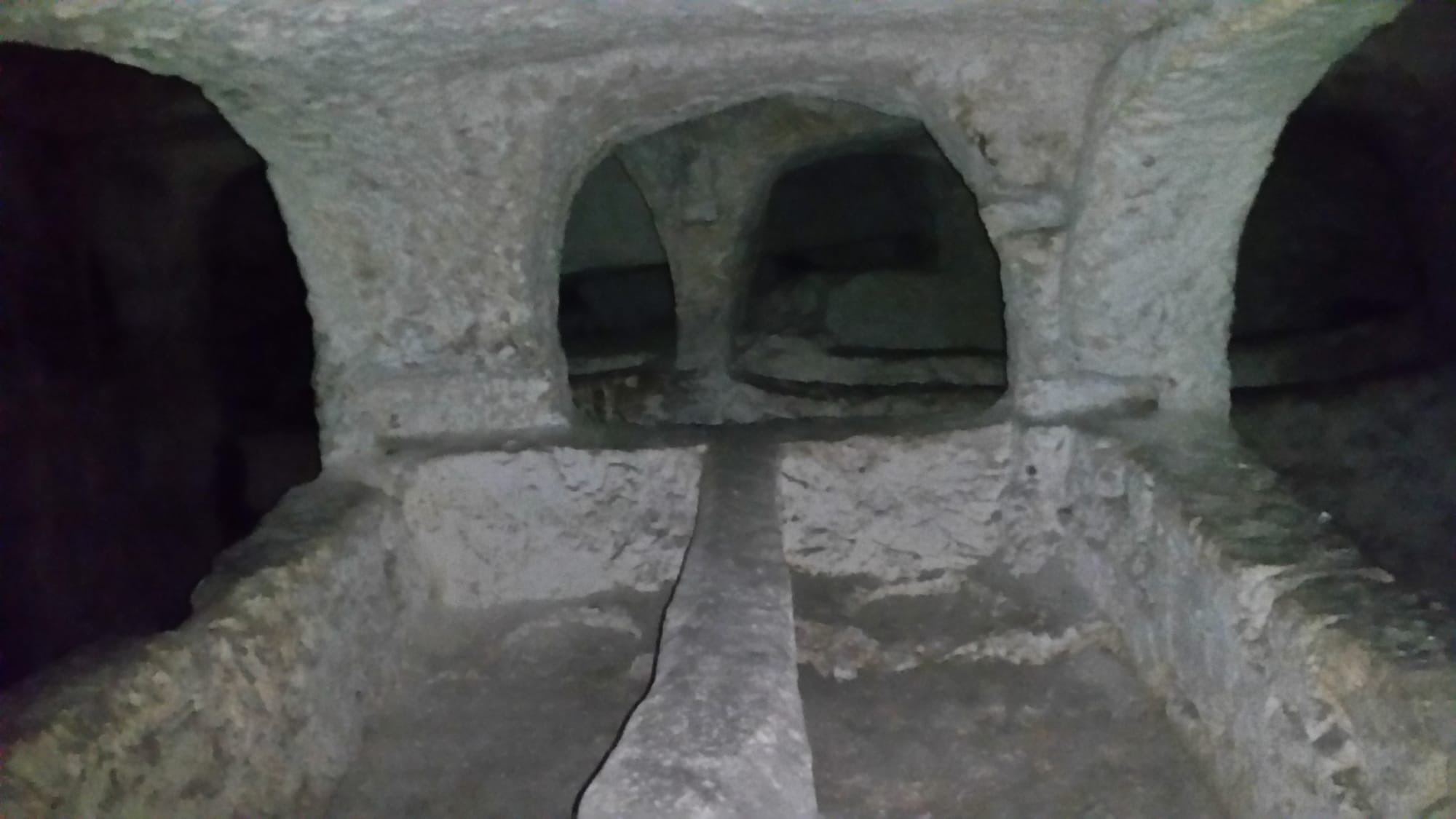
Dining With the Dead
The single most distinctive feature of the Maltese catacombs — the thing that sets St. Paul's apart from the catacombs of Rome or anywhere else I've been — is the agape tables.Carved directly out of the rock near the entrances to the burial areas are circular stone platforms with a low, sloping, reclined surround — essentially a stone dining couch and table built into the floor of a tomb. These are triclinium or agape tables, and they were used for funerary meals. Relatives of the dead would come down into the catacombs, recline around these tables, and share a ritual meal — the refrigerium — in honor and memory of the people buried there. Eating with the dead, in the literal house of the dead, on a date that mattered to the family.There's something about that detail that lands harder than the graves themselves. The tombs you expect. A permanent stone dinner table installed in a cemetery so that the living could regularly come down and eat a meal with their dead is a window into how completely differently these people lived alongside death. It wasn't sealed away. It was somewhere you visited, and dined.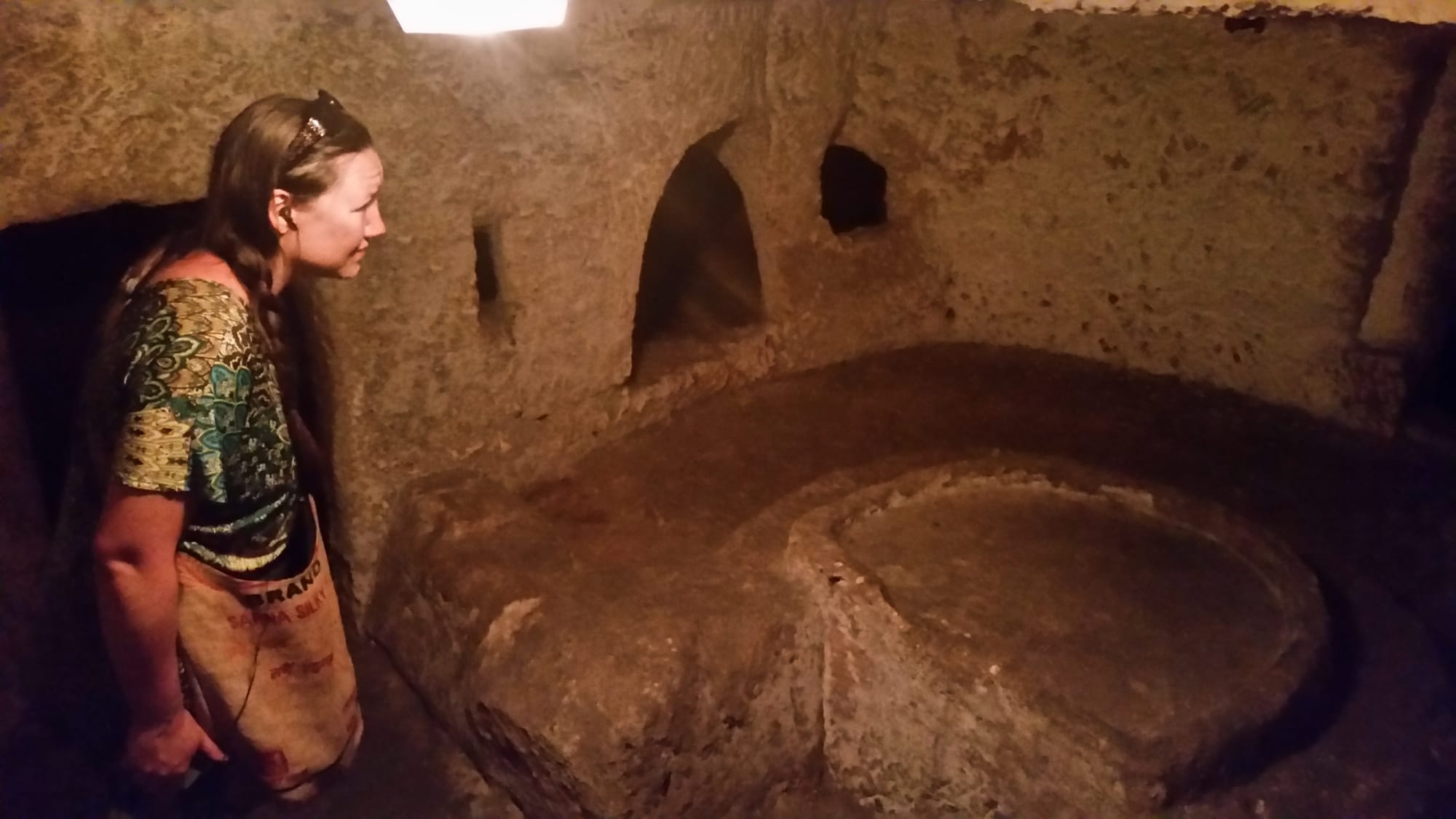
A Mixed Underworld
St. Paul's is often described in Christian terms, but the reality underground is more interesting than that. The catacombs were used by a religiously mixed population, and you can read it in the carvings. Christian graves sit near pagan ones. And in the wider complex — particularly in the associated hypogea — there's clear evidence of a Jewish community, including tombs marked with the menorah, the seven-branched candelabrum.That coexistence is genuinely remarkable. In one underground cemetery you have Christians, Jews, and pagans buried in the same rock, in the same period, using the same types of tombs and the same stone tables. Late Roman Malta was a crossroads in the middle of the Mediterranean, and its city of the dead reflects exactly that — a small, mixed, layered society, preserved underground long after the world above it changed.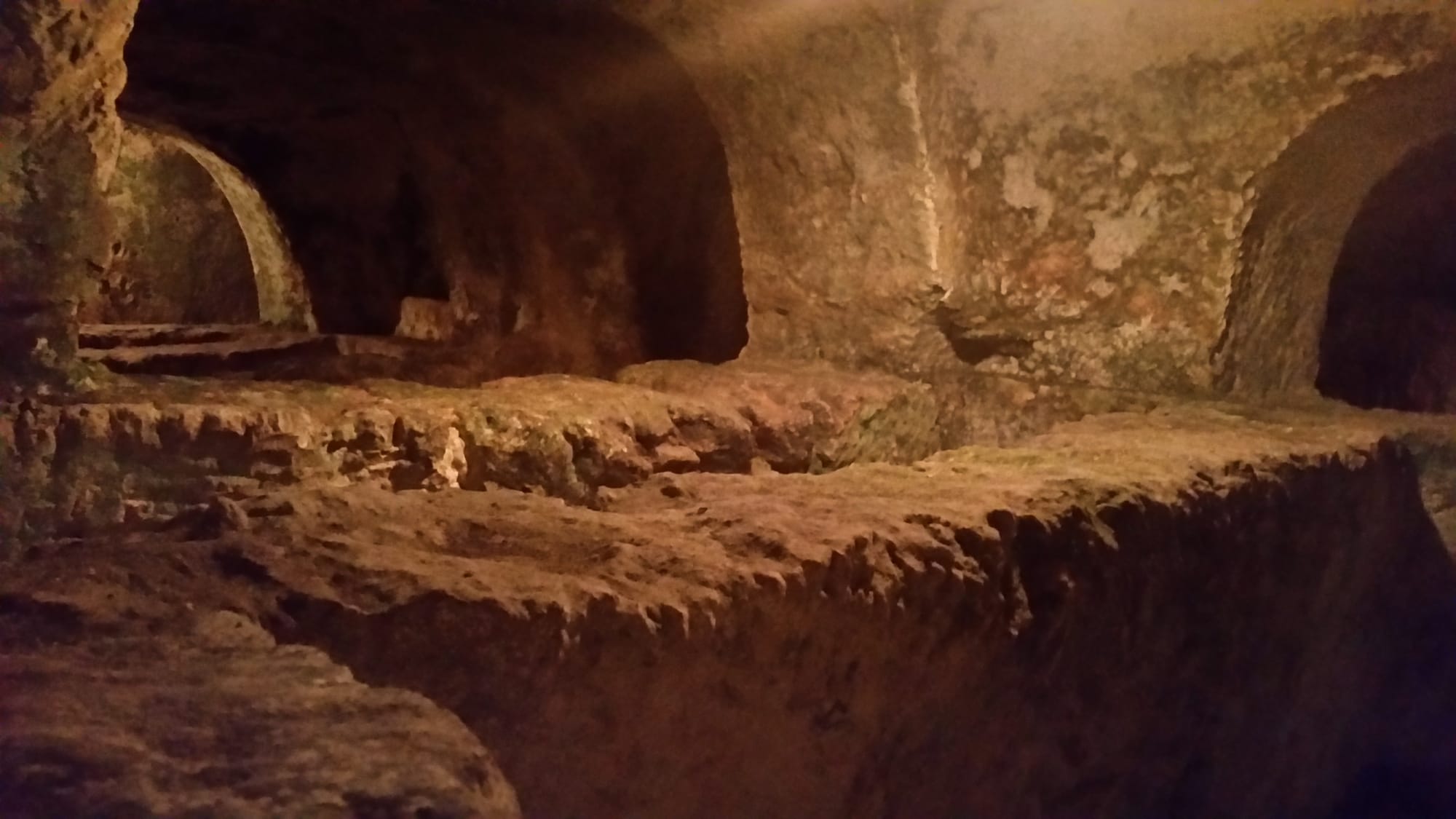
The St. Paul Connection
The name needs a footnote, because it promises something the site doesn't quite deliver — and the gap is worth knowing.According to the Acts of the Apostles, the Apostle Paul was shipwrecked on Malta around 60 AD while being transported as a prisoner to Rome, and spent three months on the island. Malta has built a great deal of its Christian identity around that event, and Rabat in particular is dense with Pauline sites — including the grotto where Paul is said to have stayed.The catacombs took his name by association. But they postdate him: the earliest burials here are from the 3rd century, roughly two hundred years after Paul would have left. Paul was never buried here, and there's no evidence he ever set foot in these specific tunnels. The name is tradition, not history — the same way Bran Castle in Romania is "Dracula's Castle" because the story attached itself to a convenient location. Knowing that doesn't diminish the catacombs at all. It just means you should come for the 1,700-year-old underground cemetery, which is the real marvel, and not for a connection to the saint that the archaeology doesn't support.Walking Through It
What I remember most is the scale and the silence. You descend out of the Maltese sun into cool, dim rock, and the passages just keep going — branching, opening into chambers, doubling back. It's well preserved in a way a lot of ancient sites aren't; the tomb shapes are crisp, the agape tables are intact, and you can actually read the architecture of how these people organized their dead. During the Second World War, parts of the Rabat catacombs were even pressed back into service as air-raid shelters, which tells you something about how solid and extensive they are.It's not a long visit — you're not underground for hours — but it's a dense one. Few places let you stand inside this much continuous evidence of how an ancient society actually handled death, right down to the furniture they built to keep eating with it.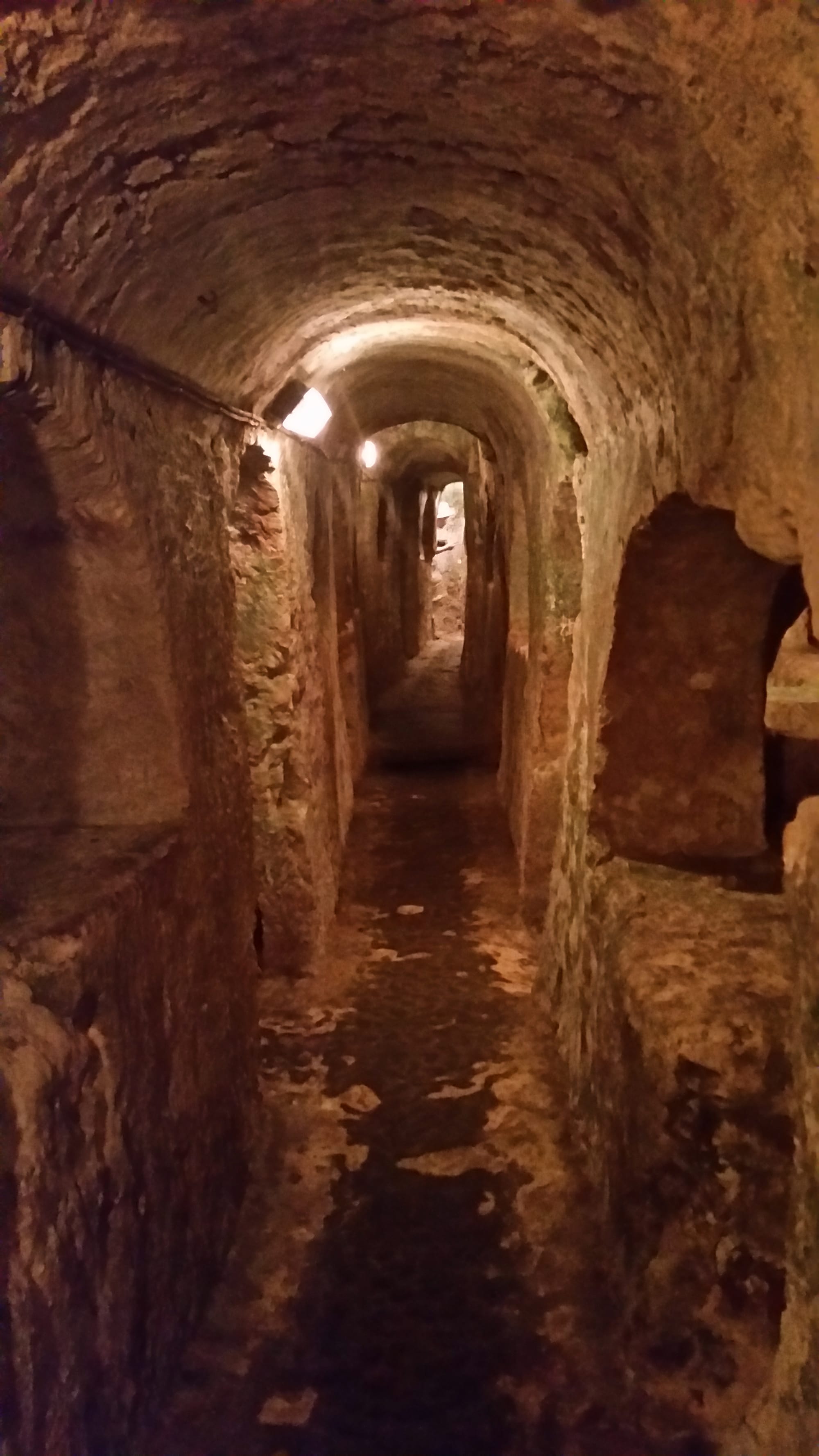
Unforgettable Experiences
Malta has incredible experiences worth booking in advance
Affiliate links • Helps fund my adventures at no extra cost to you
How to Visit St. Paul's Catacombs
Where it is. The catacombs are in Rabat, immediately outside the walls of the old capital, Mdina, in the center of Malta. They're managed by Heritage Malta, with a visitor center and museum at the entrance that does a good job of explaining the tomb types and the history before you go down.Combine it with Mdina. Mdina — the "Silent City," the medieval walled capital — is a five-minute walk away and is one of the most atmospheric places on the island. Doing the catacombs and Mdina together makes for a natural half-day. If you've got a Game of Thrones radar, the Mdina gate stood in for the gates of King's Landing.Pair it with the temples for a full ancient day. Malta's other great prehistoric draw, the megalithic temples of Ħaġar Qim and Mnajdra, are down on the southern coast. The temples and the catacombs together make a complete day in deep-history Malta — Neolithic above ground, Roman and Byzantine below it.Getting around. As with everywhere on Malta, a rental car makes life far easier than the buses, which run on their own loose interpretation of a timetable. Rabat is more accessible than the rural temples, but a car still saves you a lot of standing at bus stops.Wear real shoes. The steps down are worn, the floors are uneven rock, and it can be slick. It's not a strenuous visit, but it's not a polished tourist walkway either, which is part of the appeal.Frequently Asked Questions
Are St. Paul's Catacombs worth visiting?
Yes — they're among the most impressive and best-preserved catacombs in the Mediterranean, and one of Malta's essential historical sites. The scale of the underground network, the variety of rock-cut tombs, and the unique stone agape tables for funerary meals set them apart from catacombs elsewhere. They pair naturally with neighboring Mdina.How old are St. Paul's Catacombs?
The earliest burials date to around the 3rd century AD, and the complex stayed in use through the Byzantine period — so the catacombs are roughly 1,700 years old. They were cut by hand into Malta's soft limestone over several centuries.Was St. Paul actually buried in St. Paul's Catacombs?
No. The Apostle Paul was shipwrecked on Malta around 60 AD, but the catacombs were dug roughly two centuries later and have no direct connection to him. He was never buried there — the name comes from local tradition and Rabat's many Pauline sites, not from the archaeology.What are the stone tables in the catacombs?
They're agape (or triclinium) tables — circular stone platforms with a reclined surround, carved from the rock, where relatives held ritual funerary meals to honor and remember the dead. They're a distinctive feature of the Maltese catacombs and one of the highlights of a visit.Who was buried in St. Paul's Catacombs?
A religiously mixed population — Christians, Jews, and pagans — were buried in the Rabat catacomb complexes, often side by side. Jewish tombs marked with the menorah have been found in the wider system, evidence of the diverse society of late Roman and Byzantine Malta.
Planning your next trip?
However you travel — no idea where to start, a rough plan, set dates or totally flexible, any budget, any style, even bringing the pets — VagaPlan builds the whole trip around you. Get 3 custom trip ideas free, then unlock the full day-by-day itinerary when you're ready.
Perfect Places to Stay
Find the best hotels in Malta — I always recommend booking early
Affiliate links • Helps fund my adventures at no extra cost to you
Further Reading
Books about Malta — history, culture, and the context that makes travel richer
Affiliate links • Helps fund my adventures at no extra cost to you
Support My Travels
Affiliate links
Affiliate link — helps fund the adventures at no cost to you
More in the Series
Next Article