
Largo di Torre Argentina: Where Julius Caesar Was Killed, Now Run by Cats
The Spot Where Caesar Died
Here's the part that surprises people, because the movies and the popular image get it wrong: Julius Caesar was not killed in the Senate House in the Roman Forum. He was killed here.On the Ides of March — the 15th of March, 44 BC — the Roman Senate was meeting not in its usual home but in the Curia of Pompey, a hall attached to the great Theatre of Pompey complex, because the regular Senate House in the Forum was under reconstruction at the time. Caesar arrived, and a group of senators — the sources put the conspirators at around sixty, led by Marcus Junius Brutus and Gaius Cassius Longinus — surrounded him under the pretext of presenting a petition, drew concealed daggers, and stabbed him to death. He was struck twenty-three times. He fell at the base of a statue of Pompey, his old rival.The ruins of that Curia of Pompey are part of the Largo di Torre Argentina site. The exact spot where one of the most consequential men in history bled out on a marble floor, an event that helped tip the Roman Republic into the empire that followed, is right there in this sunken square — now presided over by cats. There's no grand monument marking it. There's a field of ancient stone, a city roaring past on all sides, and the quiet fact that this is the place.Four of the Oldest Temples in Rome
Caesar's death tends to overshadow everything else here, but the temples themselves are extraordinary in their own right. There are four of them, and because archaeologists couldn't be certain which gods they were dedicated to, they're simply labeled A, B, C, and D.Temple C is the oldest, dating back to roughly the 4th or early 3rd century BC — making it one of the most ancient temples in all of Rome. Temple B is the round one, the easiest to pick out, built around 101 BC and generally identified with Fortuna Huiusce Diei, the goddess of "the fortune of this day." Temple A and Temple D round out the group, with various proposed identities. Together they sit in what was the Campus Martius, the flat field outside the old sacred boundary of the city where Romans built temples, theaters, and monuments.The reason the whole site sits below street level is that Rome, like most ancient cities, kept building on top of itself. Over two millennia the ground floor of the city rose, burying the Republican-era square. It wasn't rediscovered until the 1920s, when demolition work for urban redevelopment under Mussolini uncovered the temples. Rather than build over them, the authorities excavated the area and left it open — a deliberate pocket of the ancient city preserved below the modern one.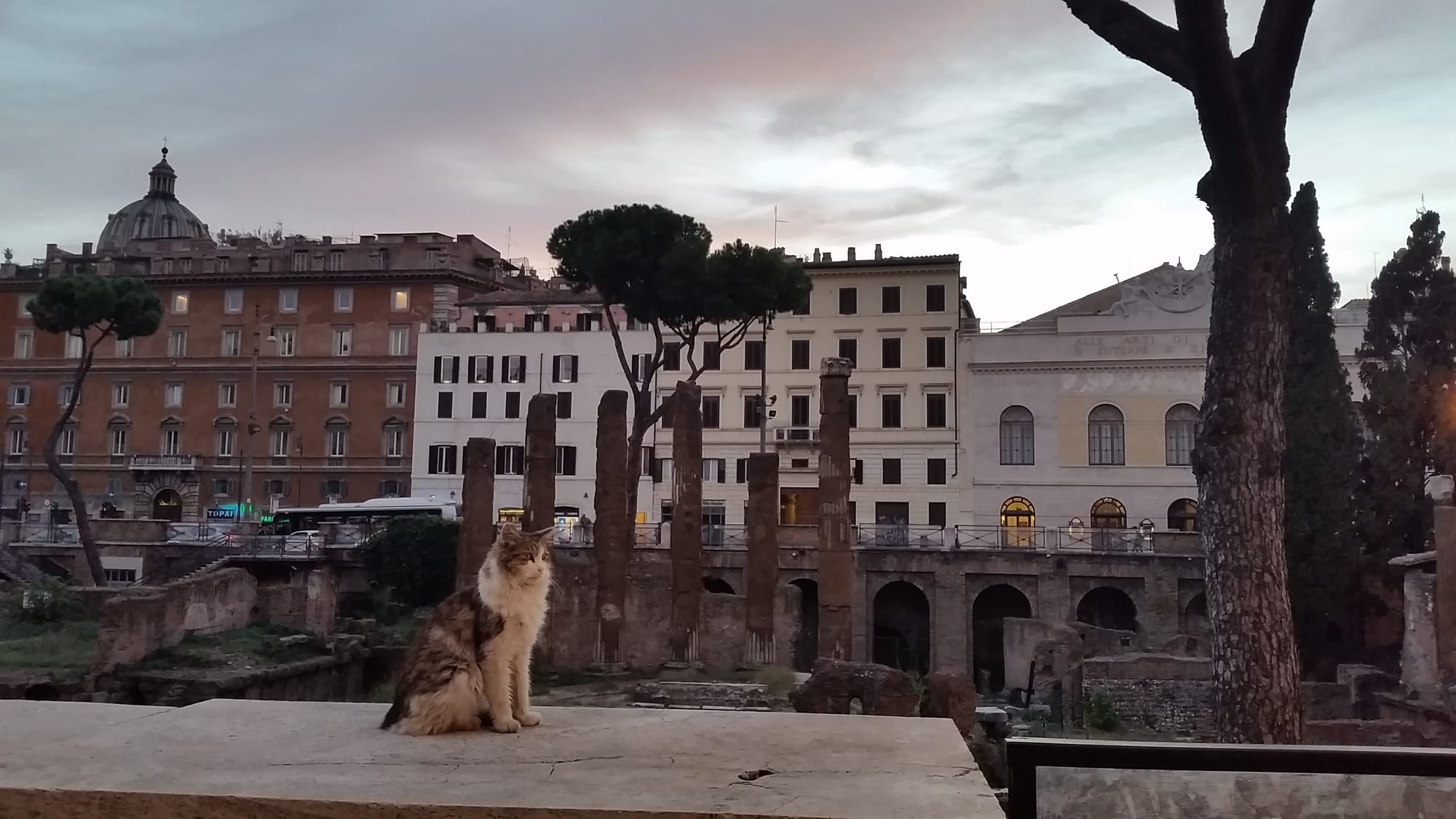
Why It's Called "Argentina"
Quick myth-correction, because everyone assumes it: the "Argentina" in the name has nothing to do with the South American country.It comes from Argentoratum — the Latin name for the city of Strasbourg. In the early 1500s, a papal master of ceremonies named Johannes Burckardt, who came from Strasbourg and was known as "Argentinus" after his home city, built a house with a tower in this part of Rome. That tower became known as the Torre Argentina, and the name eventually attached itself to the whole square. So the place is named, very indirectly, after a city in France — by way of a Renaissance Vatican official's nickname. Not the tango, not the steak, not the country.The Cats
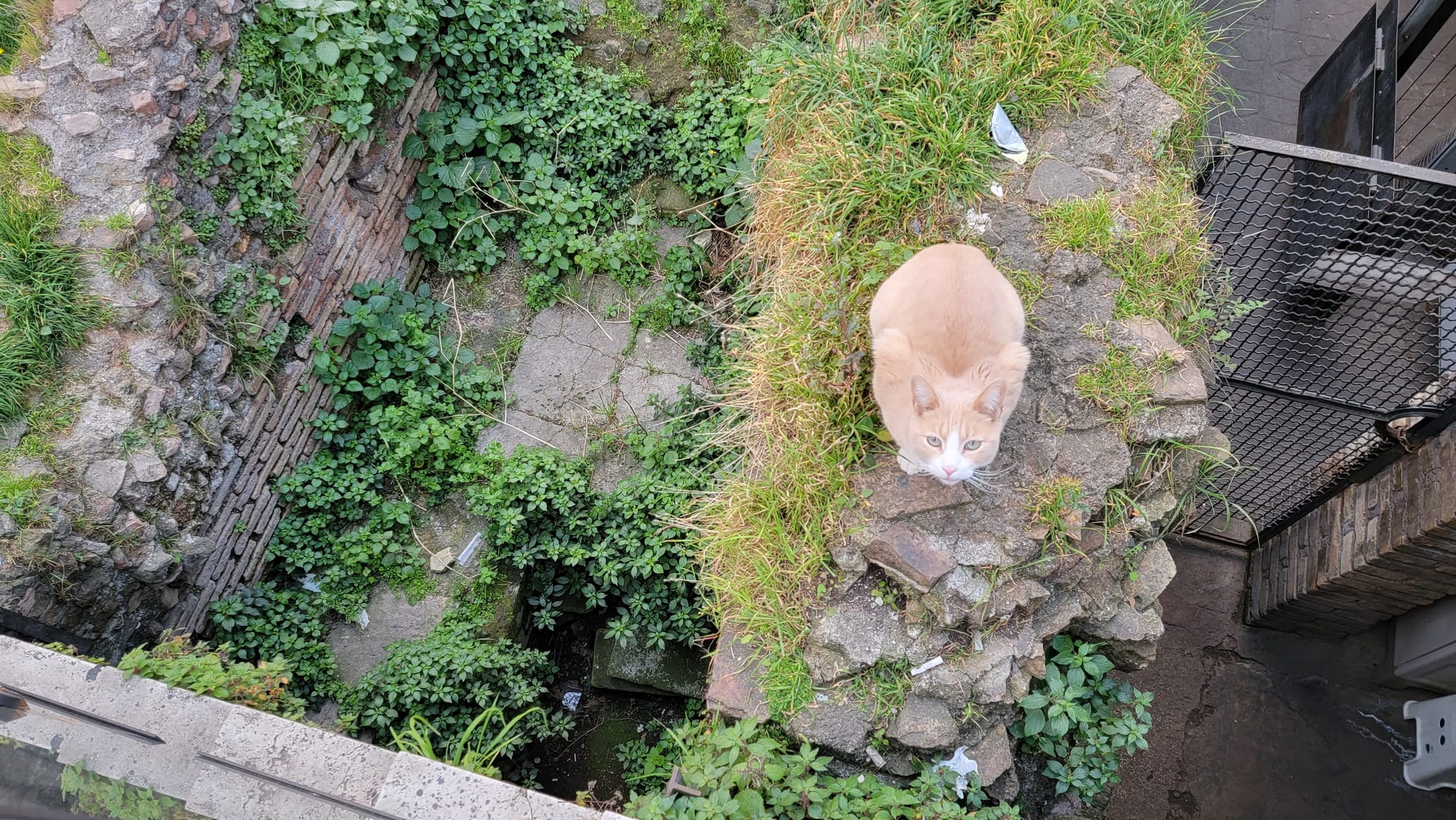
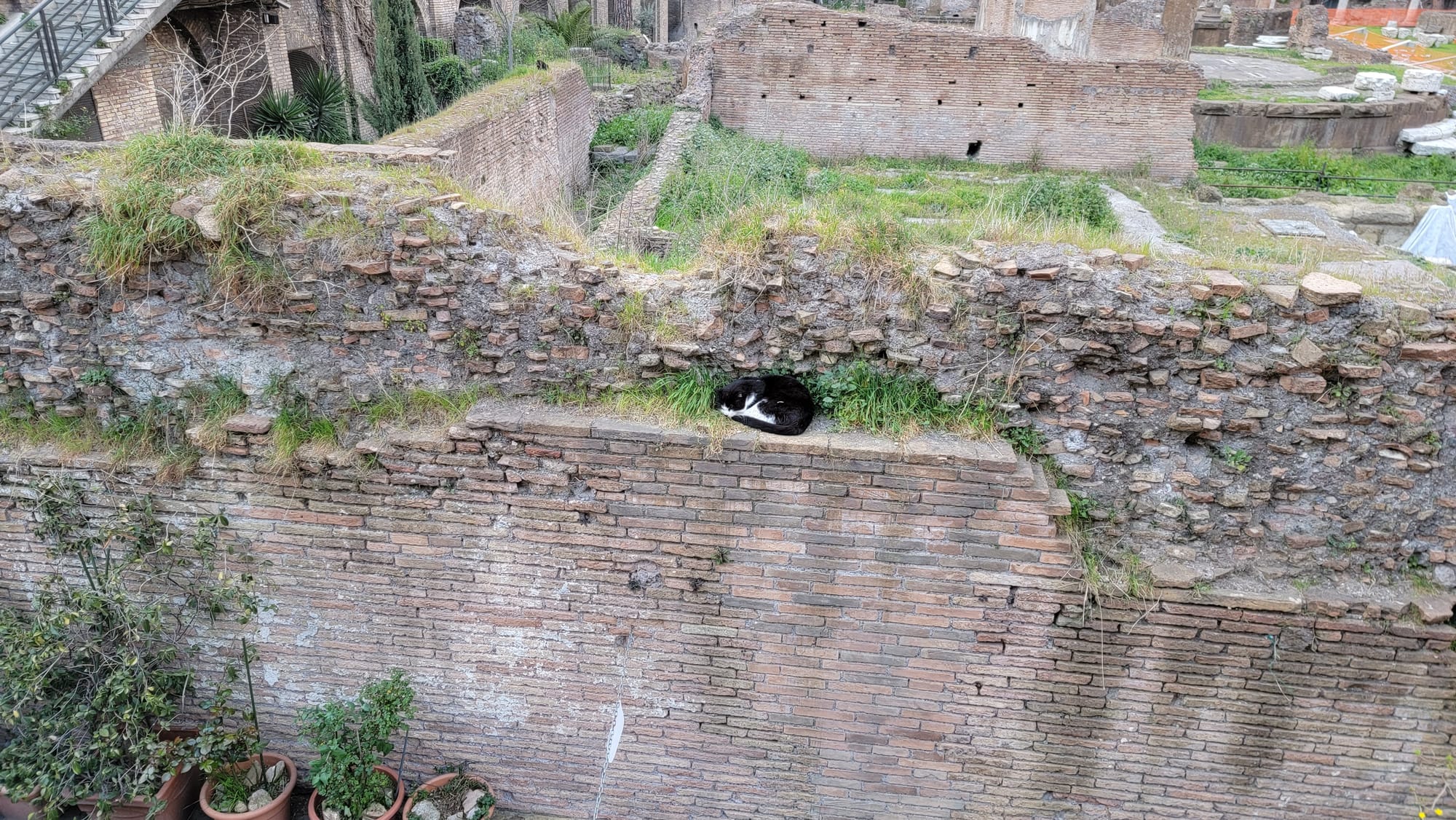
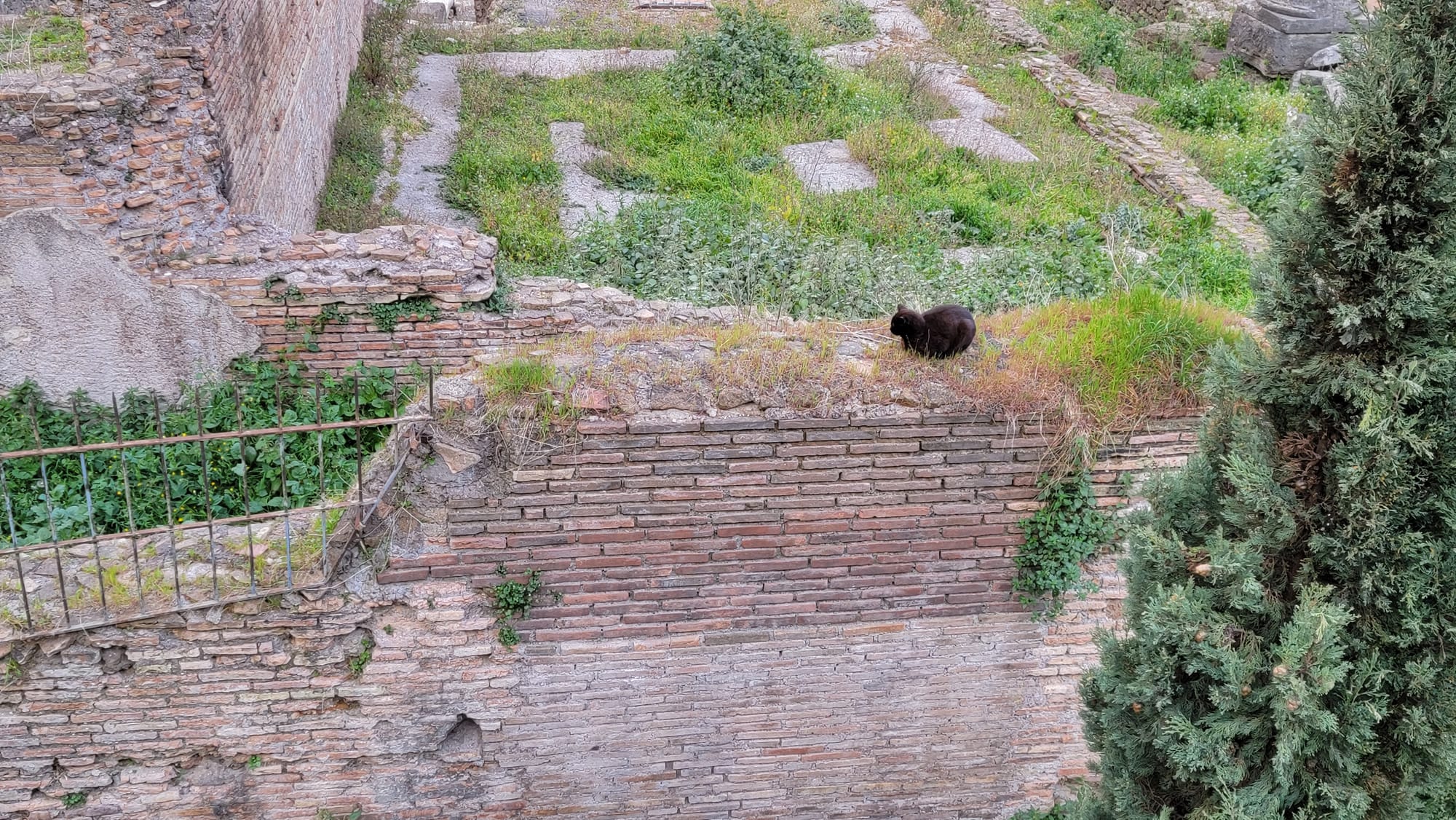
Since the ruins were excavated and left open, cats did what cats do with a quiet, walled, sunken refuge in the middle of a chaotic city: they moved in. By the 1990s a colony had established itself among the temple stones, and in 1993 a group of volunteers founded the Torre Argentina Cat Sanctuary to care for them.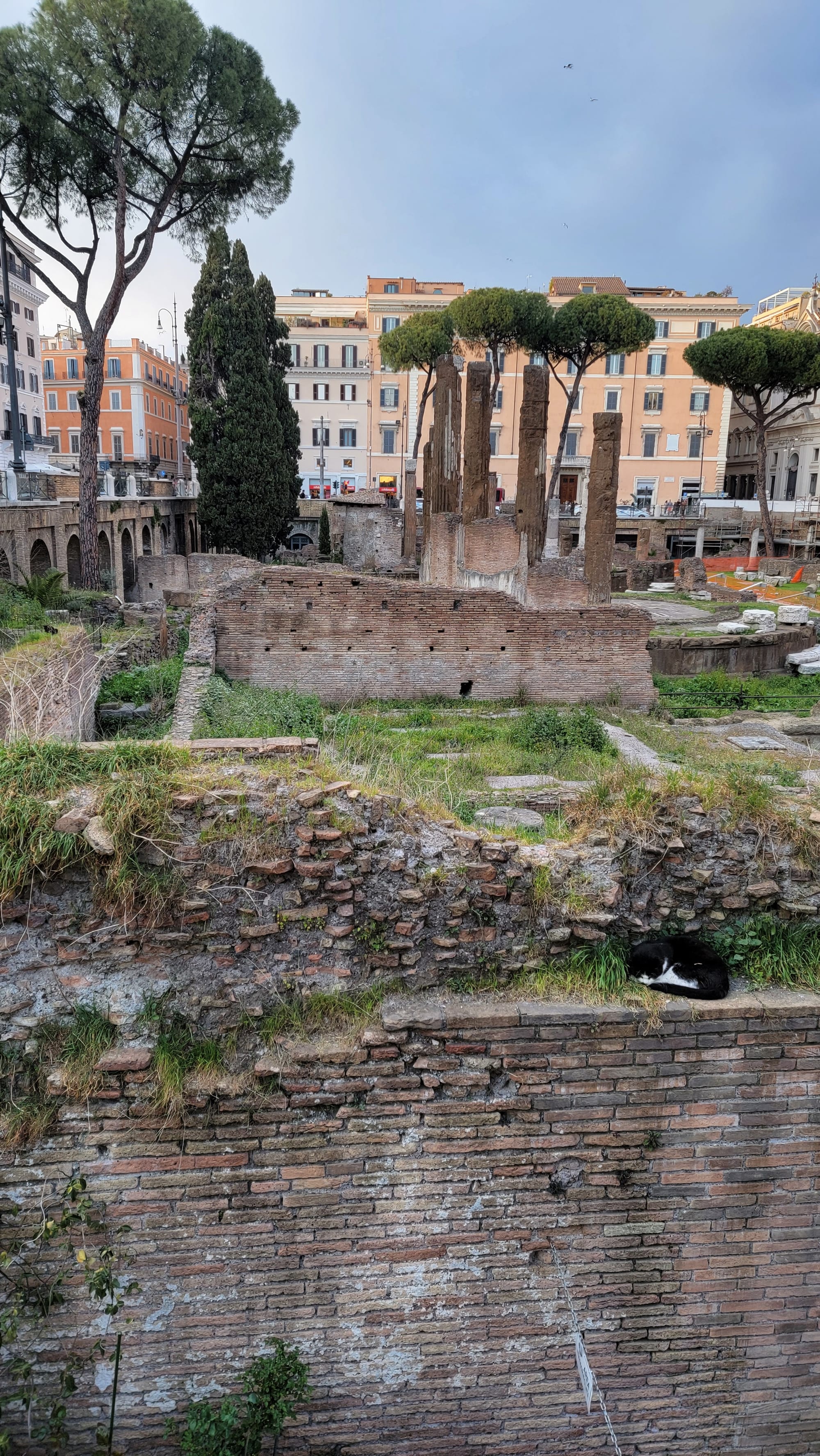
You Can Now Walk In
When we visited, the only way to experience Largo di Torre Argentina was from above — leaning on the railings that ring the square at street level, looking down into the ruins and the cats. For decades that was the whole experience, and honestly it was a good one.That changed in 2023. After a restoration project funded by the jeweler Bulgari, the site opened to visitors at the archaeological level for the first time, with elevated walkways that let you go down into the square and move among the temples and the Curia of Pompey — close to the ground where Caesar fell, rather than peering at it from the street. If you're planning a trip now, this is the version to do. It turns a thirty-second look over a railing into an actual visit to one of the most historically loaded patches of ground in Rome.Unforgettable Experiences
Rome has incredible experiences worth booking in advance
Affiliate links • Helps fund my adventures at no extra cost to you
How to Visit Largo di Torre Argentina
Where it is. It's in the heart of Rome's centro storico, in the Campus Martius area, a short walk from the Pantheon and easily folded into any day in the old city. It sits at a busy intersection and tram stop, so it's genuinely hard to miss once you know to look down rather than across.Going in vs. looking down. Since 2023 you can buy a ticket to walk the elevated paths through the excavated site. If you're short on time or budget, the free view from the street-level railing is still there and still gives you the temples and the cats. But if you care about the history, the walk-in is worth it now that it exists.Visit the cat sanctuary. The Torre Argentina Cat Sanctuary welcomes visitors, runs on donations, and has cats available for adoption. If you're an animal person, it's a lovely, low-key stop — and the entry fees and donations go directly to caring for the colony.Combine it with the obvious. You're a few minutes from the Pantheon, Piazza Navona, and the Campo de' Fiori. Largo di Torre Argentina is a perfect ten-minute detour that most visitors skip entirely, which is reason enough to make it.If you want the Rome that the crowds miss, this is it: the oldest temples in the city, the murder that ended the Republic, a Renaissance naming mix-up, and a hundred cats — all in one sunken square you could walk past without ever knowing what you were looking at.Frequently Asked Questions
Is Largo di Torre Argentina where Julius Caesar was killed?
Yes. Caesar was assassinated on 15 March 44 BC in the Curia of Pompey, a Senate meeting hall attached to the Theatre of Pompey — not in the Roman Forum, as is often assumed. The ruins of that Curia are part of the Largo di Torre Argentina site, making it the actual location of his death.Can you go inside Largo di Torre Argentina?
Yes, as of 2023. Following a Bulgari-funded restoration, the site opened to visitors with elevated walkways at the archaeological level, so you can walk among the temples and the Curia of Pompey. Before that, it could only be viewed from the railings at street level — which remains a free option.Why is it called Argentina if it's in Rome?
The name comes from Argentoratum, the Latin name for Strasbourg — not the country Argentina. A papal official from Strasbourg, Johannes Burckardt, built a tower here in the early 1500s known as the Torre Argentina, and the name spread to the whole square.What is the Torre Argentina cat sanctuary?
It's a cat sanctuary founded in 1993 among the ruins, run largely by volunteers, that cares for over a hundred stray cats living in the excavated square. It runs spay-and-neuter and adoption programs, welcomes visitors, and survives on donations. Rome legally protects its feral cat colonies as part of the city's heritage.How old are the temples at Largo di Torre Argentina?
They're among the oldest in Rome. Temple C, the oldest of the four, dates to roughly the 4th or early 3rd century BC. The round Temple B was built around 101 BC. The square sits below modern street level and was excavated in the 1920s.
Planning your next trip?
However you travel — no idea where to start, a rough plan, set dates or totally flexible, any budget, any style, even bringing the pets — VagaPlan builds the whole trip around you. Get 3 custom trip ideas free, then unlock the full day-by-day itinerary when you're ready.
Perfect Places to Stay
Find the best hotels in Rome — I always recommend booking early
Affiliate links • Helps fund my adventures at no extra cost to you
Further Reading
Books about Rome — history, culture, and the context that makes travel richer
Affiliate links • Helps fund my adventures at no extra cost to you
Support My Travels
Affiliate links
Affiliate link — helps fund the adventures at no cost to you
More in the Series


Next Article