In 1459, Vlad the Impaler invited the noblemen who had murdered his father to an Easter feast. Once they were assembled, he had the older ones impaled on stakes outside the walls and marched the survivors fifty miles, still in their Easter finery, to rebuild a ruined fortress on a cliff — working them until the castle was finished or they were dead, whichever came first.That happened at the Princely Court in Târgoviște. The Chindia Watchtower he used to watch over it still stands at the center of the ruins, with a small museum inside. It should be crowded. It almost never is.The crowds are an hour away, at Bran Castle — the fortress sold to the world as "Dracula's Castle," which Vlad may have passed through once and certainly never lived in. The stronghold he actually held, the one his enemies were forced to build for him, is Poenari: 1,480 steps up a Carpathian mountainside to crumbling walls on a cliff above the Argeș River. I climbed all of them. There was almost no one else at the top.That gap — between where the tourists go and where the history actually happened — is most of what you need to know about Vlad the Impaler. The man people think they know is a vampire in a Transylvanian castle. The one who actually existed was stranger, and considerably darker, than the legend that replaced him.
Who He Was
Vlad III was born in Sighișoara in 1431. His father was Vlad II, a member of the Order of the Dragon — a chivalric order founded by Holy Roman Emperor Sigismund to defend Christian Europe against the Ottoman advance. The order's emblem was a dragon. Dracul in Romanian means dragon. Dracula means son of the dragon. The whole etymology is a knightly coat of arms — not a curse, not a supernatural designation, a military insignia passed down as a nickname to the man who carried it for the rest of history.When Vlad was around twelve, his father sent him and his younger brother Radu to the Ottoman court as political hostages — insurance against their father straying from Ottoman expectations while governing Wallachia. He spent roughly six years there, from around 1442 to 1448. The Ottomans treated them reasonably well by the standards of that arrangement. He learned Turkish during those years — a detail that becomes relevant later. He also learned, from a position of enforced proximity, exactly how Ottoman power operated, how it was organized, and how it thought about vassals.He came back to find his father murdered by the Wallachian boyars — the noble class — in coordination with Hungarian political interests, specifically John Hunyadi, the powerful Hungarian regent who would later become Vlad's reluctant patron. His older brother Mircea had been blinded with hot irons and buried alive. His younger brother Radu had converted to Islam and would spend years fighting for the Ottomans. The family Vlad returned to was a ruin.He seized power in Wallachia for the first time in 1448, lost it within months, spent years in exile, and retook it in 1456. He held it until 1462. Those six years are where the history is.
What He Did
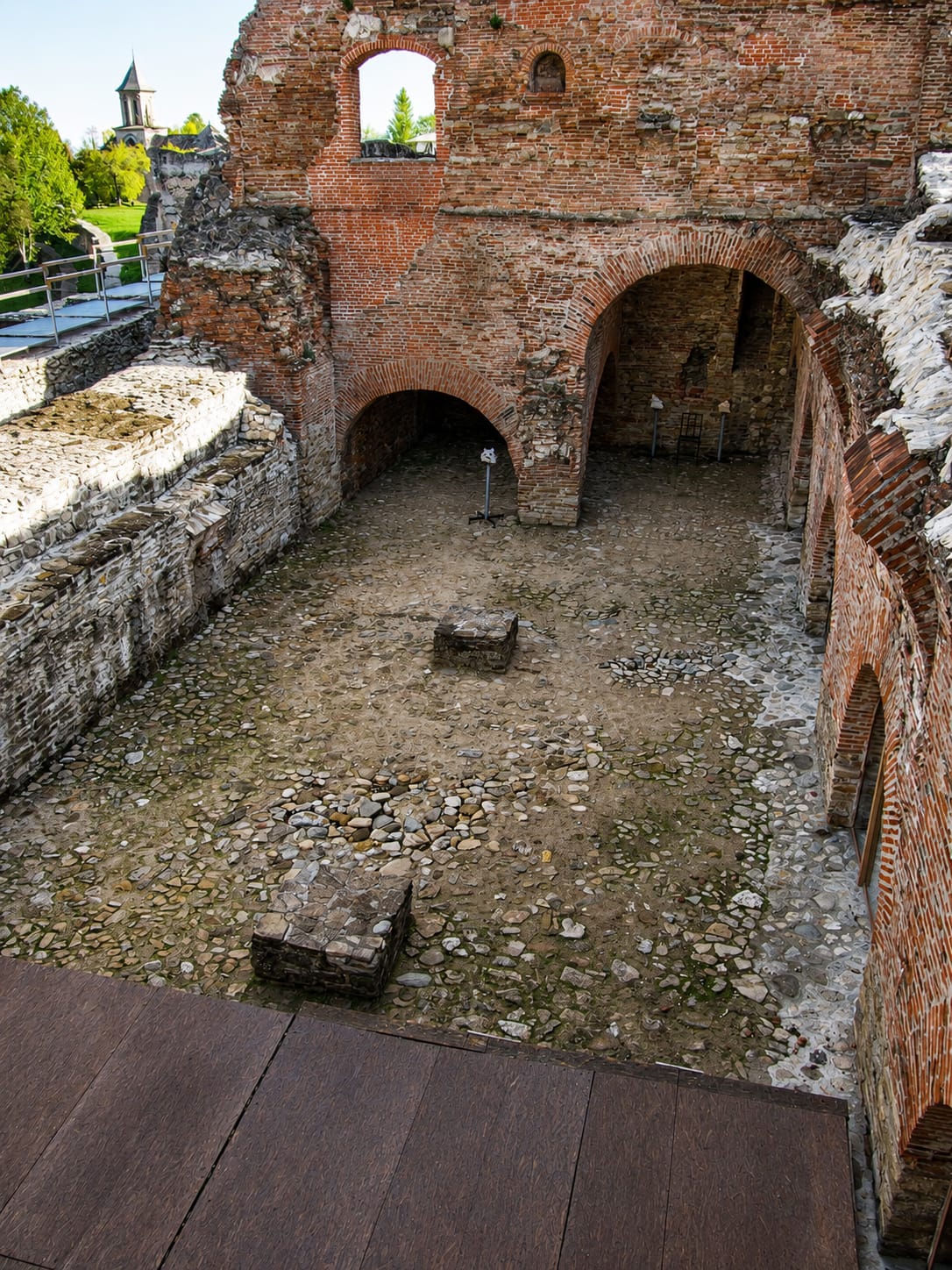
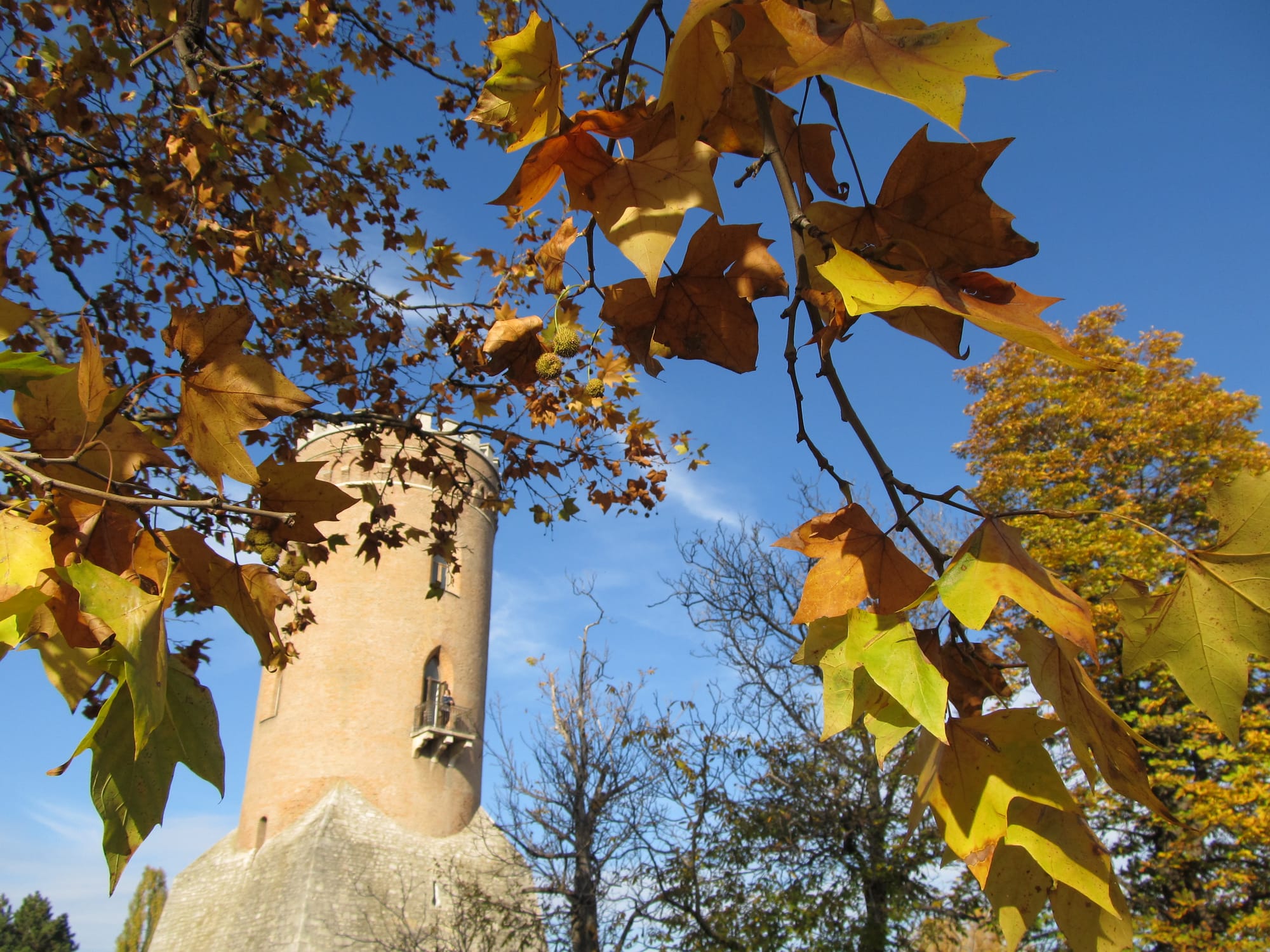
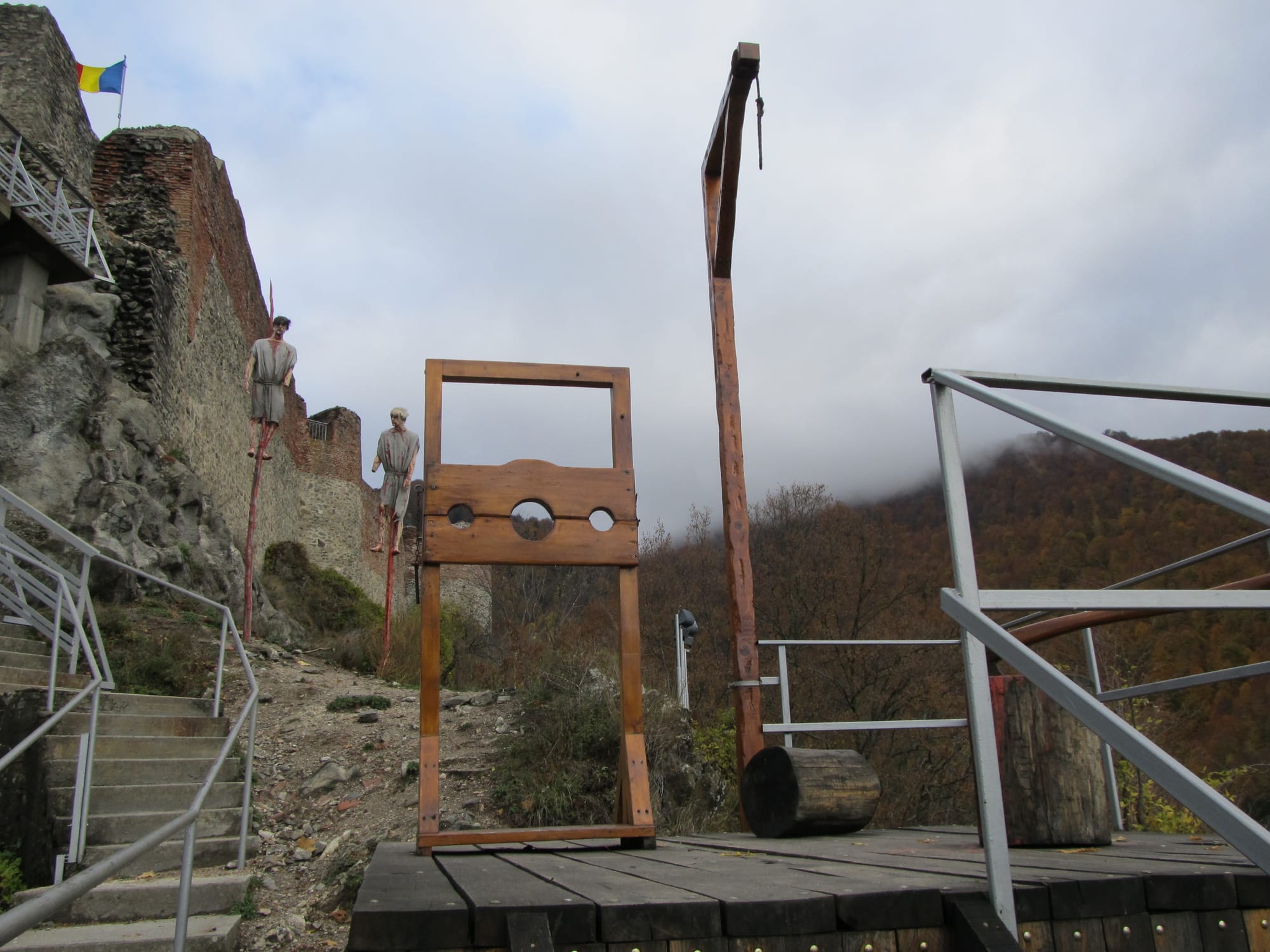
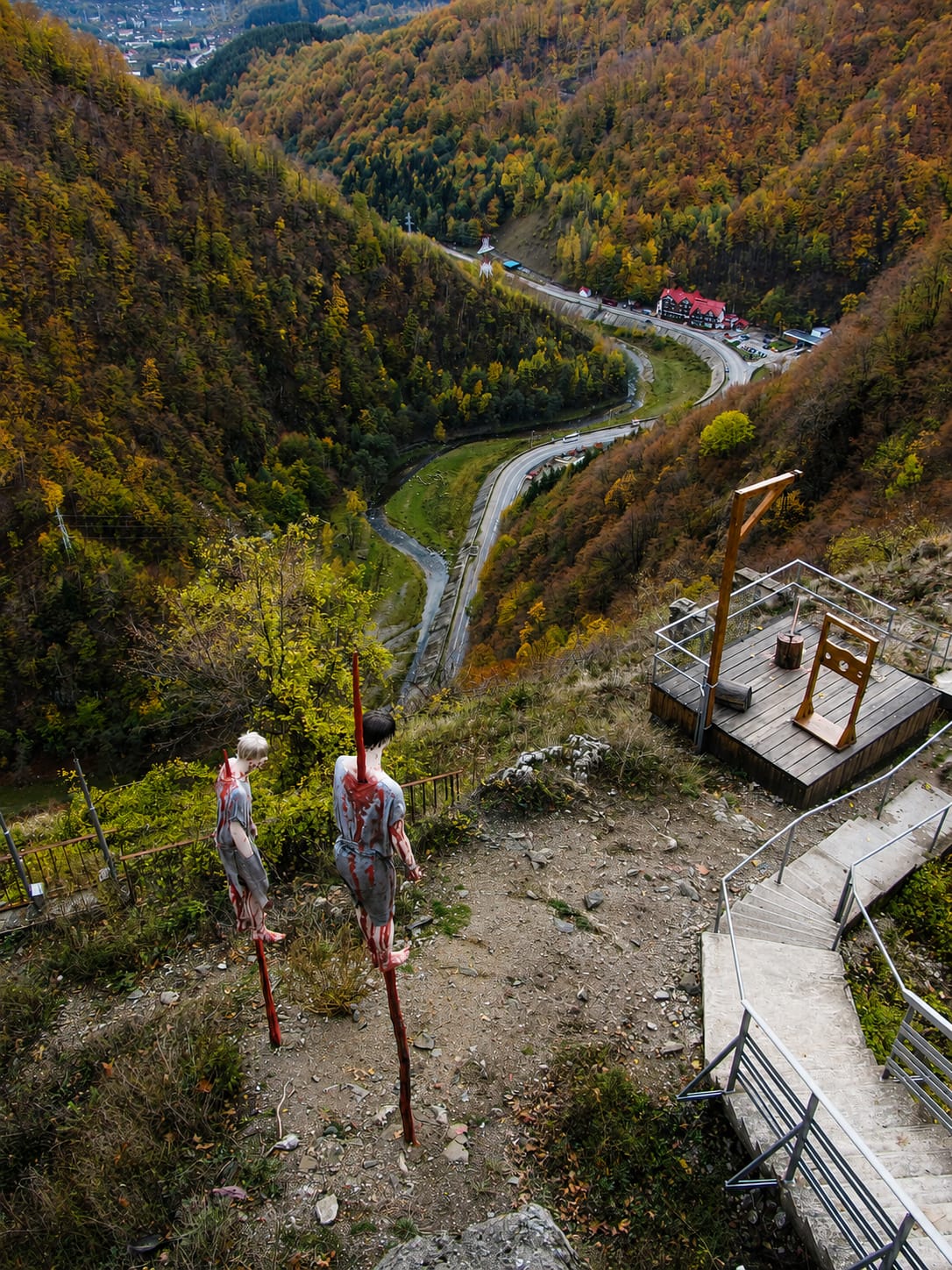
The boyars who killed his father got the Easter feast first.In 1459, Vlad summoned the nobles who had conspired against his family to the Princely Court at Târgoviște. Accounts differ on the number — some sources say 200 boyar families and officials, others simply say hundreds. The older ones he impaled on the spot, outside the palace walls where executions in Wallachia were traditionally staged for maximum visibility. The younger ones he marched fifty miles to Poenari in their formal Easter clothes to rebuild his fortress on the cliff above the Argeș River. Many of them died during the construction. The ones who didn't built him his stronghold. His family's murderers built him his castle.The ruins of the Princely Court at Târgoviște — where the Easter feast ended badly for the boyars.The Chindia Watchtower — Vlad's observation post, still standing at the center of the complex.There's an efficiency to that which is difficult to entirely argue with, while also being obviously monstrous. That's the Vlad problem. Both things are true at the same time, and neither cancels out the other.Impalement was his preferred method, and he deployed it at a scale that went past any reasonable military or judicial calculation. The mechanics of it were deliberate: the stake was typically rounded at the tip rather than sharpened, to slow the process. Stakes were calibrated to the rank of the victim — higher-status prisoners received taller stakes. The body was then raised and left on display. It was not a quick death, and it was not meant to be private.Estimates of total deaths during his reign run from 40,000 to 100,000 — figures that come from contemporary sources, not later embellishment. Bishop Nicholas of Modruš, who heard testimony at the court of Matthias Corvinus in 1463 and 1464 while Vlad was already under house arrest there, recorded 40,000. A Transylvanian Saxon account compiled the figure of 100,000 from multiple tallies. Even the lower number represents a significant portion of the population of the kingdom he ruled. He impaled political enemies, criminals, foreign merchants who ran afoul of his trade policies, the poor, and occasionally people for reasons that the sources don't make clear. The German pamphlets that circulated about him during his lifetime — printed from the 1480s onward, reprinted repeatedly through the 1560s — depicted him dining among the impaled, eating bread dipped in blood. Whether any specific anecdote is true matters less than what it tells you about his contemporary reputation: people in the 15th century, who lived in a world that executed criminals publicly and regarded violence as a normal instrument of governance, found what Vlad did exceptional enough to write pamphlets about it.He was aware of the pamphlets. He wasn't particularly bothered.It's also worth noting what the eastern sources say, because it's a different picture entirely. Slavic chronicles from Moldavia and Russia describe him as a fierce defender of order — a ruler who broke the corrupt boyar class, protected common people from noble exploitation, and enforced a legal code that made Wallachia, by some accounts, one of the safer places in Eastern Europe for law-abiding travelers. Romanian folklore remembers him as a man who went out in disguise at night to check on the condition of his people. After 1459 he stopped paying tribute to the Ottoman Empire, which freed Wallachian peasants from that tax burden. When the Ottomans came for him in 1462, the peasants fought with him. That's not the behavior of a population that regarded their ruler purely as a terror.Both portraits are true. There is no version of the history that resolves the tension between them.
The Night Attack and the Forest of the Impaled
The confrontation with Mehmed II in 1462 is where the history becomes almost implausible.The immediate cause was Vlad's decision in early 1462 to stop paying the haraç — the annual tribute the Ottomans demanded from non-Muslim client states — and to launch a preemptive military campaign into Ottoman territory. He crossed the frozen Danube, divided his army into smaller units, and over roughly two weeks covered approximately 800 kilometers, killing over 23,000 people by his own count in a letter to Matthias Corvinus dated February 11, 1462. He also used his Turkish against the commander of the fortress at Giurgiu, impersonating an Ottoman officer to get the gates opened, then attacked and destroyed the fortress from inside. The knowledge of Turkish he'd acquired as a hostage thirty years earlier, deployed as a military weapon.Mehmed's response was to raise one of the largest armies the Ottomans had fielded since the siege of Constantinople nine years earlier. Contemporary estimates range from 90,000 upward — Ottoman logistics make the larger figures implausible, but the force was substantial. Against it, Vlad could field maybe 30,000 Wallachians, many of them conscripted peasant militia. He didn't try to meet the Ottomans in open battle. He burned crops. He poisoned wells. He evacuated villages along the Ottoman line of advance and drove livestock into the forests. He sent men infected with plague into the Ottoman camps. He harassed the Ottoman flanks continuously with cavalry raids. And during the night of June 16 to 17, 1462, he led a cavalry force directly into the Ottoman camp outside Târgoviște in an attempt to personally assassinate Mehmed II.He got the wrong tent. He hit the quarters of the grand vizier and another senior official, not the sultan's. The Janissaries — Mehmed's elite infantry — rallied, drove the Wallachians out, and inflicted significant casualties. Vlad escaped under cover of darkness.The next day, Mehmed's army marched on Târgoviște. The capital was deserted — Vlad had withdrawn the population. The Ottoman forces entered the city unopposed and found the gates open.Outside the walls, along the road leading to the city, they found what the Greek historian Chalkokondyles described as a forest of the impaled: approximately 20,000 bodies on stakes, mostly Turkish prisoners from Vlad's winter campaign, arranged across an area that some sources describe as stretching miles along the road. Hamza Pasha — the Ottoman official who had been sent earlier that year to capture Vlad by diplomatic deception, and who had been killed and impaled when the ambush failed — was on the tallest stake, his rank acknowledged in the one currency Vlad apparently recognized. The bodies had been there long enough to be in an advanced state of decomposition. Birds were nesting in them.Chalkokondyles recorded Mehmed's reaction directly: he was seized with amazement and said that it was not possible to deprive of his country a man who had done such great deeds, who had such a diabolical understanding of how to govern his realm and its people. The Ottoman army dug defensive trenches around their camp that night and withdrew the following day.The man who ended the Byzantine Empire, who had taken Constantinople with a force that shook the Western world, looked at what was outside that city and went home.Whether the exact figure of 20,000 is accurate is debated — some historians argue it's inflated for effect, part of the same propaganda machinery that generated the German pamphlets. But an Ottoman eyewitness named Enveri, a participant in the 1462 campaign, independently confirmed seeing a full field of impaled Turks. The scale may be exaggerated. The event itself is not.
The End
Vlad's 1462 campaign ended without a decisive victory for either side. Mehmed withdrew, but installed Vlad's brother Radu — who had been at the Ottoman court since childhood and was Mehmed's personal favorite — as a rival claimant to the Wallachian throne. Radu had Wallachian support and Ottoman backing. Vlad's own nobility began to defect. He retreated into Transylvania seeking military help from Matthias Corvinus, who promptly had him arrested on the basis of letters — almost certainly forged — purporting to show Vlad had offered to ally with the Ottomans against Hungary.He spent the next decade under various forms of captivity in Hungary, initially in Visegrád, later in more comfortable house arrest in Buda. During this period the German pamphlets about him flourished — printed in Nuremberg and other cities, circulating across Europe, amplifying the most lurid accounts of his methods. He converted to Catholicism, married into the Hungarian nobility, and was eventually released around 1475 at the request of Stephen III of Moldavia, who needed a capable military ally against the Ottomans.He retook the Wallachian throne for the third and final time in late 1476. He held it for roughly two months. The circumstances of his death in December 1476 are unclear — battle, ambush, possibly assassination by his own men. He was around 45 years old. His head was sent to Constantinople, where Mehmed had it displayed as confirmation of death. His body was reportedly buried at Snagov Monastery, though excavations in the 20th century found the supposed tomb empty.The Romanian Orthodox Church canonized him as a saint in 2023. From inside the country he spent his life defending against an empire that swallowed everything around it, that reads differently than it does from the outside.
Sighișoara
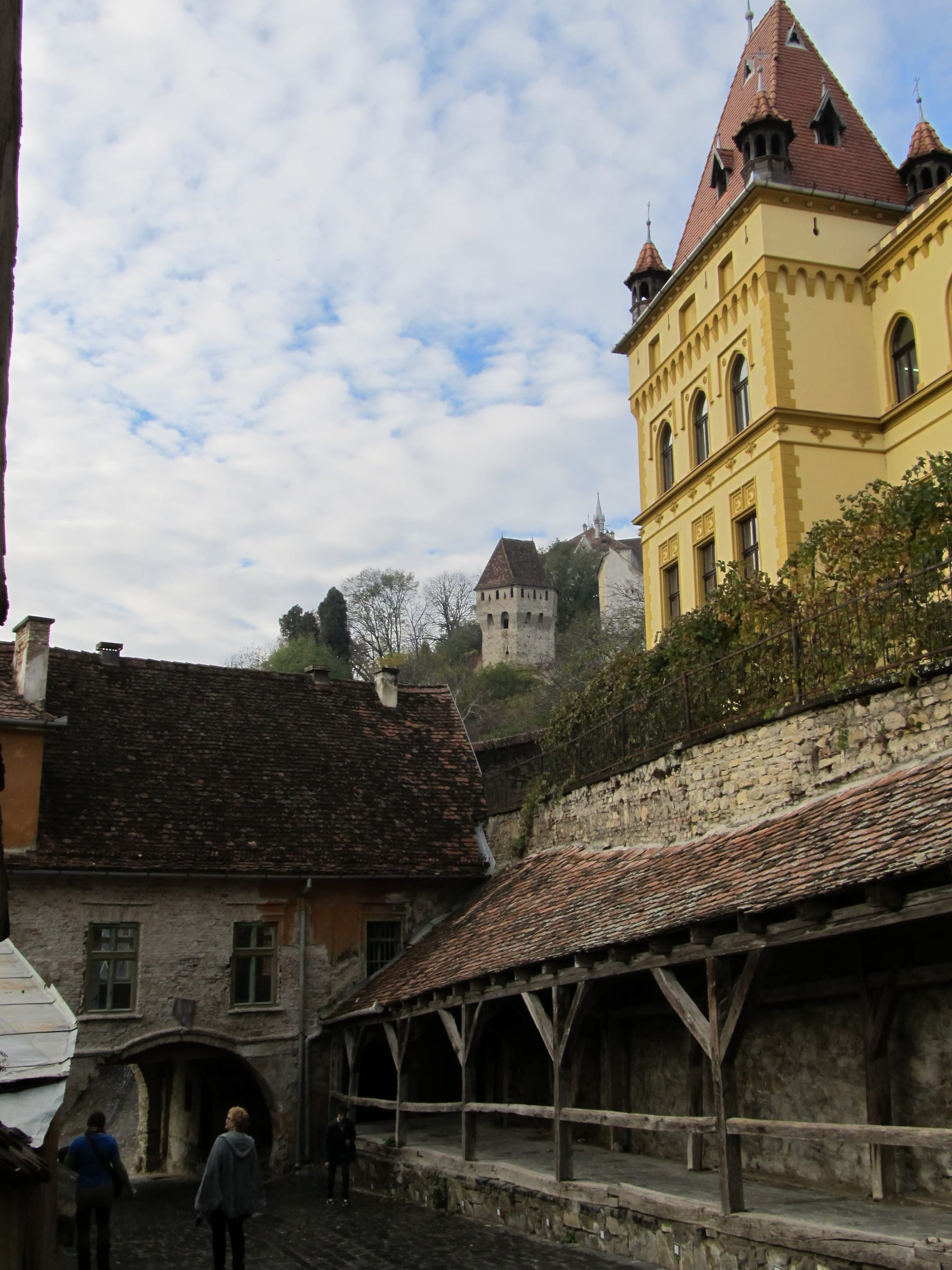
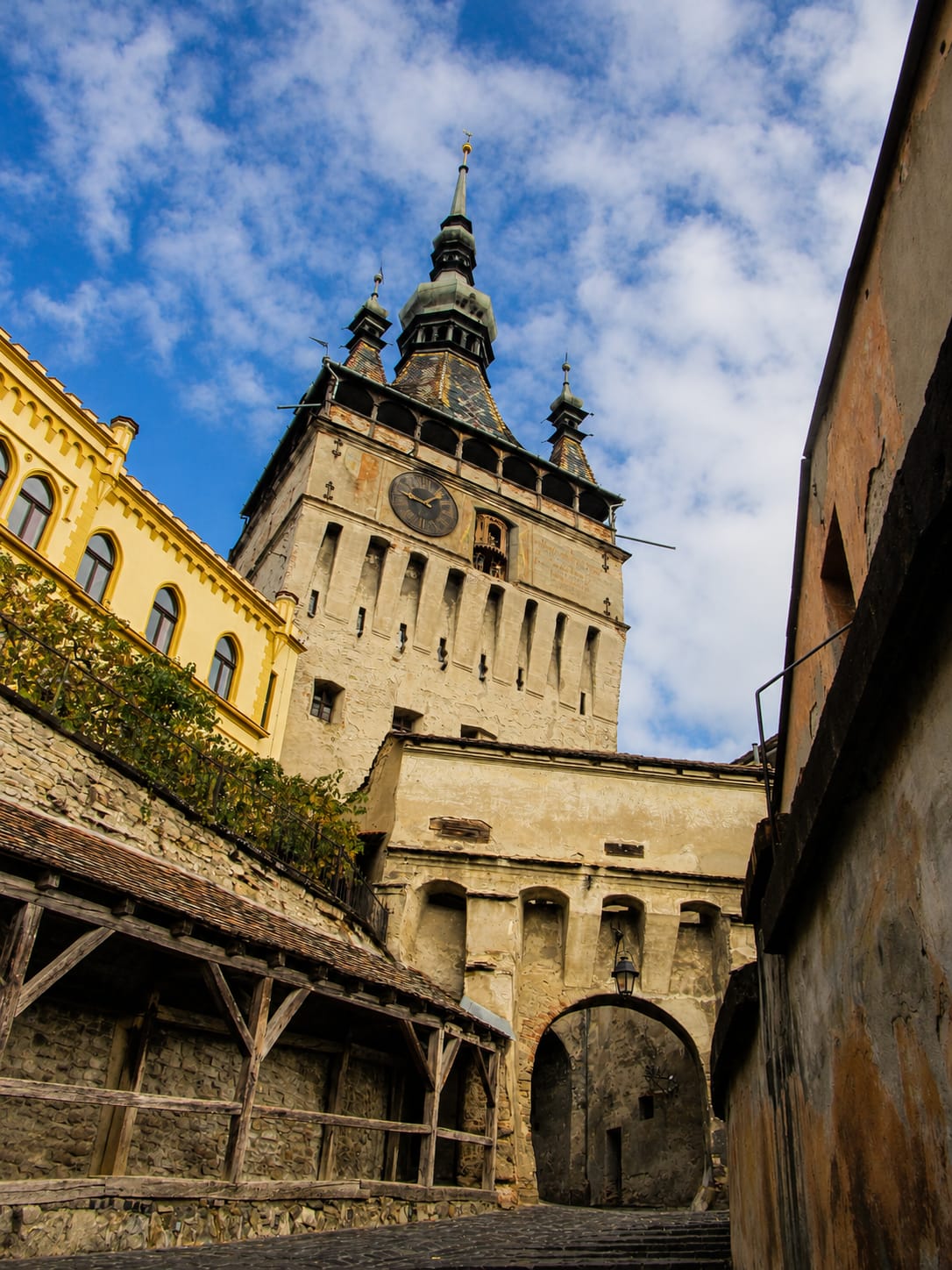
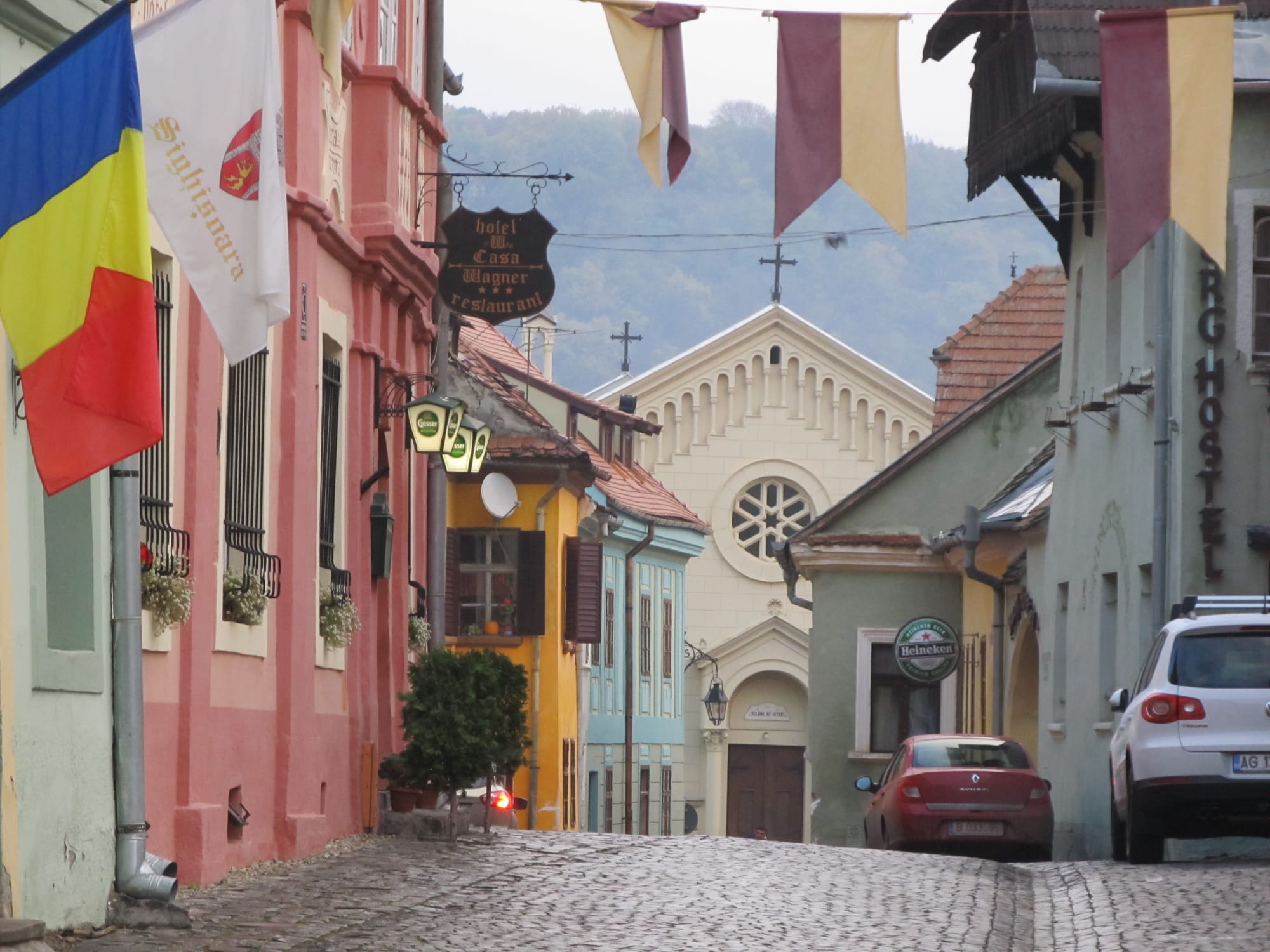
Sighișoara is one of the best-preserved inhabited medieval citadels in Europe — a UNESCO World Heritage Site, and the town where Vlad III was born in 1431. The building where he was born is still standing on the main square of the upper citadel. It currently operates as a restaurant on the ground floor. There's a plaque. The restaurant seems entirely at peace with its history.Sighișoara — the medieval citadel where Vlad was born, still intact after six centuries.The citadel is compact and walkable, with towers, cobbled streets, and a covered wooden staircase built in 1642 that connects the lower town to the hilltop church. It's the kind of place that would be overrun if it were in Western Europe. In Romania it gets a fraction of what it deserves.The clock tower — the main gateway into the upper citadel, built in the 14th century.The cobbled streets of the upper citadel. Largely unchanged since the medieval period.
Poenari
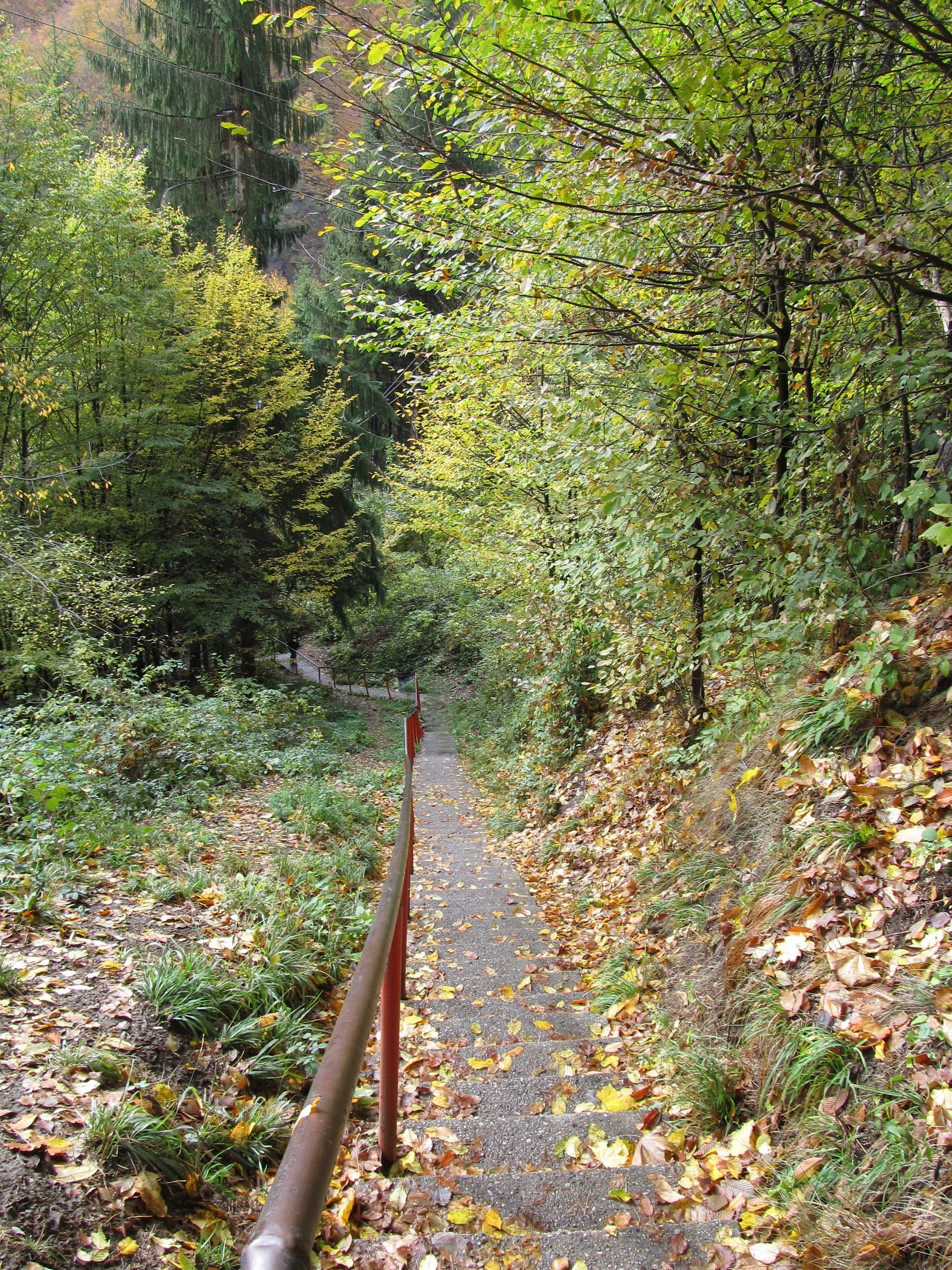
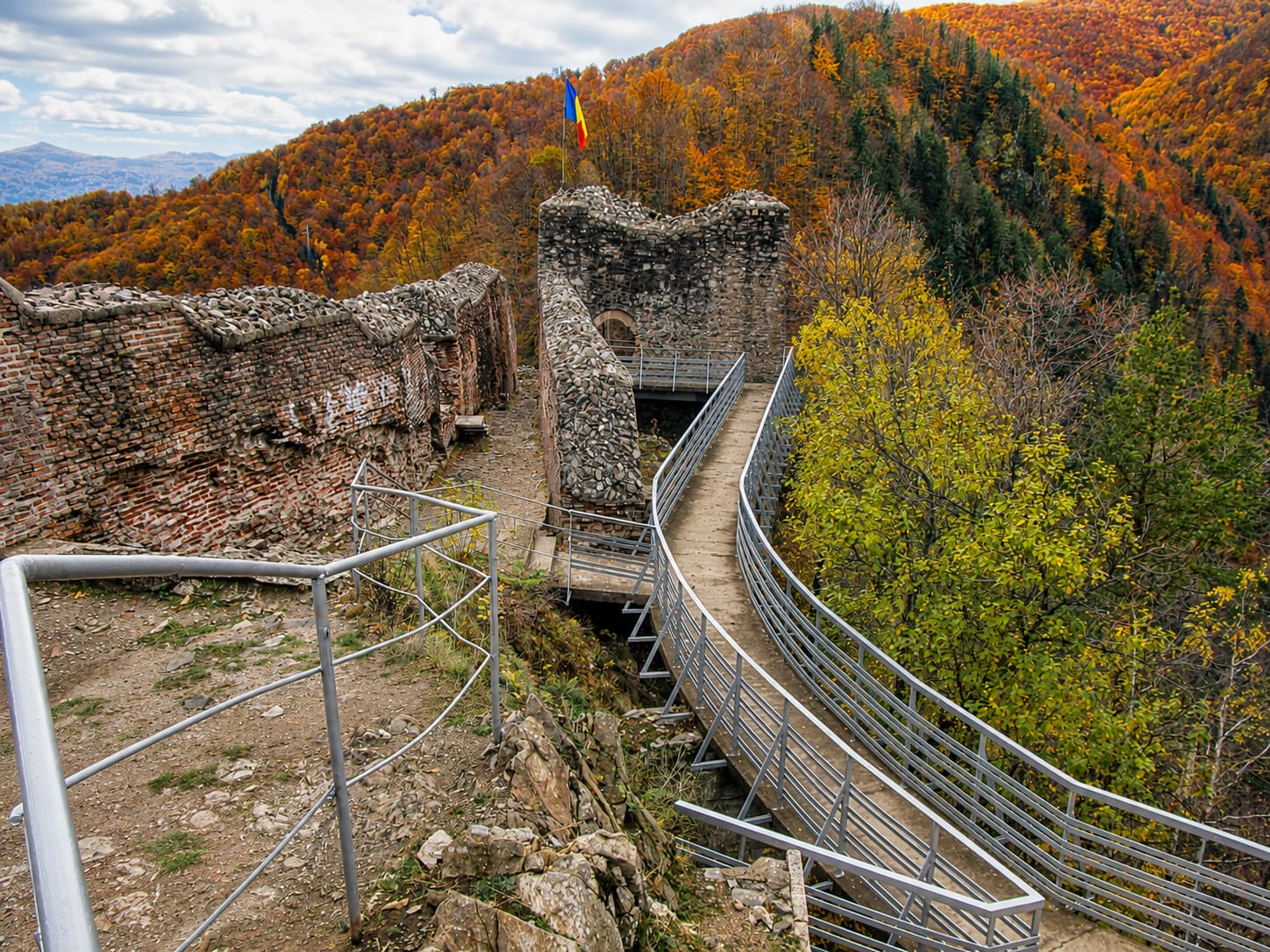
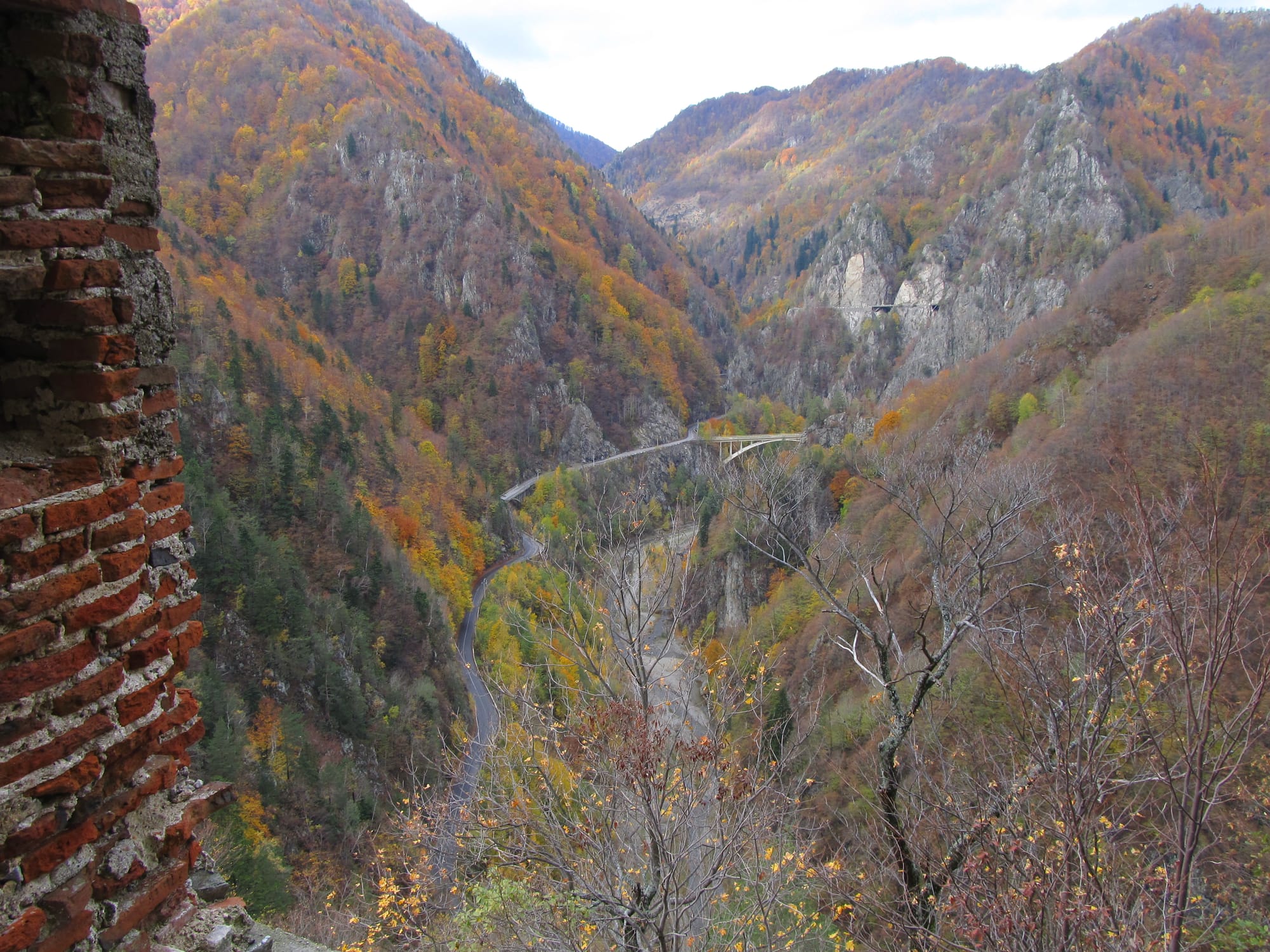
Fortress Poenari sits at the top of 1,480 concrete steps cut into a Carpathian mountainside above the Argeș River. The steps are uneven and steep in places. The climb takes 20 to 30 minutes depending on your pace and the heat.Poenari is what people mean when they say Dracula's Castle, whether they know it or not. Vlad had it rebuilt and expanded in the early 1460s using the boyar labor from the Easter massacre — the captured nobles marched 50 miles to do forced construction work until the castle was done or they were dead, whichever came first. When the Ottomans came for him in 1462, his wife threw herself from the battlements into the Argeș River rather than be taken. Vlad escaped through a secret passage into the mountains and survived, because of course he did.Poenari from below — the fortress sits on a cliff above the Argeș River at the top of 1,480 steps.Looking down the staircase. 1,480 steps, steep in places, no queue at the top.What's left now is a set of crumbling walls on a cliff with a view that goes on forever. No gift shops. No queue. You share it with whoever else made the climb that day.The ruins — crumbling walls, a cliff edge, and a view of the Argeș valley that goes on forever.The view from Poenari. He escaped through a passage in the mountain. She didn't.
The Vampire Part
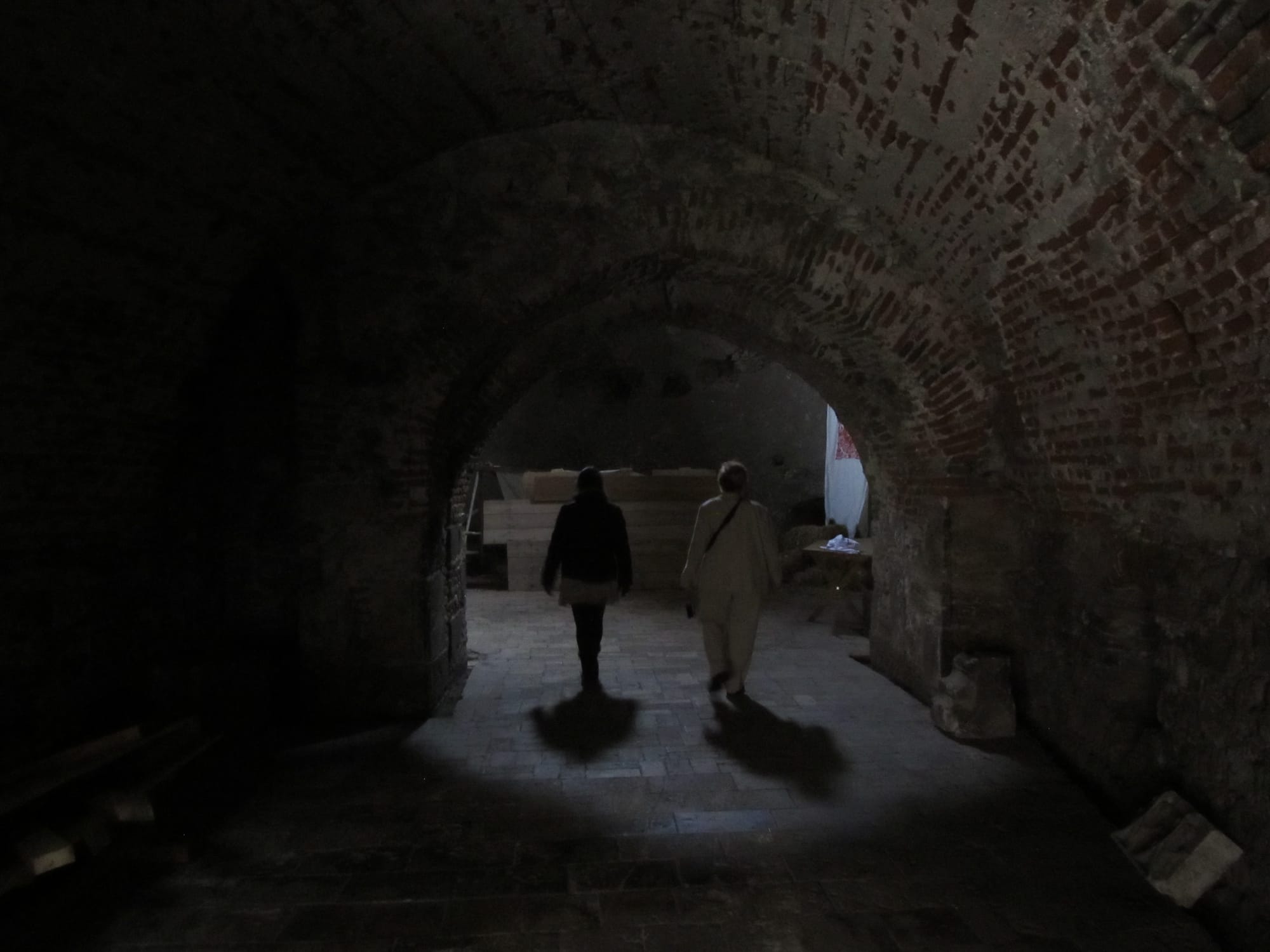
Bram Stoker published Dracula in 1897. The connection to Vlad is real but partial. Stoker knew the name and the general historical reputation — the historical Vlad was well documented in German and Hungarian sources available in the British Museum library, which Stoker used for research. But the vampire mythology itself comes from Eastern European folklore about the strigoi and similar undead figures that predates the novel by centuries and has no specific connection to Vlad. Stoker didn't invent the vampire. He gave it a name, a location, and a Wallachian nickname.The geography doesn't match either. Stoker's Count is from Transylvania. Vlad ruled Wallachia and operated primarily from Târgoviște and Poenari, neither of which is in Transylvania. He was born in Sighișoara, which is in Transylvania, and was imprisoned at Corvin Castle in Hunedoara, also Transylvania — but his actual seat of power was elsewhere.My sister and mom inside Corvin Castle. Gothic corridors, fourteen stories, built to impress as much as to intimidate.The result is Bran Castle: a 14th-century fortress in Transylvania marketed as Dracula's Castle, with a connection to Vlad that amounts to the possibility he may have passed through briefly. It's impressive, it's well-maintained, and the queue is long. It's also not where any of the history happened.Fortress Poenari — where the history actually happened.Poenari is 1,480 steps, crumbling walls, and a view of the Argeș valley that goes on forever. His wife went off the battlements. He went out through the passage. He came back twice more before it was over.The real Vlad is more interesting than the fictional one. He almost always is.
How to Visit the Real Vlad Sites
If you want to walk where the history actually happened — not where the gift shops are — here's how I'd prioritize it.Poenari Fortress — the one to climb. This is the real thing: Vlad's stronghold, rebuilt by the boyars he marched up from Târgoviște. It sits on a cliff above the Argeș River near the town of Curtea de Argeș, on the road that climbs toward the Transfăgărășan. Base yourself in Curtea de Argeș and reach it by car — it's awkward to get to without one. Budget 20 to 30 minutes for the 1,480 steps, wear real shoes, and go earlier in the day before the heat. There's no queue at the top. Most days there's barely anyone there at all.Târgoviște — the Princely Court. The ruins of the court where the 1459 Easter feast ended badly for the boyars, with the Chindia Watchtower still standing at the center and a small museum inside. It's in the city of Târgoviște, an easy day trip north of Bucharest, and it sees a fraction of the visitors it should.Sighișoara — the birthplace. A UNESCO-listed medieval citadel in Transylvania and the town where Vlad was born in 1431. The house he was born in still stands on the upper square and operates as a restaurant on the ground floor. Worth a night if you can swing it — it's one of the best-preserved inhabited citadels in Europe.Bran Castle — go for the castle, not for Vlad. This is the one marketed as "Dracula's Castle," and it's a genuinely beautiful, well-maintained fortress. Just know the Vlad connection is marketing — he may have passed through briefly, once, and never lived there. Go for the 14th-century architecture and the views, and expect a queue. Don't go expecting Vlad.If you only have time for one, make it Poenari. Everyone else is at Bran.
🎭
Unforgettable Experiences
Romania has incredible experiences worth booking in advance
Affiliate links • Helps fund my adventures at no extra cost to you
Frequently Asked Questions
Is Bran Castle really Dracula's castle?
No. Bran Castle is marketed as Dracula's Castle, but its connection to Vlad the Impaler is thin to nonexistent — he may have passed through briefly and certainly never lived there. The fortress Vlad actually held and rebuilt was Poenari, on a cliff above the Argeș River.
Where did Vlad the Impaler actually live?
Vlad ruled Wallachia and operated mainly from the Princely Court at Târgoviște and his cliff-top fortress at Poenari. He was born in Sighișoara and was later imprisoned at Corvin Castle in Hunedoara — but his seat of power was Wallachia, not the Transylvania of the Dracula legend.
Was Vlad the Impaler a real vampire?
No. The vampire mythology comes from Eastern European folklore about the strigoi, which predates Bram Stoker's 1897 novel by centuries. Stoker borrowed Vlad's nickname — Dracula, "son of the dragon," from his father's membership in the Order of the Dragon — and attached it to a fictional count. The historical Vlad was a 15th-century warlord, not a creature of the undead.
How many steps are there to Poenari Castle?
1,480 steps cut into the Carpathian mountainside above the Argeș River. The climb takes most people 20 to 30 minutes depending on pace and the heat.
Is Vlad the Impaler considered a saint?
The Romanian Orthodox Church canonized him in 2023. From inside the country he spent his life defending against the Ottoman Empire, his legacy reads very differently than it does from the outside.
How many people did Vlad the Impaler kill?
Contemporary sources estimate between 40,000 and 100,000 deaths during his reign — figures recorded during his own lifetime, not later embellishment. Even the lower number represented a significant share of Wallachia's population.